
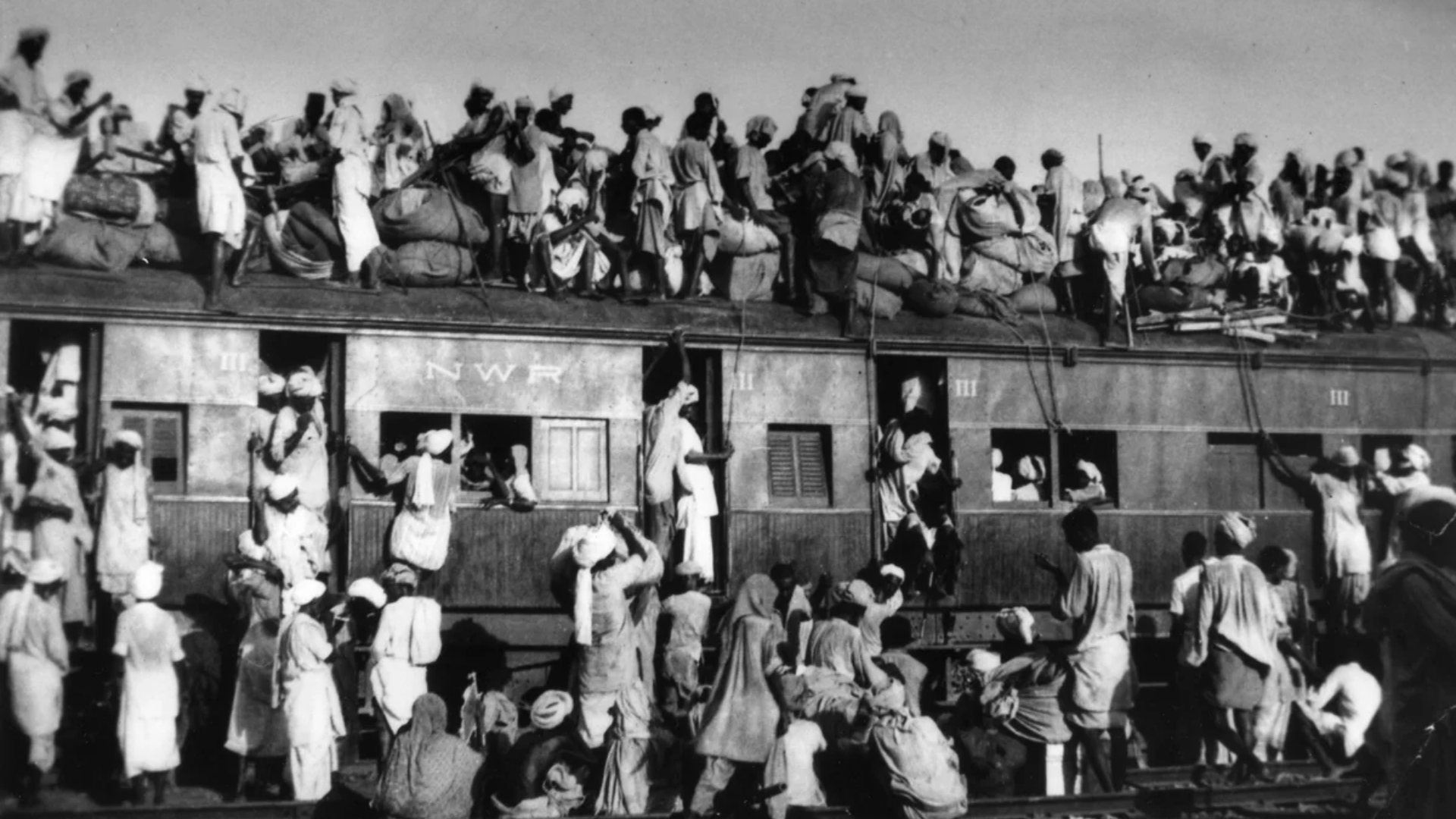

Many Punjabi families living in Delhi today have a common memory of Partition. Although the partition took place in 1947, its echoes are still alive through stories, silences and cultural identity.
Although 1947 divided a nation politically, its emotional wounds and inherited memories continue to shape identity generations later.
This essay examines the impact of partition on families, especially womenand how the trauma experienced was often hidden under a veil of silence and “honor” and ultimately forgotten. Although 1947 politically divided a nation, its emotional wounds and inherited memories continue to shape identities generations later, with descendants carrying memories of places like Gujranwala and Lahore even though they never saw them.
Growing up, I remember my great-grandmother and now my grandparents sharing their experiences of Partition around the dinner table, often with a strange mix of sadness and nostalgia. They often spoke of hiding their valuables in haystacks, believing they would soon return to their homes. One such story, passed down in my family, captures the same sense of desperation: My maternal grandmother’s chachaji (paternal uncle) carried a tin can with him while crossing the River Ravi because he believed it contained nothing more than panjiri, a traditional North Indian sweet.
My family also spoke of the loss of close family members and sometimes questioned their family’s decision to leave the country, wondering what would have happened if they had stayed.
When it became more difficult to cross the river, he let go of the box. When they reached the other side, someone from the family asked him where the box was, and only then did he reveal the truth to the other family members. One of the women in the family then told him that the box actually contained jewelry that was hidden under the panjiri. The loss was only recognized when it had become irretrievable.
My family also spoke of the loss of close family members and sometimes questioned their family’s decision to leave the country, wondering what would have happened if they had stayed.
The invisible work of women and patriarchal respectability
These memories were not only borne by the people who had experienced the Partition; Rather, they were shared across families and generations. As thousands of refugees left for a new country, they carried their lost homeland with them in the form of memories. When I still talk to my grandparents today, I feel both the pain of losing their home and the longing for the life they once led there.
However, building a new life in a new country was not an easy task. It had taken the invisible labor of women who did much of the work, quietly rebuilding what they had lost. When I say that, I think of my great-grandmother.
When their village and home were attacked, my great-grandfather stayed behind and fought with his army weapon while the rest of the family managed to escape safely. In the middle of the chaos he was captured. In the uncertainty that followed, not knowing whether he was still alive, it was his wife who held everything together, taking care of their new surroundings, looking after their children and ensuring their daily survival largely alone until he was finally found and reunited with the family.
Scholar Ravinder Kaur has written about resettlements in Delhi during the Partition era, including the establishment of a colony for young widows in Lajpat Nagar, where women were under strict supervision and forbidden from leaving without permission.
As refugees reached Delhi to start all over again, the city itself became a record site of displacement. Scholar Ravinder Kaur has written about it Delhi’s partition-era resettlementsincluding the establishment of a colony for young widows in Lajpat Nagar, where women were under strict supervision and were not allowed to leave without the permission of the social workers assigned to the colony. In this way, the state assumed the role of patriarch and attempted to regulate women’s lives in the name of preserving the nation’s “honor.”
Memory is fragile because trauma can distort memory and painful memories are often buried rather than spoken. People may forget dates, but they still remember the scent of a home they never knew themselves, and at some point the memory becomes more emotional than factual. What the younger generation inherits are not necessarily facts, but rather fragments, traces and nostalgia that continue to shape us.
In my own family, even if they were not visible decision-makers during Partition, it was the women who knew what was hidden and what was lost.
However, this fragility of memory was not shared equally. Men’s stories about property, migration, and difficult decisions were shared more openly, while women’s stories were more likely to remain buried, attenuated, or unspoken. Even small domestic details bear these traces. In my own family, even if they were not visible decision-makers during Partition, it was the women who knew what was hidden and what was lost.
Different experiences with gender-based violence
Having grown up with these fragments, I would now like to turn to two relatives whose stories express the gendered violence of the Partition more directly. One of my relatives’ house was attacked during a village raid. The men were killed while the women were kidnapped, attacked or killed. At that moment, saving “honor” seemed more important than saving her life. In desperation, the women of the family and the village ran to the well. Among them was my grandmother’s mommy (maternal aunt), who was running with her sister and holding her son tightly in her arms. When she reached the well, she jumped in, not knowing that there was no water in it, only corpses. She survived, but her son died, still in her arms. She was later captured by the attackers and held for months.
When her father-in-law finally found out where she was, he crossed the border from India into Pakistan to bring her back. She initially refused to return because she no longer considered herself “worthy” of returning as someone else’s wife. It took some time and his insistence before she agreed to come home. She was welcomed with great honor and built a new life for herself on this side of the border, far from the trauma of those months. She lived quietly in Samana, Punjab, until her late seventies, leaving behind a close-knit family.
Her husband believed that she, like countless women during Partition, might have been kidnapped and attacked while traveling to India, and so he decided to kill her first, calling it “protection.”
Another story in my family is that of a newlywed bride. As tensions rose in their village, conflicts between communities increased. The family decided to go to India, but before doing so, her husband asked her to put on her latest suit and wear all her jewelry and informed her that they were going to visit her paternal family. She asked why they would leave under such circumstances, but he refused to answer. When she emerged from her room dressed and ready, he beheaded her.
At that moment he decided that her “honor” was more important than her life. She was left there without anyone performing her last rites. Her husband believed that she, like countless women during Partition, might have been kidnapped and attacked while traveling to India, and so he decided to kill her first, calling it “protection.” When the family reached India, he spent the rest of his life in great mental anguish, unable to escape the burden of what he had done.
What we want to remember
These two stories reflect a pattern larger than my own family. Women’s trauma during Partition was routinely hidden because society demanded silence; “Honor” was more important than truth, and women were rarely given the space to publicly express their own pain.
My grandmother’s mother was returned to her family and welcomed with “honor,” much like the thousands of women who were officially “recovered” as part of India’s post-Partition policy. Although her family’s love for her was genuine, the family wanted to ignore her own feelings of not belonging.
In both cases, what was called “protection” or “honor” was decided by men for women, without asking what the women themselves wanted or believed.
The newlywed bride wasn’t even given that chance; Her husband unilaterally decided that her death would preserve the “honor” of the family, which was unlikely to jeopardize her survival. In both cases, what was called “protection” or “honor” was decided by men for women, without asking what the women themselves wanted or believed.
Some memories faded with time; others remained painfully sharp. The division lives not only in what is remembered, but also in what could never be spoken aloud, in the memories that are buried deep in people to this day.
Even after more than seven decades since the 1947 Partition, memories of those dark months quietly persist in Punjabi households across India, especially in Delhi.
Even after more than seven decades since the 1947 Partition, memories of those dark months quietly persist in Punjabi households across India, especially in Delhi. For many Punjabi families like my own, these experiences are still preserved through the retelling of family stories at gatherings.
Even today, the memories of cities like Gujranwala, Rawalpindi and Lahore live on in the descendants of those who came from and around these regions. So perhaps the power of memory lies not in its ability to blur the boundaries between nations and continents, but in the fact that no border can erase the memories of the countless nameless women who, in many cases, bore the burden of displacement, often alone.
