


With tree nut allergies on the rise, sunflower butter is an easy swap for peanut butter. However, since many store-bought brands contain oil, you can create a healthier version at home.
This way, you get to control the ingredients and the sweetness level. Use it on sandwiches, in energy bites, or in homemade granola bars for a nut-free snack!
⭐⭐⭐⭐⭐ Featured Review
“I had no idea it would go through all these stages. Thanks for the great details! I probably would have given up after about 5 minutes without the pictures! 😋 Yummy!!” -Donna
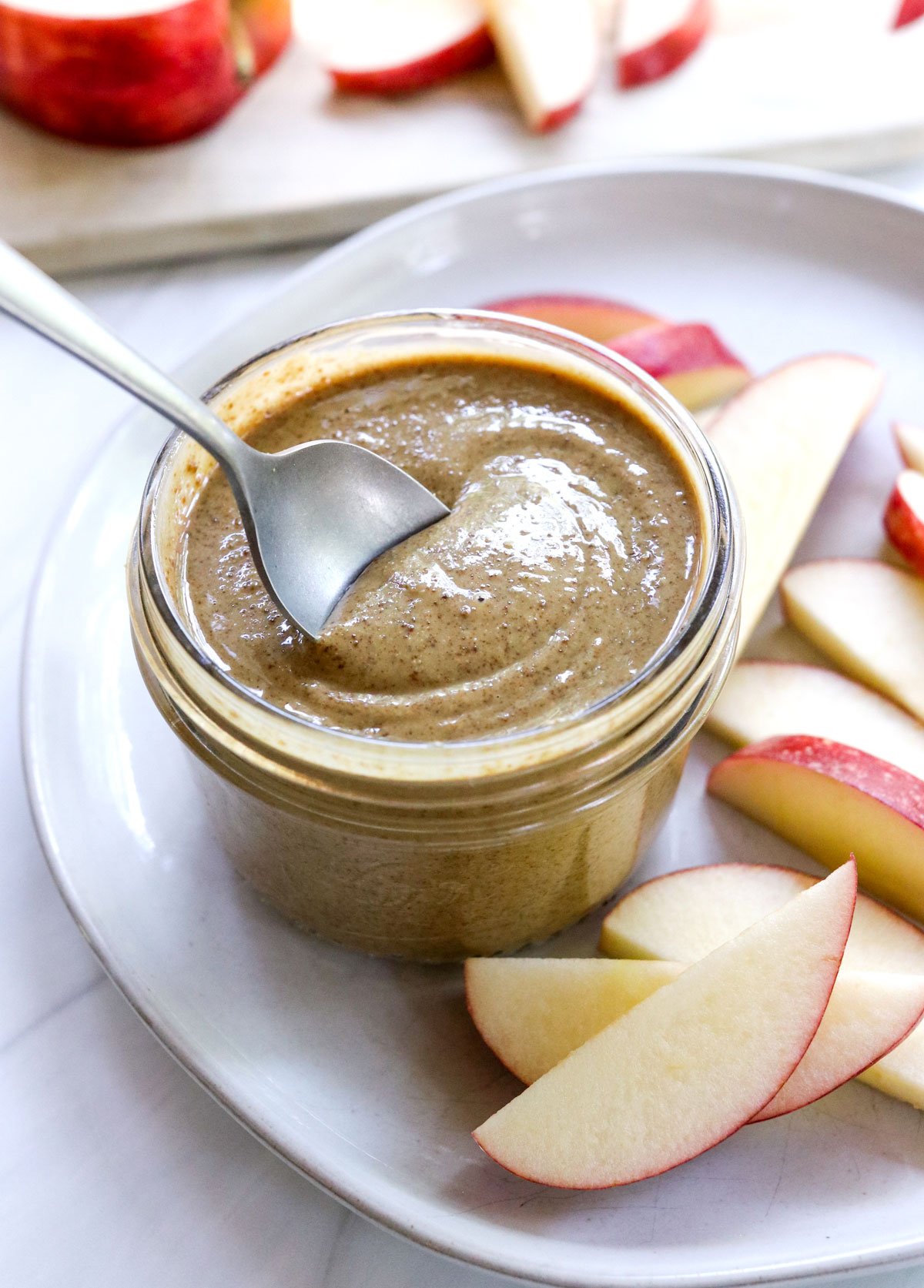
Why You’ll Love This Sunflower Butter Recipe
It’s oil-free. Many store-bought sunflower butters are made with added oil, but it’s not necessary when you make your own. (Be sure to roast the sunflower seeds briefly first, which will help them to release their natural oils.)
It’s easy to make. All you need is a little bit of patience. Roast the seeds briefly to release their natural oil, then process them in a food processor or blender until smooth. Then you can add any flavorings to taste!
It’s naturally sweetened. Sunflower seeds are pretty bitter on their own, so unlike homemade almond butter or peanut butter, you may want to add a little sweetness to this recipe. I tend to use coconut sugar, but any other granulated sugar will work in this recipe. You can also leave it unsweetened if you don’t mind the bitter flavor. I do highly recommend adding salt in that case, which also helps distract from the bitter taste.
Ingredients You’ll Need
Here’s what you’ll need:
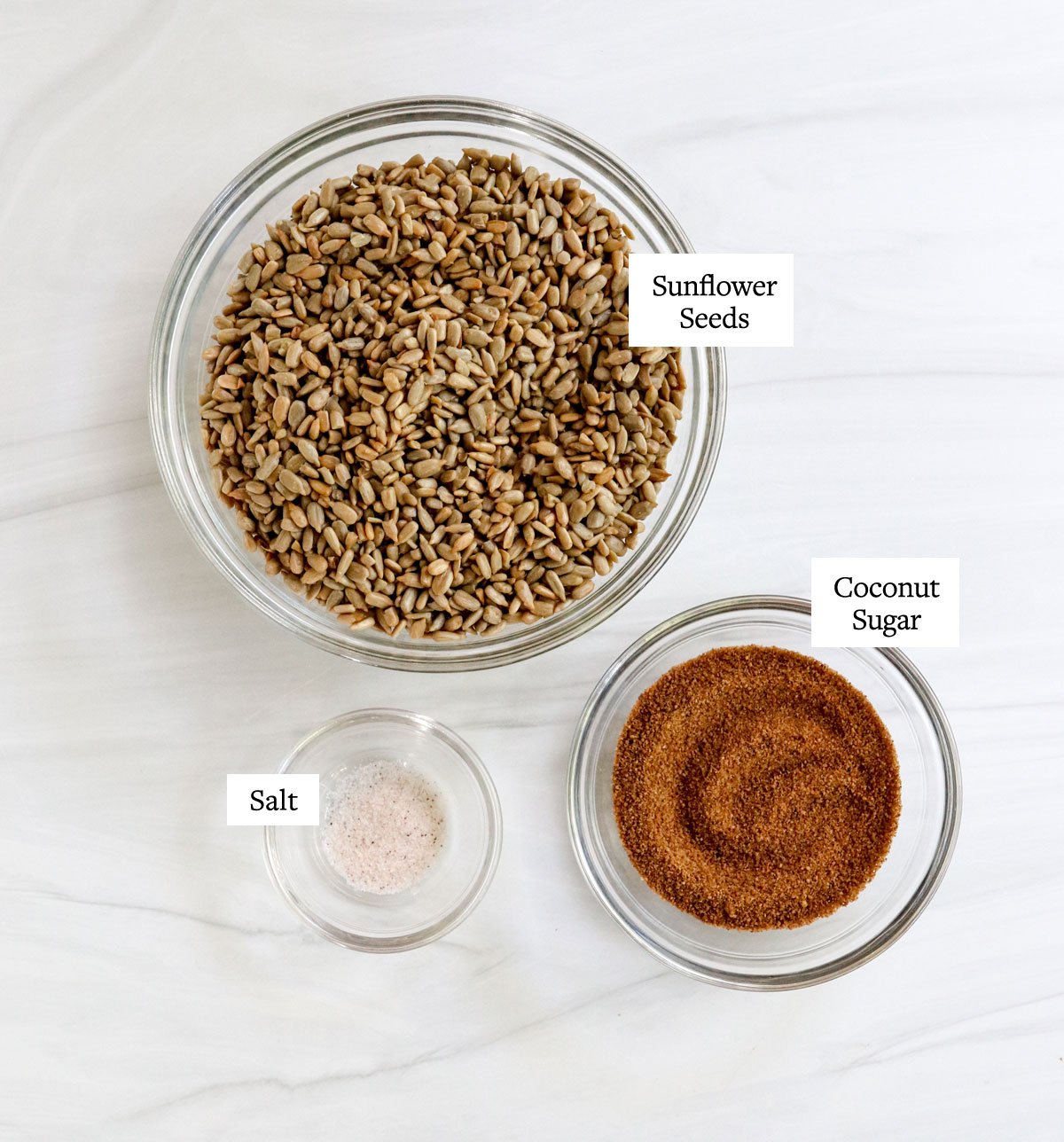
- Sunflower Seeds. Shop for unsalted and unroasted sunflower seeds when possible. This will give you the most neutral flavor, without any added oil. However, any sunflower seeds should work if you can only find roasted or salted ones.
- Coconut Sugar. Sunflower seeds taste very bitter on their own, so they don’t make a great peanut butter substitute unless you add some sweetness to balance out the bitterness. Coconut sugar is a natural sweetener; however, any other granulated sugar will work as well. Do not use a liquid sweetener, such as honey or maple syrup, as the texture could be ruined.
- Salt. Adding salt helps boost the flavor and balance the sweetness.
Safety Tip
For individuals with nut allergies, please check the packaging of your sunflower seeds to ensure they aren’t manufactured in facilities that also process other tree nuts. (This should help prevent cross-contamination.)
How to Make Sunflower Seed Butter
Step 1:
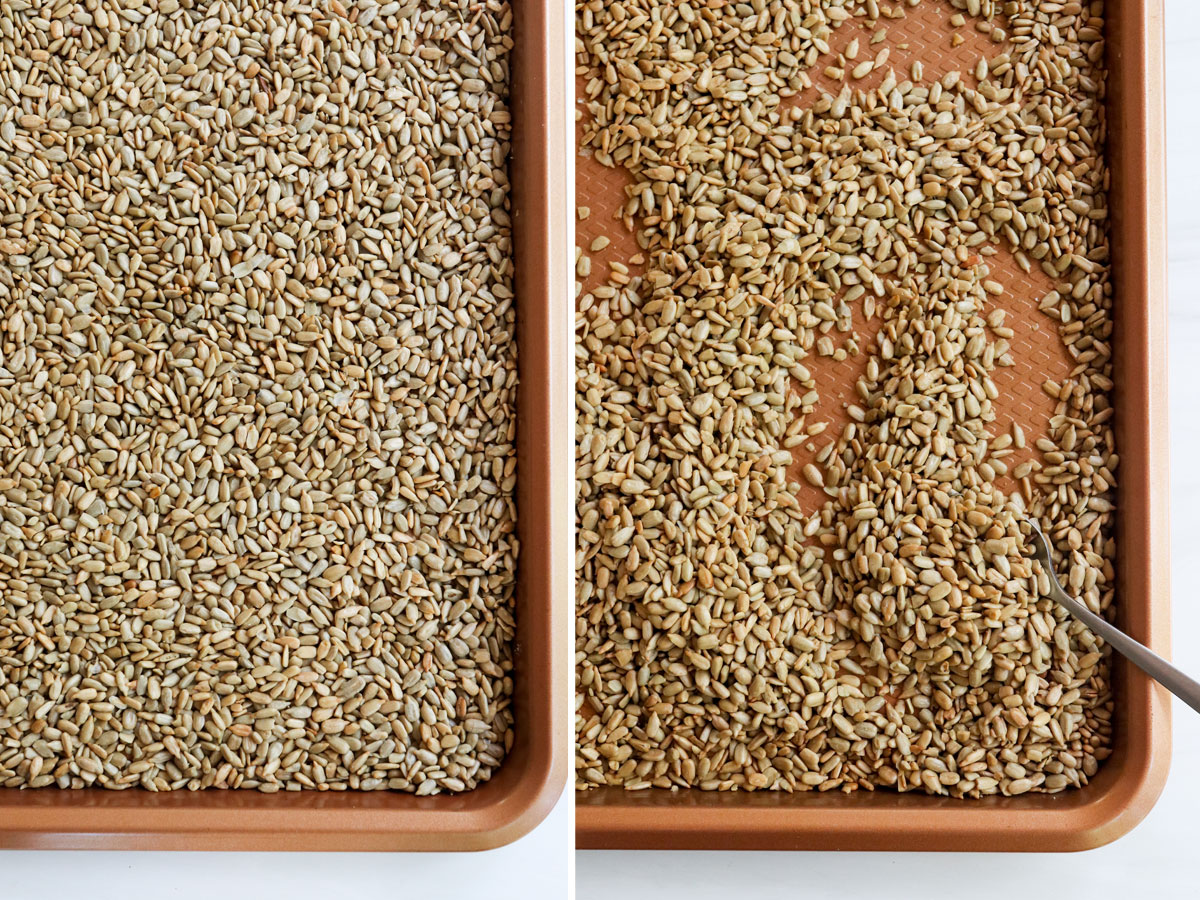
Preheat the oven to 350ºF and pour the sunflower seeds on a rimmed baking sheet. Spread them out into an even layer and toast the seeds for 8 to 10 minutes, until they smell fragrant and appear slightly oily when stirred in the pan.
Remove the pan from the oven and let the seeds cool for at least 10 minutes. (If you pour piping-hot seeds directly into the bowl of a food processor or blender, it could melt the plastic container.)
Note: This step should be done even if you’re using roasted sunflower seeds. The point is to warm up the seeds, so your food processor won’t have to work as hard.
Step 2:
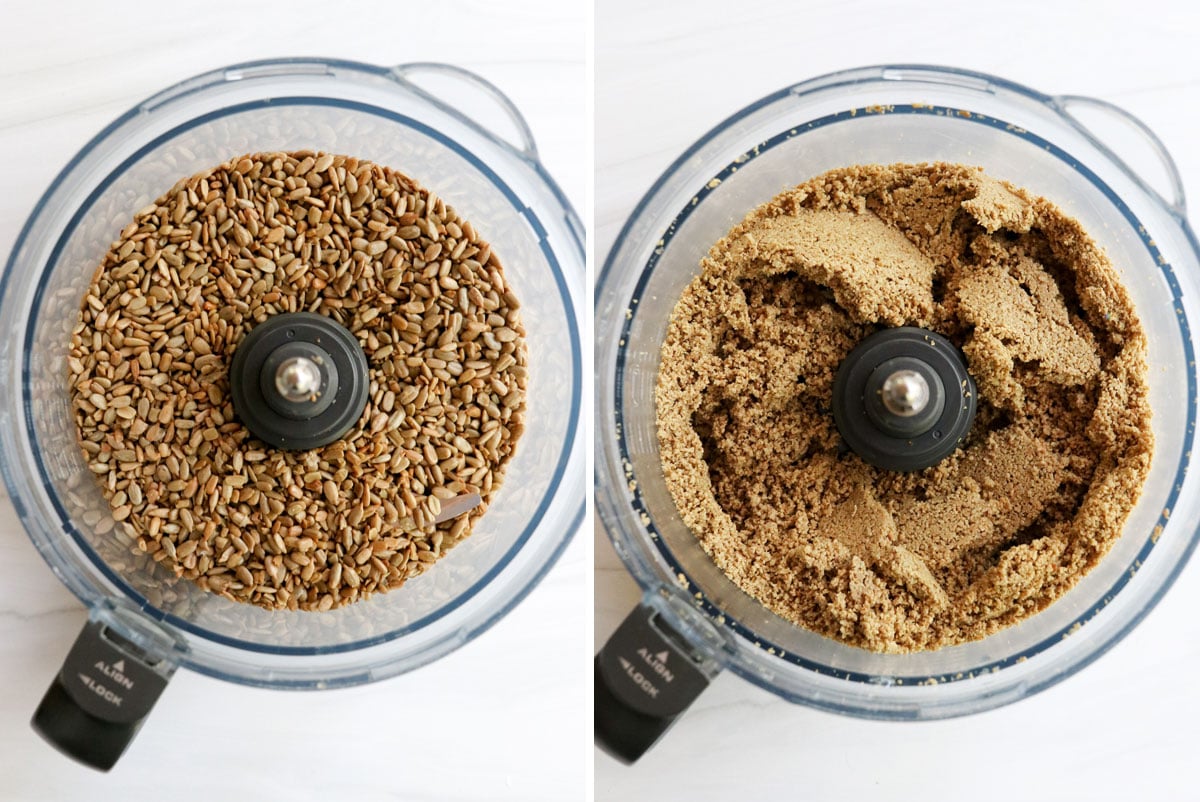
Once the seeds are warm, but not piping hot, transfer them to the bowl of a food processor. I’m using a 12-cup machine in these photos.
Process for 1 to 2 minutes. If the seeds start to stick to the walls of your machine, pause the process to scrape them down with a spatula.
Step 3:
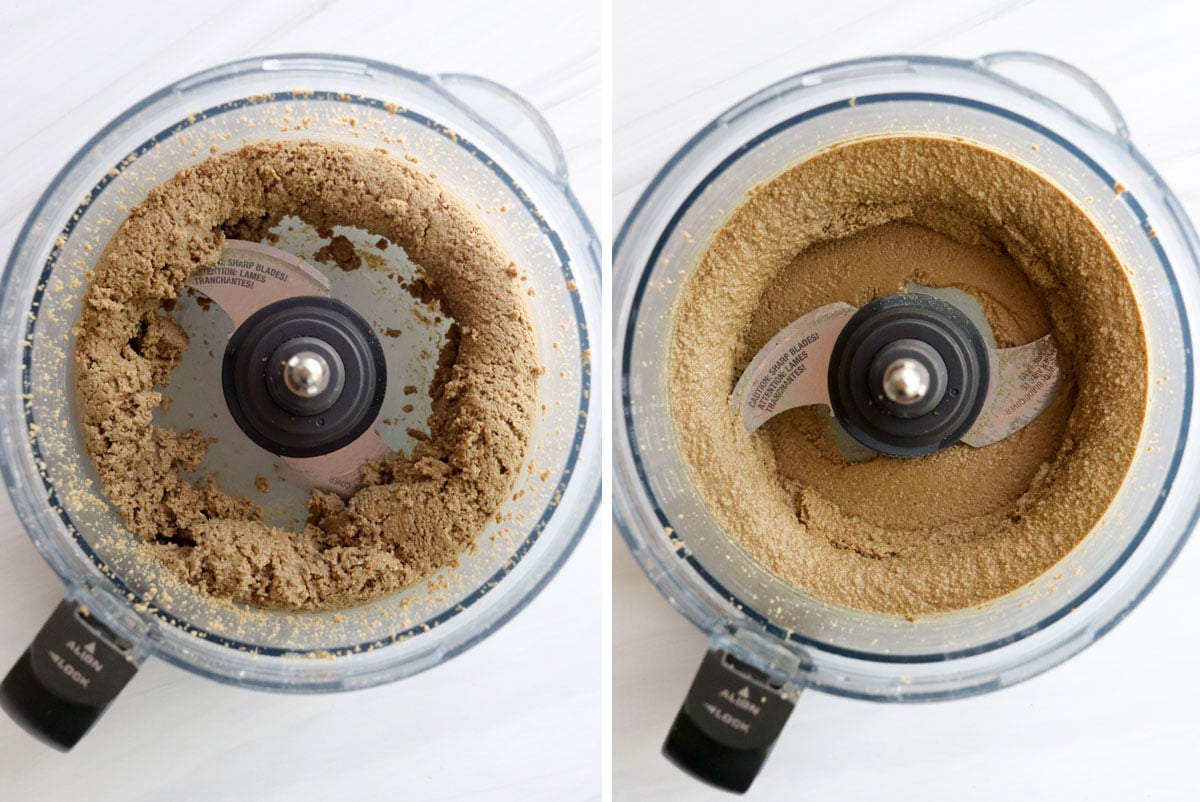
Continue processing for approximately 2 more minutes. The sunflower seeds will eventually stop climbing the sides of the walls and will start to stick together, like a thick paste.
This is a good sign!
Step 4:
Continue processing until you see a grainy sunflower seed butter starting to form, which should take about 1 to 2 more minutes. You’re almost done!
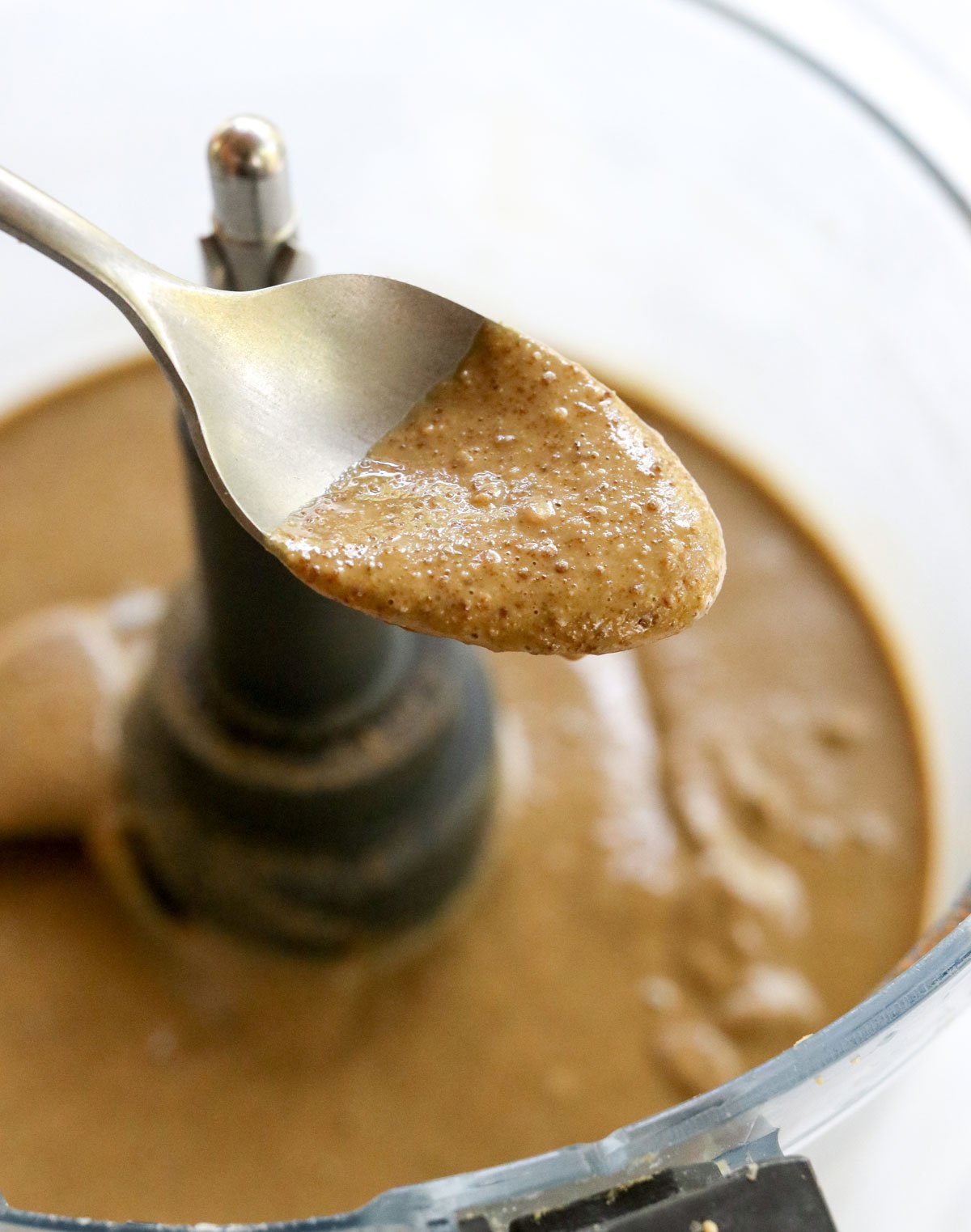
Process the sunflower seeds until the butter has a drippy consistency. The texture will still be slightly gritty when you taste it, which is the nature of making an oil-free nut butter.
Tip: For a slightly smoother result, use a high-speed blender instead of a food processor. It will blend the sunflower seeds even faster! You can also add a drizzle of neutral-flavored oil into the mix, which will help the butter become more whipped in texture. Do not use coconut oil, as it will harden when chilled in the refrigerator. (This will make it more difficult to spread later.)
Step 5:
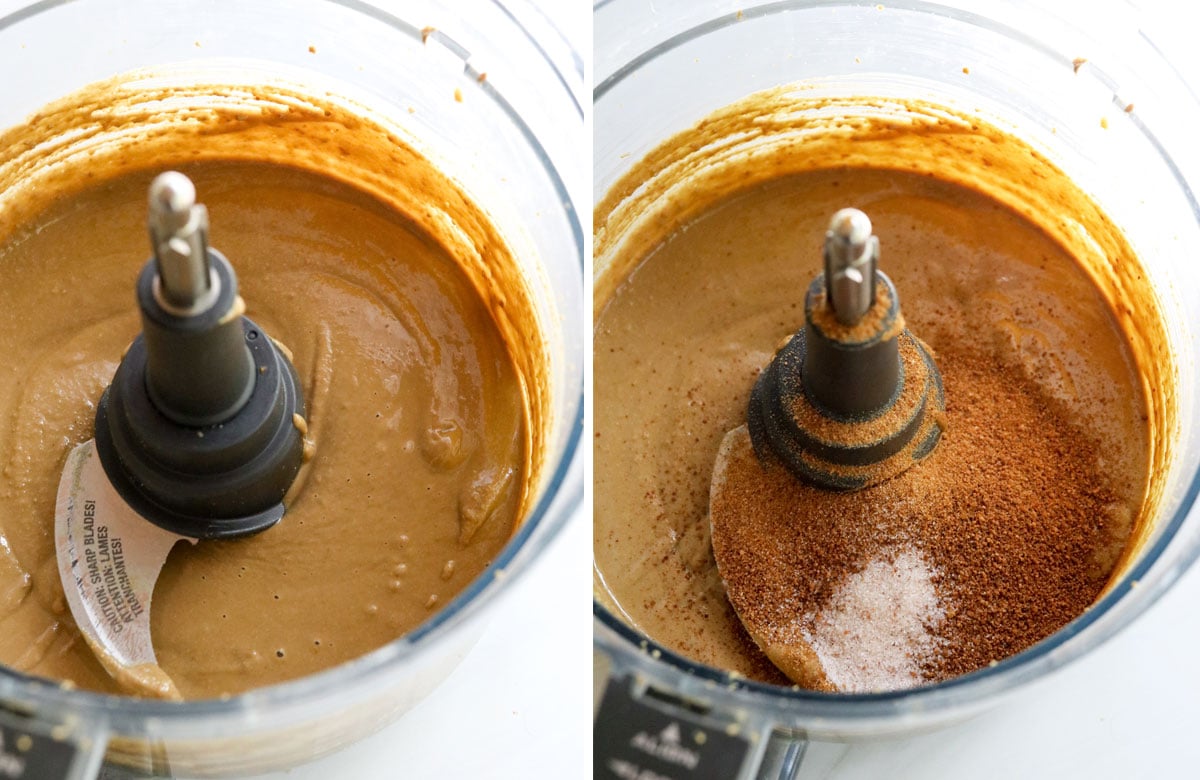
When you taste the finished sunflower seed butter, you’ll probably notice that the flavor is quite bitter. Adding salt will help this tremendously! I typically use 3/4 of a teaspoon of salt, in total, but you can start with just a 1/2 teaspoon and add more to taste.
To balance out the bitterness, you can also add a dry sweetener, like granulated sugar. Start with a 1/4 cup and process it in. You can add up to 2 tablespoons more, depending on your preference.
Flavor Variation: Add up to a teaspoon of ground cinnamon for a warm and spicy flavor.
Storing Homemade Sunflower Butter
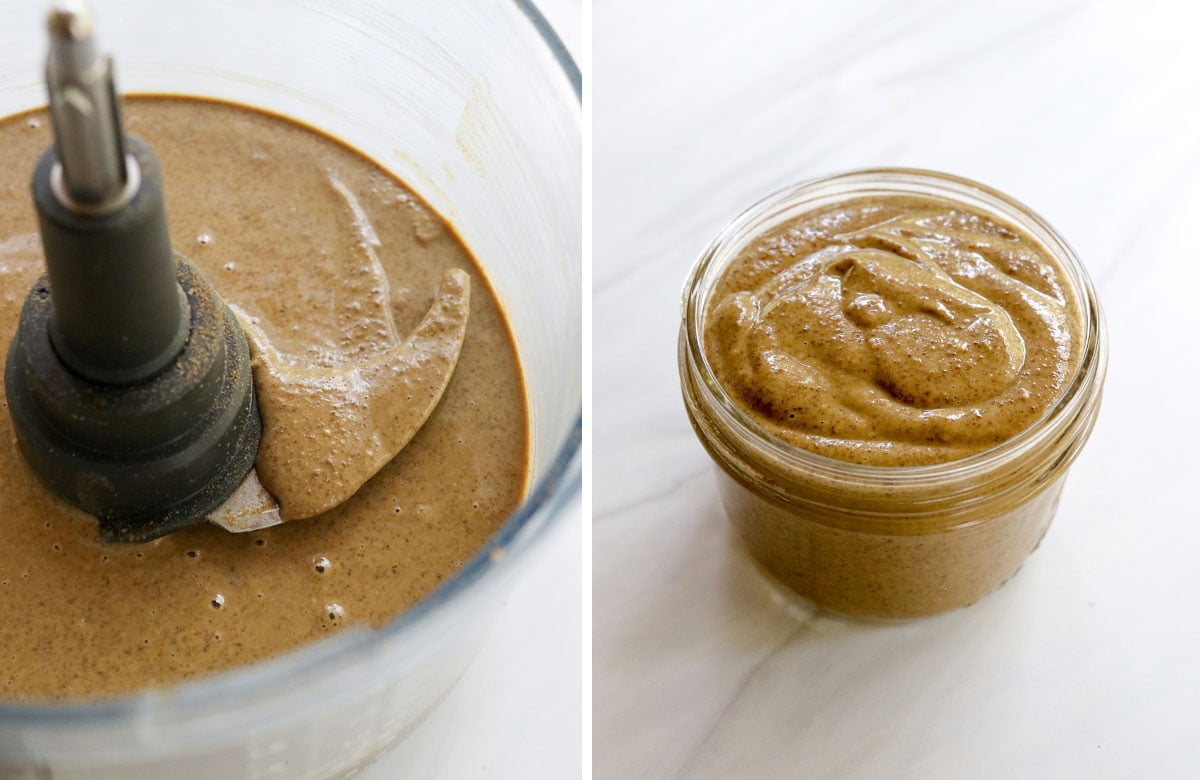
Transfer the sunflower seed butter to a jar and secure with a lid. Store sunflower seed butter in an airtight container in the refrigerator for up to 1 month.
Be sure to always use a dry utensil when using the seed butter to help maintain its shelf life. (Added moisture will make anything spoil faster!)
Recipes to Use Sunflower Butter
Now that you’ve made it, here are some delicious ways to use it.
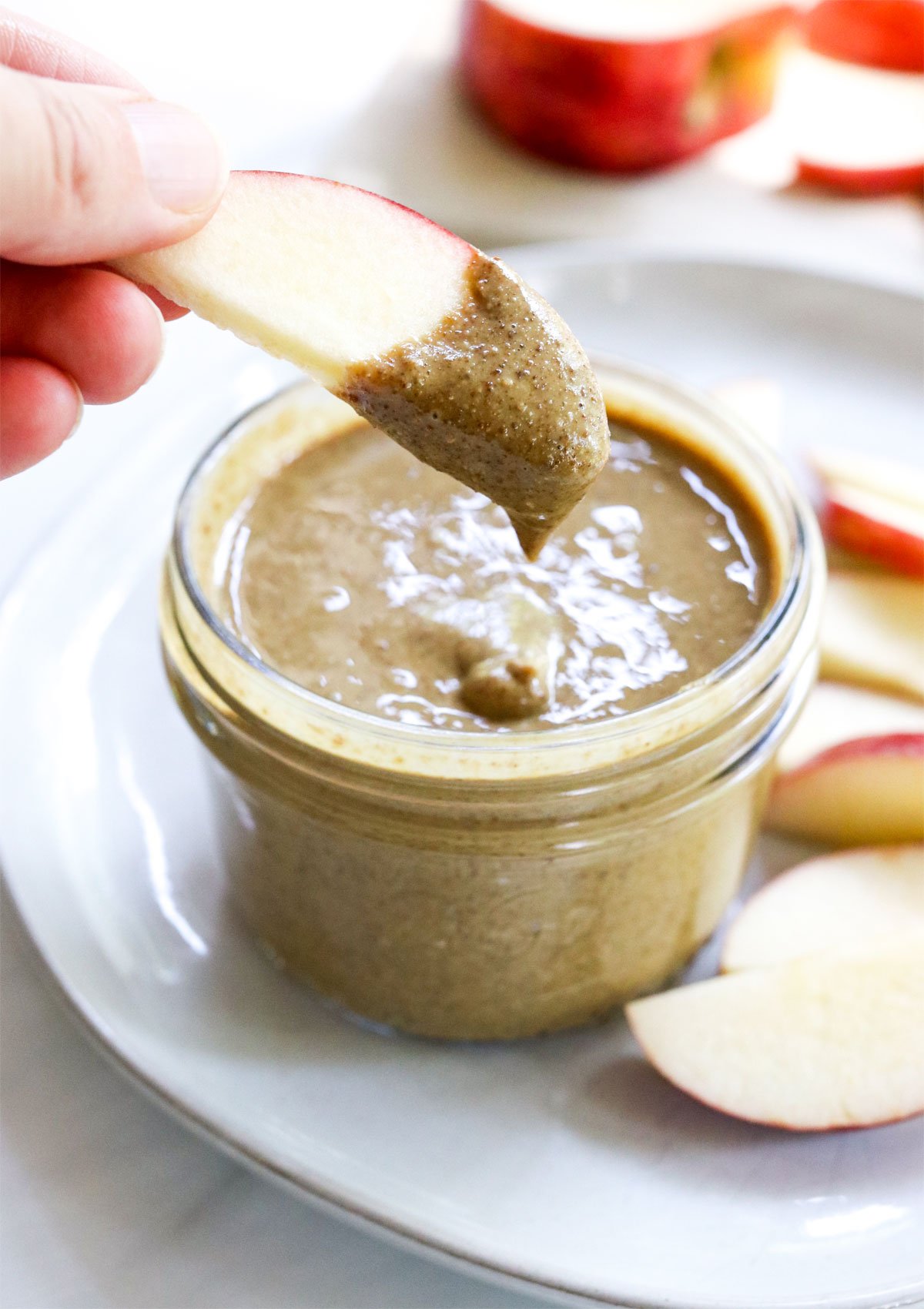
- As a dip or drizzle. It’s delicious as a dip or drizzled on Apple Nachos.
- Use it in granola bars. Create nut-free granola bars that are safe for school!
- Add it to date balls. The dates will help offset any bitter flavor from the sunflower seeds.
- Spread it on pancakes or waffles. This will make them more filling!
- Swap it anywhere you would normally use peanut butter. Basically, any recipe that calls for peanut butter can use sunflower butter instead.
Detoxinista Tip
Sunflower butter can cause baked goods to turn green when used in recipes that contain baking soda. This is a safe chemical reaction that can sometimes be fun around St. Patrick’s Day, but it can be surprising if you aren’t expecting it.
- 12 ounces hulled sunflower seeds (unsalted; raw or dry roasted)
- ¾ teaspoon fine sea salt
- ¼ cup coconut sugar
-
Preheat the oven to 350ºF and spread the sunflower seeds out into an even layer on a rimmed baking sheet. Roast the seeds for 8 to 10 minutes, or until they smell fragrant. When you stir the seeds, they should glisten from their natural oils being release. Let the seeds cool for at least 10-15 minutes, so they won’t melt the plastic of your food processor or blender container.
-
Add the warm (but not piping hot) seeds to the bowl of a food processor or blender and process for 2 minutes. Stop and scrape down the sides of the machine, as needed.
-
Continue processing the seeds, until they start to stick together and form a thick paste. This is a good sign! The seeds will need to process for roughly 5 more minutes, until a gritty sunflower seed butter starts to come together.
-
Keep processing the seeds for another minute or two, until the sunflower seed butter becomes more runny and drippy in consistency. When it looks relatively smooth, you can add any seasonings you like, such as salt and granulated sugar, if you want to counter-balance the bitter flavor of the seeds. Process briefly to evenly distribute the seasonings, about 60 seconds.
-
Transfer the sunflower seed butter to a glass jar, and let it cool completely before securing the top with a lid. (This way the jar won’t steam from the heat, which could cause it to spoil faster.) Sunflower seed butter can be stored in an airtight container in the fridge for up to 1 month.
Nut Allergy Note: If you are making this for someone with nut allergies, be sure to check the package of your sunflower seeds to make sure they aren’t processed in a facility that also handles tree nuts.
Sweetener Note: You can use any granulated sugar you prefer, but avoid using liquid sweeteners, such as maple syrup or honey. Adding liquid will cause the sunflower butter texture to seize. This means it will thicken up and become very difficult to spread. Avoid using liquid sweeteners or any other liquids (like vanilla extract) when possible.
Calories: 176kcal | Carbohydrates: 9g | Protein: 6g | Fat: 15g | Saturated Fat: 1g | Polyunsaturated Fat: 7g | Monounsaturated Fat: 5g | Sodium: 154mg | Potassium: 183mg | Fiber: 2g | Sugar: 3g | Vitamin A: 14IU | Vitamin C: 0.4mg | Calcium: 22mg | Iron: 1mg
More Nut-Free Recipes to Try
If you try this homemade sunflower seed butter, please leave a comment and star rating below, letting me know how you like it.
