There are two hair transitions that cause instant panic in the group chat: bangs… and going gray from red.
Because when silver starts growing into red hair, it does not blend politely. It contrasts. Boldly. That bright, cool shimmer against warm copper or auburn can feel dramatic in a way you didn’t sign up for.
And if your red is color-treated, there’s also the fade to think about. Red does not disappear quietly. It lingers. It turns peachy. Sometimes brassy. Sometimes suspiciously orange. Even natural red can soften and shift in tone over time, which makes those cool silver strands stand out more.
If you’re wondering how to transition from red hair to gray without going through an awkward pumpkin phase, you are very much not alone. Whether your red is natural or dyed, the contrast can feel intense at first.
The good news? It can be done beautifully, with a little strategy and a lot less stress than you think.
Why Red Hair Is the Hardest Color to Grow Out
Let’s just say it. Transitioning from red hair to gray is not the same as growing out blonde or brown.
Red pigment is famously clingy. If your red is color-treated, those larger dye molecules hang onto the hair shaft and fade in stages instead of disappearing cleanly. If your red is natural, the warmth is still very present, which makes the coolness of incoming gray stand out more.
“Red tones are some of the most stubborn to fully remove from the hair,” says celebrity colorist Tracey Cunningham. “They can linger in the hair and fade warm before they completely lift.”
For those growing out dyed red hair, that lingering warmth is exactly why so many people end up in the orange zone. Artificial red often passes through copper, peach, or brassy tones before it softens completely.
For natural redheads, the challenge is different but just as noticeable. Silver strands tend to appear bright and cool against warm copper or auburn, creating contrast even without artificial pigment involved.
Warm plus cool without a blending plan? That’s where the shift can feel dramatic.
The goal is not to rush the red out at any cost. It’s to manage the transition so the warmth and the incoming gray work together instead of competing for attention.
The Best Way to Transition from Red Hair to Gray Without Going Orange
If you take nothing else from this article, take this. The secret to avoiding orange is not ripping the red out as fast as possible. It is softening it strategically.
When red fades on its own, it often turns brassy before it disappears. That is when people panic and overcorrect. Instead, the smarter move is controlled blending.
“The key to transitioning successfully is creating harmony between the existing color and the natural gray,” says master colorist Jack Martin, who is known for dramatic gray transformations. “You want to blur the line of demarcation so the grow out looks intentional.”
So what does that actually mean in real life?
1. Soften the Red Before You Remove It
Instead of maintaining a bold, vibrant red, gradually shift to softer tones. Think strawberry, muted copper, or even a rose-leaning shade. Less saturation means less dramatic fading.
When the red is slightly lighter and less intense, the incoming gray does not look like it crash-landed at your roots.
2. Add Subtle Highlights to Break Up the Line
Fine highlights near the root area can help diffuse that sharp contrast between warm red and cool gray. The goal is dimension, not stripes.
Celebrity color educator Guy Tang explains, “Blending is about creating movement in the hair. When there’s dimension, the eye doesn’t focus on a harsh line.”
A few well-placed lighter pieces can make the transition feel seamless instead of stark.
3. Let It Be a Gradual Fade
This is not an overnight transformation. And honestly, it should not be.
Artificial red pigment often requires multiple lightening or toning sessions to fully soften. Natural red transitions tend to unfold more organically as silver increases over time.
Either way, rushing increases the risk of dryness, uneven tone, or regret.
Think of it as easing from fire to silver instead of flipping a switch.
Blending Ideas That Actually Work
If the goal is to transition from red hair to gray without going orange, blending is everything. The right placement and tone can make the shift look intentional instead of accidental.
Here are the red-to-gray techniques that consistently deliver.
Silver Balayage on Red Hair
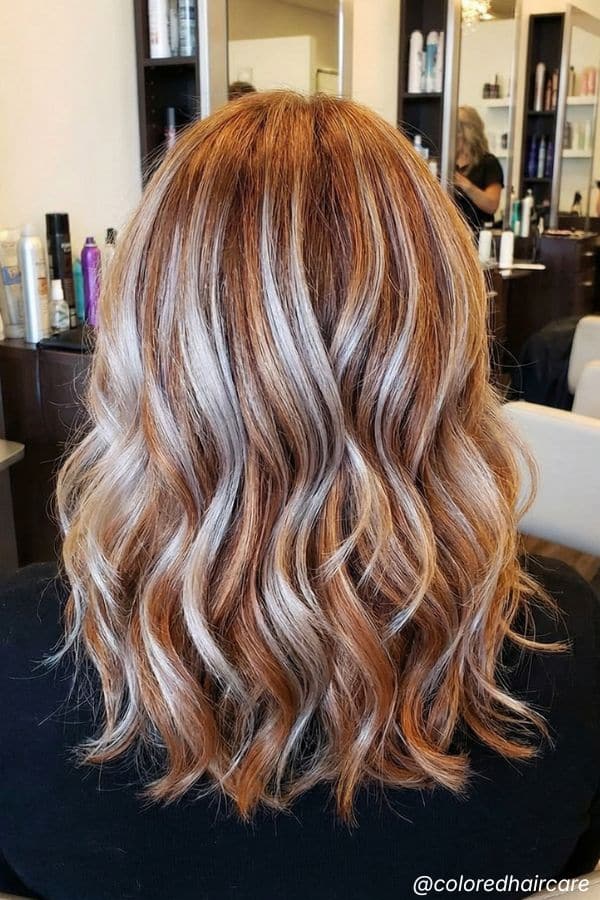
This is one of the most forgiving ways to start.
Hand-painted silver or ash-toned balayage pieces woven through red hair create ribbons of cool tone throughout the warmth. Instead of a solid block of red meeting a stripe of gray at the root, you get dimension.
The beauty of balayage is that it grows out softly. As natural gray continues coming in, it blends with those cooler painted pieces and looks cohesive.
It is subtle. Strategic. Very modern.
Rose to Silver Color Melt
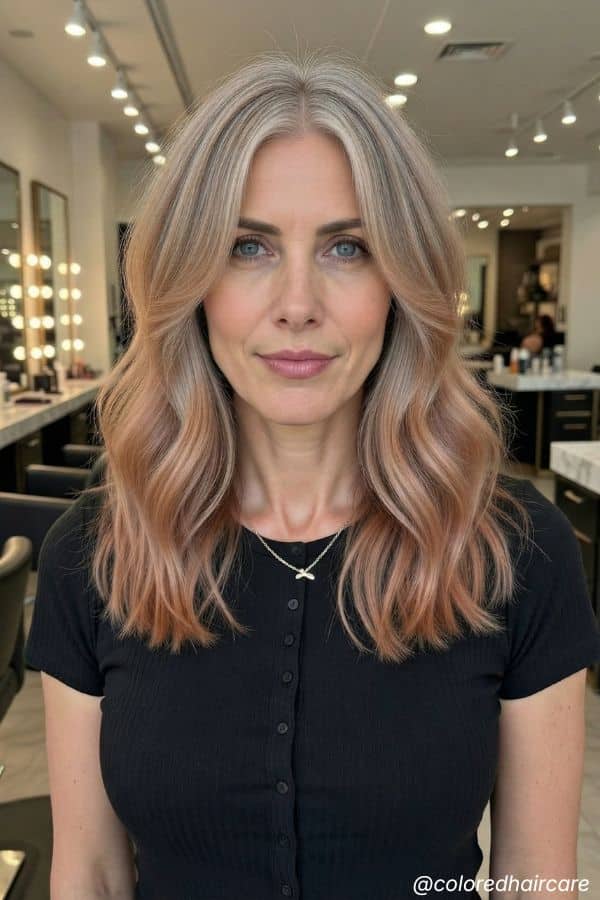
If bright copper feels too harsh against gray, shifting first into a softer rose or muted copper can act as a bridge.
A gentle color melt from rose-toned mids into silvery ends helps neutralize that jarring warm-to-cool contrast. It eases the eye from one tone to the other.
This option is especially flattering if your red has been vibrant for years and you want a graceful step down instead of a dramatic switch.
Salt and Pepper Lowlights
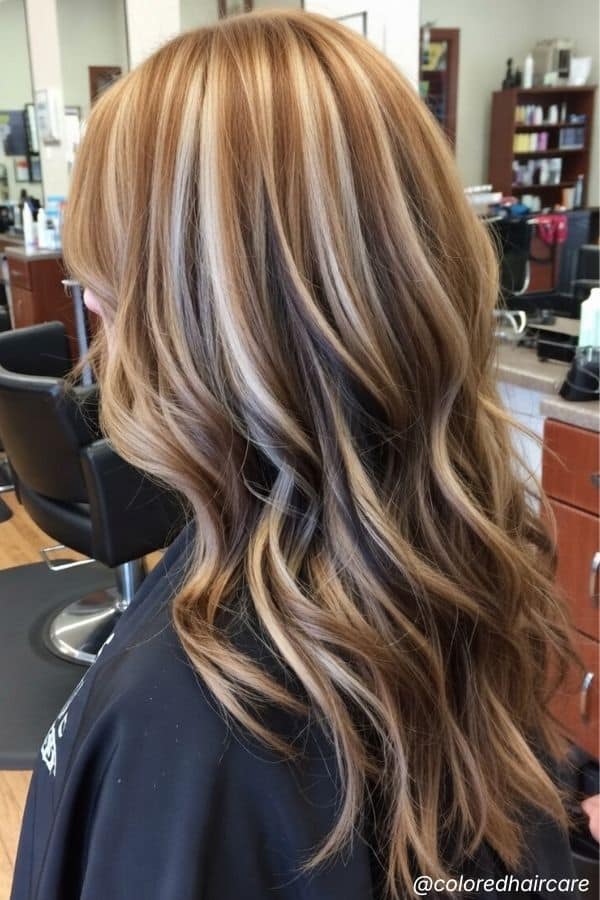
Instead of fighting the gray, lean into it.
Adding deeper, smoky lowlights among fading red creates contrast that mimics natural salt and pepper hair. It prevents the color from looking flat and helps disguise uneven fading.
This technique works beautifully when you already have a decent amount of gray coming in and want it to feel deliberate rather than patchy.
How to Prevent Red Hair from Turning Orange During the Transition

Use the Right Toning Shampoo
If your red is fading orange, blue shampoo is your friend. Blue neutralizes orange tones, helping calm that coppery cast before it gets out of control.
If you’re mostly dealing with yellow tones in your gray, a purple shampoo works better.
Celebrity color educator Guy Tang often reminds clients that toning is about balance. “You have to neutralize the unwanted warmth without overcorrecting.” Too much toning can leave hair looking flat or slightly smoky.
Start once or twice a week. Adjust as needed.
We Recommend
• Fanola No Orange Blue Shampoo – Strong pigment, excellent for stubborn copper tones
• Matrix Total Results Brass Off Blue Shampoo – A bit gentler, great for regular maintenance
• L’Oréal Paris EverPure Purple Shampoo – Sulfate-free and affordable for brightening gray
These are easy Amazon finds and work well depending on how intense the brassiness is.
Hydration Is Not Optional

Gray hair is often drier and coarser. Add fading red pigment and you get a texture shift that can exaggerate warmth and dullness.
When hair is hydrated, it reflects light better. That shine alone can make the transition look more polished.
Deep conditioning and bond-repair treatments help maintain elasticity while the color evolves.
We Recommend
• Olaplex No. 3 Hair Perfector – A cult favorite for strengthening during color transitions
• Briogeo Don’t Despair, Repair! Deep Conditioning Mask – Excellent for moisture without heaviness
• Moroccanoil Treatment Original – Adds shine and smoothness, which makes brassiness less noticeable
These help keep the hair looking healthy even in the awkward middle stage.
Avoid Over-Lifting at Home
If your hair is dyed red, it’s tempting to grab a color remover and “just fix it.” But uneven lifting often exposes even more orange underneath.
“Removing artificial red pigment often takes multiple gentle sessions,” says celebrity colorist Tracey Cunningham. “Trying to rush the process can compromise the integrity of the hair.”
Patience protects the hair. Damage makes everything look warmer and rougher.
If someone insists on at-home fading support, it should be gentle and conditioning-based, not aggressive stripping.
We Recommend
• Malibu C Color Fade Shampoo – Helps gradually soften artificial pigment
• Color Oops Extra Strength Hair Color Remover – For those who need a reset, but always follow with deep conditioning
• K18 Leave-In Molecular Repair Hair Mask – Excellent for restoring strength after any color removal process
These are not magic erasers. They are tools. And tools work best when used carefully.
Red Hair to Gray Transition FAQs
How long does it take to transition from red hair to gray?
It depends on how much artificial red pigment is built up and how fast your hair grows.
On average, hair grows about half an inch per month. If you are fully dyed red from root to tip, a complete grow-out can take 12 to 24 months without cutting.
If you’re blending with highlights or gradually lightening, the transition can feel significantly smoother within 3 to 6 months.
The key thing to remember is that fading red pigment often takes multiple sessions to soften properly. It is rarely a one-appointment shift.
Is red hair harder to grow out than blonde or brown?
Short answer. Yes.
Red dye molecules are larger and more persistent, which is why they tend to fade warm before fully lifting. That lingering warmth is what creates the orange stage people fear.
Blonde and light brown typically blend with gray more naturally because they sit closer to gray on the tonal spectrum. Red sits on the opposite end. So it requires more intentional blending.
Can you go from dyed red hair to gray in one appointment?
In most cases, no.
Celebrity colorist Tracey Cunningham has noted that red pigment often requires gradual removal to protect the integrity of the hair. Trying to force a full red-to-silver shift in one session can lead to uneven warmth or dryness.
A phased approach keeps the hair healthier and the final gray more dimensional.
What is the best shampoo for transitioning from red hair to gray?
If you’re battling orange tones, a blue shampoo is typically the most effective. If you’re brightening natural gray and fighting yellow, purple shampoo works better.
Hydrating formulas are especially important since gray hair can be naturally drier and more textured.
The Real Secret to Going Gray from Red Hair
Here’s what no one says loudly enough.
There will be an in-between phase.
It might feel awkward for a few weeks. The tone might shift before it settles. You might question it once or twice in bathroom lighting that is absolutely not your friend.
But transitioning from red hair to gray is not about erasing who you were. It is about evolving the color story.
Red is bold. Gray is powerful. And when blended thoughtfully, the shift can look intentional, dimensional, and completely modern.
If you’re making this transition because you’re tired of the upkeep, that’s valid. If you’re curious about your natural silver, that’s powerful. If you just want something softer and lower maintenance, that makes sense too.
The goal is not to avoid every awkward stage. It is to move through it with a plan.
And trust me, silver with a whisper of former warmth can be stunning.
Found your perfect shade? We’d love to see it! Tag us on Instagram @coloredhaircare or Facebook and share your hair color stories. Looking for more hair care tips? Check out How to Look After Colored Hair: 11 Expert Secrets For Long-Lasting Color.

Our Research & Review Process
To ensure our recommendations are as comprehensive and reliable as possible, we’ve undertaken an extensive research effort.
We cite scientific evidence and journals, collect real user reviews and gather impartial perspectives from hair stylists, users, and experts in the field.
Additionally, we conduct hands-on testing by using products and applying hair dyes not only on our own locks but also on real human hair extensions and hair pieces of different hair type, textures and lengths.
This rigorous approach allows us to provide you with insights into which products genuinely live up to their promises.
As always – please consult with a professional hair colorist or stylist for advice on how to color your own hair at home. It’s different for everyone!