
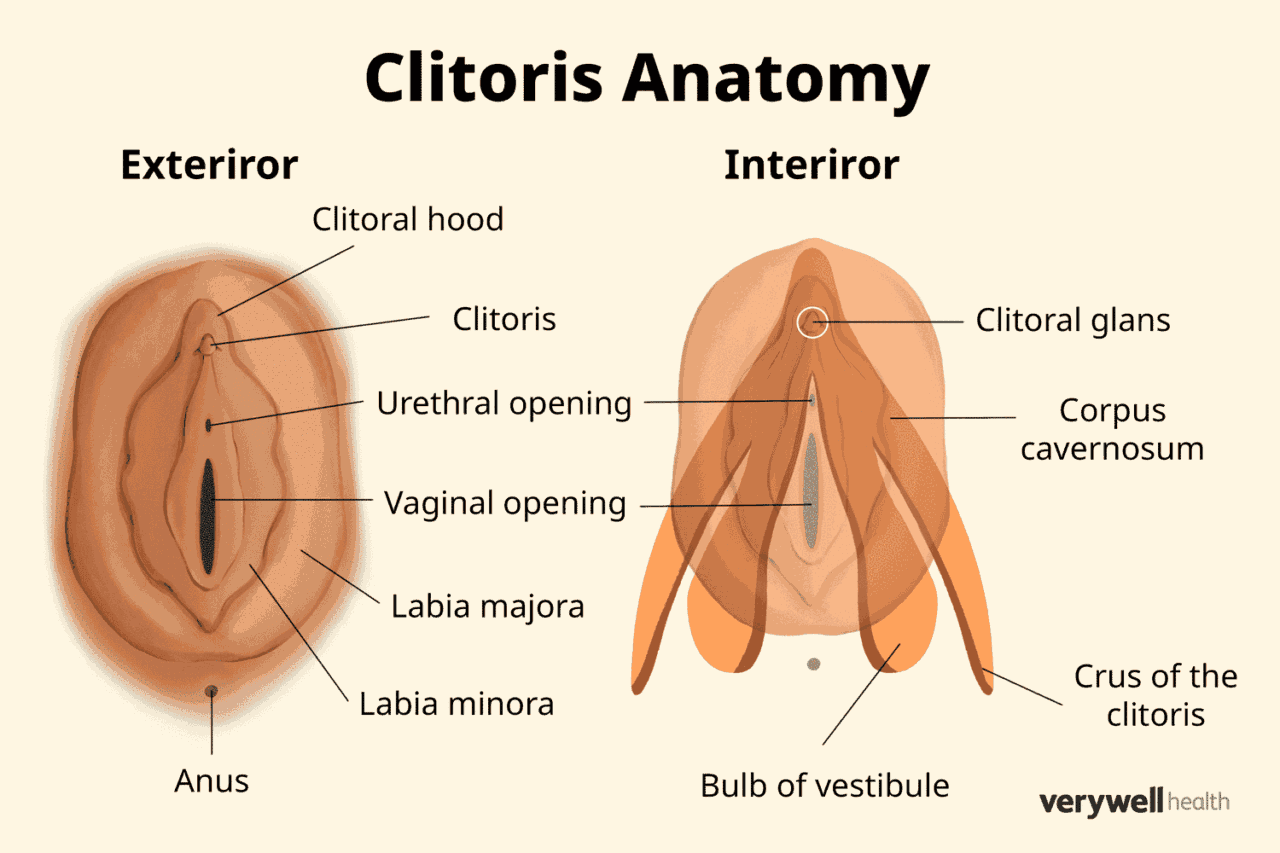


As the government wipes important sexual health information from official websites and targets research funding simply for the presence of words like “women” and “sex,” it’s more important than ever that those of us with hard-earned sex education share what we know, especially about women’s pleasure. We need what the artist Sophia Wallace calls “cliteracy” more than ever.
Women were created with amazing bodies destined for pleasure and we need to rid our minds of any suggestion that we don’t deserve to experience it to the fullest. Women possess the only bodily organ whose sole purpose is to bring pleasure. We need to be aware of the patriarchal bias against understanding our anatomy and study it ourselves to celebrate and protect this wonderful gift.
The clitoris is much more than the visible glans we call the clit. Below the glans there is a shaft, two clitoral legs and vestibular bulbs beneath the labia and around the urinary and vaginal openings. All this is impressive erectile tissue. Despite this – or perhaps because of this – our culture has built multiple barriers to learning about it. Girls may be discouraged from touching themselves and if they do not explore what gives them pleasure, they are not prepared to share their needs with a partner. A culture may suggest that women’s sexual needs are subordinate to men’s. Some religions may even teach that female sexual pleasure is a sin. Purity for girls, but not for boys is often the norm with shame continuing into married life.
There are barriers, too, to learning about it even for those whose job it is to understand and heal the body. Typically, medical school curricula ignore the clitoris and focus on the vagina, cervix and uterus. According to Dr. Rachel Rubin, a urologist and sexual health specialist, female sexual pleasure is not a high priority for any medical specialty. Gynecology focuses on fertility and preventing disease. Urologists have volumes of information about the penis, but little about the clitoris. They try to preserve nerves in the penis during prostate surgery, but since no one studied the same nerves in the clitoris, they may not try to preserve them during pelvic surgeries on women. A new study reveals how clitoral size, position, and shape may influence sexual function after surgery. Pierre Foldes, a surgeon who restores the clitoris, in an interview by Hubert Prolongeau for his book Undoing FGM: “There’s some sort of mental block. People [even gynecologists] simply can’t bring themselves to talk about the clitoris, or if they do, they blush. It has been banished… I’ve become increasingly convinced that these roads have been paved by misogyny, the intention to gain power over women.”
What would women’s lives look like if we were encouraged – by doctors, by our faith traditions, by our culture – to honor our bodies’ extraordinary capacity for pleasure and experience it to the fullest?
Correct anatomical descriptions of the clitoris have been available for two centuries but have not been included in medical textbooks because of “cultural prejudices surrounding the structure of the clitoris.” Australian researchers attempted to correct this by publishing Anatomy of the Clitoris in 2005. Additional research articles have since been published but there is little evidence that medical school curriculum has universally changed to incorporate new knowledge. The authors O’Connell, Sanjeevan and Hutson propose further research, so surgeons better understand the macroscopic and microscopic neural network to preserve clitoral sensitivity like how they preserve penile sensitivity in males. In the twenty-first century, the medical field should no longer let societal values determine what is taught about women’s anatomy.
Education about the clitoris for the public is also coming from authors outside of the United States. Two Norwegian female physicians published The Wonder Down Under that addresses anatomy, periods, sex, contraception, pregnancy, abortion, disease and other medical complications. Is it time for American women to educate themselves on their own bodies and demand equality in anatomical research?
About the Author: A. Renee Bergtrom, EdD, is a Public Voices fellow on Advancing the Rights of Women and Girls with the OpEd Project and Equality Now.
