
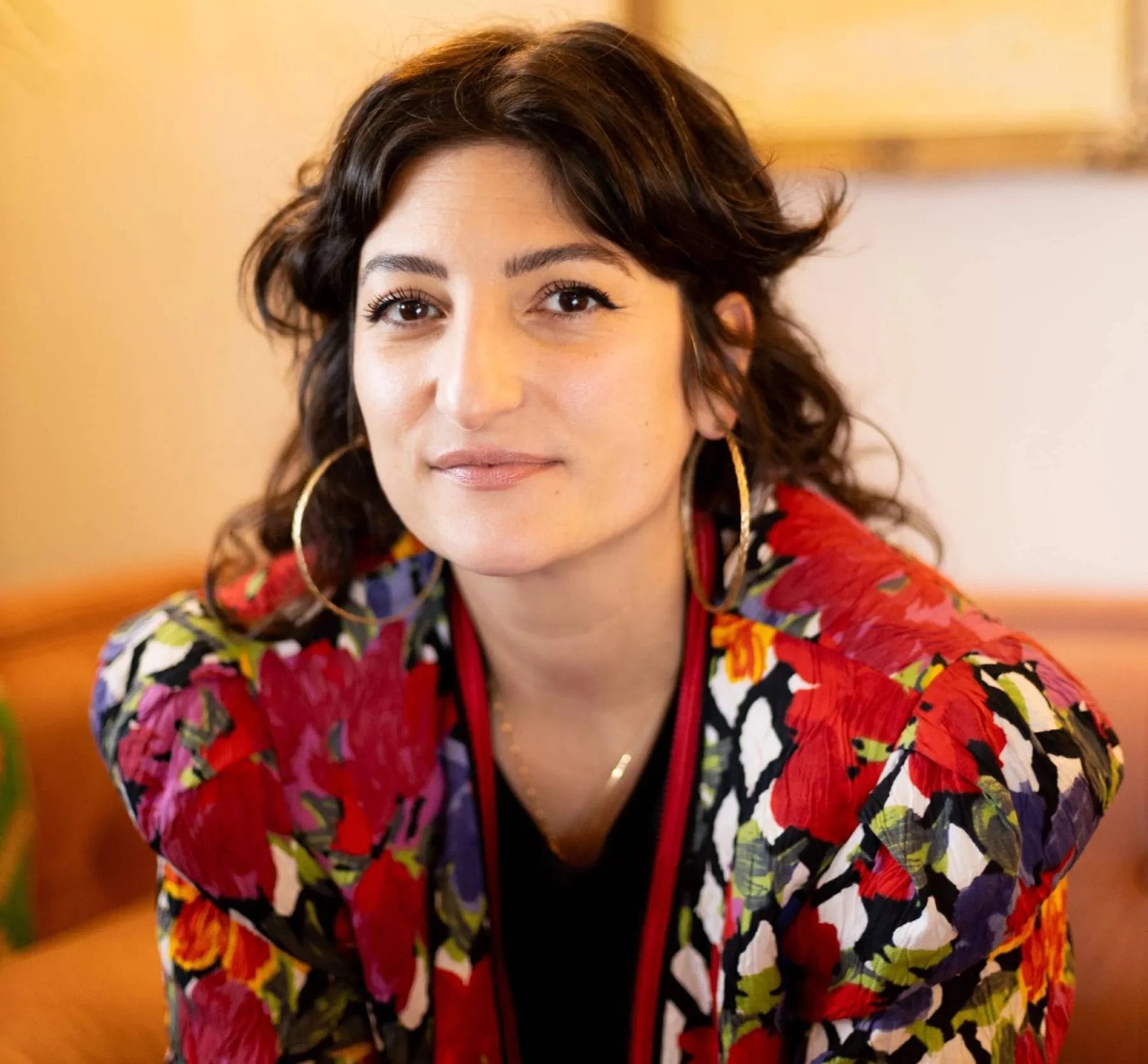

March is Endometriosis Awareness Month. This painful condition can potentially cause infertility, organ damage, and more due to the build-up of tissue in the pelvic region. Though it affects 10 percent of menstruating individuals worldwide, endometriosis typically takes years to diagnose. More alarming is that chronic pelvic conditions — like PCOS (Polycystic Ovarian Syndrome) or PMDD (Premenstrual Dysphoric Disorder) — and even perimenopause are woefully misdiagnosed. Of endometriosis, the World Health Organization says, “A careful menstrual health history including pain, heaviness of bleeding, and associated symptoms can help with diagnosis.”

Menstrual health and charting one’s flow (and much more) is the topic of “The Cycle Book: An Interactive Step-by-Step Guide to Tracking Hormones and Knowing Your Body” by sex therapist Laura Federico and midwife Morgan Miller (Tarcher, 2025). “The Cycle Book” aims to empower people by educating them on precise tracking methods that go further than simple period data in order to collect real information unique to the reader. With enough charting forms for a year, “The Cycle Book”’s premise is that becoming aware of all physical and emotional shifts throughout the month and beyond allows folks to see larger trends at play. Armed with data to bring to medical practitioners, people get better diagnoses, treatments and information for pregnancy planning.
Federico and I recently chatted over the phone. Our interview has been edited for length for clarity.
Karen Yates: This book was born out of two dramas, your drama of trying to get pregnant and co-author Morgan Miller’s drama of trying to have an abortion and not get pregnant again. Your dual experience of not being seen was one of the things that led to this book.
Laura Federico: For me, it was going into appointments with medical professionals who were there to try to help me do this thing which I could not figure out how to do on my own, which was to get pregnant again, and I was expressing this information that I knew to be true about myself as someone with PMDD, and watching it not go anywhere. It wasn’t being integrated into what my care looked like. It wasn’t being taken seriously. And I ended up in some pretty bad physical and emotional places as a result of that.
Today, years out from this experience, if one is to ask ChatGPT what the implications are for someone with PMDD undergoing fertility treatments, there is no information. No studies. In retrospect, my doctors didn’t have any information either.
My co-author, Morgan, someone with endometriosis and a history of DVT (Deep Vein Thrombosis) in her family which wasn’t properly assessed, that led to additional risks for her. She also felt pretty invisible in a lot of these spaces too.
This continues throughout your book, that there’s a chasm between the medical complex and the menstruating and menopausal patients.
It’s unbelievable the amount of information that we simply don’t have about basic conditions. When we were researching this book, we were shocked to discover just how little we know about women’s bodies, and even learned the way that research is conducted, which is primarily on male cells, male animals, male bodies. And then when introducing women’s biology into that, it’s often isolated around particular cycle phases where there’s no hormone variability.
One of the mantras in your book is “you are the expert of your body.” You aren’t just talking about tracking menstrual cycles. You’re talking about tracking everything, like physical, emotional, cognitive, spiritual, relational. As a somatic sex educator, I found this emphasis on interconnectedness very exciting. How did you come to that?
Because of the bio-essentialist focus of a lot of our reproductive education, we’ve been taught that this one part of our body, the reproductive system, is only important when we’re talking about reproduction. That has done us a massive disservice, because we have hormone receptors in every major body system. And when hormones shift, neurotransmitters like dopamine, serotonin, impact how we feel, how we identify, how we see ourselves. These things have a pretty big impact on how we engage in our lives.
We want to empower readers to have a huge, robust data set about themselves, so that when providers are pressed for time we can guide some of these interactions in a way that might get us the type of support that we’re really looking for. You’re the only one living in your body who knows how this feels. We want to give people a way to communicate that.
Can you share how when the people who were using your system found an inconsistency in their cycle, they would go back to their calendars and see that there was an event that had happened that had potentially caused that anomaly?
I’m so glad you noticed that. What we’re trying to demonstrate is that our systems are not static. They are not based just on the average of how many people in the world menstruate. This speaks to the way that we were taught about our cycles, which is that they are around 28 days.
Different things can impact our cycles, including things outside of our bodies. So, stress, how we sleep or don’t sleep, if we’re not well, what’s happening mentally for us — even things like a night out drinking with your friends.
One of the major problems with many calendar-based apps is that these are not taking into consideration any of the changes that are happening within people’s bodies or outside of their bodies. We’re just using an average here, which, we’re seeing in research, is unfortunately very ineffective at accurately predicting people’s cycle phases. It’s like 20 percent effective at accurately predicting ovulation.

For menstruating people and especially menstruating people of color, pain is minimized or dismissed by the medical profession. You talk about how with chronic pain, we need to throw out the 1-to-10 pain scale, which has patients name the number level of the pain they’re experiencing.
Yeah, we’re already talking about ways in which what we are experiencing is not being seen. On top of that, when we get to pain, there’s so many layers of historical bias, misogyny, ableism, racism — well-documented layers of judgment that are not going to provide the environment for people to get the care that they need.
What we’re encouraging people to do is articulate exactly what that pain feels like, so then they have a better chance of communicating in a way that other people are going to hear. It should not be up to people who are already suffering so much to figure out how to best describe, synthesize, and then disseminate this information. However, it is the reality of the situation.
Instead of using a very subjective scale, we want to help people, when they’re being assessed in a medical environment, to have some ways to describe what is happening for them, to give them the chance of getting an accurate diagnosis and better treatment options.
What I found notable is that the book felt so radical. It feels like some updated, groovy 1970s manual about how to look at your cervix. Did it feel radical to you when you were writing it?
That is absolutely our intention. We want people to feel like they can take some of the power back. There’s a lot of power that Tech has, and there is this feeling of, ‘Look! You have access to this tech that’s going to help you take matters back into your own hands!’
Unfortunately, not only is that designed to make money off of people who are vulnerable, but it’s not protecting our data and not giving us a lot of good information. It’s kind of predatory.
It feels radical to be like: What you can do is listen to yourself, and through a very simple pen-and-paper tool learn quite a lot about what’s going on and be ready to make good choices and fight back.
You and Morgan lead workshops for health care providers on hormone literacy because clients can come in with menstrual disorders, perimenopause, postpartum changes, gender-affirming hormone therapy, where hormones play a significant role in symptoms, but the provider is not adequately equipped to respond.
I know from our last conversation* that you’ve been in therapy before, and let me ask you: the last therapist that you had when you were having intake conversations, did they ask you when you first got your period or what your experience was taking different contraceptive options? You’re literally laughing.
Yup.
Or once you get into my field, sex therapists, we are not — as part of a general intake — asking our clients what it was like when you first got your period? Or what’s that been like throughout your lifetime? This is critical information, especially if we are talking about sex and relationships, pleasure, arousal, desire — things that are very deeply impacted by hormonal shifts as well as medications that many, many people take in relation to their mental health.
The workshop that Morgan and I offer to providers is not only a framework to integrate this information but also highlights specific conditions. For example, patients are coming into providers’ offices and saying things like, ‘I’m having panic attacks. I am anxious.’ If a mental health provider, without knowing the hormonal implications of perimenopause, is not assessing for that and then referring out appropriately, we have someone who’s getting treatment for generalized anxiety disorder or panic disorder, instead of getting treatment for perimenopause.
With hormonal birth control, we could have someone in sex therapy doing mindfulness-based exercises for pain with penetration, when actually, if that person was assessed, they could maybe have just changed their birth control, and the pain would go away entirely. Clinicians just need to be given a bit more information.
We’re still so far from where we need to be with this. So that was really the hope, is that ‘The Cycle Book’ would fill in some of these big, big gaps we all have in understanding our bodies.
*I interviewed Federico for the Wild & Sublime podcast episode “Sex, Relationships, and OCD” in late 2025. Contact Federico and Morgan for a clinician’s workshop.
