


Freezing childcare and social-services funding exposes how the administration’s “pro-family” agenda relies on pushing women out of the workforce and back into unpaid caregiving.
The current federal administration is very pro-family—they tell us that all the time. One of JD Vance’s first public appearances as vice president was his speech at the antiabortion March for Life rally in January 2025, where he called for more births in the U.S. and framed his agenda as both “pro-life” and “pro-family.” Trump reaffirmed that position in March, where he reiterated that this was a pro-family administration.
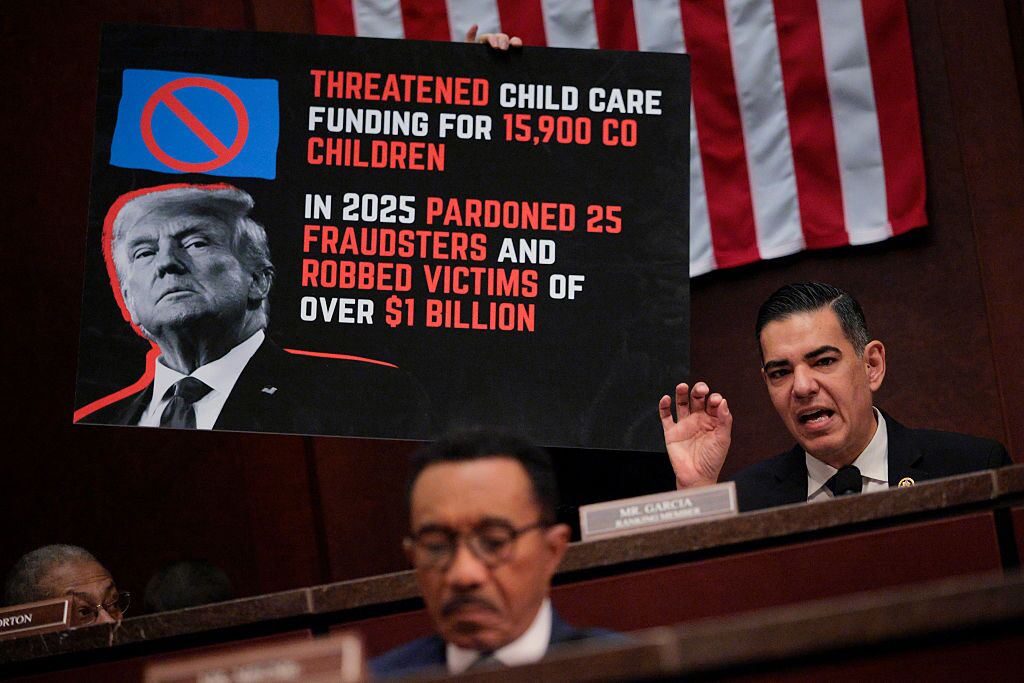
But at the start of this year, on Jan. 6, 2026, alleging concerns about fraud in state-run social services programs (even though the only concerns that have been raised—not proven—are in Minnesota), the Trump-Vance administration’s U.S. Department of Health and Human Services suspended three programs that provide support to children—not only in Minnesota, but also in California, Colorado, New York and Illinois. Those states, all led by Democrats, will lose access to billions in funding through the Temporary Assistance for Needy Families (TANF) program, the Child Care and Development Fund, and the Social Services Block Grant program. To be clear, these funds are the backbone of services-provision for families living in poverty in most communities, Republicans and Democrats alike.
This announcement comes days after the administration moved to eliminate a rule that had capped childcare copayments for low‑income families at 7 percent of their income.
It also comes after last year’s efforts to eliminate support for Head Start, quality and affordable education and other services for young children living in poverty.
…. All this from the pro-family party.

TANF is the best known of the menu of social services support, but the Child Care and Development Fund (CCDF) explicitly provides financial relief for families needing childcare. Childcare is a key support for working parents. And while 2025 was the weakest year for job growth since 2003, key everyday costs like food, rent and energy are still rising. Even worse, the cost of childcare remains astronomical in many communities. For single parents it can represent up to 35 percent of what they earn, causing some people with children to quit jobs because they literally cannot afford to work. Cuts, or freezes, on the CCDF will make childcare costs shoot up even higher.
So how is eliminating government funding for childcare pro-family you ask? It depends what kind of family you want to support. Because if the cost of childcare rises, one of two things has to happen: Either a parent needs to get a better paying job—quickly—or quit their job to stay home with the kids.
And given that women on average make about 76 cents per dollar paid to men (for Black women, it’s 65 cents; for Latinas, it’s 58 cents), that’s a lot of women who are going to be staying home.
When childcare is disrupted, full-time employees can miss significant amounts of work. Those work interruptions fall disproportionately on women, as well as Black and multiracial parents.
Women make up 82 percent of those who miss work for childcare reasons, and bBack and multiracial parents have had to quit a job or turn down a job at twice the rate of white parents.
Many of the families that benefit from childcare services are those with only one parent, as well as same-sex parents. The impact on them will be different, but just as harmful.
Either way, we’re pushing people out of the workforce and into the home. And disproportionately, it’s women being pushed.
It is hard not to see that such as result is unlikely to worry the current administration much. On May 3, 2021, JD Vance co-authored an opinion piece for The Wall Street Journal declaring, “Young children are clearly happier and healthier when they spend the day at home with a parent.”
The Heritage Foundation clearly agrees, because their hot-off-the-presses report, “Saving America by Saving the Family,” restates their belief that children do best when raised by the married couple that created them—a premise it then uses to advance policies including tax incentives for larger families and shifts in childcare funding that would steer public support away from external childcare programs and toward parental, at-home care.
And who do we think is expected to choose home over career? As Acting Assistant Secretary Andrew Gradison of the Administration for Children and Families said recently, “In a healthy America, fathers lead, protect and provide for their families.”
