


The first time I spotted silver in my bangs, I did what any reasonable person would do: leaned way too close to the mirror, squinted like I was trying to read fine print, and wondered if it was glitter from last weekend. Spoiler: it wasn’t.
After a brief moment of panic, I texted my stylist. Her response changed everything: “You should totally reverse gray it.”
Wait—reverse what now?
What Is “Reverse Gray Hair,” Anyway?
Reverse gray isn’t about turning back time or pretending your grays don’t exist. It’s about making them the main character.
Reverse gray is a coloring technique where stylists intentionally add gray or silver tones throughout your hair, blending them seamlessly with your natural color. Think cool-toned highlights, soft lowlights, and pearly glosses that make your silver strands look like they were meant to be there all along—because they were.
Instead of fighting your grays, you’re building your entire look around them. And honestly? It’s genius.
How It Actually Works (and Why Everyone’s Obsessed)
The beauty of reverse gray is that there’s no one-size-fits-all formula. Your stylist customizes the whole thing based on your natural color, texture, and how much gray you’re working with.
Depending on what you’ve got going on, they might:
- Lift your base color and tone it with silvery ash or pearl shades
- Add silver balayage for that diffused, dimensional effect
- Use cool-toned glosses or lowlights to blend your roots
- Soften the harsh line between gray and non-gray hair for a natural grow-out
As hair artist Tom Smith explains, there’s a whole movement toward cooler tones this year. Greige—a blend of gray and beige—has become especially popular, as it “honors natural silver while brightening and warming the complexion.”
This definitely isn’t your grandmother’s silver rinse. When done right, it’s modern, multidimensional, and downright stunning.
Who Should Try Reverse Gray Hair?
If you’ve got grays and you’re ready to own them, you’re already halfway there. But here’s the breakdown:
Best for:
- Cool undertones—silver really pops on pink or neutral skin
- Natural brunettes with grays (hello, smoky goddess energy)
- Wavy or curly hair where texture adds even more dimension
- Anyone ready to embrace their silver, regardless of age
Maybe skip it if:
- You hate ashy tones and your skin runs warm (though your stylist can work around this with champagne or beige hues)
- You want absolutely zero maintenance
- You’ve got very dark or black hair—lightening can be trickier, though definitely not impossible with the right colorist
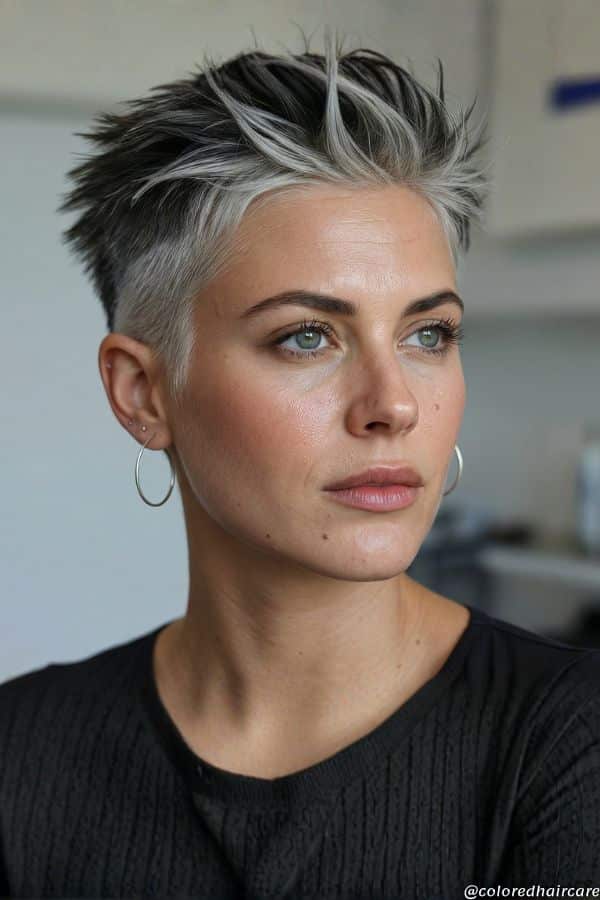
Reverse Gray: Pros and Cons
Pros:
- Embraces your grays instead of constantly covering them up
- Soft, seamless grow-out with no harsh root line
- Looks effortlessly chic and editorial
- Less frequent touch-ups than traditional all-over dye
Cons:
- Can get pricey, especially if you’re starting with dark hair
- Needs toning every 6–8 weeks to keep those silver tones fresh
- May clash with warm complexions if not adjusted properly
- Not really a DIY situation—trust me on this one
Wait, Is This Just…Going Gray Naturally?
Nope! Not even close.
Going gray naturally means letting your roots grow out and dealing with that harsh demarcation line between your dyed hair and your natural gray.
Reverse gray is an intentional color transformation where your stylist blends, adds dimension, and creates a cohesive look. As celebrity colorist Jack Martin—who’s become famous for his gray transformations—explains, the key is studying the client’s natural gray pattern and recreating that throughout the hair for a seamless result.
It’s the difference between “I gave up” and “This is a whole look.”
Can You DIY This at Home?
Probably not.
Getting that soft, seamless blend requires a professional who knows how to tone without making things too ashy, how to lift your base color evenly, and how to blend different textures.
As Sibi Bolan, senior colorist at George Northwood’s Holland Park salon, notes about working with gray: “It’s about finding that perfect neutral that enhances your skin—it should feel like it belongs to you.”
That said, you can maintain the look between salon visits. At-home glosses like dpHue Gloss+ or Kristin Ess Signature Gloss can give your grays a subtle silver boost without any drama.
Expect to invest around $150–$300+ for the initial service, depending on your hair length, current color, and where you live.
Should You Actually Try It?
If you’re curious about embracing your silver but want something polished and customized rather than just letting roots grow out—this trend is absolutely worth exploring.
Sarah Thompson, a colorist at Silverfox Salon in New York, puts it perfectly: “Gray hair is not just accepted; it’s celebrated. We’re seeing a surge in clients wanting to enhance their natural gray rather than cover it up.”
Reverse gray hair isn’t about hiding anything. It’s about taking something natural and making it next-level. It says, “Yeah, I have grays. And I made them fabulous.”
Not sure if it’s right for you? Book a consultation. A good stylist will help you figure out if the color, tone, and maintenance fit your lifestyle.
Because gray isn’t just a trend anymore. It’s a statement.
Quick FAQs
Q: Is reverse gray hair permanent?
Not totally. The color fades gradually over time and needs toning every couple of months to keep those cool silver tones from turning brassy.
Q: Can you try this even if you don’t have grays yet?
Absolutely! Plenty of people add silver tones purely for the aesthetic—it’s bold, icy, and very much in right now.
Q: How do I keep silver tones from turning yellow?
Use a sulfate-free purple shampoo regularly, get toned every 6-8 weeks, and always use heat protectant before styling tools.
Found your perfect shade? We’d love to see it! Tag us on Instagram @coloredhaircare or Facebook and share your hair color stories. Looking for more hair care tips? Check out How to Look After Colored Hair: 11 Expert Secrets For Long-Lasting Color.

Our Research & Review Process
To ensure our recommendations are as comprehensive and reliable as possible, we’ve undertaken an extensive research effort.
We cite scientific evidence and journals, collect real user reviews and gather impartial perspectives from hair stylists, users, and experts in the field.
Additionally, we conduct hands-on testing by using products and applying hair dyes not only on our own locks but also on real human hair extensions and hair pieces of different hair type, textures and lengths.
This rigorous approach allows us to provide you with insights into which products genuinely live up to their promises.
As always – please consult with a professional hair colorist or stylist for advice on how to color your own hair at home. It’s different for everyone!

