

A woman with graying hair silently enters her kitchen. She instinctively makes two cups of tea, then counts ten cloves and grinds them. At Sulagna Chatterjee Olach (Identity), the woman only remembers that her husband is dead when she is about to pour the tea.
This moment establishes almost everything the 21-minute short film wants to say about grief and the identities that women build in relation to other people. The woman’s house is also full of evidence of a life lived in relation to others: wedding photos, memories of raising children and the many traces of a socially prescribed family life. But Mansi Joshi, played by veteran actress Suhasini Mulay, suddenly finds herself alone in this house.
A scene from Olakh. Photo credit: Special agreement
Olakh, which had its world premiere at the Indian Film Festival of Melbourne on August 20, follows Mansi, a recently widowed woman, and Divya Paswan (Nikita Grover), her maid, over the course of an afternoon in Mumbai. The women occupy very different worlds. Mansi is older and middle class; Divya is younger, works at home and comes from a different caste and class. But Chatterjee is interested in the intimacy of the two women, who discover the same wound in each other: they have changed so much that they can no longer recognize themselves.
Food then becomes the central metaphor of the film. When Divya discusses a recent breakup, she initially insists that her life isn’t over yet. She has to convince herself of this. But Mansi sees the pain behind her rejection and asks her to sit and have tea with her instead of rushing with her work.
When food becomes your identity
Everyday domestic life gradually gives way to emotional intimacy. As Divya takes clothes off the line, dusts pillows and scurries around the house, Mansi tries to reach her with several knowing questions. A conversation about why Divya wants to look like a “model” finally helps viewers gain insight into the younger woman’s relationship with her body and how she has often been misunderstood.
A scene from Olakh. Photo credit: Special agreement
Finally, the two women go to the kitchen, where Divya reveals that she stopped eating meat for a man who still considered her undesirable because of her weight. Soon caste comes into conversation. Divya has effectively distanced herself from her caste and forgotten how her mother cooked.
In Olakh, as in the rest of the world, Food becomes inheritanceand a record of who a woman was before she began to change to become acceptable to someone else.
Mansi also has her own version of this erasure. She opens a dusty suitcase full of old memories, including a notebook with recipes. She puts on her reading glasses and hurriedly writes down the ingredients that Divya needs to buy. And in the kitchen, the two women continue to remember themselves.
As they cook, they admit that they both missed meat. They remember their mothers and give them names. They joke about how much chili powder to use and what effect all of those spices might have on their stomachs, but keep adding it anyway. Olakh knows that reclamation can sometimes look as simple as dumping a handful of sliced green chilies into the kadhai, even though he knows you’ll regret it the next morning.
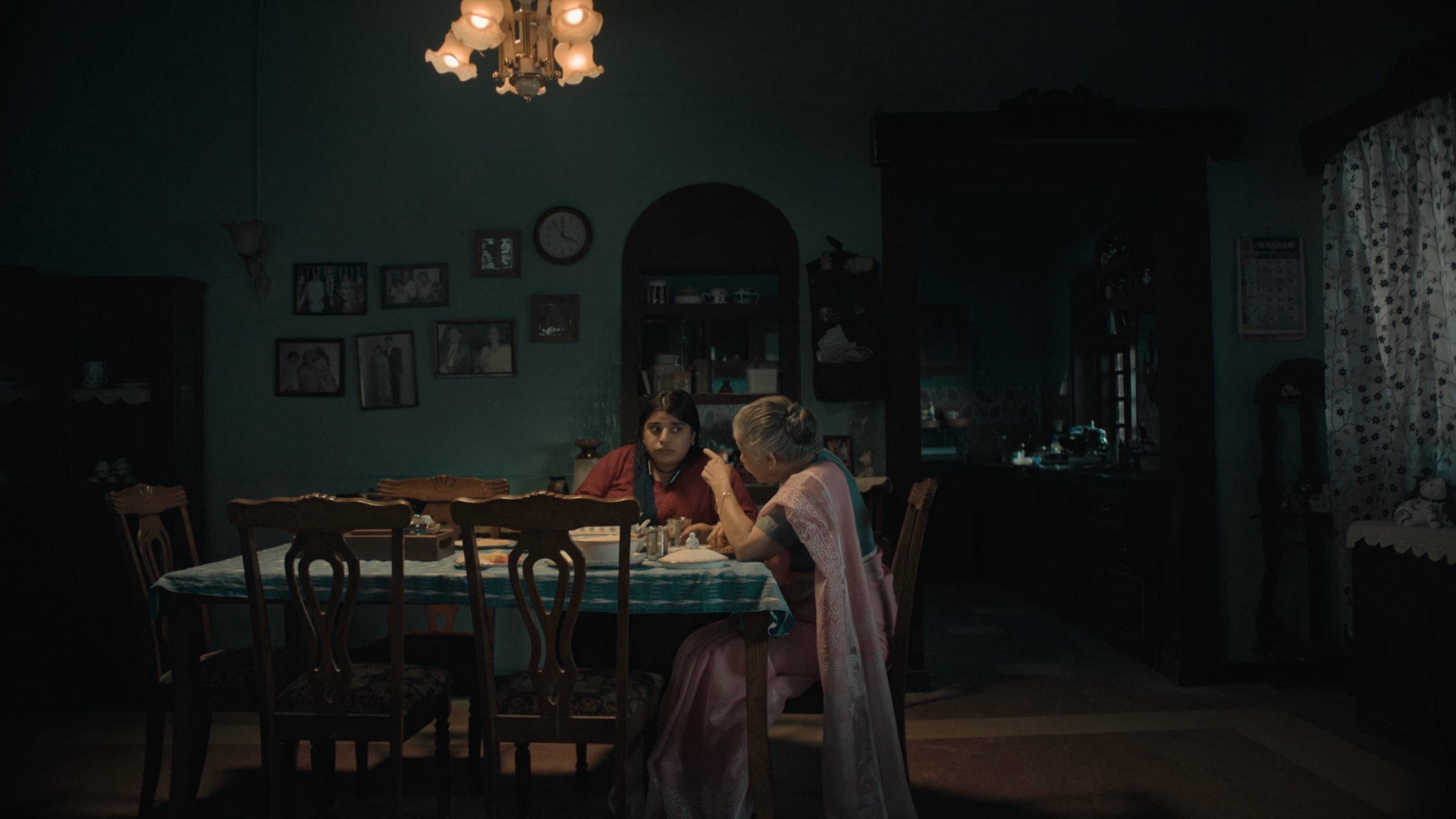
The film’s politics become more nuanced as the women make their way to the dinner table. Divya has already placed a steel plate for herself and a glass plate for Mansi. But today Mansi stops them and asks Divya to bring another set of plates so that they can eat the same kind.
A common plate, an unequal world
For the most part, Olakh avoids simplistic gestures of equality because the difference between women never disappears. Divya is still Mansi’s housemaid. Their caste and class positions remain unequal. What changes, however, is the way they look at each other. Eating together does not eliminate structural problems, but rather creates a temporary space in which the two women’s hunger must be placed above that of the others.
A scene from Olakh. Photo credit: Special agreement
There’s also something wonderfully mischievous about the way the film turns eating into an act of rebellion. As the women taste, laugh and sweat from the heat of the spices, the joy of eating is obvious and physical.
Then Divya picks up the phone. “Aapka woh mutton wala recipe aap bhejo na ek baar (Please send me your mutton recipe),” she asks her mother shyly and lovingly. She wants to make her mother’s recipe so that her employer and now confidante can try the food from her childhood.
A scene from Olakh. Photo credit: Special agreement
The film’s short running time inevitably means that some of these ideas are not fully explored. Caste and class, in particular, could bear much longer scrutiny than the film allows. Divya’s relationship with food and her mother’s cooking is certainly emotionally readable, but this thread is not fully explored.
But the size of the film is also part of its charm. Instead of trying to explain every form of oppression women face, Chatterjee focuses on what can happen in an afternoon.
Reclaim what was given away
The resulting intimacy is reinforced by Mulay’s performance. The irony of portraying her as a woman whose life is deeply shaped by marriage and widowhood is not lost on viewers. Mulay himself married for the first time at the age of 60. However, Mansi is not Mulay. Her character confronts who she is now that her role as a wife is over.
A scene from Olakh. Photo credit: Special agreement
Chatterjee, meanwhile, says that growing up in Calcutta and later Mumbai, she often saw women negotiating their bodies, desires, ambitions and relationships over food.
70-80 percent of Olakh’s production costs were raised through crowdfunding over a four-month period from more than 220 backers. It was literally made by people who chose to believe in it. And perhaps there is something fitting in that: identities that have been collectively diminished can also be collectively reclaimed.
A scene from Olakh. Photo credit: Special agreement
The central chicken dish, cheekily called “Natkhat” (mischievous), sets the mood in the kitchen. At the end, at the table, Mansi closes her eyes as she tastes the food and memories come flooding back in all their fullness. Tomorrow, they promise each other, they will cook mutton while they think about what comes next.
And for once, these decisions are entirely theirs.
Sohini (she/her) hails from Kolkata and loves to research and write about everything related to society, culture and gender. With a background in journalism and English literature, they have finally managed to make heartfelt conversations a big part of their lives outside of the usual boxes.
