

Lagenaria Vulgaris Ser / Lagenaria Siceraria (Molina) Standl. / Bottle Gourd / White Gourd / Alabu / Louki / Katutumbi

Abstract
Lagenaria siceraria (Molina) Standl., commonly known as bottle gourd and belonging to the family Cucurbitaceae, is a widely cultivated climbing perennial vegetable crop grown throughout tropical and subtropical regions, including India, Japan, and Thailand. It is highly valued both as a nutritious food and a medicinal plant. The young, tender fruits are commonly consumed as a vegetable due to their soft, spongy texture and rich nutritional composition, which contains essential nutrients required for maintaining human health. In traditional systems of medicine, particularly Ayurveda, bottle gourd has been extensively used for its therapeutic properties. It is regarded as a cardioprotective and cardiotonic agent and is also employed as a general tonic, diuretic, and aphrodisiac. Various parts of the plant are utilised in folk medicine for promoting overall well-being and supporting cardiovascular and urinary health. Due to its nutritional value and diverse pharmacological activities, Lagenaria siceraria continues to be an important vegetable and medicinal plant with significant health-promoting potential.
Classical References
- Bhavprakash Nighantu Shaaka varga
- Raj Nighantu Guduchyadi, Mulkadi varga
Scientific Classification
- Kingdom: Plantae
- Division: Magnoliophyta
- Class: Magnoliopsida
- Order: Cucurbitales
- Family: Cucurbitaceae
- Genus: Lagenaria
- Species: Lagenaria siceraria (Molina) Standl.
Synonyms
- Pinda Phala – The fruit is spherical or round in shape.
- Tikta Beeja – The seeds possess a bitter taste.
- Tiktalabu – Refers to the bitter-tasting variety of bottle gourd.
- Mahaphala – The fruit grows to a large size.
- Tiktabija – Another name indicating that the seeds are bitter in taste.
- Katutumbi – Due to its bitter nature, it helps alleviate Kapha and Pitta doshas.
- Ikshvaku – A classical Sanskrit name for bottle gourd mentioned in Ayurvedic texts.
- Tumbi – Refers to the gourd-shaped fruit, often used as a general name for bottle gourd.
- Lamba – Denotes the elongated or long shape of the fruit.
- Rajaputri – Literally means “daughter of a king,” indicating its esteemed medicinal and nutritional value.
- Tumbika – A diminutive form of Tumbi, referring to a small gourd-like fruit.
Vernacular Names
- Sanskrit: Alaabu, Alobu, Tumbi, Ishavaaku, Katutumbi, Tiktaalaabu
- English: Bottle Gourd, Long Melon, Calabash, White-flowered Gourd, Bitter Calabash Gourd
- Hindi: Lauki, Ghiya, Titalouki, Kadavi Lauki
- Bengali: Loki, Laus, Tumbi, Titlaou, Ladu
- Gujarati: Dudi, Dudhi, Tumbadi, Kadavi Tumbadi, Tumada
- Kannada: Sorekai, Sorekayi, Isugumbala, Tumbi
- Telugu: Sorakaya, Sorakkaya, Sorekaya, Anapakaya
- Tamil: Sorakkai, Suraikkai, Surai, Shorakkai
- Malayalam: Chorakka, Choraikka, Churan, Chora, Tumburini, Tumburu, Piccura
- Marathi: Dudhi, Phopla
- Punjabi: Tumbi, Dani
- Manipuri: Khongdrum
- Urdu: Lauki, Ghiya, Kadu
- Odia: Tumba, Lau
- Assamese: Lau, Jati Lau
Habitat
Lagenaria siceraria (Molina) Standl., commonly known as bottle gourd, is a climbing perennial plant belonging to the family Cucurbitaceae. It is widely cultivated throughout tropical and subtropical regions of the world, including India, Thailand, Egypt, Japan, and several other countries. The plant thrives in warm and humid climates and can be grown almost year-round, particularly in frost-free areas. It adapts well to a variety of soil types but grows best in fertile, well-manured loamy soils with adequate moisture. In dry regions, successful cultivation requires regular irrigation. Bottle gourd is extensively cultivated throughout India, and its fruits are available in markets throughout the year. It has also been reported to grow wild in parts of India, Ethiopia, and the Moluccas. The coastal regions of Malabar (present-day Kerala) and the humid forests of Dehradun in northern India are considered important centres of origin and diversity. Archaeological and fossil evidence indicate that the plant was cultivated in India before 2000 BC, suggesting its long history of domestication and widespread distribution across tropical regions of the world.
Morphology
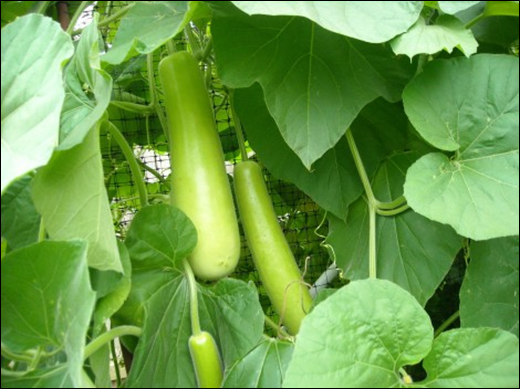
Lagenaria siceraria is a vigorous climbing or trailing plant with stems that can grow up to 5 meters in length. The stems are angular, ribbed, tough, brittle, and softly hairy, and they do not exude sap when cut. The leaves are borne on long petioles and are broad, kidney- or heart-shaped, usually with 3–7 shallow lobes, rounded margins, and a soft, hairy surface. The leaves are non-aromatic when crushed, and the plant bears bifurcated tendrils that aid in climbing. The fruits exhibit considerable variation in shape and size, commonly appearing bottle-, club-, or mace-shaped, and may reach 25–60 cm in length at maturity. They possess a smooth, light-green outer surface with a hard shell-like epicarp and contain numerous seeds embedded in a spongy pulp. The seeds are flattened, compressed, and characterised by two ridges on their flat surfaces, which may appear uneven or wrinkled in certain varieties.
Varieties
- Alaabu (Tumbi): A sweet-tasting, heavy variety of bottle gourd that balances Pitta and Kapha, nourishes body tissues, and supports heart health.
- Katutumbi (Kadvi Tumbi): A bitter variety of bottle gourd with cooling potency and pungent post-digestive effect, traditionally used to pacify Kapha and Pitta and promote cardiac health.
Classical Categorisation
- According to Charaka Samhita – Vamana (emetic drugs) and Phalini Dravyas (fruit-bearing plants)
- According to Sushruta Samhita – Urdhwabhaga Hara Dravyas (drugs that eliminate toxins upwards, i.e., emetics)
- According to Bhavaprakasha Nighantu – Shaka Varga
- According to Dhanvantari Nighantu – Guduchyadi Varga
- According to Kaiyadeva Nighantu – Aushadhi Varga
- According to Raj Nighantu – Guduchyadi, Mulkadi Varga
Ancient Verse
अलाबुः कथिता तुम्बी द्विधा दीर्घा च वर्तुला ॥
मिष्टतुम्बीफलं हृद्यं पित्तश्लेष्मापहं गुरु ।
वृष्यं रुचिकरं प्रोक्तं धातु पुष्टिविवर्धनम् ॥ (Bhavprakash Nighantu Shaka varga 57- 58)
According to the text, Alabu (commonly known as Tumbi or Lauki) is classified into two distinct morphological types based on its shape: long and round. The properties of the sweet variety of bottle gourd (Mishta Tumbi) are deeply beneficial for health. It is described as Hridya (heart-friendly/cardiotonic) and Guru (heavy to digest). Therapeutically, it is highly effective in balancing and mitigating aggravated Pitta and Kapha doshas (Pitta-Shleshma-apaham). Furthermore, it acts as a potent aphrodisiac (Vrishya), improves appetite and taste (Ruchikaram), and fundamentally nourishes and strengthens the bodily tissues (Dhatu Pushti-vivardhanam). The cultivated sweet variety is primarily used as a daily dietary vegetable to promote vitality.
इक्ष्वाकुः कटुतुम्बी स्यात्सा तुम्बी च महाफला ।
कटुतुम्बी हिमा हृद्या पित्तकासविषापहा ।
तिक्ता कटुर्विपाके च वातपित्तज्वरान्तकृत् ॥
(Bhavprakash Nighantu Shaka varga 59)
The bitter variant of the bottle gourd is referred to by classical synonyms such as Ikshvaku, Katu Tumbi, Tumbi, and Mahaphala. Unlike its sweet counterpart, this wild variety is distinctly bitter and is reserved strictly for medicinal and therapeutic applications rather than culinary use. In terms of Ayurvedic pharmacology, Katu Tumbi possesses a cooling potency (Hima) and, interestingly, is also described as beneficial for the heart (Hridya) when administered appropriately. It is bitter in taste (Tikta) and undergoes a pungent post-digestive transformation (Katu Vipaka). It is exceptionally potent in destroying toxins (Visha-paha), relieving coughs associated with Pitta imbalance (Pitta-kasa), and pacifying fevers arising from Vata and Pitta doshas (Vata-Pitta-Jvarantakrit). It is an essential herb in Ayurvedic purification therapies due to its strong systemic cleansing action.
कटुतुम्बी कटुफला तुम्बिनी कटुतुम्बिनी ।
बृहत्फला राजपुत्री तिक्तबीजा च तुम्बिका ॥
कटुतुम्बी कटुस्तीक्ष्णा वान्तकृत् श्वासवातजित् ।
कासघ्नी शोधिनी शोफ-व्रणशूलविषापहा ॥ (Raj Nighantu Guduchyadi varga 56-57)
Katutumbi (Lagenaria siceraria / Lagenaria vulgaris Ser.) is the bitter variety of bottle gourd and is known by several Sanskrit synonyms such as Katuphala, Tumbini, Katutumbini, Brihatphala, Rajputri, Tiktabija, and Tumbika, which describe its bitter taste, bitter seeds, and large-sized fruits. In Ayurveda, it is characterised by Katu (pungent) rasa and Tikshna (sharp and penetrating) properties, making it a valuable herb for Vamana Karma or therapeutic emesis. It is traditionally used in the management of asthma, dyspnea, chronic cough, and Vata-related respiratory disorders while also helping to eliminate excess Kapha. The herb possesses strong Shodhana (purificatory and detoxifying) actions and is beneficial in reducing oedema, healing wounds and ulcers, relieving abdominal colic, and neutralising toxins and poisons. Owing to its wide range of therapeutic properties, Katutumbi holds an important place in Ayurvedic medicine as a cleansing, detoxifying, and respiratory-supportive herb.
गोरक्षतुम्बी गोरक्षी नवालाम्बुर्घटाह्वया ।
कुम्भालाम्बुर्घटआलाबु, कुम्भतुम्बी च सद्भया ॥
कुम्भतुम्बी सुमधुरा शिशिरा पित्तहारिणी ।
गुरुः सन्तर्पणी रुच्या वीर्यपुष्टिबलप्रदा ॥
(Raj Nighantu Mulkadi varga 162-163)
The text introduces the sweet, pot-shaped bottle gourd variety known as Kumbha Tumbi, detailing its classical synonyms such as Goraksatumbi, Gorakshi, Navalambu, Ghatahvaya, Kumbhalambu, Ghataalabu, and Sadbhaya, which highlight its unique, rounded, pitcher-like morphology. Pharmacologically, this variety is characterised as exceptionally sweet (Sumadhura), naturally cooling (Sisira) in its metabolic potency, and highly effective at eliminating aggravated bile or Pitta dosha (Pittaharini). Although it is relatively heavy to digest (Guruh), it provides profound cellular nourishment (Santarpani) and significantly enhances the sense of taste and appetite (Ruchya). Ultimately, it acts as a restorative tonic that maximises reproductive tissue vitality (Virya), deeply nourishes the primary body tissues (Pushti), and substantially increases overall physical strength and immunity (Balaprada).
कटुकालाम्बुनी तुम्बी लम्बा पिण्डफला च सा ।
इक्ष्वाकुः क्षत्रियवरा तिक्तबीजा महाफला ॥
कासश्वासच्छर्दिहरो विषार्ते कफकर्शिते ।
इक्ष्वाकुर्वमने शस्तः प्रताम्यति च मानवे ॥
कटुतुम्बी कटुस्तिक्ता वातकृच्छ्वासकासजित् ।
कफघ्नी शोधिनी शोफव्रणशूलविषापहा ॥ (Dhanwantari Nighantu Guduchyadi varga 167-169)
Katutumbi (Lagenaria siceraria / Lagenaria vulgaris Ser.), the bitter variety of bottle gourd, is a well-known medicinal plant in Ayurveda. It is referred to by several classical synonyms, including Tumbi, Lamba, Pindaphala, Ikshvaku, Kshatriyavara, Tiktabija, and Mahaphala. Traditionally, it is valued for its effectiveness in managing chronic respiratory disorders such as cough (Kasa), asthma and dyspnea (Shwasa), and persistent vomiting (Chardi). It is also considered beneficial in conditions associated with poisoning (Visha) and in individuals weakened by excessive Kapha accumulation. Katutumbi is regarded as one of the best herbs for Vamana Karma (therapeutic emesis), helping to safely induce vomiting for the elimination of aggravated Kapha. It is especially recommended in conditions involving fainting, loss of consciousness, and certain Kapha-related disorders. According to Ayurvedic principles, it possesses pungent (Katu) and bitter (Tikta) tastes and exhibits drying, light, and sharp qualities. While it may increase Vata dosha, it is highly effective in reducing and eliminating excess Kapha. The herb is also recognised for its purifying and detoxifying actions (Shodhana). It is traditionally used to help reduce swelling (Shotha), support the healing of wounds and ulcers (Vrana), relieve abdominal pain and colic (Shula), and counteract the effects of various toxins. In addition, Katutumbi has mild laxative properties, making it useful in cleansing and detoxification therapies aimed at promoting overall health and well-being.
Ayurvedic Properties
Ayurvedic Properties Of Alaabu
- Physical property (Guna) – Heavy (Guru)
- Potency (Veerya )- Cold Potency (Usna)
- Effect on tridosha– Balance Pitta and Kapha dosha
Ayurvedic Properties Of Katutumbi
- Taste (Rasa)– Bitter (Tikta), Pungent (Katu)
- Physical property (Guna) – Light (Laghu)
- Potency (Veerya )- Cold Potency (Cold)
- Post-digestion effect (Vipaka)– Katu (Pungent)
- Effect on tridosha– Balance Vata and Pitta dosha
Therapeutic Indications
- Yakrit Uttejaka: stimulates and supports the regeneration of liver tissue
- Pittasaraka: promotes bile flow and acts as a cholagogue
- Pittaprashamana: cools and pacifies aggravated Pitta dosha
- Malabhedaka: works as a gentle laxative and supports easy bowel evacuation
- Malavardhaka: increases stool bulk and promotes healthy elimination
- Vamani: induces vomiting when therapeutically required
- Vatapittajit: helps in balancing Vata and Pitta dosha
- Hrudya: Good for heart health
- Sheetala: provides a cooling and soothing effect
- Kasa: cough and cold conditions
- Shwasa: asthma and chronic respiratory disorders
- Jvara: fever conditions
- Visha: toxic states, poisoning and insect bites
- Shopha: inflammatory conditions and swelling
- Vrana: ulcers and wound healing
- Shoola: abdominal colic and pain conditions
Systemic Actions
External Uses
- Styptic Action: Owing to its inherent astringent properties, the plant demonstrates a strong styptic capability, making it highly reliable for stopping active haemorrhages and bleeding.
- Topical Paste: A fresh poultice or paste prepared from the leaves can be applied topically over the abdominal region to assist in the management of splenomegaly (enlarged spleen).
- Decoctions and Baths: A medicated wash made from the leaves serves as an excellent cleanser for chronic wounds, and its utilisation in sitz baths provides therapeutic relief for cases of rectal prolapse.
- Oral Care: The same decoction can be employed as a therapeutic oral rinse or gargle to manage dental caries and improve oral hygiene.
- Dusting Powder: Fine powder of the dried leaves can be dusted directly onto open injuries to effectively control local bleeding.
- Fumigation: Furthermore, the leaves are utilised in traditional fumigation procedures (dhupana) to treat painful haemorrhoids and to sterilise wounds.
Internal Uses
- Digestive System: The medicinal bark is traditionally administered to control diarrhoea and loose stools, whereas a decoction derived from the leaves is specifically indicated to treat and reduce an enlarged spleen.
- Circulatory System: This botanical remedy is highly beneficial in treating systemic bleeding disorders (rakta-pitta), and it is good for the heart.
- Reproductive System: It is specifically indicated for managing gynaecological complaints such as leucorrhea (white discharge) and menorrhagia (excessive menstrual bleeding), where a leaf decoction can be safely administered as a uttara basti (intrauterine or vaginal douche). Furthermore, oral intake of the fresh leaf juice or its dried powder proves highly beneficial in controlling and managing premature ejaculation.
Chemical Composition
- Cucurbitacins B, D, G, H, 22-deoxy cucurbitacin, and 22-deoxoisocucurbitacin-D
- Flavonoids and flavone-C glycosides
- Triterpenoids including bryonolic acid
- Sterols such as fucosterol, campesterol, and avenasterol
- C-glycosides and β-glycosides
- Saponins
- Phenolic compounds
- Tannins
- Lagenin (ribosome-inactivating protein)
- β-glucosidase enzyme
- Choline
Vitamins
- Vitamin C (ascorbic acid)
- Vitamin B-complex
- Vitamin A (retinol)
- β-carotene
- Vitamin E
Amino Acids
- Aspartic acid
- Glutamic acid
- Leucine
- Phenylalanine
- Valine
- Tyrosine
- Alanine
- Threonine
- Serine
- Cystine
- Cysteine
- Arginine
- Proline
Minerals
- Calcium
- Magnesium
- Potassium
- Iron
- Sodium
- Phosphorus
- Sulfur
- Copper
- Iodine
Carbohydrates And Fibers
- Fructose
- Glucose
- Sucrose
- Raffinose
- Cellulose
- Hemicellulose
- Lignin
- Pectin
Proteins And Nutrients
- Crude protein
- Dietary fiber
- Mineral matter
Seed Constituents
- Omega-6 fatty acids (linoleic acid)
- Omega-3 fatty acids
- Palmitic acid
- Stearic acid
- Sterols including cholesterol, isofucasterol, stigmasterol, sitosterol, campesterol, and spinasterol
- Sugars such as rhamnose, fructose, glucose, sucrose, and raffinose
- Saponins
Root Constituents
- Cucurbitacins B, D, and E
- Bryonolic acid
- Triterpenoids
Leaf Constituents
- Carbohydrates
- Phytosterols
- Saponins
- Phenolic compounds
- Tannins
- Proteins
- Amino acids
- Flavonoids
Actions And Properties
Cardioprotective And Cardiotonic Activity
Lagenaria vulgaris supports cardiovascular health through the combined action of flavonoids, saponins, dietary fibers, and essential minerals. Flavonoids such as vitexin, orientin, and isoorientin possess potent antioxidant properties that neutralise free radicals, reduce oxidative stress, and protect cardiac tissues from damage. Saponins help lower elevated cholesterol, triglycerides, and LDL levels, thereby reducing the risk of atherosclerosis and cardiovascular disorders. Soluble fibers, particularly pectin, promote the elimination of cholesterol and bile acids from the body, supporting healthy lipid metabolism. The high potassium content acts as a natural vasodilator, helping maintain normal blood pressure by relaxing blood vessels, while magnesium supports proper heart rhythm and cardiac function. Together, these constituents contribute to improved heart health, enhanced circulation, and overall cardiovascular protection.
Anti-Obesity Activity
Lagenaria vulgaris aids in healthy weight management through the combined effects of dietary fiber, cucurbitacins, choline, and antioxidant phytochemicals. Pectin, a soluble fiber present in the fruit, promotes satiety by slowing gastric emptying, thereby reducing hunger and excessive food intake. Cucurbitacins, particularly cucurbitacin E, help regulate fat metabolism by inhibiting adipogenesis and limiting the accumulation of lipids in body tissues. Choline acts as a lipotropic agent that supports the breakdown and transport of fats, helping prevent excessive fat deposition in the liver and abdomen. Polyphenols and flavonoids such as quercetin and kaempferol provide antioxidant protection, reduce inflammation associated with obesity, and may decrease dietary fat absorption by inhibiting digestive enzymes. Together, these constituents support healthy body weight, improved metabolism, and better lipid regulation.
Antidiabetic Activity
Lagenaria vulgaris helps regulate blood glucose levels through the combined action of flavonoids, polysaccharides, saponins, and other bioactive compounds. Flavonoids such as luteolin derivatives possess strong antioxidant properties that reduce oxidative stress and inflammation, thereby improving insulin sensitivity. Polysaccharides contribute to glucose regulation by supporting healthy carbohydrate metabolism and enhancing the body’s response to insulin. The plant also contains natural enzyme inhibitors that slow the activity of α-amylase, α-glucosidase, and DPP-4, resulting in a gradual release and absorption of glucose after meals. Saponins further assist in lowering blood sugar levels by improving cellular glucose uptake and supporting lipid metabolism. Together, these constituents help maintain healthy blood glucose levels, improve metabolic function, and support the management of diabetes.
Hepatoprotective Activity
Lagenaria vulgaris supports liver health through the combined action of flavonoids, polyphenols, cucurbitacins, saponins, and choline. Flavonoids such as isoquercitrin and kaempferol act as potent antioxidants that protect liver cells from oxidative damage by neutralizing free radicals and reducing lipid peroxidation. Cucurbitacins exhibit hepatoprotective and anti-inflammatory properties, helping safeguard hepatocytes from toxic insults and inflammation. Saponins support healthy lipid metabolism and help prevent excessive fat accumulation in the liver, while choline promotes the transport and utilization of fats, reducing the risk of fatty liver changes. These bioactive compounds also enhance the activity of endogenous antioxidant enzymes and support liver regeneration. Together, they help maintain normal liver function, improve detoxification processes, and protect against various liver disorders.
Practical Uses / Health Benefits
- Nasal Drops prepared from fresh leaves are traditionally used in the management of jaundice and sinusitis
- Fresh Fruit Juice is used as a mouthwash and gargle for dental caries and oral hygiene maintenance
- Medicated Oil prepared from the leaves and roots is applied externally for skin diseases, localized swelling, and wounds
- Fruit, Leaves, and Roots are utilized to induce emesis and purgation during Panchakarma detoxification therapies
- Leaf Paste is applied topically over insect bites to relieve pain and itching
- Leaf and Fruit Decoction in divided doses of 20–25 ml is traditionally used for skin disorders and conditions associated with blood impurities
- Leaf and Fruit Decoction in a dose of 15–20 ml on an empty stomach is beneficial in intestinal worm infestations
- Sweet Variety of the Fruit is commonly consumed as a nutritious vegetable in various culinary preparations
Part Use
Dosage
Conclusion
Lagenaria vulgaris (Lagenaria siceraria), commonly known as bottle gourd or lauki, is a highly valued medicinal and nutritional plant widely used in traditional Ayurvedic medicine. Rich in vitamins, minerals, dietary fiber, flavonoids, cucurbitacins, and other bioactive compounds, it offers a broad range of therapeutic benefits. The plant is beneficial for digestive, hepatic, cardiovascular, metabolic, and urinary health, while also supporting weight management and detoxification. Its fruits, leaves, roots, and seeds possess significant medicinal value and are utilized in various internal and external remedies. Owing to its nourishing, cooling, and health-promoting properties, bottle gourd remains an important natural remedy and functional food for maintaining overall well-being.
FAQs
1. What are the uses of Lagenaria vulgaris?
Lagenaria vulgaris is used as a nutritious vegetable and in traditional medicine for digestive health, liver support, weight management, diabetes, skin disorders, and urinary complaints.
2. What is the common name of Lagenaria vulgaris?
The common name of Lagenaria vulgaris is Bottle Gourd or Lauki. It is also known as Calabash Gourd.
3. What are the medicinal uses of Lagenaria vulgaris?
It is traditionally used for jaundice, fever, cough, asthma, skin diseases, constipation, obesity, diabetes, liver disorders, and cardiovascular health.
4. What is the Sanskrit name of Lagenaria vulgaris?
The Sanskrit names of Lagenaria vulgaris include Alabu, Tumbi, Katutumbi, and Kumbha Tumbi.
