
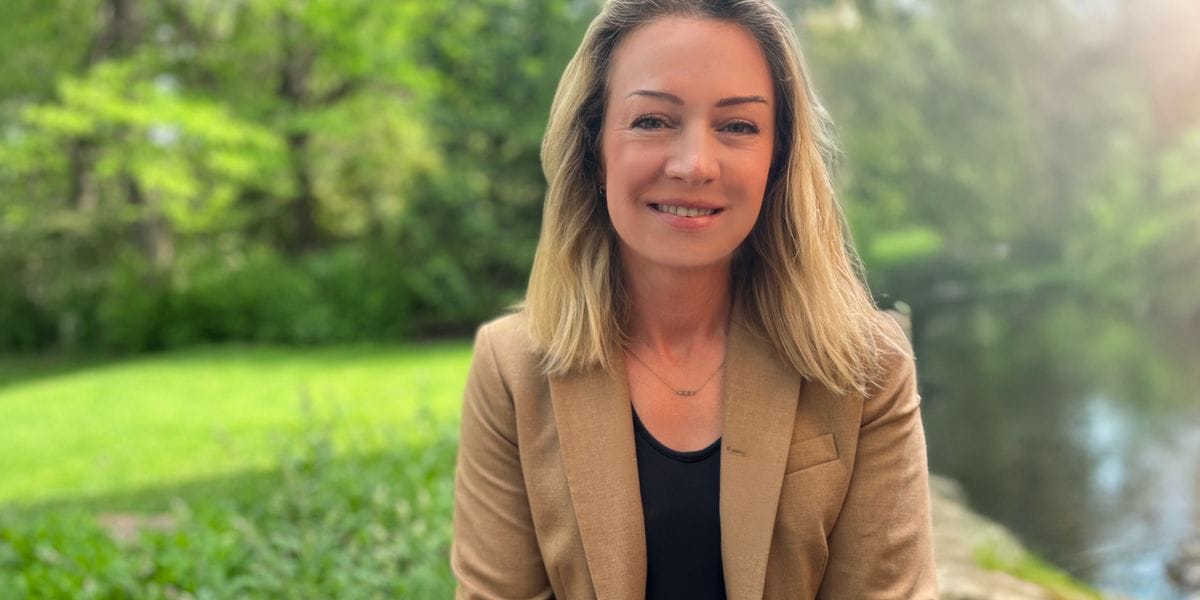

As Jacquelyne Froeber tells
May is a month of stroke.
“Why is my face deaf?”
When I stared in the mirror, everything looked fine for me. But the left side of my face definitely felt deaf. Then I remembered that the tip of the tongue felt deaf the day before.
Alarm bells went in my head. Wasn’t something wrong with me?
I knew that as a first mother I juggled a lot, but I felt great up to that point. I had a quick recovery after my caesarean section and was excited for my second day at work. I felt that I found my life out.
So I convinced myself that the deafness was not a big deal. I probably slept hard on my left side near the baby phit. And I probably burned my tongue on one of the many cups of coffee that I had drunk to feel less tired.
The days passed, but the numbness remained and the tiredness got worse. I came across a friend who is a medical assistant and told him how I felt. “Do you think it’s Bell’s paralysis?” I asked.
“Maybe … but let it check out,” he said.
I frowned. “What else could it be? I didn’t have a stroke.” That was the only thing I could imagine that was associated with deafness.
He agreed that I didn’t look like I had a stroke, but thought I should still see my family doctor. Fortunately, I was able to get in that day to see her. She said I could have Bell’s paralysis, but I had to go to emergency care to be safe.
I tried to argue with her. I had work, a newborn in my neighbor’s house, and my husband wasn’t in the city – did I really have to go to the emergency room?
She said yes.
Two visual tests later said the he -Doktor, he thought I had a stroke, but they had to test more to be sure.
I was stunned.
I had already joked about it, but a stroke just didn’t seem to be possible. My face did not fall off and I had no blurry speech. I was a healthy, active, 36-year-old mother who had a wonderfully boring, uncomplicated birth. How did that happen to me?
I was brought to the neuro unit of the hospital, where a nurse asked if I needed a breast pump. I noticed that there were many pumps behind her on the shelf. “You would not believe how many new mothers we come in here,” she said.
Jess holds her son Stanley in the hospital after her stroke in 2019.
I thought it was strange, but later learned that her body flows into a hyper -coagulable state after birth, which means that your blood is rather furnished and that you have an increased risk of stroke.
That blew me away. After I had my son, I had worried about 1,000 different things, but nobody mentioned the increased possibility of a stroke.
The next day, the tests confirmed that I actually had a stroke in my brain tribe. My hyper -coagulable condition could have caused it, but nobody knew exactly.
My doctor said I will probably be fine. He prescribed medication and I went home. Nobody seemed to believe that it was such a big deal, so I thought the worst was behind me.
Three days later I woke up in bed and stared at two ceiling fans. We only have one. For about 30 minutes I tried to concentrate my eyes to make a fan, but I just couldn’t do it. I stumbled down the stairs and told my husband that we had to go back to the emergency room.
After further tests, the good news was that I showed no evidence of new strokes. The bad news: Nobody knew what caused my double vision. I was prescribed another medication and went home disoriented and anxious.
Unfortunately, the medication did not help. As disturbing as the double vision was, the tiredness was even worse. I felt like I was weighed by a thick fog that was never raised. The tiredness had become my new normality, so I did my best to push the tiredness through and remain as active as possible. I knew that in the long run it could only help to take care of my physical health.
Jess with her husband and son Stanley.
After two months I felt better. I had more energy and my view was almost normal again. But the relief was short -lived. I started to have episodes in which I would lose the command of my lips or my tongue or my left arm or leg. The loss of motor skills only lasted about 30 seconds – but every time it felt like an eternity. I never knew when an episode would happen, but they were so often that I hid them well.
I knew that the whole situation was bizarre. Usually people who had a stroke show progress over time – I had a number of new symptoms. And nobody could tell me what was going on.
Finally I found a doctor who said I have episodes because my brain didn’t get enough blood. He said that if we could slower or preventing the blood, the episodes would stop after about six months.
In the next half of the year I took a new medication and tried to be patient with myself. It wasn’t easy. Every morning I woke up that I saw two ceiling fans. And every time I had an episode, I feared that I would not come out. Then the episodes heard around the six -month brand. And they didn’t come back.
Over the years, I was surprised by the number of people who either know someone who had a postpartum stroke or had one myself. I wish I knew about the increased risk – maybe I wouldn’t have had the tiredness and deafness as long as I was depending on the tiredness and deafness.
After my consequences stopped, I was good for a long time. But in 2021 I started to experience trigeminal neuralgia on the left side of my face – similar to how I had the deafness with the stroke. In the beginning the pain would come and go, but to this day it was more than a year of constant, relentless pain.
I think the pain is somehow connected to the stroke, but the doctors are not sure why he happens or how to treat the pain. It was a frustrating and time -consuming process, and on some days the pain is so overwhelming that I feel hopeless. But I know that I have to push further to find the help I need. Just because I haven’t found it yet – does it not mean that it is not out there.
Do you have your own real women, real stories you want to share? Let us know.
Our real women, real stories are the authentic experiences of women in real life. The views, opinions and experiences that are shared in these stories are not supported by healthwomen and do not necessarily reflect the official politics or position of healthwomen.
From their site articles
Related articles related to the web
