


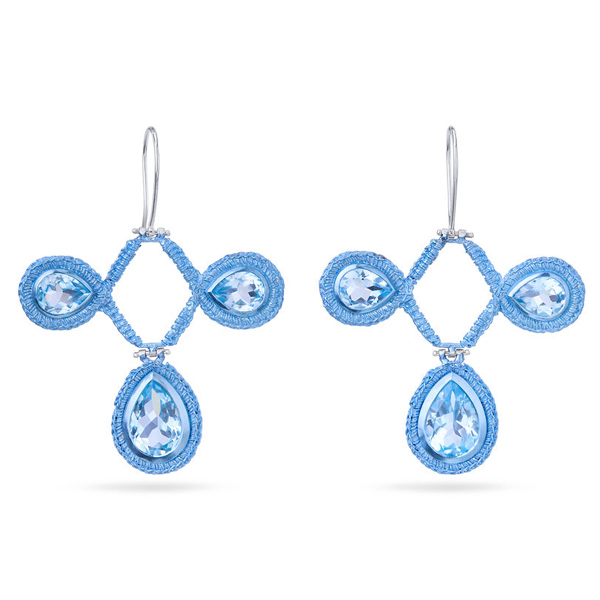
Scottish designer Ebba Goring’s jewels are eye-catching, saturated with color and centered on beautiful gemstones set within what looks like intricately woven gold or silver.
Perhaps even more intriguing is how Goring creates her pieces, a process that involves working with fabric that is then cast into precious metal through the ancient technique of lost-wax casting.
“Some pieces are simply stitched or crocheted cotton, but more often I’m building a structure first, either a wire framework to stitch over or a CAD design,” Goring says. “With CAD, I’m carefully thinking about how the 3D-printed components will fit together once they’ve been stitched over, allowing space for the textile layer. There’s this quite technical process underpinning it, which then gets softened by the hand-stitching.
“Once I have that structure, I crochet or stitch directly onto it. I’ll often make a few versions, testing different scales or thread thicknesses, until I’m happy with the final form. From there, the piece is cold-molded, and a wax is produced from that mold. That wax is what I use for lost-wax casting, transforming it into metal. Sometimes I’ll skip CAD altogether and carve directly into wax, then stitch onto that—it depends on the piece.
“After casting, there’s still quite a lot of work to do. Pieces are cleaned up, assembled, and any additional elements like hinges or fittings are hand-fabricated by me in the studio. Then they’re finished with stone setting or ceramic color plating. In terms of timing, developing a new design can take weeks or even months, especially if I’m experimenting. For bespoke pieces, it’s usually around six to eight weeks from start to finish.”
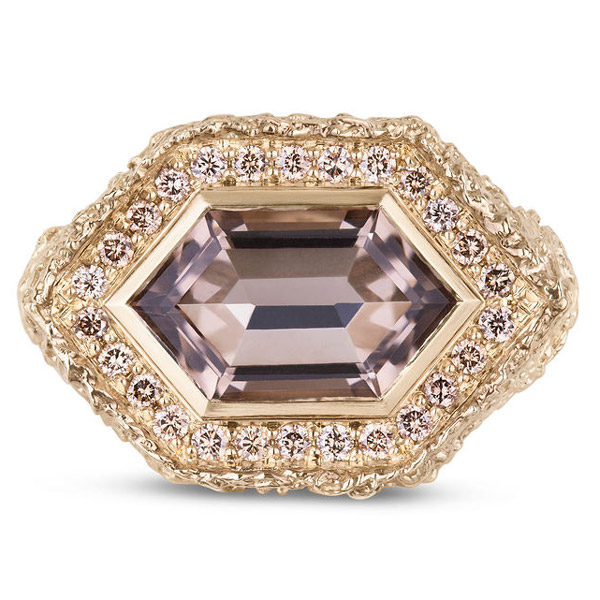
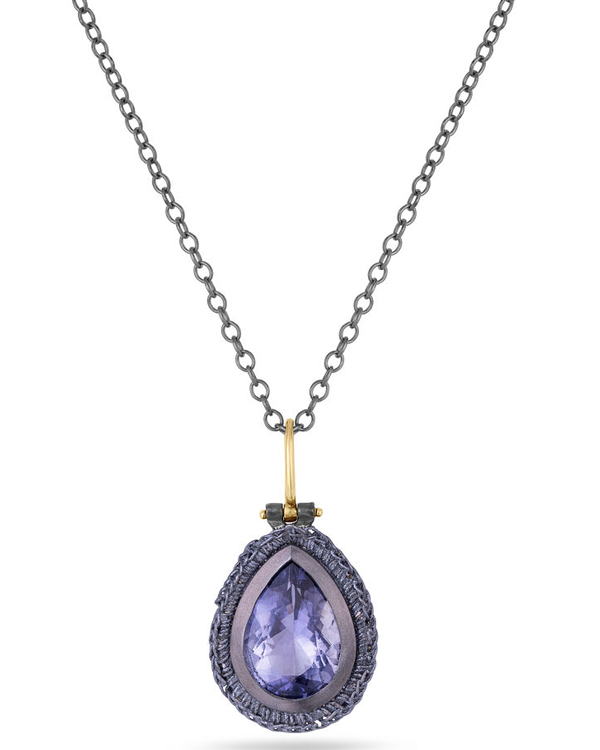
By using textiles in her jewelry, Goring honors the needlework skills that were passed down through generations of Scottish families. “My work is rooted in Scottish textile heritage, which has always been part of my surroundings,” she says. “I grew up and continue to live in the [the Edinburgh area’s] Kingdom of Fife, close to Falkland Palace, and grew up regularly visiting castles and museums where you see centuries of embroidery, tapestry, and incredible costume and art.
“I’ve always been drawn to the details of fabric and jewelry in historic portraiture. What interests me most, though, is not who wore these textiles but who made them. The skills, the time, and the knowledge passed down through generations. My mother is a textile artist, so I learned to stitch and crochet from a young age, and that sense of inherited skill is central to my practice.
“I translate those techniques into metal through casting, preserving the texture of thread in something permanent. There’s also a strong connection to place in my work. Living on the Fife coast, I’m inspired by more domestic textiles, fishing communities, and net making, which has influenced pieces like my Knots ring, as well as my use of Scottish stones like Cairngorm quartz and agates.”
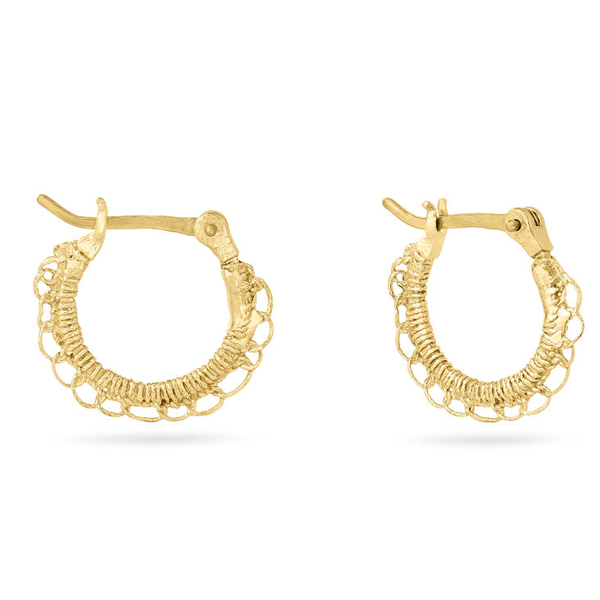
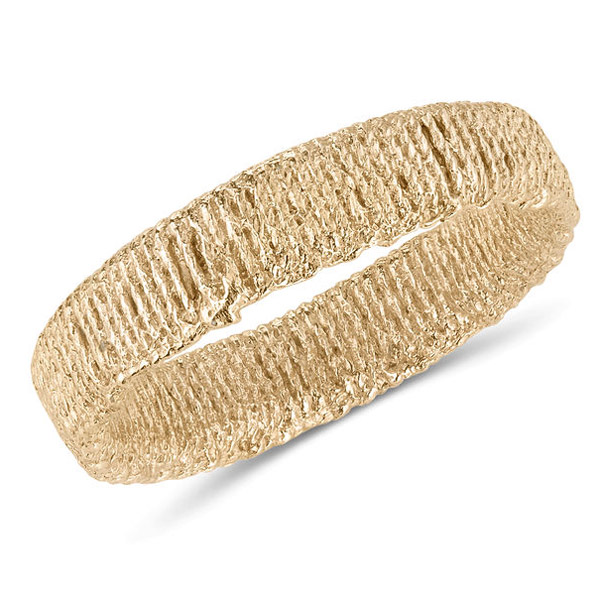
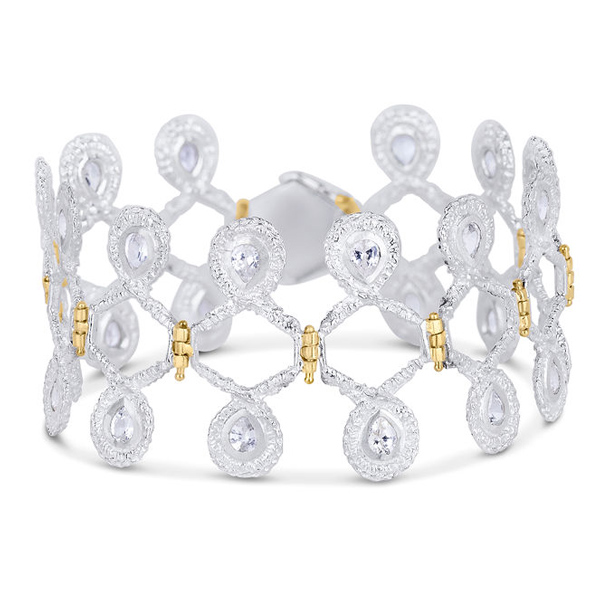
Goring has Scandinavian ancestry, and she pays homage to those roots in her collections, taking inspiration from Nordic folk art and ancient Viking treasures. “Ultimately, I’m interested in how motifs and techniques carry through time,” she says. “Each generation reinterprets them, and I hope to do that in my own distinct way.”
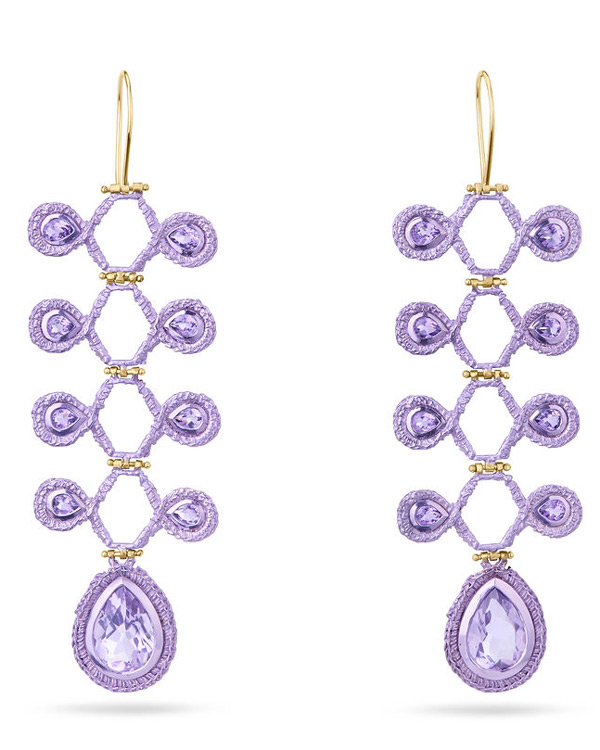
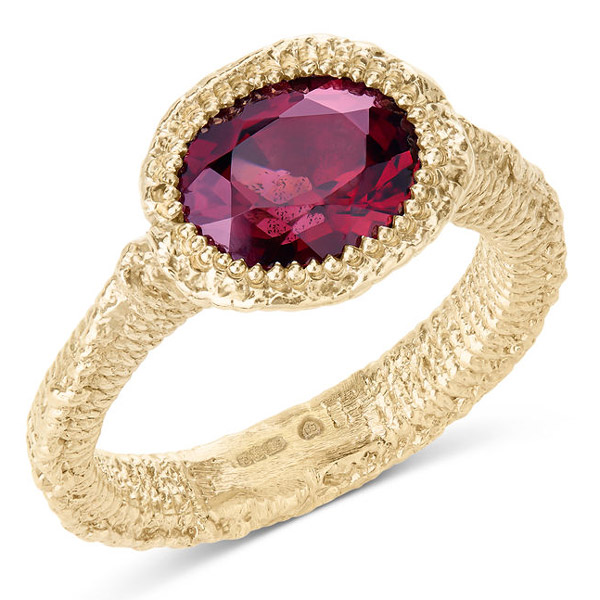
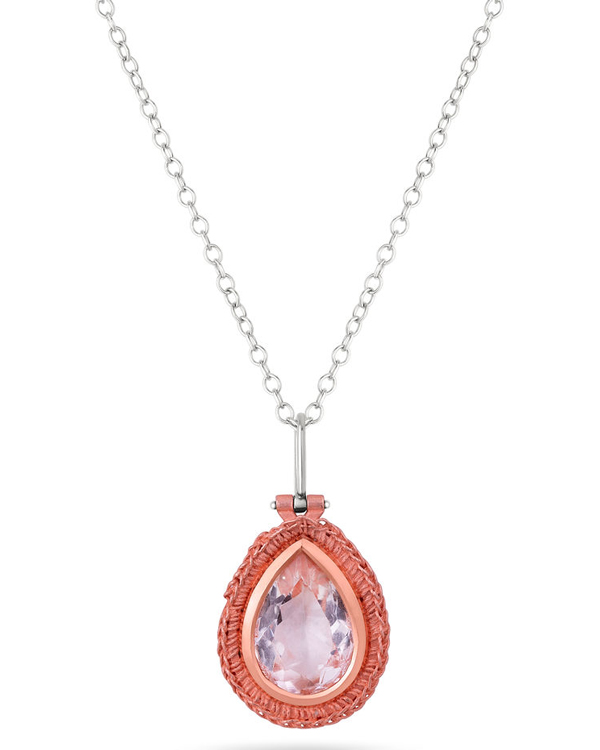
Describing the visual effect of her knit work, Goring says, “That sense of delicacy is very intentional, and it’s something I really love about working with these processes. The jewelry can appear light and airy, but it still has the strength and durability of precious metal.
“I think very carefully about wearability while I’m designing. I consider where a piece touches the body, how it moves, and how it will feel to wear. For example, I make some quite large statement earrings, but I’m always making sure they’re comfortable and not overly heavy. I can create volume through frameworks, space, and construction without relying on unnecessary metal weight.
“I’ve been refining this process of casting textiles since 2010, so achieving very fine detail while still making pieces that are durable is something I have worked hard to achieve. Most pieces are designed to be worn every day and cared for just like any other fine jewelry. Although the pieces may look delicate, they’re designed with longevity in mind—to be worn, enjoyed, and passed on.”
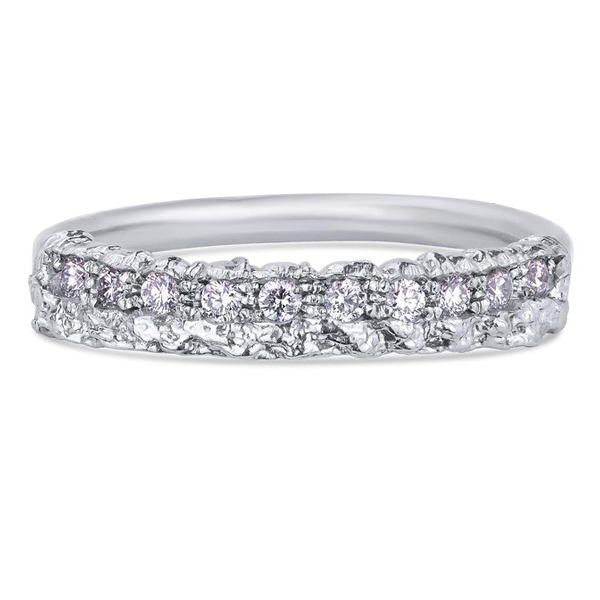
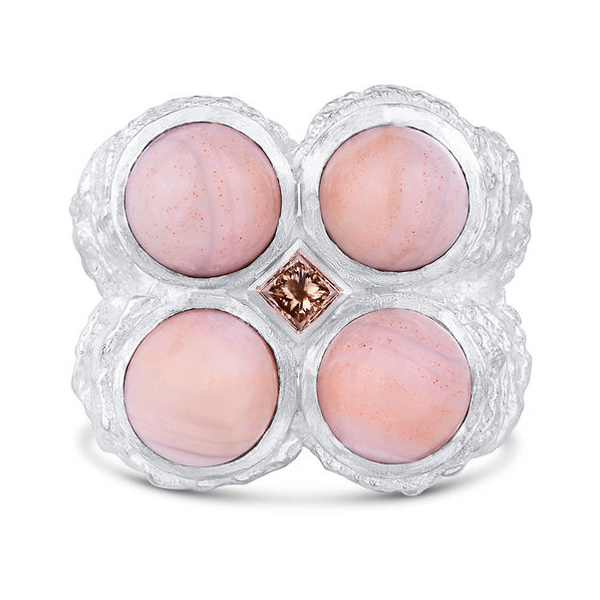
Goring tells JCK that she will be expanding her Ripple design into a broader collection, and plans to introduce a series of one-of-a-kind brooches this autumn.
Top: Regency demi chandelier earrings in sterling silver and 18k white gold with blue ceramic and blue topaz, £1,800; Ebba Goring
