
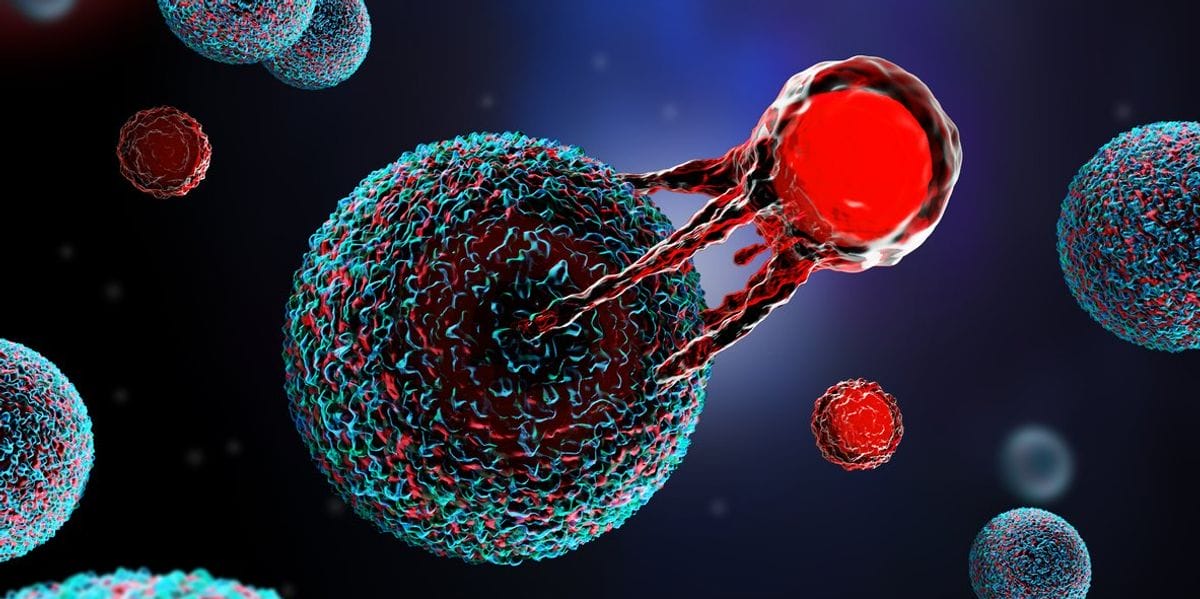

Let’s take a minute to give your immune system props.
If you are not exactly sure what your immune system is doing, remember how the mom bear of your body. The cells, fabrics and organs from which your immune system consists of protect your body against threats (germs, viruses, etc.) and attack everything that may be harmful.
Your immune system can also be a strong weapon against cancer thanks to a treatment option called immunotherapy. Treatments include increasing or changing the functionality of the immune system so that cancer cells can determine and destroy.
Depending on the illness and diagnosis, there are different types of immunotherapy. One of the most innovative options, which are referred to as a car-t cell therapy (car) as a chimeric antigen receptor (car), which is typically used after other therapies have been tried out first.
Treatment is unique compared to other cancer treatments, since it uses the body’s T cells – a kind of white blood cell – to fight against cancer.
Car-t cell therapy is not an option for all types of cancer, but can help people with certain types of blood cancer.
Read: genes & cell therapy 101 >>
Here is more about autotherapy with auto-t cell therapy.
What is a car-t cell therapy?
The T cell therapy of the chimeric antigen receptor (car) is a kind of immunotherapy from the living T cells of the person with cancer.
The T cells are a kind of white blood cells and the main guards of diseases and infected cells. The natural T cells in people with cancer are not the best to find and combat cancer cells. Therefore, car-t cell therapy changes the T cells in a laboratory so that they can search and destroy the cancer better.
How Car T cell therapy works
Car-t cell therapy requires a few different steps. First, blood is collected by the patient via two IV lines – one to remove the blood and separate the white blood cells – and one to put the blood back into the body.
From there, T cells are separated from other white blood cells and generously changed in a laboratory. Special genes, which are referred to as chimarian antigen receptors (cars) – are therefore added to the surface of the T cells.
After the T cells have been modified, they are grown and multiplied to generate hundreds of millions of cells that are infused into the person with cancer.
The modified cells can then be connected to antigen proteins of cancer cells and attack cancer.
Car T cell preparation and infusion
The process from the first blood collection to the infusion can take up to five weeks.
In the weeks before the infusion, some people may have chemotherapy to weaken the immune system in order to give the modified T cells a better chance of fighting cancer.
When it is time, Car-T cell therapy is given in a single infusion via IV-a process that usually takes about an hour.
Side effects of cars T cell therapy
As with all cancer treatments, Car-T cell therapy can have a number of side effects, some of which can be serious, including infections and the death of B cells that produce antibodies.
The good news is that investigations show that the advantages of these treatments outweigh their risks. As a result, the Food and Drug Administration (FDA) has the Rems requirements of the risk assessment and reduction (REMS), which are protocols that are set up to manage risks, set up by the approved car-t cell immune therapies.
If the Car-T cells multiply, you can release chemicals in the blood (cytokines) that increase the immune system and cause life-threatening problems. This is referred to as cytokin freedom syndrome (CRS).
The side effects of CRS can include:
- High fever and chills
- Breathing problems
- dizziness
- fatigue
- Headache attacks
- Joint pain
- Muscle pain
- Nausea, vomiting and diarrhea
- Quick heartbeat
Car-t cell therapy can also influence the nervous system and lead to an immune effect-related neurotoxicity syndrome (icans). The symptoms of the disease can include:
- confusion
- Changes in consciousness
- Headache attacks
- Loss of balance
- Tremble
- Problems talking or understanding
- Seizures
Other side effects of car-t cell therapy can:
- Low mineral levels in the blood
- Allergic reaction during the infusion
- Weakened immune system
- Low blood cells
- Increased risk of other blood cancer
What are car-t cell therapies approved for?
Car-T cell therapies were first approved by the FDA for children with acute lymphoblastic leukemia in 2017. Today, auto-t cell therapy is also approved for the treatment of adults.
In addition to acute lymphoblastic leukemia, car-t cell therapy can be used to treat other types of blood cancer. These can include:
- Multiples myeloma
- High quality B cell lymphoma
- Follicular lymphoma
- Primary mediastinal big B-cell lymphoma
- Coat cell lymphoma
In view of the success of the success of blood cancer, a number of studies are now examining car-t cell therapy for solid tumor cancer such as brain, pancreatic, colorectal and triple negative breast cancer as well as autoimmune diseases (e.g. lupus, multiple sclerosis), cardiac and liver fibrosis, HIV and type 1 diabetes.
Then how do I know if I am entitled to a car-t cell therapy?
Car-t cell therapies are used to treat blood cancer that are returned (recurred) or blood cancer that have not responded to previous treatments. If you have blood cancer, you should speak to your HCP to see if you are a candidate.
Does insurance therapy cover autotherapy with car therapy?
Many insurance plans cover the therapy of car-t cell therapy, but the treatment costs vary depending on the plan, and prior approval may be required.
Medicare covers the car-t cell therapy approved by the FDA, and Medicaid can also cover it. The cover can vary depending on the state.
For people who do not have insurance or need financial support, Car-T-Zell treatment centers and medication manufacturers can help with treatment costs and travel costs such as transport, meals and accommodation. Characteristic organizations such as Leukemia & Lymphoma Society may also offer financial support options.
Access to auto-t cell therapy
When the FDA removed the REMS request for six approved therapies for Car-T-Zell therapies last month, the move also made the potentially more recent treatments accessible.
Without the REMS requirements, hospitals and clinics no longer have to have certification to manage the treatments.
Also well to note: The FDA set the time that people have to wait for two weeks after treatment from eight weeks. And the FDA shortened the obligation to stay near a health facility from four weeks to two weeks.
These changes offer more flexibility and treatment options.
If you or someone you know are interested in therapy with autoocelle therapy, talk to an oncologist about the facts, including treatment where you are for treatment.
This educational resource was created with the support of Bristol Myers Squibb, a healthy member of the advice council of Healthywomen.
From their site articles
Related articles related to the web
