


Abstract
Boswellia serrata Roxb. ex Coleb., commonly known as Indian olibanum or the Indian frankincense tree, belongs to the family Burseraceae. The species is native to India and predominantly found in tropical dry deciduous and dry hilly forests across regions such as Rajasthan, Madhya Pradesh, Gujarat, Bihar, Assam, Odisha, and parts of peninsular Andhra Pradesh. In Unani medicine, it is known as Kundur and has long been valued for its medicinal resin. The Burseraceae family comprises approximately 17 genera and 600 species distributed throughout tropical regions, with the genus Boswellia including about 25 species mainly occurring in Arabia, northeastern Africa, and India; Boswellia glabra Roxb. is recognized as a synonym of Boswellia serrata. The term “olibanum” is derived from the Arabic al-lubbān, meaning “milk,” referring to the milky resin, while the English term “frankincense” originates from the Old French franc encens, denoting high-quality incense. Historically, frankincense has been traded for over 5000 years across the Arabian Peninsula and North Africa and was extensively used by ancient civilizations, including Hindus, Babylonians, Persians, Greeks, Romans, Chinese, and early American cultures. Its resin held significant cultural and religious importance, notably in ancient Egyptian rituals, Hebrew Ketoret ceremonies, and Temple services in Jerusalem, underscoring its longstanding ethnobotanical and historical relevance.
Classical References Of Boswellia Serrata Roxb./ Shallaki/ Salai
- Bhavprakash Nighantu Karpooradi and Vatadi varga
- Raj Nighantu Amradi Phala and Chandanadi Varga
Scientific Classification Of Boswellia Serrata Roxb./ Shallaki/ Salai
- Kingdom: Plantae
- Subkingdom: Tracheobionta
- Superdivision: Spermatophyta
- Division: Magnoliophyta
- Class: Magnoliopsida
- Subclass: Rosidae
- Order: Sapindales
- Family: Burseraceae
- Genus: Boswellia
- Species: Boswellia serrata Roxb. ex Coleb.
Synonym Of Boswellia Serrata Roxb./ Shallaki/ Salai
- Shallaki / Sallaki
- Suvaha – The plant that bears or carries aromatic resin.
- Vallaki – Refers to the profuse exudation of gum resin from the tree.
- Sara – Indicates the resinous or extractive nature of the plant.
- Maheruna / Maherana – The plant that is consumed by elephants.
- Kunduruki – Derived from Kunduru, denoting the resin obtained from the tree.
- Hlada / Hladani – That which pleases or refreshes the mind due to its pleasant aroma.
- Ashwamutri – A traditional synonym referring to its distinctive exudation pattern.
- Gajabhakshya – Leaves are eaten by elephants.
- Surabhi – The gum resin possesses a pleasant fragrance.
- Susrava – The plant that exudes resin naturally.
- Bahusrava – Indicates abundant or profuse secretion of gum resin.
- Vanya – A wild-growing plant found in natural forests.
- Mocha – The tree releases exudates or secretions.
- Tiyasraphala / Tryasraphala – The fruit is trigonal (three-angled).
- Surabhisrava – The exudate is aromatic and fragrant.
Synonyms Of Kunduru (Resin)
- Kunduru – Term used to indicate the aromatic resin obtained from Shallaki.
- Mukunda – The resin that imparts fragrance and purity.
- Sugandha – Pleasant-smelling or aromatic substance.
- Kunda – Refers to the resinous, white or fragrant nature of the exudate.
Vernacular Names Of Boswellia Serrata Roxb./ Shallaki/ Salai
- English: Indian Olibanum tree; Indian Frankincense tree; Gum – Indian frankincense, Boswellia gum
- Hindi: Salai, Salay, Kundur, Luban
- Marathi: Salai
- Gujarati: Salode, Dhupado
- Bengali: Kundur, Laban, Salai
- Urdu: Kundur, Lobana
- Oriya (Odia): Loban
- Tamil: Parangisambrani, Parankisampirani, Parangi, Attam
- Telugu: Andugum Chettu; Gum – Anduga Banka, Kunduru Guggilammu, Sanibrani, Paraginsavani, Phirangi, Anduga, Guggilamu, Pamragisamvrani
- Kannada: Maddi, Madi, Tallaki, Chilakdhupa
- Malayalam: Salayi, Salai, Kungilyam, Kunturukkam, Samprani, Parangi, Mukundam
- Arabic: Bastaj, Kundur, Luban
- Persian: Kundur
- Sanskrit: Shallaki, Ashwamuthri, Kunduru, Chitta, Gugula, Dhupa, Adimar
- Bombay region: Salai, Salaphali, Salayudhup, Salga, Guggula
Habitat Of Boswellia Serrata Roxb./ Shallaki/ Salai
Boswellia serrata is native to India and is primarily distributed in tropical dry deciduous forests, where it grows on dry, rocky ridges, slopes, and flat terrains up to an altitude of about 1,150 m. The species thrives under diverse climatic conditions, tolerating annual temperatures ranging from 0 to 45 °C and rainfall between 500 and 2,000 mm. Its natural occurrence has been reported from numerous Indian states, including Andhra Pradesh, Bihar, Chhattisgarh, Goa, Gujarat, Haryana, Jharkhand, Karnataka, Kerala, Madhya Pradesh, Maharashtra, Meghalaya, Odisha, Rajasthan, Tamil Nadu, Telangana, Uttar Pradesh, and West Bengal, while it is also cultivated under Trees Outside Forests programmes in several regions. Overall, B. serrata is distributed across a large part of India, with climatically suitable habitats covering nearly 22% of the country, and population estimates from selected states suggest approximately 44 million individuals.
Morphology Of Boswellia Serrata Roxb./ Shallaki/ Salai
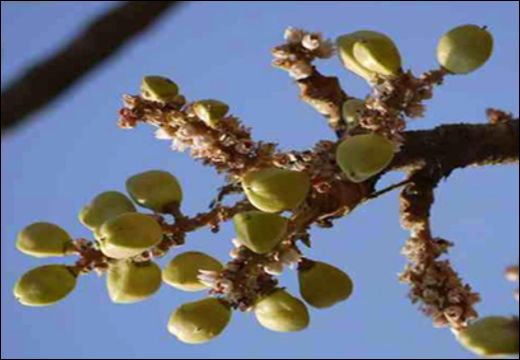
Boswellia serrata is a medium to large-sized deciduous, balsamiferous tree that typically attains a height of 18–20 m with a girth of about 1.5–2.4 m. The bark is yellowish-white with dark patches and characteristically exfoliates in thin, papery flakes. The leaves are alternate, imparipinnate, and often clustered at the ends of branches; the leaflets are sessile, lanceolate to ovate in shape, with crenate or serrate margins and a slightly pubescent surface, measuring approximately 15–31 cm in length. The tree produces small, white, bisexual, actinomorphic flowers arranged in axillary or terminal racemes, each inflorescence bearing numerous flowers with five to seven lobes and petals. The ovary is trilocular, containing one ovule in each locule, and the flowers provide nectar and pollen, facilitating cross-pollination as the species is self-incompatible. Flowering generally occurs between January and April, followed by fruiting during May–June or winter, depending on the region, and the tree often remains leafless during this reproductive phase. The fruit is a trigonous drupe that splits into three valves and contains compressed, pendulous seeds. On injury or tapping, the tree exudes an aromatic oleo-gum resin known as Salai guggul or Indian frankincense, which forms semi-transparent pinkish tears that are brittle when cold but soften upon heating and release a pleasant fragrance when burned.
Varieties Of Boswellia Serrata Roxb./ Shallaki/ Salai
According to the Unani (Yunani) system of medicine, Kunduru is classified into five types based on Aakrati (shape) and Varna (colour):
- Nara Kunduru – Reddish to yellowish in colour, round in shape.
- Mada Kunduru – Pale in colour and occurring in comparatively larger pieces.
- Gola Kunduru – Spherical or globular in form.
- Kishara Kunduru – Flat and thin in appearance, resembling Parpati (flakes).
- Dukaka Kunduru – Available in powdered form.
In addition, Boswellia floribunda is also traditionally used and referred to under the name Kunduru in the Unani system of medicine.
Special Note
Ancient Ayurvedic texts consider the resin (exudate) of Shallaki (Salai) itself to be Kunduru; however, the Kunduru commonly available in the market is not obtained from Indian Salai but from a related foreign species that comes mainly from Africa and Arabia and is traded largely through Mumbai. From a therapeutic point of view, there is no significant difference between Indian Salai resin and foreign Kunduru. For clarity, the Indian resin is referred to as “Salai Guggul”, while the foreign resin is termed “Kunduru,” and both are described separately. In the market, the name “Guggul” is used for both Salai Guggul and Kan-Guggul (true Guggulu), so when purchasing, one should specifically ask for Salai Guggul if Shallaki resin is required, and Kan-Guggul when Guggulu is needed. The Salai tree is described under the Vatadi Varga in Ayurvedic literature. Although Kunduru is known as “Luban” in Arabic, Loban or Lohban refers to a different substance altogether.
Classical Categorisation Of Boswellia Serrata Roxb./ Shallaki/ Salai
- According to Charaka Samhita: Pureesha Virajaniya Gana
- According to Bhavprakash Nighantu: Vatadi Varga, and resin is included in Karpooradi Varga
- According to Raj Nighantu: Amradi Phala and Chandanadi Varga
- According to Sushruta Samhita: Rodhradi Gana and Eladi Gana (with reference to the gum/resin).
- According to Vagbhata: The gum of Shallaki is classified under Eladi Gana and Rodhradi Gana.
Ancient Verse Of Boswellia Serrata Roxb./ Shallaki/ Salai
शल्लकी गजभक्ष्या च सुवहा सुरभी रसा।
महेरुणा कुन्चुरुकी वल्लकी च बहुत्रवा ॥
शल्लकी तुवरा शीता पित्तश्लेष्मातिसारजित् ।
रक्तपित्तव्रणहरी पुष्टिकृत्समुदीरिता ॥
(Bhavprakash Nighantu Vatadi varga 22-23)
According to the above shloka, the Sanskrit names of Salai include Shallaki, Gajabhakshya, Suvaha, Surabhi, Rasa, Maheruna, Kunduruki, Vallaki, and Bahusrava. Salai is described as having astringent taste (Kashaya Rasa), cooling potency, and nourishing properties. It is traditionally indicated for the management of Pitta and Kapha disorders, diarrhoea, bleeding conditions (Raktapitta), and wound healing (Vrana).
सल्लकी तिक्तमधुरा कषाया ग्राहिणी परा ।
कुष्ठास्त्रकफवाताों-व्रणदोषार्त्तिनाशिनी ।।
(Raj Nighantu Amradi phala varga 195)
According to the above shloka, Sallaki (Salai) is described as having bitter, sweet, and astringent tastes with a strongly constipating action. It is traditionally indicated for alleviating disorders associated with Kapha, Vata, and Rakta, and is used in the management of piles, wounds, leprosy, and related skin diseases.
शल्लकी वल्लकी ह्लादा सुरभिः सुस्रवा च सा ।
अश्वमूत्री कुन्दुरुकी गजभक्षा महेरणा ॥
शल्लकी स्यात् कषायाऽतिशीता वीर्ये प्रकीतिता ।
बलासं हन्ति पित्तस्य प्रकोपशमनी मता ॥
(Dhanvantari Nighantu Chandanadi varga 122-123)
According to the above shloka, Boswellia serrata is known by several synonyms, including Vallaki, Halada, Surabhi, Susrava, Ashvamatri, Kunduruki, Gajabhaksha, and Maherana. Therapeutically, it is characterised by an astringent taste and cooling potency, and is traditionally used for its ability to pacify Kapha and Pitta doshas.
Ancient Verse Of Salai Guggul/ Shallaki Niryasa/ Indian Olibanum Or Frankincense/ Gum Resin Of Boswellia Serrata Roxb.
कुन्दुरुस्तु मुकुन्दः स्यात्सुगन्धः कुन्द इत्यपि ॥
कुन्दुरुर्मधुरस्तिक्तस्तीक्ष्णस्त्वच्यः कटुहरत् ।
ज्वरस्वेदग्रहालक्ष्मीमुखरोगकफानिलान् ॥
(Bhavprakash Nighantu Karpooradi varga 50-51)
According to the above shloka, Kunduru, an aromatic substance obtained as the gum resin of Shallaki, is known in Sanskrit by the names Kunduru, Mukunda, Sugandha, and Kunda. It possesses sweet, bitter, and pungent tastes, has a sharp potency, and is considered beneficial for the skin. Traditionally, Kunduru is used in the management of fever, excessive sweating, psychological or spiritual afflictions (Grahabadha), inauspicious conditions (Alakshmi), oral disorders, and for alleviating Kapha and Vata doshas.
कुन्दुरुर्मधुरस्तिक्तः कफपित्तार्त्तिदाहनुत् ।
पाने लेपे च शिशिरः प्रदरामयशान्तिकृत् ।।
(Raj Nighantu Chandanadi varga 114)
According to the above shloka, Kunduruka or Gandha Viroza is described as having sweet and bitter tastes and is traditionally used to alleviate disorders arising from aggravated Pitta and Kapha. It is known for its pain-relieving and cooling properties, helping to reduce burning sensations when applied both internally and externally. Additionally, it is considered beneficial in the management of various types of vaginal discharges, including leucorrhoea.
कुन्दरुः स्यात् कुन्दुरुकः शिखरी कुन्द्रगोपुरः ।
सुकुन्द्रस्तीक्ष्णगन्धश्च पालिन्दो भीषणो वली ॥
कुन्दुरुः कटुकस्तिक्तो वातश्लेष्ममलापहः ।
पाने लेपे च शिशिरः प्रदरामयशान्तिकृत् ॥
(Dhanvantari Nighantu Chandanadi varga 118-119)
According to the above shloka, Kunduruka is known by several synonyms, including Sikhri, Kundragopura, Sukundra, Tikshna-gandha, Palinda, Bhishana, and Bali. Therapeutically, it is characterised by pungent and bitter tastes with a cooling potency, and is traditionally used to pacify Vata and Kapha, as well as to manage vaginal bleeding.
Ayurvedic Properties Of Boswellia Serrata Roxb./ Shallaki/ Salai
- Taste (Rasa)- Astringent (Kashaya), Bitter (Tikta), Sweet (Madhur)
- Potency (Veerya )- Cold Potency (Sheet)
- Effect on tridosha– Balance Pitta and Kapha dosha
Ayurvedic Properties Of Salai Guggul/ Shallaki Niryasa/ Indian Olibanum Or Frankincense/ Gum Resin Of Boswellia Serrata Roxb.
- Taste (Rasa)- Bitter (Tikta), Pungent (Katu), Sweet (Madhur)
- Physical property (Guna) – Sharp (Teekshna)
- Effect on tridosha– Balance Vata and Kapha dosha
Therapeutic Indications Of Boswellia Serrata Roxb./ Shallaki/ Salai
- Atisara – Diarrhoea and dysentery
- Raktapitta – Bleeding disorders such as epistaxis and menorrhagia
- Vrana – Ulcers and wounds
- Kushta – Skin diseases
- Asra – Blood-related disorders, including abscesses, skin conditions, and bleeding disorders
- Arsha – Haemorrhoids
- Vranadoshahara – Cleanses and promotes healing of wounds
- Shoola – Pain
Indications Of The Resin (Kunduruka / Salai Guggul)
- Jwara – Fever
- Sweda – Excessive sweating
- Graha and Alakshmi – Psychological and psychosomatic disorders
- Mukharoga – Oral diseases
Systemic Actions Of Boswellia Serrata Roxb./ Shallaki/ Salai
External Use
- Shallaki possesses anti-inflammatory, analgesic, antimicrobial, wound-cleansing, and wound-healing properties.
- It is beneficial for ocular health.
- External application of its warm paste is useful in joint disorders, goitre, lymph node enlargement, flank pain, diabetic carbuncles, and related conditions.
- A collyrium prepared from Shallaki with honey is indicated in various eye diseases.
- It also helps in normalising the movement of Vata dosha.
Internal Uses
1. Nervous System
- Acts as a nervine tonic, supporting nervous system strength and function.
2. Digestive System
- Functions as a carminative, digestant, and absorbent and may be used as a mouth freshener.
- It is indicated in diarrhoea, loss of appetite, abdominal distension, malabsorption syndrome, and haemorrhoids.
3. Circulatory System
- Supports cardiac health and exhibits styptic action, making it useful in bleeding disorders.
4. Respiratory System
- Beneficial in chronic cough and respiratory ailments.
- Its use in herbal smoking (Dhoomapana) helps in expelling aggravated Kapha dosha.
5. Excretory System
- Promotes urine output and is indicated in Puyameha (pus in urine), urinary calculi, and dysuria.
6. Reproductive System
- Acts as an aphrodisiac and is useful in reduced semen quality and leucorrhoea.
7. Skin
- Indicated in various skin disorders.
8. Satmikarana (Rejuvenative Action)
- Exhibits Rasayana-like effects, enhances strength, and is beneficial in general debility.
9. Tapakrama
- Indicated in the management of fever.
Chemical Composition Of Boswellia Serrata Roxb./ Shallaki/ Salai
1. Bark
- Tannins – 9.1%
- Pentosans – 18.3%
- Lignin – 28.8%
- Holocellulose – 48.7%
- β-Sitosterol
2. Stem (Oleo-Gum-Resin)
- The stem exudes an oleo-gum-resin composed of 60–80% alcohol-soluble resin, 15–20% gum, and 5–7% essential oil.
Volatile Oil Constituents
- α-Thujene
- α-Pinene
- β-Pinene
- Linalool
- Geraniol
- Cadinene
- Elemol
- Phenols
- Terpenyl acetate
- Bornyl acetate
- 2,2,4-Trimethyl-cyclopent-3-enyl-1-yl acetic acid
- α-Campholenic acid
- α-Campholytic acid
2. Non-Volatile Constituents
- Diterpene alcohol: Serratol
- Triterpenes: α-Amyrin, β-Amyrin
- Boswellic acids (Pentacyclic triterpenic acids):
- β-Boswellic acid
- 11-Keto-β-boswellic acid (KBA)
- 3-O-acetyl-11-keto-β-boswellic acid (AKBA)
- 24-dien-21-oic acid
- 3α- and 3β-hydroxytirucall-8
- 3α-acetoxytirucall-8
- 3-ketotirucall-8
3. Leaves
- Essential oil obtained by steam distillation contains:
- p-Cymene – 2.2%
- Methyl chavicol – 4.0%
- d-Limonene – 3.9%
- α-Terpineol – 13.6%
- α-Pinene – 2.5%
- Bornyl acetate – 20.0%
- α-Terpinolene – 1.9%
- α-Phellandrene
- d-Thujone
4. Flowers And Seeds
- Seeds contain:
- Moisture – 9.0%
- Crude protein – 8.0%
- Pentosans – 29.3%
- Water-soluble mucilage – 1.2%
- Flowers and seeds are edible
- Dried powdered flowers are used traditionally in colds and fevers
5. Phytosterols
- β-Sitosterol was identified in the essential oil of the resin
6. Major Bioactive Compounds
- Boswellic acids (37.5–65% of extracts):
- AKBA (3-O-acetyl-11-keto-β-boswellic acid) – highly potent anti-inflammatory
- KBA (11-keto-β-boswellic acid) – anti-inflammatory, anti-arthritic, anti-asthmatic
- Essential oils (Monoterpenes & Sesquiterpenes):
- α-Thujene (22.7–47.4%)
- α-Pinene
- δ-3-Carene
- Limonene
- Diterpenes:
- Serratol
- Incensole
- Incensole oxide
- Polysaccharides:
- Carbohydrates present in the gum fraction
Actions And Properties Of Various Chemical Constituents Of Boswellia Serrata Roxb./ Shallaki/ Salai
1. For Pain
The pain-relieving activity of Boswellia serrata is primarily attributed to its boswellic acids, a group of pentacyclic triterpenoids, of which 3-O-acetyl-11-keto-β-boswellic acid (AKBA) is considered the most potent anti-inflammatory constituent of the oleo-gum resin. Along with 11-keto-β-boswellic acid (KBA) and other related acids such as β-boswellic acid and acetyl-β-boswellic acid, these compounds work synergistically to reduce pain and inflammation. They exert their effects mainly by inhibiting 5-lipoxygenase (5-LOX), thereby decreasing the formation of leukotrienes that drive inflammation-induced pain and joint swelling. AKBA further suppresses inflammation by blocking NF-κB signaling, which lowers the release of pro-inflammatory cytokines like TNF-α and IL-1β. In addition, boswellic acids protect joint and connective tissues by inhibiting leukocyte elastase and matrix metalloproteinases, enzymes involved in cartilage and collagen degradation, and by reducing prostaglandin E₂ (PGE₂) synthesis through inhibition of mPGES-1, collectively resulting in effective pain relief and improved joint function.
2. Antidiarrheal Activity
The antidiarrheal effect of Boswellia serrata is primarily due to its boswellic acids, particularly 3-acetyl-11-keto-β-boswellic acid (AKBA) and 11-keto-β-boswellic acid (KBA), which are pentacyclic triterpenoids present in the gum resin. These compounds help manage diarrhoea by exerting anti-inflammatory, antispasmodic, and antimicrobial actions, thereby reducing intestinal irritation and abnormal gut motility without causing constipation under normal conditions. AKBA inhibits acetylcholine-induced intestinal contractions through modulation of L-type calcium channels, while both AKBA and KBA suppress 5-lipoxygenase (5-LOX) activity, leading to decreased leukotriene production and reduced intestinal inflammation. In addition, their antimicrobial activity against pathogens such as Escherichia coli further supports the therapeutic role of Boswellia serrata in diarrhoea management.
3. Antimicrobial Activity
The antimicrobial activity of Boswellia serrata is largely attributed to its resin, which contains a high proportion of boswellic acids along with smaller amounts of antimicrobial essential oils. Boswellic acids, particularly 3-O-acetyl-11-keto-β-boswellic acid (AKBA), 11-keto-β-boswellic acid (KBA), and acetyl-β-boswellic acid (ABA), exhibit significant antibacterial and antifungal effects, with AKBA being especially potent against Gram-positive bacteria such as Staphylococcus aureus and Enterococcus faecalis, as well as fungal pathogens like Candida species. These compounds act by disrupting microbial cell membranes, inhibiting biofilm formation, and reducing pathogen survival, while the essential oil constituents—such as α-pinene, α-thujene, sabinene, and p-cymene—further enhance antimicrobial efficacy, particularly in skin and mucosal infections. Additionally, Boswellia serrata extracts demonstrate synergistic effects with conventional antibiotics and antifungal agents, improving their effectiveness against resistant microbial strains.
4. For Aromatherapy
Aromatherapy with Boswellia serrata (Indian frankincense) works through its essential oil, rich in monoterpenes and sesquiterpenes, mainly α-thujene and α-pinene, which give the oil its distinctive woody, resinous aroma and therapeutic effects. When inhaled or used in massage, these volatile compounds stimulate the olfactory system and limbic brain centres, helping to calm the mind, reduce stress, and promote emotional balance, while also supporting respiratory health by easing breathing and clearing mucus. Additional constituents such as octyl acetate, incensole, and incensole acetate contribute to anxiolytic, antidepressant, anti-inflammatory, and antimicrobial actions, creating a grounding and meditative effect. Though aromatherapy focuses on volatile oils, supportive resin compounds like boswellic acids further enhance anti-inflammatory and skin-soothing benefits, making Boswellia serrata valuable for relaxation, respiratory comfort, and holistic well-being.
5. For Skin Problems
Boswellia serrata supports skin health mainly due to its pentacyclic triterpenic acids known as boswellic acids, which are especially effective in inflammatory skin conditions such as psoriasis, eczema, acne, and premature ageing. Among these, 3-O-acetyl-11-keto-β-boswellic acid (AKBA) and 11-keto-β-boswellic acid (KBA) are the most potent, strongly inhibiting the inflammatory enzyme 5-lipoxygenase (5-LOX) and thereby reducing redness, itching, and irritation. β-Boswellic acid and acetyl-β-boswellic acid further enhance skin repair by promoting cell regeneration, reducing hyperpigmentation, and improving skin firmness. These compounds also inhibit matrix metalloproteinases (MMPs), protecting collagen and slowing wrinkle formation. Additionally, boswellic acids regulate excess sebum, show antimicrobial activity against acne-causing microbes, and accelerate wound healing, making Boswellia serrata highly effective for overall skin protection and rejuvenation.
Practical Uses / Health Benefits Of Boswellia Serrata Roxb./ Shallaki/ Salai
- Aromatherapy & Mind Health: Also known as Frankincense oil, it is widely used in aromatherapy. Palm inhalation (rubbing a few drops between the palms and inhaling) is believed to improve mental clarity, focus, and concentration.
- Skin & Massage Use: The essential oil is added to skin creams to enhance their effectiveness and is commonly used in massage for relaxation and pain relief.
- Oral Use: For internal use, 1–2 drops of the oil are mixed with 8 ounces (about 226 grams) of water or one tablespoon of honey. It is traditionally used to improve low digestive strength and is being studied for its potential role in ovarian cancer management.
- Wounds & Ulcers: A paste or ointment prepared with salai guggul along with substances like sulphur, is beneficial for chronic, deep, and foul-smelling wounds. Mixing it with lemon juice or coconut oil and applying externally helps wound healing.
- Inflammation & Swellings: When ground with warm water, it is applied in conditions such as lymph node enlargement, glandular swellings, arthritis, joint disorders, and bone inflammation; it is also given internally in some cases.
- Venereal & Chronic Conditions: Used along with oleation therapies in chronic gonorrhea and syphilitic conditions.
- Bad Breath & Respiratory Issues: Combined with babul gum, it is used for foul-smelling breath. In chronic kapha disorders with excessive sticky phlegm, it is administered with almond, sugar, and water to reduce cough and odour and fumigation is also practised.
- Pain & Swelling Relief: An ointment prepared by melting salai resin with poppy seed oil and white wax is applied over inflammations, swellings, wounds, boils, carbuncles, and painful swellings to reduce pain and oedema.
- Analgesic Poultice: Heating the resin with water forms a sticky mass, which, when combined with substances like opium or belladonna and applied as a bandage, helps relieve pain by reducing movement and constricting blood vessels.
- Digestive Disorders: The bark is used with sugar and honey in diarrhoea. In bloody diarrhoea, it is ground in milk and given with honey.
- Bleeding Disorders: Its powder mixed with ghee and honey is used in bleeding conditions.
- Wound Cleansing: Decoctions prepared with other herbs are used for washing and cleansing wounds.
- Other Uses: The fruits and flowers are used in kapha and vata disorders, hemorrhoids, skin diseases, and loss of appetite.
Parts Used Of Boswellia Serrata Roxb./ Shallaki/ Salai
Dosage Of Boswellia Serrata Roxb./ Shallaki/ Salai
- Gum resin of Boswellia serrata Roxb.- 0.5-1 gms
- Gum resin of Boswellia carterii Birdw and other species- 1-3 gms
- Bark powder- 3-6 gms
Classical Products Of Boswellia Serrata Roxb./ Shallaki/ Salai
- Lakshmanarishtam
- Asana Eladi Coconut Oil
- Varanadi thailam
- Balaguluchyadi Thailam
- Prabhanjana Vimardhanam Kuzhambu
- Pinda Thailam
- Kottamchukkadi Kuzhambu
Planet Ayurveda Products With Boswellia Serrata Roxb./ Shallaki/ Salai
Conclusion
Shallaki is a highly valued medicinal resin in Ayurveda, renowned for its potent anti-inflammatory, analgesic, wound-healing, and antimicrobial properties. It effectively pacifies Vata and Kapha doshas, supports joint health, improves mobility, and is widely used in conditions such as arthritis, wounds, skin disorders, respiratory ailments, and digestive disturbances. With its proven bioactive compounds like boswellic acids, Shallaki bridges traditional wisdom and modern research, making it a reliable natural remedy for managing chronic inflammation, pain, and overall tissue health.
Frequently Asked Questions (FAQ’s)
1. What is the Ayurvedic name of Boswellia serrata?
The Ayurvedic name of Boswellia serrata is Shallaki, widely used in classical Ayurvedic formulations.
2. What are the medicinal uses of Boswellia serrata?
It is used to manage arthritis, inflammation, joint pain, respiratory disorders, skin diseases, and digestive issues.
3. What are the benefits of Boswellia serrata?
It helps reduce inflammation, relieves pain, supports joint health, improves digestion, and promotes skin healing.
4. What is the common name of Boswellia serrata?
The common name of Boswellia serrata is Indian Frankincense.
5. What is the Sanskrit name of Boswellia serrata?
The Sanskrit name of Boswellia serrata is Shallaki (also known as Kunduru).
6. What is the Hindi name of Boswellia serrata?
In Hindi, Boswellia serrata is called Salai Guggul or Salai.
7. What is the English name of Shallaki?
The English name of Shallaki is Indian Frankincense.
