
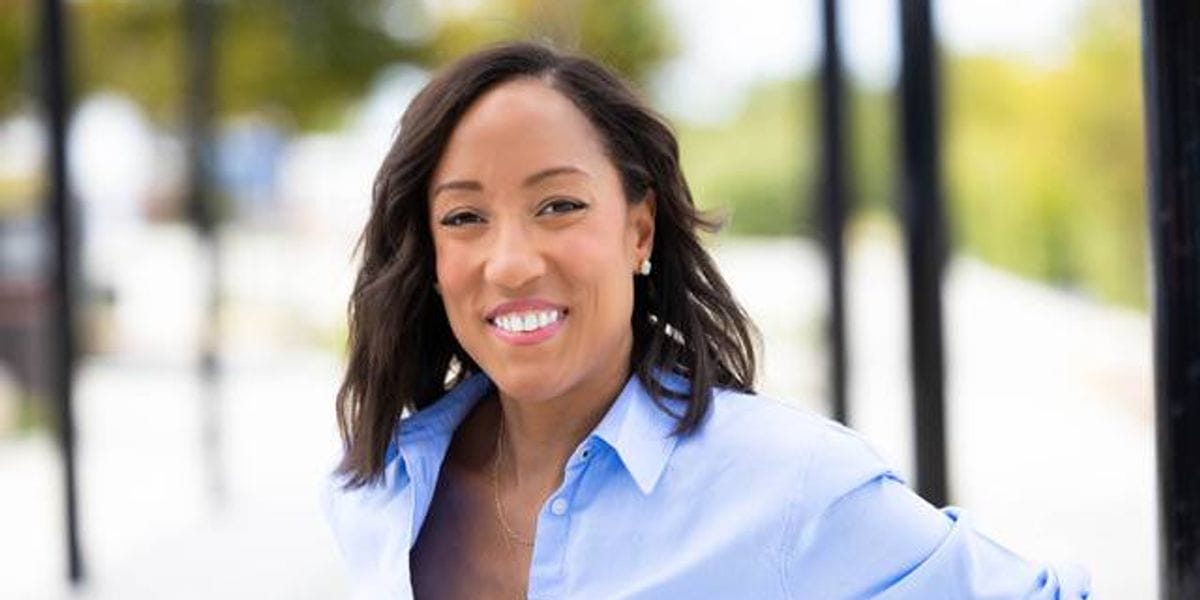

As told to Marnie Goodfriend
January is National Blood Donor Month.
I have suffered from sickle cell anemia since I was in the womb. My older brother also suffers from this disease, but it affects each of us differently. When we were children, he once visited me in the hospital for a blood transfusion after spending the day playing in the sun. I was angry that I was hospitalized every two weeks but he was never. This was an early lesson for me that different people with this disease experience it differently. For example, I am a fighter against sickle cell anemia, I am in pain every day and often need blood transfusions.
Growing up in Michigan, my parents tried to keep things normal, but I had a lot of limitations. I was curious and wanted to be like the other children. But intense exercise is a major stressor on the blood of people with sickle cell anemia. So I watched my friends do things like swimming in lakes or tubing, but I couldn’t join in. I went to Girl Scout camp for a year. I wanted to stay here all summer and ride, but my parents picked me up after two weeks. When I was young, my mother helped me understand my condition. She would say, “You’re no different than your friends who get a cold or the flu. It’s just that your illness is a little worse and you have to go to the hospital.” That’s how I understood things for many years.
While I was in school, my parents allowed me to apply to any college I wanted to attend. They never wanted my circumstances to destroy my dreams. But when I was accepted into schools out of state, my mother sat me down to talk about what life would be like if I did it on my own. “I’ll find out,” I told them. “What will you do if you can’t walk,” she asked. I knew she was right. Sickle cell anemia drains all the energy from my soul and some days all I can do is be still.
I enrolled in a local university for four years to be near my family and receive the care I needed. I lived on campus but often got sick and had to go back to the hospital. It was before cell phones, so none of my friends knew where I was. I disappeared with my parents in the middle of the night and that was that. For a while I was really angry because I didn’t understand why I had to live this life and try to date boys and be cute instead of being a sickly kid who was exhausted just from carrying his book bag. I looked like a normal student, but I was never normal. When you receive blood throughout your childhood, you often need different types of blood with different antibodies, and as a young adult I needed more blood donations.
When I began a career in logistics after college, I rarely told anyone that I had sickle cell anemia. If I had to be unemployed, I would use a different but related excuse, such as a pulmonary embolism or arthritic problems in my foot. When I told employers about my condition, I felt like I was viewed as inferior and that prevented me from moving up. Sometimes I need transfusions or painkillers to feel better, but I always need understanding and empathy that isn’t always present in the workplace.
2023 (Photo/Jason Avant)
As I got older and thought about romance, marriage seemed out of the question. Why would anyone want to take care of me? When I was long-distance dating my now husband, it took me three months to tell him about sickle cell anemia. I explained that I had a blood disorder with sickle-shaped blood cells instead of round ones and a blockage of oxygen that was wreaking havoc on organs. “The average life expectancy for someone with sickle cell disease is about 40 years. Do you still want to be with me?” I asked. It took him a few weeks to think about it, then he said, “I want to be able to take care of you.” Four years later I moved to Dallas and we married.
My husband and I talked about having children, something I had never thought about. It was too hard to imagine dying and leaving a family behind. But marriage changed things for me and we decided to give it a try for a year. Just as we were about to give up, I got pregnant. This baby inside me has taken all my love – and my entire body. He deprived me of every nutrient. I had sciatica, several bouts of pneumonia, and a pregnancy cough that left my lungs unable to fully develop. This meant I spent even more time in the hospital. When I came home I knew I couldn’t work in another stressful office environment, so I started photographing babies and built a business that grew from there.
I also increased my patient advocacy, which came naturally to me. My mother used to work for the University of Michigan. When I was about six years old, she took me to lectures about my illness and asked me to stand up and tell my story. From there, my passion for helping others on their health journey grew.
Over the years, I have learned that advocacy is much bigger than my own story. I’m no longer the little girl in the hospital bed. I am a passionate advocate and determined to change the narrative – not just for myself, but for so many people with sickle cell anemia or other chronic illnesses who rely on blood donations from complete strangers.
I realize that donating blood isn’t the most important thing for most people, but I hope everyone reads my story and takes some time to think about how much good they can do by simply donating blood. And I especially want to encourage people of color to donate. People of color are best suited for sickle cell patients, but donations are not always readily available and the days-long wait for blood is excruciating – not just for me, but for my parents, my husband, my son and everyone else who loves me.
I know there are stigmas and fears associated with donating blood, such as illnesses, medical environments, and even needles. But I want people to understand that donating blood is safe. And needles can be scary, but if you really think about it, maybe you could get over it when you realize that donating blood literally saves a life? I am living proof.
Do you have any real women, real stories of your own that you would like to share? Let us know.
From your website articles
Related articles on the Internet
