
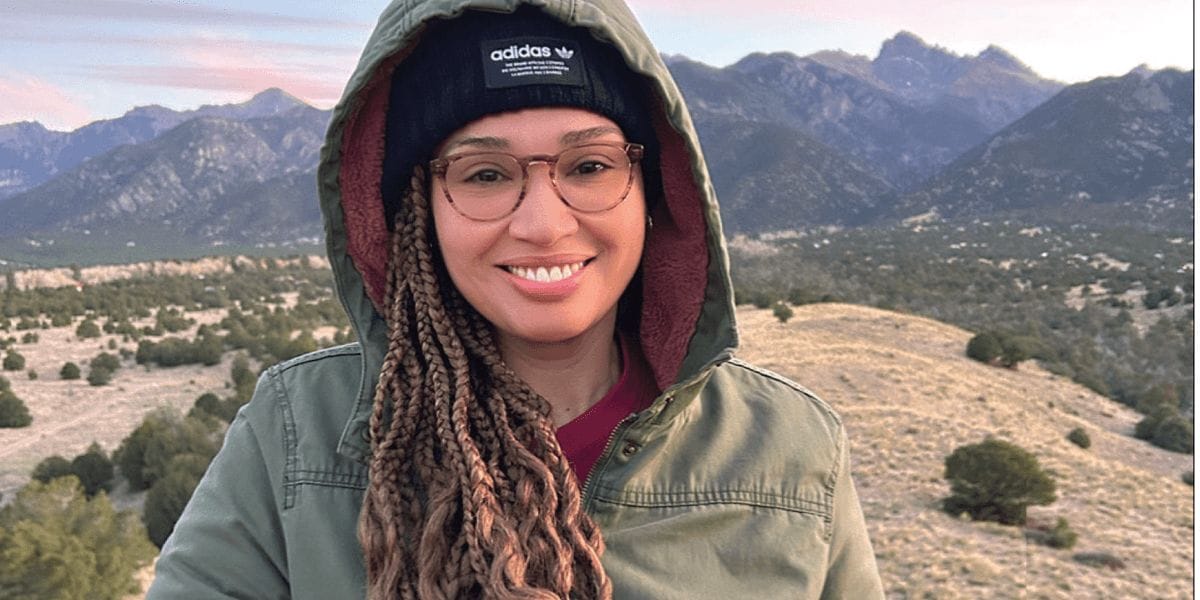

As Jacquelyne Froeber tells it
February 4th is World Cancer Day.
I have wanted to have a breast reduction for most of my adult life.
I’ve often dreamed about what it would be like to work out – or just feel comfortable in my clothes – without constant back pain or the unpleasant side effect of my DD breasts weighing me down.
Most women in my family have large, dense breasts, but no one has ever talked much about how large breasts affect their quality of life. Breast cancer also ran in my family, dating back to my maternal grandmother, who had a mastectomy in her fifties. So I understood the importance of routine mammograms and checking for anything unusual.
As I got older, I began to seriously consider the reality of breast reduction surgery. After my daughter was born and I left breastfeeding behind, I decided that at age 40 it was finally time to take the plunge.
I had a breast reduction in December 2024 and the procedure went according to plan. As I left my plastic surgeon’s office, I felt a heavy weight lifted from my chest and immediately felt like I had changed my quality of life for the better.
About a week into recovery, my plastic surgeon called unexpectedly. I thought she was checking on me (how sweet!). I had forgotten that my breast tissue had been sent to a pathology lab to be examined for abnormal cells. This was routine after a breast reduction, so I didn’t think much about it.
2025
What I didn’t know was that my plastic surgeon had noticed something unusual during the procedure – heavy bleeding in my left breast and abnormal-looking tissue, which could be a sign of cancer.
She hadn’t said anything yet because there was no way to find out without testing.
“It’s not easy to say. Your pathology results came back and they found cancer in your left breast,” she said.
As I sat on the edge of the bed, I immediately felt all the blood draining from my body.
The tissue was positive for ductal carcinoma in situ (DCIS) – a common type of breast cancer found in the milk ducts. DCIS is also known as stage 0, meaning it was in the earliest possible stage and had not yet spread to the surrounding breast tissue or other parts of the body.
This was all good news, but my brain had already gone to a dark place. I panicked. My first thought was that I have to be there for my daughter – I can’t leave her like that.
My plastic surgeon was very straightforward with me. “This will not separate you from your daughter. You will have to make some decisions, but we will help you get the care you need.”
Both my plastic surgeon and the pathologist who examined my breast tissue samples seemed confident that the reduction removed all of the cancer. However, I still needed follow-up tests to make sure we were taking every possible precaution.
I was still in shock after we hung up. I felt numb all over my body. I thought I was doing everything right. I’ve had routine mammograms every year – the last one was a few months before surgery.
Up until this point, I had only had a blocked mammary gland in my left breast after I stopped breastfeeding my daughter. I immediately called my gynecologist to talk to him about the discomfort and the fact that there was blood and pus coming out of my nipple. I had a mammogram and the results showed nothing unusual.
I also had fibroadenomas – benign lumps – in both breasts. I had a biopsy of a fibroadenoma in my right breast to rule out cancer – but not the lumps in my left breast. Looking back, I wish I had pushed for a left breast biopsy considering that’s where the DCIS was found.
But then it became clear to me: this diagnosis was a gift. I had done everything I was supposed to do, but there was still cancer. And because of the operation, we may have caught it before it became fatal.
My plastic surgeon kept her word and helped me get to all of my follow-up appointments within a few weeks. I was so grateful to have her by my side and see me through the necessary tests. I often thought of her words – that this would not separate me from my daughter – and they gave me strength and optimism during a very stressful time.
2025
About a month after the cancer call, all of my follow-up visits confirmed that the cancer was removed during the reduction surgery. It was basically like I’d had a lumpectomy – I just didn’t know it. And the best part: I didn’t need chemotherapy. Radiation and a mastectomy were both options I could pursue to reduce the risk of a recurrence. However, according to my surgeon, none of these were mandatory, so I decided to continue testing every six months, alternating between a mammogram and an MRI for two years, when recurrence is most likely.
I felt confident about this choice because I had significantly reduced the size of my breasts to a C cup and no longer had dense breast tissue, which meant anything unusual was easier to spot.
Looking back, it seems surreal to me that when I finally did something for myself – when I finally got the breast reduction I’d wanted for so long – it probably saved my life.
Now, 16 months after my reduction and cancer diagnosis, I am still cancer free. My doctors said I can go back to annual mammograms if my next six-month exam still doesn’t detect cancer.
I carry with me every day a sense of gratitude for how my situation has turned out. Overall, this experience taught me that self-care means health care. Like so many women, I find it difficult to put my own needs first. I am a mother, my mother’s caregiver and a career woman. However, I have learned to make sure I take time for myself and not allow the “mom guilt” to get to me. I’m a good mother and I’m a good daughter, and taking time out for myself doesn’t change that.
I hope that by sharing my story I can help other women in some way. Because together we are stronger.
Do you have any real women, real stories of your own that you would like to share? Let us know.
Our “Real Women, Real Stories” are the authentic experiences of real-life women. The views, opinions and experiences shared in these stories are not endorsed by HealthyWomen and do not necessarily reflect the official policy or position of HealthyWomen.
From your website articles
Related articles on the Internet
