


Across three days of conversations, RepresentWomen’s Democracy Solutions Summit showed that women’s political power depends on how democracy is designed—and how those systems can be rebuilt to better reflect the people they serve.
March 8 marked International Women’s Day, a moment each year when people around the world pause to celebrate the achievements of women and reflect on the work still ahead to build a more equitable future.
This year, I had the privilege of spending the days that followed in conversation with hundreds of people—including more than 60 speakers, panelists and moderators—who share a deep commitment to strengthening democracy and expanding women’s political power.
.jpg)
At RepresentWomen, we hosted the 2026 Democracy Solutions Summit, bringing together leaders, researchers, policymakers and advocates for three afternoons of conversation about a question that sits at the center of our work: How do we design democratic systems that truly reflect the people they serve?
Before anything else, I want to begin with gratitude.
To everyone who joined us, whether you attended one session or all three days: Thank you. Your engagement, curiosity and commitment to this work are what make gatherings like this meaningful.
I’m also deeply grateful to the remarkable speakers and moderators who shared their insights, and to the RepresentWomen team who worked tirelessly behind the scenes to bring the summit to life.
This year’s theme was “Women’s Power by Design.” It’s a phrase we return to often—because women’s representation is not simply the natural outcome of democracy. It is shaped by the rules and systems that determine who can run, who wins elections and whose voices are heard.
So we structured the summit around three conversations: where we’ve been, where we are and where we’re going.
Day 1: March 10
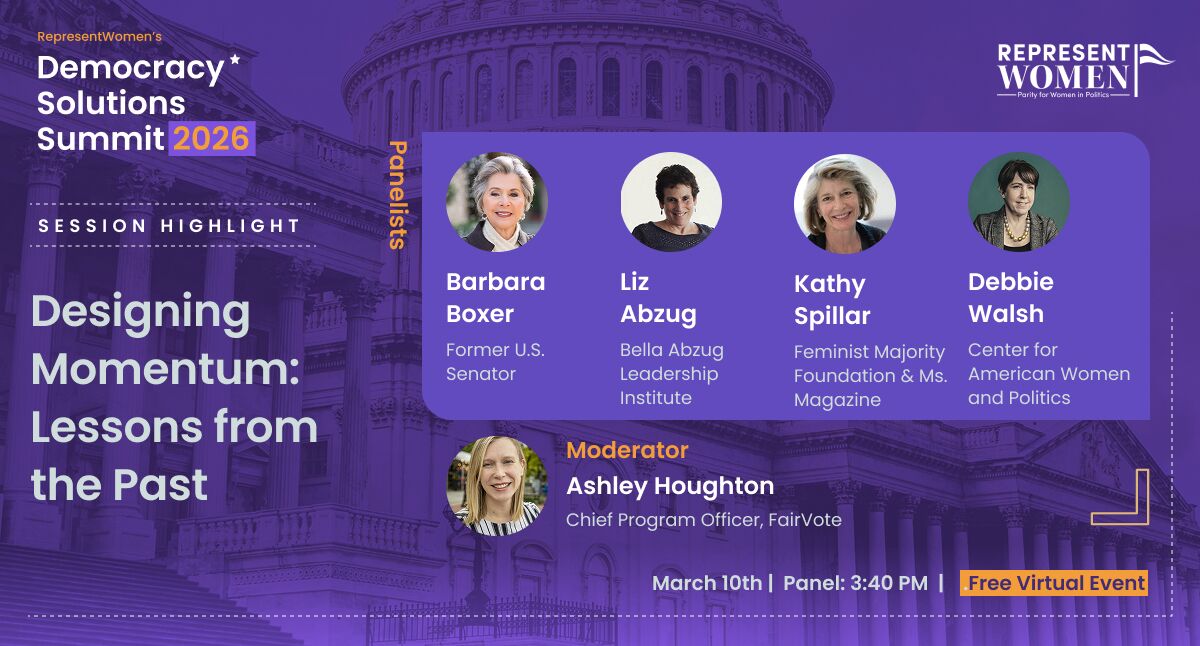
On the first day, we looked back at the foundations that made women’s political progress possible. Leaders, including former U.S. Sen. Barbara Boxer, Debbie Walsh, Kathy Spillar and Liz Abzug, reflected on the organizing, persistence, and institutional change that helped build momentum for women candidates over the past several decades.
Day 2: March 11
The second day focused on the realities women face in public life today.
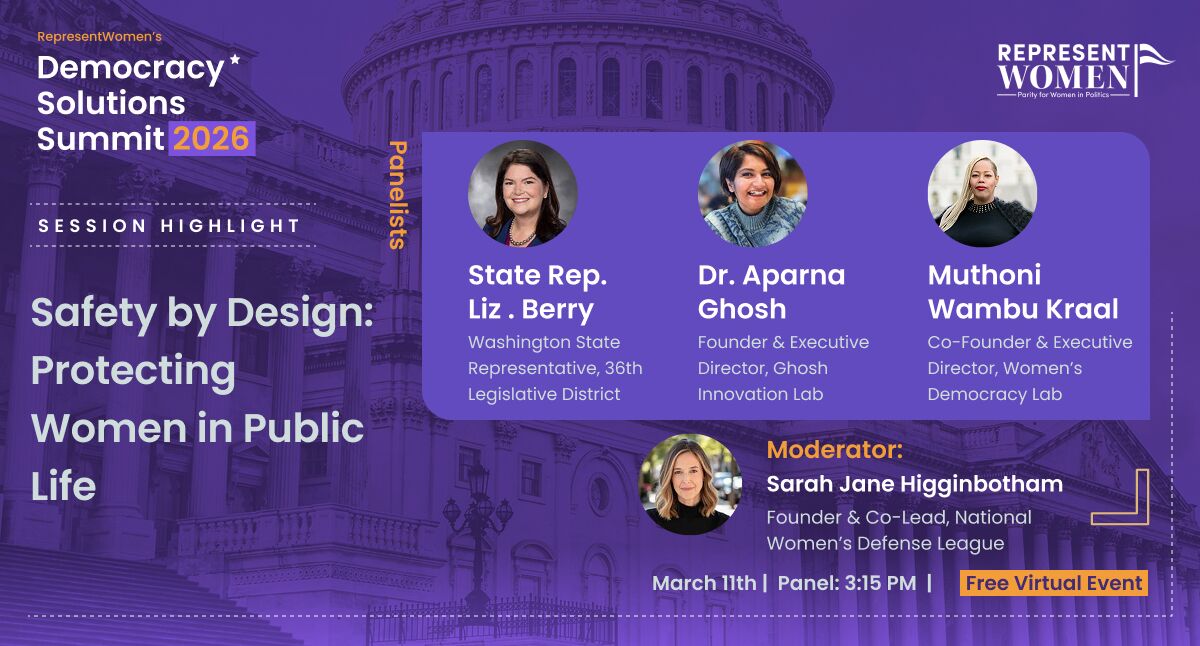
In a discussion on political violence and harassment, Washington state Rep. Liz Berry, researcher Aparna Ghosh, and democracy advocate Muthoni Wambu Kraal explored how threats to women in public life can discourage participation and undermine democratic institutions.
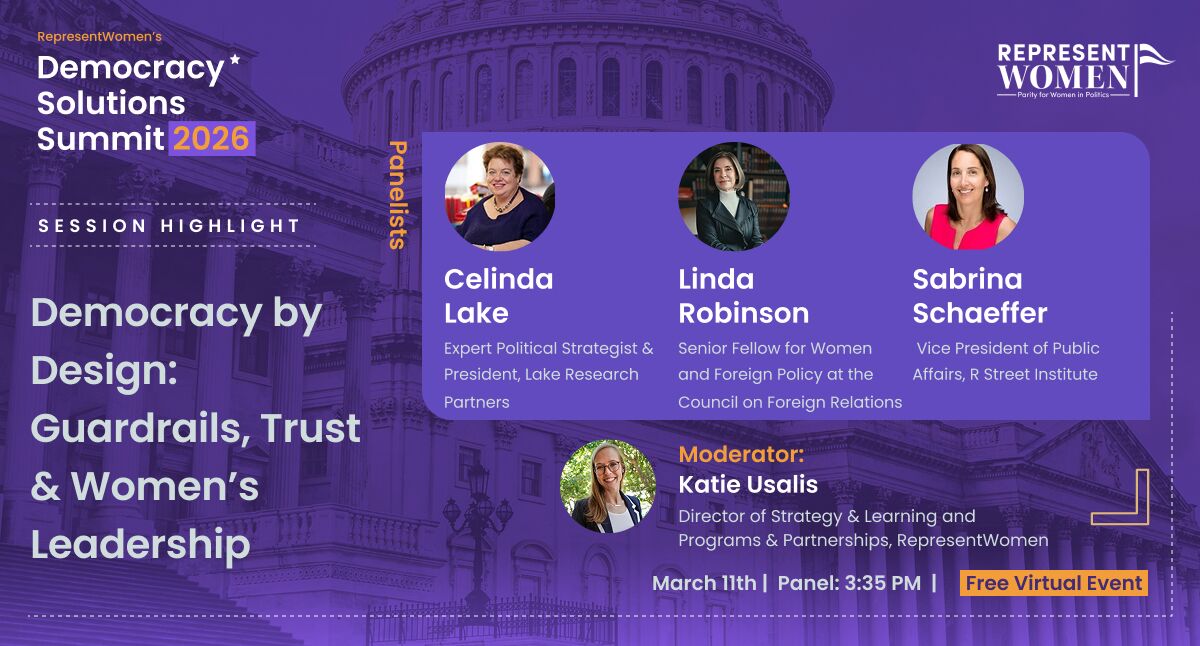
Another panel brought together political strategist Celinda Lake, Linda Robinson of the Council on Foreign Relations, and Sabrina Schaeffer of the R Street Institute to discuss democratic resilience, institutional guardrails and the importance of rebuilding public trust.
Women on another panel, including Vandinika Shukla, Saskia Brechenmacher and Jennifer Piscopo, discussed international trends for women’s representation and power.
We also highlighted the organizations building the leadership pipelines women need to run and lead. In a conversation moderated by Lindsey Williams Drath, CEO of the Forward Party, leaders from across the political spectrum shared insights from their work expanding pathways to public office, including Susannah Delano of Close the Gap California, Liuba Grechen Shirley of Vote Mama, A’shanti Gholar of Emerge, Anathea Chino of Advance Native Political Leadership and Jennifer Pierotti Lim of Republican Women for Progress.

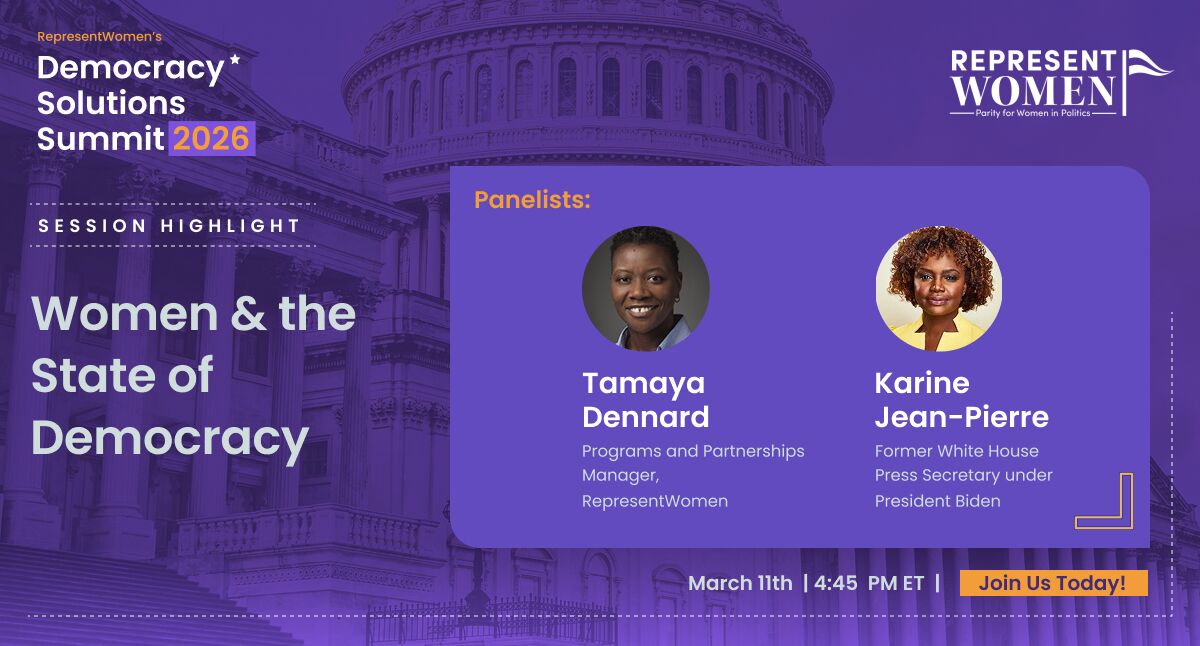
And while this day was often sobering, as we sat with all the work to be done, it also provided a lot of hope, which is meaningful in itself. As former White House press secretary Karine Jean-Pierre put it, “Hope is action.”
Day 3: March 12
The final day of the summit turned toward the future; toward the reforms, leadership pipelines and new voices that will shape the next chapter of women’s political power.
Movement leaders from across the country—including Tamaya Dennard of RepresentWomen, Sila Avcil of New Mexico Voters First, Liz White of UpVote Virginia, Marcela Miranda-Prieto of the California Ranked Choice Voting Coalition, Michelle Whittaker of RCV Maryland, and Juli Lucky of Alaskans for Better Elections—discussed the growing momentum behind electoral reform efforts.
Later panels brought together elected officials and legal experts, including former Oakland Mayor Libby Schaaf, constitutional lawyer Yael Bromberg, and former Cincinnati Councilmember Liz Keating, to discuss what it takes to lead within today’s political and legal systems while working to reform them.
And while all of the conversations throughout the summit were powerful, one of the most meaningful moments came when Ruby Coleman, a graduate student at American University and a former RepresentWomen intern, shared reflections on the future of democracy before moderating a conversation with three teenage girls, who are passionate about women’s representation, about the political system they hope to inherit. Listening to them speak was a powerful reminder that the work we do today is not just about the next election cycle. It is about the generations that will shape democracy long after we are gone.
Designing a Democracy That Reflects the People it Serves
Across the three days, one theme came through clearly: Women’s political power has never been accidental. It has been built through generations of organizing, reform and determined leadership by women who believed democracy could be more inclusive. And that work is far from finished.
As we approach the 250th anniversary of the Declaration of Independence, we have a chance to reflect not only on how far our democracy has come, but also on the systems we inherited along the way, including election rules rooted in traditions adopted from England centuries ago. The question before us now, as we look toward the future, is simple but profound: What would it mean to finally design a democracy that truly reflects the people it serves?
As we closed the summit, we shared a reflection from former New Zealand Prime Minister Jacinda Ardern, whose memoir, A Different Kind of Power, offers a vision of leadership grounded not in dominance but in empathy, courage and responsibility to the people we serve.
Expanding representation is not only about who holds office. It is also about how leadership is practiced once they get there. And as the musical Suffs reminds us:
“Remember every mother that you came from
On the journey every generation makes.”
Progress is never guaranteed. But history shows that it is possible when each generation continues the work. So as we move forward from this year’s Summit, let’s keep marching on, together, to design a system where women’s political power is not the exception, but the expectation.
