
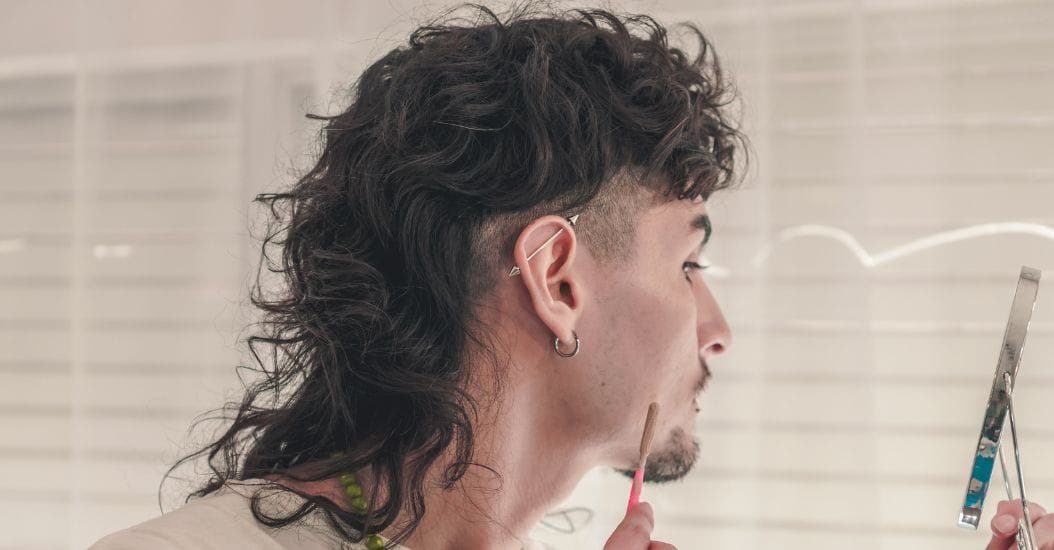

The resurgence of the mullet in men’s fashion blends effortless texture with bold shape, this cut thrives on movement and personality. Curly hair elevates a mullet by adding texture, movement and individuality. Modern mullets are wearable, tailored and versatile, this guide will cover preparation, styling, maintenance, face shape suitability and professional advice.
The Modern Curly Mullet for Men – Then vs Now
The mullet has a longer and more layered history than most people realise, it became iconic in the 70’s and exploded in the 80’s, worn by musicians, athletes and actors who embraced its rebellious energy. Modern mullets differ from their retro counterparts in both execution and attitude, while the classic mullet was often exaggerated and uniform, today’s versions are more refined, intentional and tailored to individual style and hair texture. Classic mullets were one size fits all, today’s mullet is highly customisable, adapted to face shape, hair type and personal style. Curly mullets are trending today because they hit the spot between texture, individuality and contemporary refinement. Unlike the flat, overly styled looks of the past, curly mullets let your hair do the talking.
Face Shapes & Curly Mullet Variations for Men
Curly Mullet for Round Faces
Why this works for curly hair
For men with round face shapes, curly hair is a major advantage when wearing a mullet. Natural curls create vertical volume at the crown, which helps elongate the face and counteract roundness. When paired with tapered sides, the curls draw the eye upward rather than outward, creating a more balanced and structured overall look.
Best suited hair type
- Hair density: Medium to thick hair
- Curl type: Small to medium curls (type 2C–3B) that naturally hold shape.
- Fine hair can work if supported with volumising or curl-enhancing products
Hair length & style structure
- Top: Short to medium length to allow lift and curl definition
- Back: Medium length – longer than the crown but not overly heavy
- Sides: Tapered or low-mid fade to reduce width at the cheeks
Maintenance guidance
- Book trims every 4-6 weeks to maintain clean sides and balanced proportions
- Use a lightweight curl cream or leave-in conditioner daily
- Diffuse on low heat to maintain height at the crown
- Avoid heavy oils or shiny products that flatten volume
Curly Mullet for Square Faces
Why this works for curly hair
A square face is one of the best shapes for a curly mullet because the style can soften strong angles while adding height and movement where its needed. Square faces have prominent jawlines and a broad forehead, the longer, textured back or curly mullet draws attention downward, while curls on top and around the sides soften the faces angularity.
Best suited hair type
- Naturally curly hair: adds body, movement and shape without much effort.
- Wavy air (Type 2): gives a relaxed, tousled look.
- Thick, straight hair: can pull off a mullet.
Hair length and style structure
- Top: usually 3-6 inches, depending on curl size and desired volume.
- Back: longest part, 4-8 inches or more, depending on personal preference.
- Sides: shorter than the top, typically 1-3 inches or even tapered/ faded.
Maintenance Guidance
- Regular trims every 6-8 weeks for the side and top, 8-12 weeks for the back, depending on growth.
- Use a curl cream on damp hair to enhance curl definition and reduce frizz.
- Wash 2-3 times per week for curly hair to avoid stripping natural oils.
- Sleep on a silk or satin pillowcase to reduce friction.
Curly Mullet for Diamond Faces
Why this works for curly hair
Diamond faces are characterised by wide cheekbones, a narrow forehead and a pointed chin. A curly mullet works perfectly because it balances the proportions and softens angles. It adds width at the forehead by creating horizontal volume, making a narrow forehead appear fuller. It also softens the cheekbones, the layered curls around the sides diffuse the prominence of high cheekbones.
Best suited hair type
- Curly hair (type 3): adds softness and movement around the cheekbones.
- Thicker, straight hair: works if strategically layered.
- Fine hair: can pull it off with added volume through styling products.
Hair length & structure
- Top: 3-6 inches to create volume above the forehead.
- Back: 4-8 inches or longer to avoid a triangular, heavy look.
- Sides: Avoid keeping too flat as it can accentuate the cheekbones.
Maintenance Guidance
- Trims every 6-8 weeks for top and sides, 8-12 weeks for the back- this keeps the shape and prevents curls looking heavy.
- Anti-frizz sprays in humid weather, extra hydration in dry conditions.
- Avoid combs that disrupt the curl pattern.
Curly Mullet for Oblong Faces
Oblong faces are longer than they are wide, with a high forehead, straight cheek lines and a slightly pointed chin. A curly mullet is ideal because it adds width and texture, balancing the length of the face. Curls on the sides help create width at the sides of the head, preventing the face from looking overly long. A slightly longer top with controlled curls softens a high forehead without exaggerating vertical lines and the layered back adds movement without elongating the face further.
Best suited hair type
- Naturally curly hair (type 3): perfect for adding width and softening vertical lines.
- Wavy hair (type 2): works well if volume is enhanced with styling products.
- Fine hair: may require styling products or curling techniques to add fullness.
Hair length & structure
- Top: 3-6 inches, slightly layered, this adds volume without elongating the face further.
- Back: 4-8 inches or longer, layered to avoid a heavy, flat appearance.
- Sides: 2-4 inches but not too tight.
Maintenance & Guidance
- Use leave-in conditioner or a lightweight mousse to define curls.
- Wash 2-3 times per week with a sulphate-free shampoo.
- Scrunch curls for volume and diffuse on a low heat.
Curly Mullet for Oval Faces
Oval faces are considered the most versatile face shape, characterised by balanced proportions, slightly rounded jawlines and a gently curved forehead. A curly mullet compliments an oval face perfectly because it enhances natural symmetry without empowering features. The mullets layered structure adds texture and movement without elongating or widening the face.
Best suited hair type
- Naturally curly hair (type 30): ideal for adding natural movement and effortless volume.
- Thick straight hair: perfect for a relaxed, tousled style that keeps the face framed.
- Fine hair: can achieve volume with light mousse or curl creams.
Hair length & texture
- Top: 3-6 inches to allow curls to form naturally.
- Back: 4-8 inches or longer, depending on preference.
- Sides: 1-3 inches, tapered or layered to softly frame the face.
Maintenance & Guidance
- Use a sulphate-free shampoo and follow with a moisturising conditioner.
- Sleep with a silk or satin pillowcase to prevent breakage.
- Use a leave-in conditioner to define curls and prevent frizz.
Preparing Curly Hair Before Styling a Mullet
When preparing curly hair to be styled into a mullet it is important to have your cleansing routine perfected. Avoid over washing the hair, 2-3 times per week works best and incorporate a sulphate-free shampoo into your routine.
If the curls need refreshing, use a water spray on dry or slightly damp hair and scrunch to reactivate the natural shape. Curly hair is more fragile when dry and combing through the curls can cause breakage and frizz. Start with finger detangling, gently separate curls and loosen knots, this minimises breakage and preserves the natural curl pattern. Follow this with a wide-tooth comb to smooth out remaining tangles, work from the ends upwards to prevent pulling and breakage. Scalp health is also crucial for curly hair, especially when styling a mullet because it directly affects curl definition, hair strength and overall style longevity.
A clean, well-moisturised scalp ensures hair grows stronger and less prone to breakage, which is essential for maintaining the longer back and layered top of a mullet.
Best Products for Men’s Curly Hair
Curl-enhancing shampoos
Curl enhancing shampoos are ideal for curly hair because they are formulated to nourish, define and maintain the natural texture of curls, something regular shampoos often fail to do. These shampoos are often sulphate-free, meaning they clean the scalp and hair without stripping away natural oils.
Lightweight conditioners
Curly hair needs moisture, but lightweight conditioners can weigh down curls making them look flat, limp or greasy. Lightweight conditioners provide just enough hydration to maintain softness and bounce while preserving natural volume.
Leave-in conditioners
Curly hair tends to be naturally dry because natural oils take longer to travel down the hair shaft. Leave-in conditioners provide ongoing moisture throughout the day, keeping curls soft and bouncy- perfect for the textured top and longer back of a mullet.
Curl creams vs gels
Curl creams moisturise and define curls with a soft, touchable finish, ideal for natural movement, frizz control and soft, textured mullets. They are extremely flexible and enhance the curl pattern without stiffness. Gels provide a stronger hold and curl definition and are useful for long back layers that need structure; however, they can feel stiff if over-applied.
Sea salt sprays (when and when not to use)
Sea salt sprays add texture, volume and a slight tousled, beachy look. They enhance curl separation and movement without making the hair look stiff and are great for achieving a lived-in, effortless style. Use these on damp hair for volume and to refresh curls midweek. Don’t use these on dry, brittle hair as they can further dry out curls and cause frizz.
Matte finishes over shine
Matte finishes provide natural, textured and soft-looking hair. It enhances curls’ volume and movement without making it look greasy or stiff and is ideal for the modern, effortless vibe of a curly mullet. If you want a more groomed, formal finish, a small amount of shine product can highlight curls. Shine can accentuate texture on top or the back for fashion-forward styles but use sparingly.
Step-by-Step – How to Style a Curly Mullet for Men
Step 1: Towel dry correctly
After washing, gently pat or scrunch your hair with a microfiber towel, avoid rough rubbing. The goal is to remove excess water without disrupting the curl pattern or causing frizz.
Step 2: Apply leave in conditioner
On damp hair, apply a lightweight leave-in conditioner from roots to ends, focus on mid-lengths and back, which tend to be the driest.
Step 3: Add curl cream or sea salt spray
Apply a curl cream for definition, while still keeping them soft and bouncy or a sea salt spray for texture and volume. Apply evenly throughout hair using fingers or a wide-tooth comb, starting from the back toward the top.
Step 4: Scrunch vs. Finger coiling
Gather curls in your palm and push upwards towards the scalp to encourage clumping and natural bounce. For tighter curls, wrap individual curls around your fingers to define them more precisely. Use the hands only method as much as possible to preserve natural shape.
Step 5: Diffuse or Air-dry
Use a diffuser on a low heat and airflow, cupping the curls in the diffuser and lift from the roots for volume and shape. If you prefer a softer, more natural look, let curls air dry while occasionally scrunching to maintain movement. The goal is to preserve natural texture while preventing frizz.
Step 6: Maintain the shape through sides and back
Use hands only or a wide-tooth comb to gently shape curls around the sides and back. Keep sides soft and controlled with the back layered and bouncy. A light curl cream on the ends helps prevent limpness.
Step 7: Finishing touches
Scrunch lightly one more time once the hair is dry to reactivate the curl pattern. Avoid touching too much throughout the day to prevent frizz.
Essential Styling Tools for a Men’s Curly Mullet
Diffusers are essential for men’s curly mullets because they help enhance natural curl patter, maintain volume and prevent frizz, all of which are key to a modern, textured look. Direct heat from a regular blow dryer can disrupt curl clumps, causing frizz and flattening layers.
Clippers and fades are key tools in shaping a modern curly mullet and they dramatically influence the haircut’s overall balance, texture and style. Clippers allow barbers to precisely shorten the sides and back, creating a clean transition that emphasises length and texture on top and in the back. Curly hair is delicate and excessive combing, brushing or heat can disrupt curls. Using fingers and gentle scrunching preserves the natural spiral and bounce that make a curly mullet look effortless and defined.
Maintaining a Curly Mullet Between Haircuts
Daily refresh routine
Use a light curl refresher spray or a mist of water to reactivate your natural curl pattern. Use your hands to lift and reshape curls, especially on top and back sections.
Weekly wash schedule
Washing your hair 2-3 times per week is ideal for curly hair to maintain moisture.
Frizz control
Leave-in conditioners, curl creams or light oils help seal in hydration, overloading curls can weigh them down and create frizz.
Sleeping tips
Sleep with a silk or satin pillowcase to reduce friction that causes frizz and breakage.
When to book trims
When curls start to look heavy, lose bounce or the shape of the mullet starts to collapse it may be time for a trim. The sides and top require trims every 6-8 weeks to maintain fade, taper and face-framing shape. The back needs trimmed every 8-12 weeks to trim split ends and maintain a layered structure.
Low-Effort Mullet Styling for Busy Men
Quick refresh hacks
For curls that have lost definition, wrap individual curls around your fingers to restore clumps and bounce. Rub a tiny amount of matte cream or clay on ends or frizz-prone areas to define curls.
Multi-use products
Multi-use products are versatile styling products that can hydrate, hold and add texture, all in one. These are ideal for curly hair because they simplify routines and reduce product overload while keeping curls soft, bouncy and well-shaped.
How to keep curls defined without daily styling
To keep curls defined without daily styling, start with a strong foundation. Wash and condition properly using a curl-enhancing shampoo and lightweight conditioner to maintain moisture and elasticity. Protect the curls while sleeping by using a silk or satin pillowcase. This reduces friction and prevents curls from frizzing overnight, or opt for the pineapple method, gathering top curls loosely at the crown to preserve volume and clump definition.
Gym/ helmet/ hat considerations
Curly mullets require a bit of extra care during workouts or when wearing hats and helmets to maintain curl definition and volume. Sweat can flatten curls or cause frizz, keep a microfiber towel handy to gently blot without rubbing or apply a light curl cream to the hair prior to protecting curls from frizz caused by sweat. Tight helmets can flatten the sides and tops, disrupting curl clumps. After removing the helmet, scrunch curls with hands or lightly mist with water to reactivate the shape. The same goes with hats, keep hair hydrated and lightly styled before putting on a hat.
Professional Styling at Rush Hair
Are you ready to rock a modern curly mullet that’s full of volume, texture and personality? Book your appointment to your closest Rush salon and our experts will craft you a cut that works with your natural curls.
FAQ’s
The best products for a men’s curly mullets are hydrating curl creams, specifically designed to hydrate curls and keep them bouncy and frizz-free. Gels can help preserve curls, clumps and shape, especially on the back and sides.
Curly hair frizzes when it’s dry or dehydrated, use a sulphate-free, curl enhancing shampoo and a lightweight conditioner to maintain moisture. If further hydration is needed, use a leave-in conditioner to lock in more hydration.
Is a curly mullet high maintenance for men?
Curly mullets can be high-maintenance or low-maintenance. Regular trims are needed to keep the signature shape, however, curls provide natural volume and movement, so less heat and over-styling is needed.
Mullets require longer length in the back while the top and sides remain shorter. If your hair is currently very short, plan for several months of growth on the back with layers.
Fades create a sharp transition from short sides to longer top and back, emphasising the mullets shape. The contrast highlights curl texture and volume on top and in the back.
