
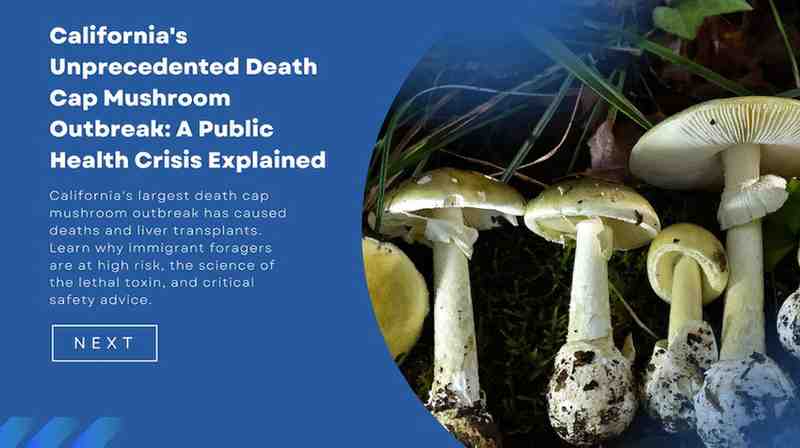

California is experiencing its largest outbreak of illness and death yet linked to the deadly death cap fungus, triggered by a wet winter.
The crisis is disproportionately affecting immigrant foragers who mistake the poisonous mushroom for edible species from their home countries, overwhelming poison control centers and prompting urgent public warnings.
Death cap mushroom outbreak: The extent of the crisis
California is struggling with one unprecedented outbreak of tuber fungi. This is what state health authorities report 35 illnesses, 3 deaths and 3 liver transplants has been linked to the fungus (Amanita phalloides) since November and is concentrated in coastal counties from Monterey to Sonoma. The medical toxicologist Dr. Craig Smollin calls this the “largest outbreak we’ve ever seen in California,” a stark contrast to the typical five annual cases. The increase is attributed to this exceptionally wet winter conditions This created an ideal bloom for the poisonous fungi that thrive under oak trees in moist, shady areas. This environmental trigger has turned an ongoing risk into a widespread public health emergency.
Why this outbreak is unique: A cultural and linguistic one Challenge
The Death cap mushroom outbreak is uniquely serious, not only in terms of numbers but also in terms of victims.
A significant proportion of cases concern immigrant collectors from Mexico and Asia (including Spanish, Mandarin and Mixteco speakers) who misidentify death cap mushrooms as a safe, well-known species from their homeland, such as the Volvariella mushroom in Oaxaca.
This tragic misidentification arises from visual similarities – a smooth, olive-colored cap and a cup-like volva at the base of the stem. However, the death cap’s distinctive ring (annulus) around the stem is a deadly distinguishing feature that is often overlooked.
Also read: USA revises vaccination plan for children. Here’s what it means for your children.
The outbreak highlights a critical gap culturally competent public health communicationas standard warnings do not reach English-speaking communities that engage in traditional foraging activities.
The Science of the Toxin: No Antidote and a Deceptive Timeline
The Death cap mushrooms The danger lies in its strong, heat-stable amatoxins, which cause irreversible cell damage.
There are not a safe level of consumptionand cooking or freezing does not neutralize the toxin.
The symptoms follow a deceptively delayed schedule: Severe gastrointestinal illness (nausea, vomiting, diarrhea) occurs 6-24 hours after ingestion and often leads sufferers to mistakenly attribute their illness to a common gastrointestinal illness.
Also read: Former Little Mix singer Jesy Nelson says her twins may never walk
The true crisis is then preceded by a false “recovery phase”: fulminant liver failure which manifests 48-96 hours after ingestion and often requires emergency transplantation or results in death.
This biphasic symptom pattern dangerously delays life-saving medical intervention.
Public health response and critical safety alerts
The authorities have warned strongly against this Look for all wild mushrooms. The California Poison Control System (1-800-222-1222) provides multilingual, confidential advice.
Experts emphasize this Identifying poisonous mushrooms is extremely difficult even for experienced collectors, as the local species differ from those abroad.
The public is made aware of this Symptoms after eating a collected mushroom require an immediate emergency callno wait-and-see approach.
This outbreak is a grim reminder that foraging knowledge is not transferable across regions and that nature’s bounty can harbor deadly mimics.
Essential safety and preparedness equipment
Safety begins with awareness and having the right tools, especially during outdoor activities.
Gardening gloves, robust – Protect your hands when handling unfamiliar plants or fungi.
American Red Cross Emergency First Aid Guide – An essential, watertight reference for dealing with medical emergencies, including poisoning.
LifeStraw personal water filter – Ensure safe drinking water in the wilderness to avoid additional health risks.
Sources
This report is based on data from California health officials and toxicology experts.
·
For official case numbers and warnings: California Department of Public Health
·
Poison control and treatment guidelines: California Poison Control System
Affiliate Disclosure: This article contains affiliate links. We may receive a commission for purchases you make, at no additional cost to you. This supports our public safety and health reporting.
