
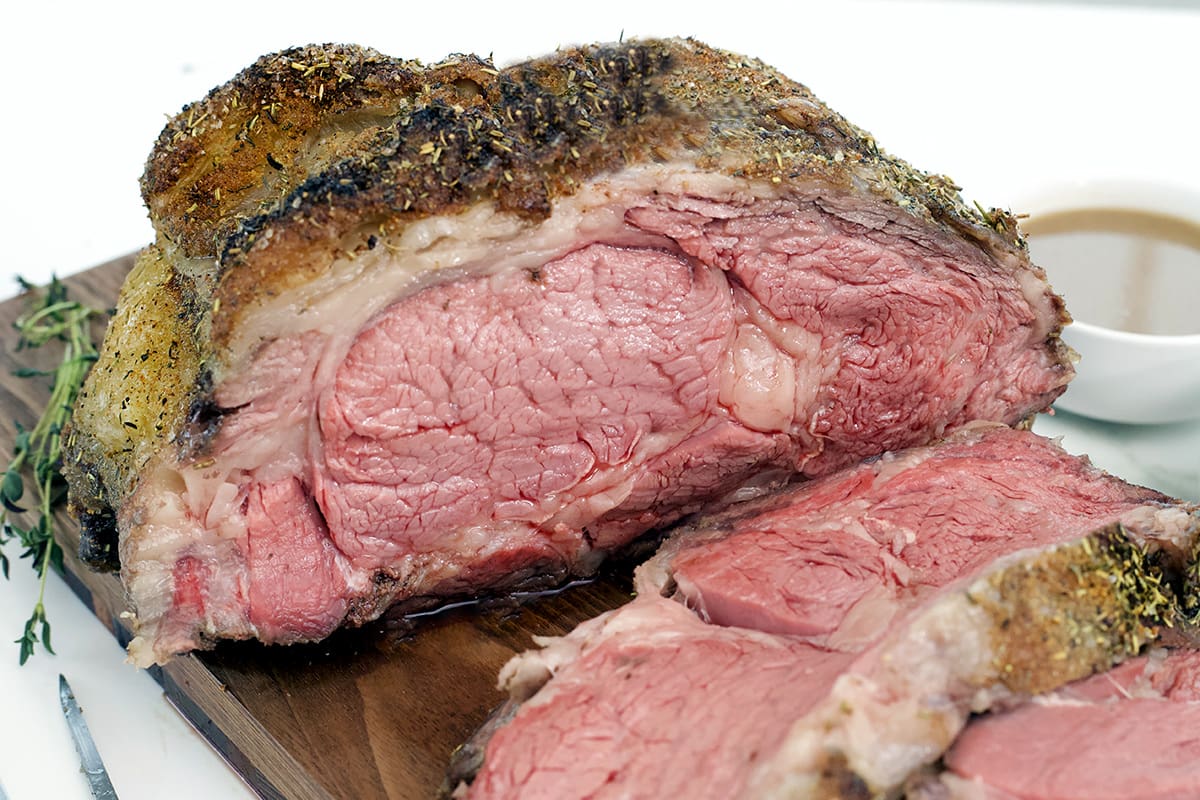

Reverse Sear Prime Rib delivers steakhouse-quality results at home — a golden crust on the outside and tender, buttery perfection on the inside. Get expert advice straight from the prime rib pros!


Reverse Sear Prime Rib Recipe
Prime rib roast, standing rib roast, ribeye roast, Christmas roast — whatever you call it, this classic cut is tender, juicy, and full of rich beef flavor, slow-roasted to perfection for any holiday feast. Many chefs recommend the reverse sear method for prime rib to achieve the perfect crust, without the unsightly grey band.
The prime rib reverse sear method delivers perfect edge-to-edge doneness, with a melt-in-your-mouth interior and beautiful char on the outside. By roasting low and slow, then finishing with a blast of high heat, you achieve the ideal balance of texture and flavor.
This method works for both bone-in and boneless roasts, from significant seven-bone cuts to smaller portions.


When shopping for a roast, select a “USDA Prime” rated prime rib. Even though it’s called “Prime Rib,” the name is misleading. The “prime” in “prime rib” refers to the cut itself – NOT the USDA grading.
There are three different quality levels to choose from: Prime, Choice, and Select. Avoid select at all costs. Amongst other things, “prime rated” means it has the most marbling, which is what prime rib is all about. It’s what gives the meat that buttery quality.
In terms of quantity, the standard rule is 3/4 -1 pound of prime rib per person.
For cost estimates and store recommendations, check out my article on Prime Rib For Sale.

Ingredients
Only a few ingredients are needed to make this reverse sear prime rib:
- Prime Rib Roast – Bone-in Prime Rib or Boneless Prime Rib
- Prime Rib Rub – kosher salt, dried or fresh Herbs (rosemary and thyme), garlic powder, onion powder, and black pepper
- Garlic – slices of fresh garlic are stuffed in the roast to help infuse the meat with flavor
- Olive Oil – creates the delightful crust and helps the seasoning stick to the meat. You can sub in ghee, beef tallow, or avocado oil.
While Prime Rib Au Jus is the go-to dipping sauce, Horseradish Sauce and Prime Rib Gravy are also great pairings. Here’s the complete list of Prime Rib Sauce options to consider.
Preparing Your Prime Rib Roast
If you choose a bone-in prime rib, there are two simple ways to get it ready before cooking:
Have Your Butcher Do It: Most butchers will cut and tie the roast for you at no extra cost. It takes them just a few minutes, but it saves you quite a few.
Do It Yourself: Use a sharp knife to separate the bones from the meat, then tie the roast and bones back together with kitchen twine. If you’re new to the technique, check out this helpful video for visuals.

How To Reverse Sear Prime Rib
Cooking a standing rib roast is easier than it sounds. The perfect prime rib roast combines flavorful prime rib seasonings with the best cooking practices to help you nail your recipe.
Here’s How To Cook Prime Rib with some photos to help you make this delicious prime rib recipe:
Preparation – Take the meat out of the refrigerator at least 4 hours before cooking, so it comes closer to room temperature. This step allows the meat to cook evenly on the inside and out. For a super crispy crust, coat the roast with kosher salt 24 hours ahead of time and store in the refrigerator uncovered.

Pre-heat The Oven – When ready to cook, pre-heat the oven to 200°F.
Add The Prime Rib Seasonings – Pat the roast dry. Using a small knife, make small slits all over the top of the roast, and insert slices of fresh garlic. Coat with olive oil, then rub with the prime rib rub. Place in a roasting pan, bones side down (fat side up).
Roast – Insert a digital thermometer into the thickest part of the roast, then cook according to the Temperature Chart below.


Rest – Transfer the cooked prime rib to a cutting board and loosely cover with aluminum foil, then rest. Do not skip this vital step, as all the juice will run out.
Reverse Sear: 15 minutes before serving, crank up the oven or crank up the stove heat. Place the roast back in the oven or skillet, and sear until a deep, rich crust forms (about 6-8 minutes).
Serve – when ready to serve, cut off the butcher’s twine and use a sharp knife (this knife is the one I personally use and recommend) to slice against the grain. Each prime rib steak should be about 3/4 – 1″ thick. Serve immediately for best results.
Estimated Cooking Time
The total cooking time depends on the size of the roast. Plan on 35–45 minutes per pound to reach rare, but prioritize temperature over strict timing.
Real-time example: My last standing rib roast was 5 pounds, and it took 3 hours and 15 minutes to cook to rare. That calculates to 39 minutes per pound.
I recommend checking the digital thermometer at the 30-minute per-pound mark, as ovens do vary in temperature and roasts do vary in shape.

Internal Temperature
Prime rib should be cooked according to internal temperature, not time. The chart below lists the final doneness temperatures. You’ll want to remove the roast from the heat before hitting your target temperature, since carryover cooking during the resting period will raise the temperature to your desired doneness.
- Rare Prime Rib: 120-129°F
- Medium Rare Prime Rib: 130-134°F
- Medium Prime Rib: 135-144°F
- Medium Well Prime Rib: 145-154°F
- Well Done Prime Rib: 155-164°F
Tip- Download our free Temperature Chart For Prime Rib printable for quick access while cooking.

Resting Time
The roast will increase in temperature as it rests, so you’ll want to adjust your “pull time” accordingly.
Here’s a general guideline for a reverse seared prime rib:
| Ideal Resting Time | Estimated Temperature Increase | Best Used For |
| 10-15 minutes | 2-3°F | Ideal for smaller cuts or when searing soon after resting |
| 20-30 minutes | 3-5°F | 3-4 bone roasts |
| 45-60 minutes | 5-8°F | 5-7 bone roasts or when resting before searing/serving |
If you need to rest your roast for more than 30 minutes, I recommend wrapping it tightly in foil, covering with a kitchen towel, and placing it in a cooler or another warm space. The cooler will insulate the roast and keep it at the proper temperature until you’re ready to serve, up to 90 minutes.
If resting for under 30 minutes, just loosely tent with foil.

Expert Tips For Success
- Pat the roast dry on the surface to ensure a good crust.
- If you’re roasting a boneless prime rib, place it on a rack to allow air circulation. No large roasting pan? No problem. A wire cooling rack set over a rimmed baking sheet works just as well.
- Using a digital meat thermometer is A MUST when making any prime rib recipe!
- Plan out your cooking schedule so you leave ample time to cook your standing rib roast to your preferred doneness. Also, the side dishes we cook usually take 30 minutes. While our meat is resting, we have the side dishes prepped and ready to pop in the oven the minute the meat is removed.
- Prime rib doesn’t put out a ton of pan drippings or excess fat, so if you’re making homemade beef gravy or au jus, you’ll need to supplement with beef broth or stock.

What To Do With Leftovers
Reheating: Reheating prime rib doesn’t have to dry it out. This How To Reheat Prime Rib guide covers seven proven methods — from oven to sous vide — so your leftovers stay tender and flavorful.
Leftover Prime Rib Recipes: Turn your roast into something new! A Prime Rib Sandwich, or Prime Rib Sliders, is my favorite way to enjoy leftovers, but you’ll find more ideas on my list of Recipes With Leftover Prime Rib.
Storage: After cooling, place leftover prime rib in a zip-top bag or airtight container and refrigerate for up to 5 days. For the best results, slice only what you plan to eat right away and keep the Rest as a whole roast to lock in moisture.
Still have questions? Let’s make your holiday season as stress-free and successful as possible! After all, this cut of beef isn’t cheap. Feel free to leave a comment or question below; I’m more than happy to answer.

Reverse Sear Prime Rib
Servings: 8 People
Calories: 888kcal
Cost: $125
Prevent your screen from going dark
Equipment
Thermaworks Wireless Thermometer
Ingredients
Prime Rib (bone-in or boneless)
- 1 prime rib roast, boned and tied (*Note 1)
- 2-3 tbsp olive oil (*Note 2)
- 3-4 cloves garlic, thinly sliced (*Note 3)
Prime Rib Rub (*Note 4)
- 1 tbsp dried thyme
- 1 tbsp dried rosemary
- 1 tbsp black pepper
- 1 tbsp onion powder
- 1 tbsp garlic powder
- 2 tbsp kosher salt, plus more to dry brine
Instructions
PREPPING
-
OPTIONAL: Coat the prime rib in kosher salt and store in the refrigerator, up to 2 days before cooking.
-
Remove the prime rib from the refrigerator 4 hours before cooking.
COOKING THE PRIME RIB
-
When ready to cook, pre-heat the oven to 200℉ (93℃).
-
Cut ½ inch slits on the top of the roast and insert sliced garlic.
-
Rub the outside of the roast with olive oil.
-
Combine the rosemary, thyme, kosher salt, black pepper, onion powder and garlic powder and spread evenly over the roast. You may need two batches depending on the size of your roast.
-
Transfer the roast to a roasting pan, bone side down (or fat side up).
-
Insert a digital thermometer into the center of the roast and place in the oven (Middle Rack).
-
Calculate your cooking time by allowing 25-35 minutes per pound of meat for medium-rare. Start checking at the 20 minute mark, as roasts vary in shape and ovens vary in temps. (*Note 5)
RESTING
-
Transfer the cooked prime rib to a cutting board and loosely cover with aluminum foil, then rest for 20-30 minutes. If resting over 30 minutes (up to 90 minutes), tightly cover with foil, a kitchen towel, and place in a warm spot or insulated cooler. (*Note 5)
SEARING
-
15 minutes before serving, crank up the oven or crank up the stove heat to as high as it goes (500℉-550℉). Place the roast back in the oven or skillet, and sear until a deep, rich crust forms (about 6-8 minutes). If using a skillet, use tongs to sear each side of the roast for about 1 minute. There is no need to rest again.
Notes
Note 2 – You can substitute in ghee, tallow, or avocado oil.
Note 3 – You can skip this step if you choose.
Note 4 – You may need two batches, depending on the size of your roast.
Note 5 – The pull from the oven temp will be 2-8°F lower, depending on how long you rest the roast.
TEMPERATURE CHART
-
- Rare Prime Rib: 120-129°F
-
- Medium Rare Prime Rib: 130-134°F
-
- Medium Prime Rib: 135-144°F
-
- Medium Well Prime Rib: 145-154°F
-
- Well Done Prime Rib: 155-164°F
Note 6 – your roast will increase in temperature as it rests, so adjust your cooking time based on how long you plan to rest the roast.
Resting Time
The roast will increase in temperature as it rests, so you’ll want to adjust your “pull time” accordingly.
Here’s a general guideline for a reverse seared prime rib:
| Resting Time | Estimated Temperature Increase | Best Used For |
| 10-15 minutes | 2-3°F | Ideal for smaller cuts or when searing soon after resting |
| 20-30 minutes | 3-5°F | 3-4 bone roasts |
| 45-60 minutes | 5-8°F | 5-7 bone roasts or when resting before searing/serving |
Nutrition
Calories: 888kcal | Carbohydrates: 3g | Protein: 39g | Fat: 79g | Saturated Fat: 32g | Polyunsaturated Fat: 3g | Monounsaturated Fat: 35g | Cholesterol: 171mg | Sodium: 1872mg | Potassium: 668mg | Fiber: 1g | Sugar: 0.1g | Vitamin A: 31IU | Vitamin C: 1mg | Calcium: 45mg | Iron: 5mg
