
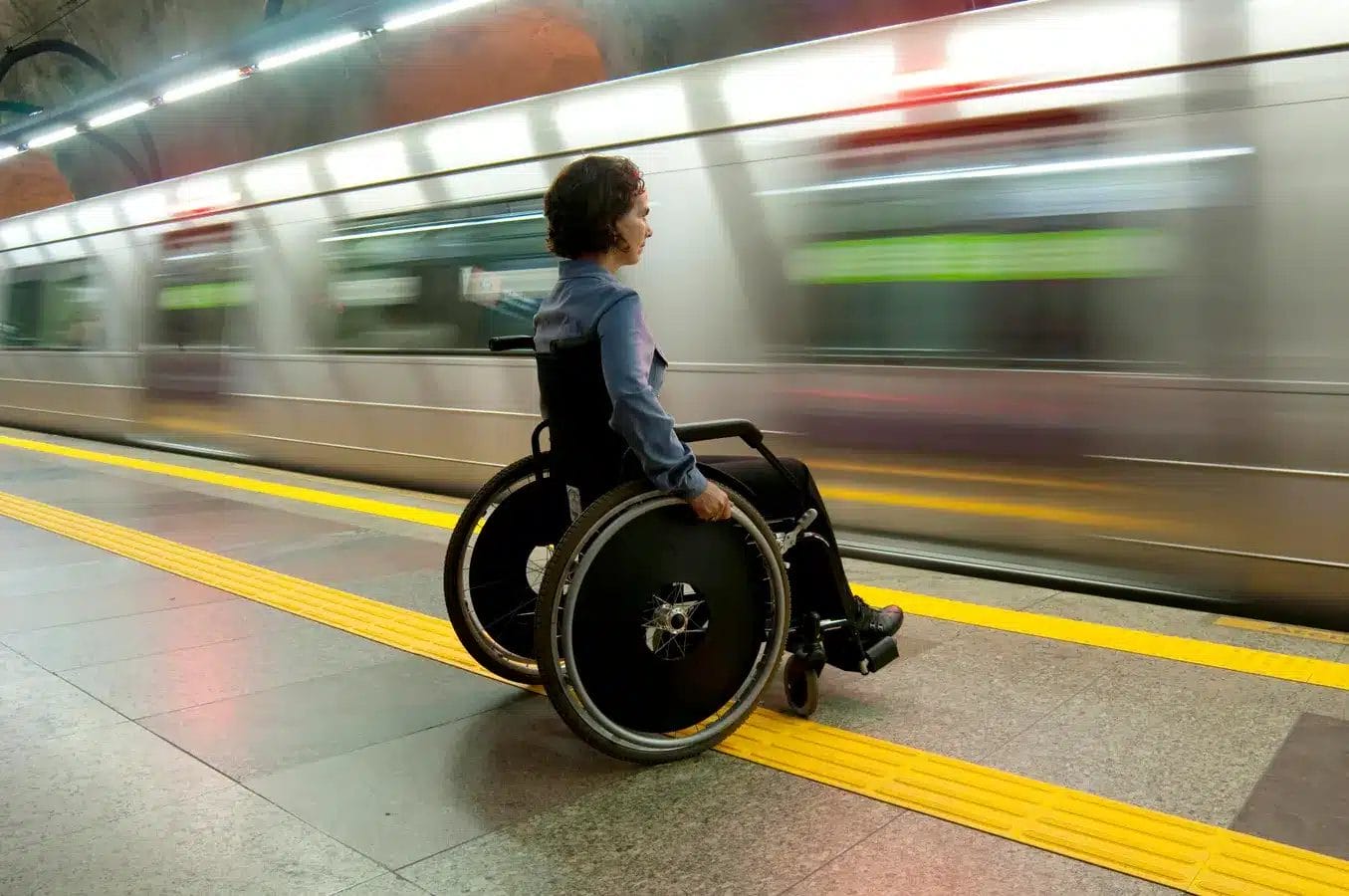


According to the United States Department of Labor (DOL), 22.7% of People with Disabilities (PWDs) are employed, compared to 65.6% of non-disabled people. As a result, PWDs are 2X more likely than non-disabled people to live in poverty.
Part of the reason is that nearly 50% of PWDs are over 65, making them more likely to experience the effects of environmental hazards, as well as generally cumulative poor health. However, age is not the only obstacle PWDs face when obtaining and retaining employment. Factors such as transportation, discrimination, and accessibility also play significant roles.
Transportation Barriers
The majority of Americans travel by car. However, for many PWDs, transportation by private car is unrealistic. For example, wheelchair vans cost around $65,000-$98,000. In comparison, the Kelley Blue Bookreports that the average American pays an average of $49,000 for their cars. Although non-disabled vehicles can be fitted with equipment to make independent driving possible,these accessories can also be quite expensive. For example, mechanical hand controls cost approximately $1,000-$6,000, and digital hand controls start at $12,000. As a result, only those in a higher socioeconomic status can afford these luxuries, and many PWDs do not fall into this category.
For those who use public transportation but cannot travel in vehicles intended for the general public, paratransit, or door-to-door service offered by public transportation systems, is often their best option. Offering paratransit is required by the Americans with Disabilities Act (ADA). Paratransit is an essential resource for many PWDs across the country. However, using paratransit has many drawbacks. Paratransit is only available within ¾ of a mile of a bus or rail station. While this system benefits PWDs in communities with advanced public transit systems, it places PWDs in communities with limited public transit opportunities at a distinct disadvantage. Twelve million Americans live in rural areas, and 41% of those live in counties without any public transit systems. These restrictions can limit social and professional mobility since paratransit rides can arrive within one hour of the requested pickup time. For example, if an individual requests a ride at 8 AM to reach work by 8:30, the ride could arrive as early as 7 AM and as late as 9 AM. Similarly, if one must reach home by a certain time, there is no guarantee that that will occur. For those with inflexible work schedules, such as those engaged in shift work, this presents a distinct disadvantage. Fortunately, some jurisdictions also provide discounts for ride-share services, such as Uber and Lyft. However, these programs often have a cap on how much the jurisdiction will pay, making travel inaccessible for low-income individuals.
Lack of Workplace Accessibility and Prejudice
In my last article, I mentioned undue hardship, which is the condition whereby companies can deny workplace accommodations if the accommodation puts too much strain on the company’s resources. For example, a company may not have the resources to build a wheelchair ramp, so an applicant with a physical disability may be denied employment due to the company’s limitations. Although companies are required by law to meet the accommodations requested, undue hardship is the exception to this rule.
However, even if accommodations are met, there is the very real possibility of discrimination from coworkers and supervisors, and stigma surrounding the accommodations received. One study found that participants who disclosed their disability on a job application were 26% less likely to receive interest from an employer. Many of those who are hired often feel isolated and overlooked for promotions (over half of the study’s participants believed that they would never be promoted in their current role due to their disability, and experienced more probationary periods than their non-disabled peers).
In one Buzzfeed article, respondents with disabilities shared their experiences of workplace discrimination. A former teacher explained how complications from Type 1 diabetes led them to quit the profession altogether sine the respondent said, “There were a number of days when I went to work after having a night of low blood sugars so bad I lost consciousness (aka nearly died), then had to slap a smile on my face for 7 a.m. because taking sick days was so looked down upon.” Another participant with mental health struggles recounted the lack of support they received when struggling to meet workplace demands. “Instead of reprimanding me and saying my work was ‘lacking,’ they could have said, ‘We noticed you may be having a hard time right now; is there anything we can do to help?”
One outdated precedent further ensures that some PWDs stay below the poverty line. According to 14(c) of the Fair Labor Standards Act of 1938, employers can pay workers with disabilities less than minimum wage because they are not able to perform as well economically as those without disabilities. Most of these employees have intellectual or developmental disabilities, earn less than $3.50 per hour, and do not receive medical benefits from their workplaces. The legal minimum wage is $7.25 per hour, so earning only $3.50 per hour can make it impossible for employees with disabilities engaged in 14(c) labor to support themselves financially.
However, the Department of Labor (DOL) has proposed a rule to phase out 14 (c). The goal of 14 (c) was originally to result in the PWD’s eventual integration into the workplace, but this goal was never achieved. Instead, there is now an emphasis on Competitive Integrated Employment (CIE), which translates to jobs where workers make at least minimum wage, work with non-disabled colleagues, receive benefits, and have the same advancement opportunities as non-disabled colleagues. The DOL’s intention to end 14 (c) is an encouraging step in the right direction.
Progress: Working from Home
While the COVID-19 pandemic brought with it many horrors, one consequence that positively affected the disability community was the opportunity to work from home. Working from home benefits PWDs because it allows workers to utilize supports they already use at home, eliminating the need for a second set of accommodations that employers may be hesitant to implement. This also allows individuals with disabilities to avoid the stigma they might face in an in-person workplace environment. In addition, working from home allows PWDs the opportunity to work in an environment in which they feel comfortable and one where they will be most productive. Working from home further provides PWDs with noise sensitivity issues to create a working environment in which they can concentrate without distractions. Flexible scheduling also benefits those who need frequent breaks or schedule restructuring.
Finally, work-from-home opportunities benefit PWDs because they cut out the need for transportation to and from their workplace. This allows PWDs to spend more time concentrating on workplace activities and less time preoccupied with traveling to work. It also saves PWDs money, because they do not have to pay for a specially outfitted vehicle, ride sharing, or paratransit. In the end, though, regardless of the setting or industry, individuals with disabilities continue to face discrimination and significant obstacles to workplace satisfaction. Work-from-home opportunities provide some reprieve for those whose jobs offer this option, but for those who don’t, the battle to thrive in the general workplace continues.
About the Author: Taylor Hamilton is a fellow with The Loreen Arbus Accessibility is Fundamental Program, a fellowship created with Women’s eNews to train women with disabilities as professional journalists so that they may write, research and report on the most crucial issues impacting the disabilities community.
