


The Trump administration is no longer providing abortion care for veterans relying on VA healthcare—even in cases of rape and incest. Women describe the fear, medical risk and loss of autonomy the policy creates.
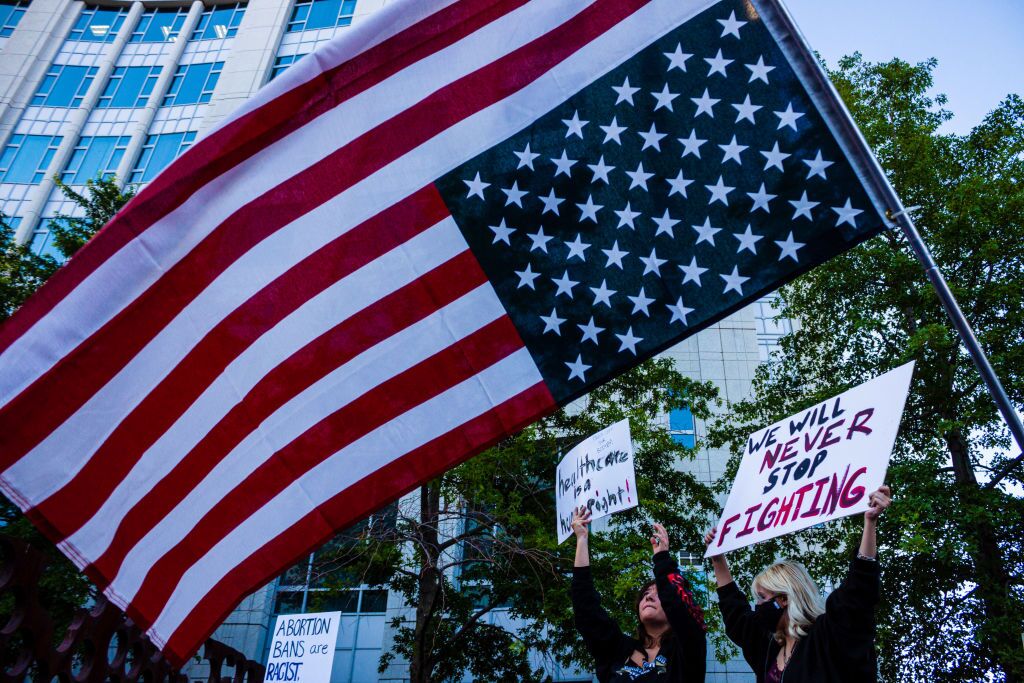
In the final days of 2025, under the cover of the holidays, Trump’s Department of Veterans Affairs (VA) reinstated a total ban on abortion (except, at least in theory, in life-threatening circumstances) and abortion counseling. In doing so, it reversed a Biden-era policy adopted in the wake of Dobbs that authorized the VA to provide abortions for women veterans and their dependents in cases of rape, incest or threats to the pregnant patient’s health or life.
The new policy applies to all VA healthcare facilities across the U.S., including in states where abortion remains legal. As a result, the VA now has “one of the strictest abortion bans in the country,” according to the Center for Reproductive Rights.
To understand what the VA abortion ban means in practice, we turn to the lived experiences of three veterans who bravely shared their stories with the media. Their accounts illuminate the real-world consequences of denying women and gender-diverse veterans what Lindsay Church, executive director of Minority Veterans of America, calls “the full spectrum of reproductive healthcare [in honor of their] service, sacrifices and dignity.” They also expose the hypocrisy of the Trump administration’s paternalistic claim that the abortion exclusion exists for veterans’ own good.
Alex
Abortion is my right … if that was what I deemed I needed.
Alex is an Air Force veteran for whom pregnancy is a very high risk due to “complex service-related injuries.”
She was raped while serving in the military, and faced the “impossible decision on whether or not to get an abortion if I was pregnant” due to her “mostly ‘pro-life’” views. She turned out not to be pregnant, but the “existential crisis” was a “turning point” in her thinking about abortion, which, she realized that “while not to be taken lightly,” was her “right … if that was what I deemed I needed.”
Years later, Alex and her husband decided to have children, but she suffered two miscarriages. During the second, she experienced uncontrolled hemorrhaging, but the VA emergency doctor refused to perform a D&C or call the OB/GYN on service, asserting that “he wasn’t legally obligated to assist…due to his personal beliefs.” He ultimately relented and put in the call to the OB/GYN who was in “complete shock and horror upon seeing the situation.”
Today, Alex remains terrified of trying again to get pregnant again. Critically, she explains that needs to be able to trust her doctors, and to have the “ability to have difficult, in-depth conversations with them” and to know that “they are with [me] every step of the way, and will without hesitation step in to save my life and fertility if something goes wrong.” But she fears the ban will make this impossible.
“Although the VA claims the abortion ban will not affect care for miscarriages, my past experience demonstrates that providers can and do conflate these,” she said. “My life hung in the balance when a provider determined that, despite my immediate need for life-saving care, he didn’t want to provide it. It shouldn’t take another person subjectively determining the value of my life, or being raped, to realize that these policies are wrong.
Firmly anchored in her experiential knowledge, Alex makes clear that the ban is “catastrophic” for women veterans who have “served and given their life for this country.” She fears that some “will take their lives when they cannot make the decisions they need to make”—something she contemplated when facing the possibility that she could be pregnant with her rapist’s child.
Capturing the devastating hypocrisy of the administration’s ostensible “pro-life” policy, Alex fears she and her husband will never become parents given the risks of trying again now that the abortion ban is in full effect. Sadly, she notes this would leave them with a spare bedroom full of baby things “we may never get to utilize and will just turn to dust.”
Lauren
No patient in America should have to go back and forth with their providers … and for damn sure not with no politicians about what medical care they are allowed to have.
Lauren served as a combat medic with the national guard. She suffers service-related injuries, including ovarian cysts, which complicate her ability to carry a pregnancy to term.
After the birth of her first son, she experienced several miscarriages. She says under the prior ban, she knew with one of the pregnancies that “something was wrong … I could feel what was happening.” For weeks, however, the VA community care clinic refused to provide the needed D&C because “they didn’t believe me,” making clear to her that “under abortion bans, opinions outweigh a woman’s word—even for those of us who are desperate to conceive.”
Ultimately, Lauren was able to get the needed care, but, as she stresses, it “was only because I know how to advocate for myself. But I shouldn’t have had to. No patient in America should have to go back and forth with their providers …and for damn sure not with no politicians about what medical care they are allowed to have.”
Explaining that the ban is not “just policy, it’s a system and its a culture,” Lauren no longer feels safe entrusting her care to the VA: Under the current administration, it is “very clear that my health would not be priority,” she says. O
f note, she worries that if something went wrong, there would no longer be anyone she could trust with a complaint. She says she is now paying out-of-pocket for “extra medical care” outside of the VA.
Lauren also zeroed in the cruelty of the ban, which she holds is a “strategic coming after women … after assault survivors.”
As she forcefully puts it, “just the concept here of forcing people who have higher rates of conditions like endometriosis … things that cause lesions inside of the muscle wall of the uterus … and what they are demanding or saying [is] that no matter what you don’t have access to this care that’s mind-blowingly inhumane.
Heather
We are all people who volunteered … We raised our hands and said, ‘yes send me.’ Healthcare is … our right as veterans.
Heather is an Air Force veteran who joined the military “hoping to give myself and my 1-year-old son opportunities we would otherwise not have received.”
Heather’s doctor suggested she take a break from her chosen birth control method due to its side effects. Soon, she found herself with an unplanned pregnancy.
Devastated, she knew it was not feasible to have another child given her financial situation and frequent deployments. Since there were no abortion providers in the state where she was stationed, she put in for a leave so she could travel to an out-of-state Planned Parenthood clinic, but her flight chief, a “devout Catholic” with strong antiabortion views, denied the request. She said he proceeded to bring “pamphlets to work about adoption services and the harms of abortion” in an effort to persuade her to have the baby in what she believes may have been an effort to “run out the clock.”
As a matter of “complete happenstance,” Heather’s son became ill during this time, and she was granted a leave to her home state to care for her son, which also enabled her to obtain an abortion. But the provocation by her flight chief continued. Without her consent, he gave her name to a “Catholic organization that had a website to ‘pray for unborn babies,’” which then began sending her emails and also published her name on their site.
Due to her flight sergeant’s behavior, coupled with the “systemic culture of mistreating women,” Heather made the difficult decision to leave the military, despite her original intent to make it her career. Many years later, this decision still “weighs heavily.”
Heather points to the yawning chasm between the administration’s rhetoric of “protecting women, protecting women,” and its abortion ban policy, which “will make the lives of women unsafe and will ultimately lead to women dying.” She warns that eventually “they will come for us all … whether it’s policies regarding LGBTQ veterans” or that “take away care from Trans veterans.”
Driving home the injustice of it, she stresses that “we are all people who volunteered … We raised our hands and said, ‘yes send me.’ Healthcare is … our right as veterans.”
Denying vets “full, evidence-based reproductive healthcare is not about protecting life,” said Janessa Goldbeck, CEO of Vet Voice Foundation. “It is about imposing ideology at the expense of veterans’ health and autonomy.”
The CRA aims to restore the promise of full reproductive health care that the veterans were both promised, need and deserve.
