


If you’ve struggled with breakouts for years, understanding the connection between your skin barrier and acne may finally explain why so many treatments haven’t worked.
This is especially true if you’re dealing with adult acne, recurring flare-ups, or skin that feels irritated and reactive no matter what you try.
Most acne advice focuses on killing bacteria or reducing oil. What often gets overlooked is the condition of the skin barrier itself—and research now shows that barrier health plays a major role in whether acne keeps coming back.
A recent review published in Clinical, Cosmetic, and Investigational Dermatology explains how inflammation, lipid imbalance and barrier dysfunction all contribute to how acne develops and whether it persists.
Let’s walk through how the skin barrier and acne are connected.
How the Skin Barrier and Acne Are Linked at the Surface
Think of your skin barrier like the walls of a house. When those walls are strong and intact, they keep the bad stuff out (bacteria, pollution, irritants) and the good stuff in (moisture, beneficial nutrients).
But when those walls develop cracks and weak spots, they allow invaders in.
The research mentioned above has revealed something interesting: people with acne almost always have a compromised skin barrier. This isn’t just a side effect of the acne, but rather, a part of what’s causing it and keeping it going.
Unfortunately, many traditional acne treatments work by further damaging this barrier. They dry out the skin and aggressively target bacteria. Over time, strong cleansers, frequent exfoliation, alcohol-based products, and harsh actives can strip away protective lipids, exposing and weakening the barrier.
Once the barrier is compromised, bacteria find it easier to slip in, and water escapes more easily. The skin becomes stressed out, and because of the dryness, produces more oil, which together with the bacteria, creates more acne.
At CV Skinlabs, our formulas were designed to strengthen and repair your skin barrier. All of our formulas contain anti-inflammatory ingredients to calm and soothe skin, including ceramides to help balance moisture, replenish essential lipids, increase water hydration, and rebuild the skin barrier.
How A Damaged Barrier Creates a Perfect Storm for Acne
To imagine this process, it helps to review exactly what happens to the skin, step by step.
1. The Barrier is Damaged
The process starts when the skin barrier loses its strength. This can happen for a few reasons, but one of the most common is long-term use of drying and irritating acne treatments.
But it can happen beforehand too. Research shows that acne-prone skin often has barrier dysfunction even before breakouts fully form. That means the skin’s outer layer is already weakened, making it less able to protect itself. This could happen because of harsh skin care products, aggressive scrubbing, overuse of products, or even simple aging.
This weak, leaky state sets the stage for everything that follows—ongoing inflammation, oil imbalance, and recurring acne.
2. Inflammation Sticks Around Longer Than It Should
When your skin barrier is injured, your skin treats everyday things as threats. That means it stays on high alert. The immune system sends out inflammatory signals to handle the problem, even if the original trigger was something small, like over-cleansing with a harsh acne treatment.
This matters because acne is not just a clog-and-bacteria issue. Inflammation is a major part of the acne story, as it slows healing, causes redness, and even makes pores more likely to clog. It also increases oil production, which also encourages acne, and allows bacteria and irritants to penetrate more deeply, triggering even more immune activity.
The study mentioned above explains that inflammation often appears before visible acne lesions form. In other words, the inflammatory process begins first, and the breakout is the result of what’s already happening under the surface.
3. The Barrier Loses Its “Mortar” (Ceramides and Other Lipids)
Remember the analogy—skin cells are the bricks, and the lipids are the mortar. Ceramides are one of the most important pieces of that mortar.
When ceramide levels are low, the wall can’t seal properly. Moisture leaks out, and irritants slide in. Skin becomes more reactive. The research points out that acne-prone skin often shows changes in barrier lipids (fats), including ceramides, and those changes weaken the skin’s protective function.
Here’s the acne trap: Once the barrier is leaky, skin loses moisture and becomes dehydrated. In response, it produces more oil, which can mix with dead skin cells and clog pores more easily, setting the stage for more breakouts.
4. Acne-Causing Bacteria Enjoy a Better Environment
Acne bacteria naturally live on skin. They aren’t always bad. The problem starts when the environment changes in a way that lets them overgrow and trigger more inflammation.
A compromised barrier creates a friendlier environment for trouble—more irritation, ore inflammation, and often, more oil imbalance.
5. Over-Treating Creates a Cycle That’s Hard to Break
This is where a lot of people get stuck. The breakout happens, they hit it hard with harsh anti-acne products, the barrier gets weaker, the skin becomes more inflamed and reactive, the oil imbalance gets worse, and breakouts return. If you treat even harder at that point, you could be worsening the entire cycle.
That’s why you can do all the “right” things for your acne but still feel like you’re losing.

Skin Barrier and Acne—a Routine That Can Reduce Breakouts
If your skin is acne-prone and irritated, reactive, or easily dried out, you need a routine that is supportive rather than aggressive. Try these steps.
1. Cleanse Gently
Use a gentle cleanser that doesn’t leave your skin tight. Tightness after cleansing is a sign you stripped too much. Clean skin is good, but stripped skin is a setback.
2. Add Hydration
Hydration helps your skin barrier repair itself. Look for ingredients that support water balance and comfort. If your skin is dehydrated, it tends to overreact, overproduce oil, and inflame more easily. Our hydrating Rescue & Relief Spray draws in water while calming inflammation. It’s non comedogenic, meaning doesn’t clog pores.
3. Add Barrier-Repairing Ingredients
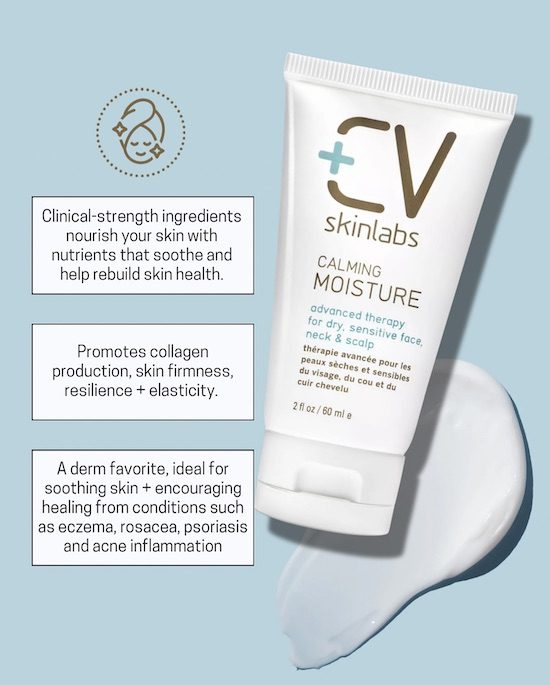
Look for products that contain ceramides, essential fatty acids, and other skin-identical lipids. These ingredients help rebuild the structural components of your barrier. CV Skinlabs Calming Moisture is specifically formulated with these barrier-supporting ingredients, including ceramides and omega fatty acids, to help restore and protect compromised skin. It will help reduce redness and blur imperfections.
4. Calm Irritation So Your Skin Can Heal
If your skin is red, stinging, or easily inflamed, calming it is part of acne care. When the skin is less inflamed, it tends to clog less and heal faster.
CV Skinlabs formulas are specially designed to calm inflammation. Our Rescue + Relief Spray can be used after cleansing or even throughout the day to soothe the look and feel of red, irritated skin. Calming Moisture helps support hydration and barrier repair without the heavy, greasy feeling people with acne often fear.
Our Restorative Skin Balm as well works great as a spot treatment for extra red or dry areas. It’s an occlusive healing ointment that is breathable and petrolatum-free.
5. Treat with Restraint, Not Panic
If you’re using acne actives like salicylic acid, benzoyl peroxide, or retinoids, consider going without them for a few weeks while you repair your skin. Overuse usually backfires when the barrier is already struggling. Many dermatology guidelines also emphasize gentle cleansing and moisturization as part of acne care. CV Skinlabs products are often recommended by dermatologists to help support barrier health, balance skin, and calm acne inflammation.
6. Be Patient and Consistent
Repairing your skin barrier doesn’t happen overnight. It typically takes 4-6 weeks to see significant improvement. But unlike harsh acne treatments that may work temporarily while causing more damage, barrier repair provides a foundation for long-term clear skin.
Skin Barrier and Acne—the Road to Clearer Skin
The connection between barrier health and lasting acne solutions is now clear—you can’t have one without the other. While it’s important to address the bacteria and inflammation involved in acne, true lasting results come from building a strong, healthy skin barrier that can naturally resist breakouts.
If your current routine feels like a battle—dry one day, oily the next, irritated all the time—it may be worth shifting your approach.
When you think about your own acne routine, does your skin usually feel calm or stripped afterward?
Featured image by Katrin Bolovtsova via Pexels.
