


A newly launched 25-state tour and national petition drive aim to pressure lawmakers to recognize the Equal Rights Amendment as the 28th Amendment to the Constitution.
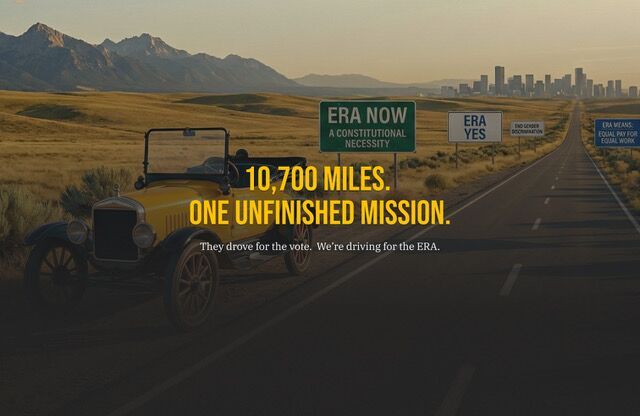
As we watch conflicts unfold abroad, and democratic norms and constitutional principles tested at home, many of us feel a growing awareness of how fragile constitutional systems can be.
When constitutions are ignored or interpreted for political or partisan gain—whether around war powers, executive authority or international agreements—it could seem irrelevant to write about the need for a new proposed constitutional amendment. And yet, it has become far more urgent to look at constitutional clarity regarding rights in the precise moments we are experiencing now.
When authority or power is ambiguous and left to interpretation or influenced by political objectives, the outcome is a vulnerable democracy and a destabilized world. When equality is implied rather than stated, which is the case in the U.S. Constitution, the rights of 175 million women are also vulnerable to interpretation and political shifts.
This is why I believe—along with the majority of Americans and voters—that there is an urgent need for constitutional clarity on women’s rights.
The Equal Rights Amendment (ERA), which has been passed by Congress and ratified by the required number of states, is at its core, a call for constitutional clarity. So why isn’t it in the Constitution? That’s a question women in the United States have been asking for more than a century. There’s some news to share about finishing the work for full equality.
A Brief History
The ERA was first introduced in Congress in 1923. The language, drafted by suffragist, Alice Paul, was elegant and unambiguous: “Equality of rights under the law shall not be denied or abridged on account of sex.”
Congress passed the amendment in 1972 and sent it to the states for the required ratification to be added to the Constitution.
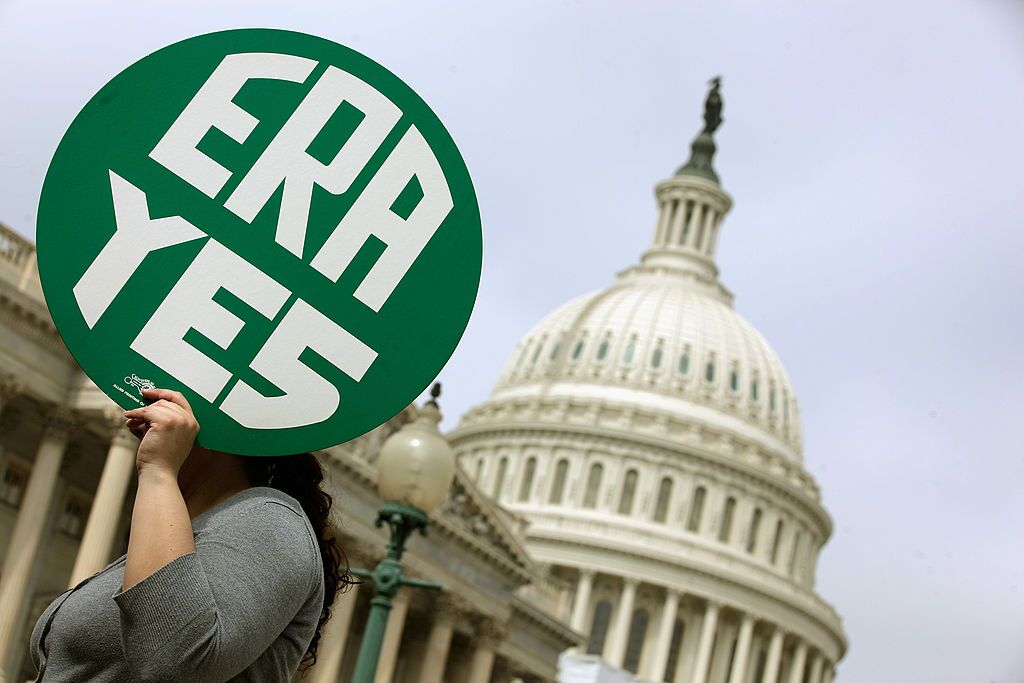
Thirty-five states ratified quickly before an organized backlash stalled the final three that were needed, and the deadline imposed by Congress expired in 1982. But the story doesn’t end there. Nevada citizens voted to ratify the amendment in 2017, followed by Illinois in 2018 and Virginia in 2020. By then, we had the necessary 38 states for ratification.
However, the debate now is not about whether enough states have ratified, but whether Congress will recognize the final three states since the votes were taken after the congressional deadline. The struggle for constitutional clarity and guarantee of equal rights continues.
There have been other procedural twists, too, but a petition to officially extend the deadline, accept the ratification and add the Equal Rights Amendment to the U.S. Constitution is the focus of a new campaign launching today that is modeled on a not so well-known part of our constitutional history.
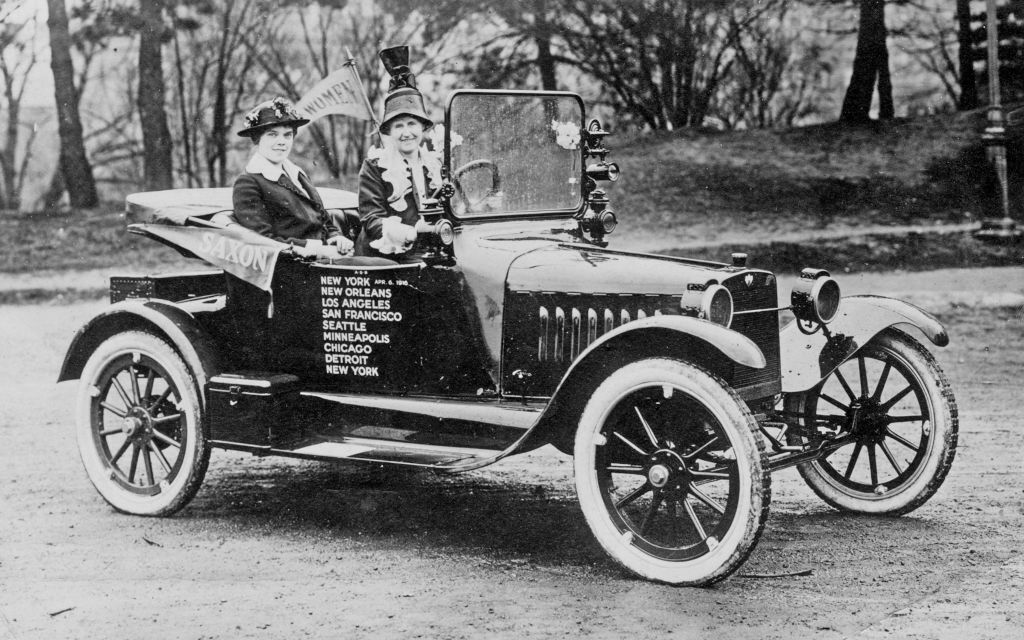
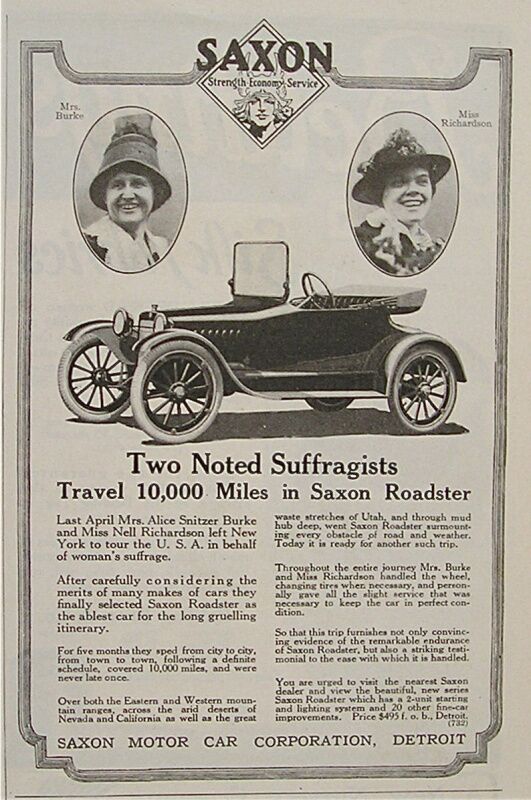
In 1916, just as Americans were beginning to enjoy the new travel freedoms that came with motorized vehicles, a couple of frustrated leaders of the campaign to secure women’s rights to vote, Alice Snitjer Burke and Nell Richardson, secured one of the first gas-driven automobiles in the country. They named the car, a Saxon, Golden Flyer and set off across the country to get support for what would become the 19th Amendment, guaranteeing women the right to vote.
Yes, the original ‘road trip’ was an act of political audacity. Long before women even had the vote, these two women drove into towns across America, on their own, spoke in town squares, slept in boarding houses and not surprisingly, endured ridicule and resistance. They were history’s first “Thelma and Louise” (if you haven’t seen this movie, please do). This road trip had a very different ending, of course, as it led to the passage of constitutional clarity on the question of voting rights, at least for white women, with the 19th Amendment. Getting that right guaranteed for all women, whatever race or circumstances, would still take other struggles. And the campaign for full equality for all women didn’t end with the Drive across America for voting rights.
The struggle for a constitutional guarantee of equality has led to another road trip across America: Driving the Vote for Women’s Equality Tour.
The tour began in New York City on March 1 at the New York Historical Society, in a restored 1914 Saxon motor car, the Golden Flyer II—the exact same make and model driven by Burke and Richardson on their groundbreaking 10,700-mile cross-country campaign for women’s voting rights.
The car stands as a living bridge between 1916 and this unfinished chapter of constitutional equality. Following in the suffragists’ tire tracks, the Driving the Vote for Women’s Equality Tour will travel through 25 states to raise awareness, activate supporters, mobilize voters and collect petition signatures for the national ERA petition drive at Sign4ERA.org.
From New York to Arizona, through Senate battlegrounds and pivotal House districts, ERA Action Teams are forming with measurable goals: add 300,000 names by March 31, reach one million signatures by Election Day 2026, secure national and local media at every stop and translate organizing into electoral consequence. What may look like a ceremony is, in fact, a disciplined political strategy.
As of December 2025, the Sign4ERA petition stands at 159,157 signatures. In the House, 215 Democrats have co-sponsored the ERA Joint Resolution, with just one Republican joining them. The alignment is clear: Equality has broad public support, but it has not yet secured bipartisan political will. That must change. Equality for everyone is not political or partisan.
When I am asked, “Why does it really matter?” I answer plainly: Without the ERA, sex equality rests on judicial interpretation of the 14th Amendment that grants citizenship to all persons born or naturalized in the U.S.—a freedom also being challenged. It’s important, yes, but not explicit. What is not explicit can be narrowed. What can be narrowed can be reversed. Constitutions anchor rights against political winds and shifting courts.
Enshrining the ERA would fortify protections against sex discrimination, strengthen the legal foundation for pay equity and reproductive autonomy, and align our founding charter with the democratic values we profess but must defend anew in every generation. In moments of democratic fragility, constitutional commitments are not ornamental; they are fundamental!
When Alice Snitzer Burke and Nell Richardson set out in the Golden Flyer in 1916, they did not know the outcome. They only knew that democracy requires action. And the action now is to finish the work through the ERA joint resolution. The message to policymakers is direct and clear: Recognize the will of the states and acknowledge that the ratification threshold has been met. Finish the work.
And to the women and men who believe equality should not depend on interpretation or election cycles: Add your name, build your community, sign, organize, mobilize and vote. Make it unmistakable that constitutional equality carries electoral consequence.
Equal means equal. It did in 1916. It does now. And this time, we will not stop until the Constitution says so.
This article was originally published on Pat Mitchell’s blog and weekly newsletter.
