
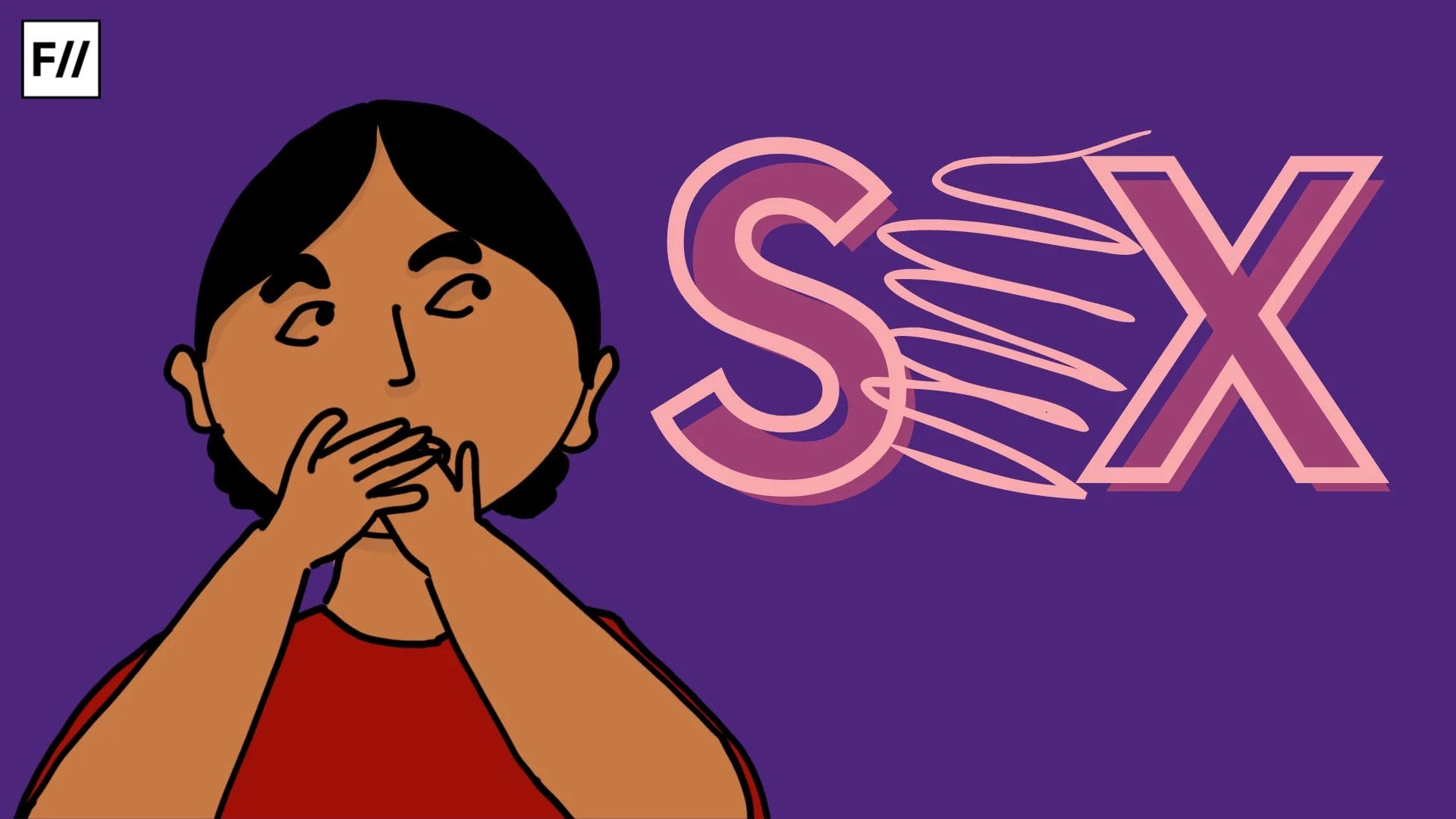
The need for CSE: Sex education must be part of the curriculum from a young age, says Supreme Court

On October 8, 2025, a 15-year-old boy in the Juvenile case Sex education cannot be restricted for students of classes IX-XII. This was not an isolated case, as in July an underage girl was allegedly raped by four underage boys in Uttar Pradesh, and in 2024 a teenager was sentenced to life imprisonment for raping underage girls aged five and six. Apart from sex crimes, India has the highest proportion of child brides in the world.
Without American soap operas or official forms, children in India rarely come across the word “sex.” There are many expectations short chapters on reproduction in middle school science textbooks where “Sexual Reproduction in Animals” is taught as an anatomy lesson. For those who do not undergo formal training, sex remains a mystery until the time when it is expected of them.
In this globalized era when the country strives to be ahead in the race of “development”, the parameter of literacy, including sex and sex education, cannot be ignored.
The reasons for this societal silence on the subject of sex are varied. But two diametrically opposed Issue hinder sexual and reproductive health and rights (SRHR) discourse around the world. Firstly, the belief that talking about sex promotes early exposure to it, and secondly, the lack of knowledge among the elders themselves, which makes it impossible for them to initiate or maintain a conversation. This is a vicious cycle as it perpetuates the problem.
CSE, sex education and hidden sides of history
When a young girl aged 14, studying in Delhi, asked Niyati if she could ever say no to sex, she became acutely aware of the gravity of the need for Comprehensive Sexuality Education (CSE). The founder of the Pratisandhi Foundation, a sexual health and education advocacy group, shared how she was perplexed and thought, “What experiences made her believe that anything other than ‘yes’ could be the answer to this question?”
FII
India is a landmass where conversations about sex, sexuality, pleasure, etc. have their roots in ancient times. Take this for example The Kama Sutra which was written by Vatsayana as a detailed Sanskrit text that viewed eroticism, sexuality and emotional fulfillment as vital goals of life. Furthermore, the concepts surrounding sex, sexuality and desires are no stranger to this landmass. The Hindu epics Ramayan and Mahabharat feature intersex characters and storylines underlying homosexuality, adoption, abortion, and even a mythical story of reproduction that can be described as imagining “in vitro fertilization” during this period. Exquisite architecture Representation of eroticism can be found in the Hindu and Jain temples of Khajuraho in Madhya Pradesh, which are also a UNESCO World Heritage Site. These are limited examples that show how the dogmatic discourse about what Indian or Hindu culture entails today ignores its own history. While there were oppressive systems of patriarchy and caste, historical evidence also places particular emphasis on the continuous invasions, showing a gradual shift towards conservative values Indian society.
Roha, an avid reader and political science student at Miranda House, believes that despite society’s aversion to sex education, there are spaces that embody inclusivity and openness and serve as a basis for conversation. She credited mainstream media, news and books for her understanding of sexual and reproductive health and rights (SRHR), and expressed her faith in literature, saying, “Change is here, in little corners of editorials, at the back of bookshelves.”
If one delves deeper into the debate about the continued conservatism of Indian society due to “foreign influences”, it is a fact that homoerotic poetry and art in the Mughal period were respected. But a sense of shame and honor associated with the body, physique and clothing remained. However, a drastic shift occurred British colonial rule, who enforced the forces of Victorian morality and law to view non-reproductive or non-heteronormative sex as taboo, sinful and even a criminal offence. Examples of this include the criminalization of homosexuality and the Hijra community through Section 377 of the Indian Penal Code (1860) and the Criminal Tribes Act (1871).
Promises that can’t be broken
Commenting on the importance of knowledge about SRHR, Tarini, a student of Political Science at Ramjas College, strongly states: “The right to freely decide whether, when and with whom to marry, have sex or have children, without pressure in the form of discrimination, coercion or violence, and to advocate for oneself are important aspects of SRHR.”
Given these conditions, CSE remains a non-negotiable need in India as sex education is considered an inherent right under Articles 26, 25, 19 and 2 Universal Declaration of Human Rights (UDHR) which guarantee the rights to health, education, information and freedom from discrimination.
India adopted the Declaration at its founding in 1948 and the Indian Constitution, which came into force two years later, committed to these principles as fundamental rights for its citizens. As a signatory to the United Nations (UN) Sustainable Development Goals 2030 (SDGs), India is bound by the shared commitment to Goal 4 “Quality Education”. Article 21 of the Indian Constitution guarantees the right to a life of dignity and although it does not explicitly guarantee a right to sex education, Article 21A, i.e. the right to education, combined with increasing legal commentary and legislative efforts in this area, implicitly guarantees CSE as a fundamental right.
As far as age appropriateness is concerned, CSE is necessary for the holistic development of a person because although it is SRHR, it is “a curriculum-based process of teaching and learning about the cognitive, emotional, physical and social aspects of sexuality.” according to UNESCO.
The Supreme Court of India has emphasized the importance of CSE. Recently in the case of Just Rights for Children Alliance v. S. Harish (2025), the bank cited research showing that CSE actually delayed sexual activity and promoted safer sexual practices among teenagers. Furthermore, it rejected the belief that sex education was a “Western concept” and incompatible with India’s traditional values, lamenting that this misconception had prevented the effective implementation of CSE, thereby forcing youth to seek information on the Internet, where they encountered misleading and harmful content.
As far as age appropriateness is concerned, CSE is necessary for the holistic development of a person because although it is SRHR, it is “a curriculum-based process of teaching and learning about the cognitive, emotional, physical and social aspects of sexuality.” according to UNESCO. The aim is to equip children and young adults with knowledge, skills, attitudes and values that strengthen them emotionally, legally and socially. It is therefore a life skill that can be taught formally or informally, but must be scientifically accurate, developmentally appropriate, curriculum-based and comprehensive.
CSE: Inclusive Education, Holistic Development
This call for integrating CSE into curricula does not mean that efforts to raise awareness and awareness have not yet been made. The government’s previous steps include the 2007 NCERT Educational program for young people (AEP) and CBSE Sexual Education Moduleboth of which encountered national opposition. More decentralized approaches are being undertaken by individual institutions, but they lack continuous, comprehensive, structured and, above all, participatory teaching methods.
“Most schools organize period workshops for girls. Each girl is given partial information and a pad. And that pad becomes the end of the world, at least for that day. They hide it between books and in secret pockets of bags and try to make sure no boy sees it. And when someone does that, embarrassment shoots up and self-esteem goes down the drain,” says Kavya, who heads social media at Pratisandhi. She added: “CSE is about getting the right information at the right age and knowing how to respond to sensitive topics such as consent, puberty and even basic respect.”
In this globalized era when the country strives to be ahead in the race of “development”, the parameter of literacy, including sex and sex education, cannot be ignored. The Success of Western role models like the Netherlands, the UK and Sweden, which mandated sex education in primary schools as early as 1955, must motivate India to make serious efforts towards CSE. However, inspiration does not mean imitation. The aim of implementing a nationwide CSE model must provide for a standardized national curriculum that is flexible enough to be adapted to regional needs. Gunika, a design student at CEPT University, Ahmedabad, had an interesting perspective on the importance of developing a tailored model of CSE suitable for Indian children. She said: “We can’t copy and paste sex education. What works abroad can cause a stir here quicker than it raises awareness.”
Gunika, a design student at CEPT University in Ahmedabad, said: “We can’t copy and paste sex education. What works abroad can create a buzz here quicker than it raises awareness.”
There are other considerations too. Children often use the internet when they are curious and these days this is quickly being replaced by AI because as Dr. Sutanu, a fellow researcher working in Delhi, rightly notes: “AI doesn’t blush or scold, and it seems safer than talking to a parent or teacher, especially about topics that are embarrassing or taboo.” While encouraging children and even the elderly to read and refer to verified sources is ideal, this is a challenging task in the age of “instant search.” Given the ease and simplicity of using AI, it is becoming increasingly difficult to find accurate information on SRHR-related issues. Therefore, Dr. Sutanu added a warning: “AI does not always understand human emotions and maturity. Its wisdom is borrowed from the Internet, which is full of helpful facts, but also full of myths, stereotypes and sometimes dangerous misinformation.”
With targeted advocacy from youth organizations, progressive judgments, legislative proposals and state-led initiatives such as Karnataka introducing two weekly sex education sessions for classes 8 to 12 from next year, the demand for a formal, age-appropriate and inclusive CSE curriculum is now louder than ever. We must act quickly, but not hastily. We must act now.
Second year student of Media Studies at CHRIST (Deemed to be University), BRC, Bangalore. A trained Kathak dancer, theater artist and political nerd.
