
The Blistered Hands No One Talks About: Reading Dalit Women’s Work through Literature and Data

» Editor’s note: #MoodOfTheMonth for February 2026 is Gender and Literature. We invite submissions on this topic in February 2026. If you would like to contribute, please refer to our submission guidelines and email your suggestions to info@@feminisminindia.com.
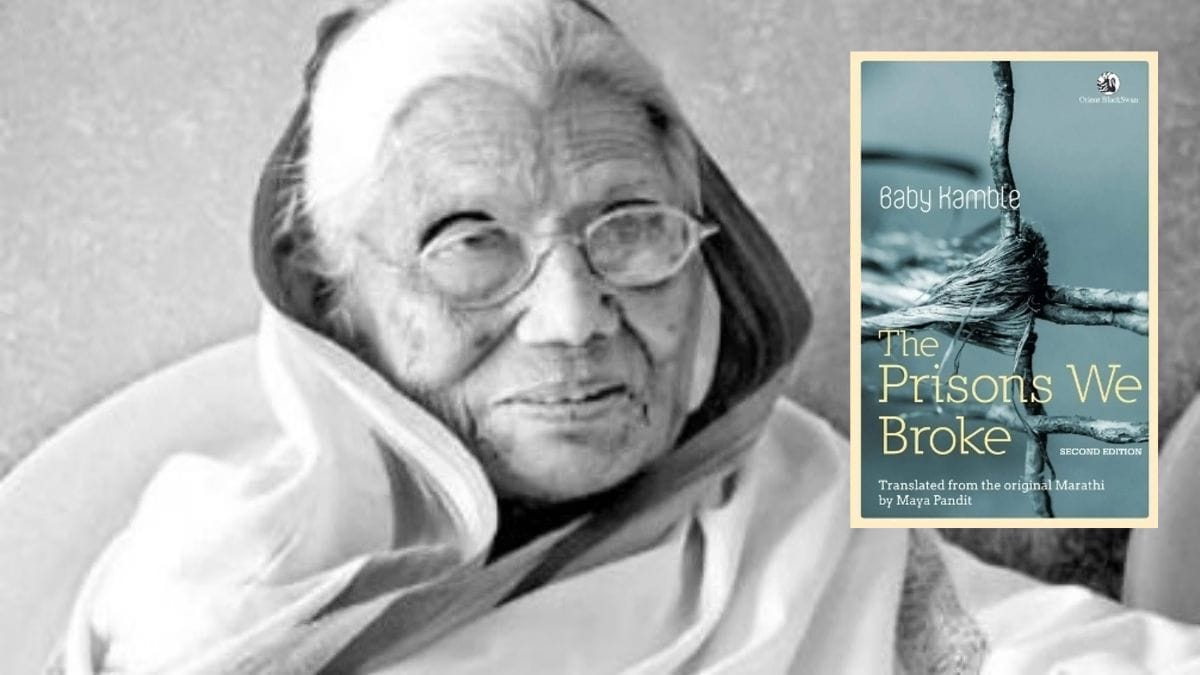
When Babytai Kamble written The prisons we have brokenthe first published autobiography of a Dalit woman in Marathi, she has done more than just narrate a life; It exposed the architecture of caste-based welfare. “We clean the mess created by others and are then called dirty ourselves,” Kamble wrote, citing an untouchable reality that Indian literature has long made invisible. While mainstream narratives celebrate the domestic sacrifice of the housewife, they systematically erase the Dalit and Bahujan women whose blistered hands scrub the floor before dawn, wash vessels that others have polluted, and absorb the emotional detritus of the household, only to disappear from the stories when the time comes. It is their work that maintains upper-caste domesticity while remaining the silent infrastructure of comfort: basic, uncredited, unnamed.
Literary evidence of embodied work
Kamble’s statement resonates throughout Dalit feminist literature. Bama’s seminal Tamil autobiography Karukku (1992) documents how Christian women from Paraiyar scrubbed the floor on their knees while being denied dignity by upper-caste nuns “who would not even drink water touched by our hands.” Likewise Shantabai Kambles Majya Jalmachi Chittarkatha (The Kaleidoscope Story of My Life) traces how the bodies of Mahar women became sites of caste-assigned hygiene work, writing: “Our hands were meant only for sweeping, scrubbing, and serving.”
Dalit feminist Urmila Pawar writes In The Fabric of My Life it says: “My mother used to weave aaydans,” the Marathi generic term for all things made of bamboo. “I find that her act of weaving and my act of writing are organically connected. The weave is similar. It is the weave of pain, suffering and anguish that binds us together.” This metaphor goes beyond poetry: her mother’s bamboo weaving, like the Dalit domestic servant’s scrubbing, was never “just work.” It was an unacknowledged survival infrastructure that morphed into literary resistance.
Interestingly, however, Pawar has analyzed the differences between Brahmin and Dalit women and argued that the Dalit woman, unlike the Brahmin woman, is not bound by customs like sati, child marriage and others. In addition, Pawar debunked some gender myths associated with the Dalit movement, such as the huge gap between Dalit and Brahmin women at the economic, social and educational levels.
Pawar continues: “A myth is perpetuated that the Dalit woman, unlike the Brahmin woman, is free from bondage and oppressive restrictions. The pain of the Devadasi, the abandoned woman and the Murali is ignored in this attitude. In fact, the woman is yet to be recognized as a full and equal human being in the household (ibid: 94).”
Similarly, Joanna Liddle and Rama Joshi write about the nonsexual and sexual divisions of labor in their work Daughters of Independence. Although economically disadvantaged, Dalit women lead more sexually liberated lives than upper-caste women. In contrast, lower-caste women experience far less control over their physical freedom.
“The economic benefits and social constraints of seclusion are unknown to them. Sati was never required of them, widowhood was not a curse, divorce was permitted in many lower caste communities, and widows and divorcees could remarry without shame (Liddle and Joshi 1986: 95-69 and 91).”
In Aayda: Mahila Adivasi Jivan Katha (edited by Pawar and Meenakshi Moon), oral histories of Adivasi and Dalit women define housework not as a naturalized duty but as caste-based exploitation. Oxfam’s data confirms this structural truth: urban women in India spend 312 minutes a day on unpaid care work, while men spend just 29 minutes; Women in rural areas spend 291 minutes, while men spend 32 minutes.
What does the data say?
The extent of this invisibility is worrying. Oxfam’s 2020 reportTime to Care, along with an India-focused supplement, shows how our sexist economies are acting as a catalyst for the inequality crisis. “Women and girls are among those who benefit least from today’s economic system. They spend billions of hours cooking, cleaning and caring for children and the elderly. Unpaid care work is the ‘hidden engine’ that keeps the wheels of our economies, businesses and societies turning. It is driven by women who often have little time to get an education, earn a decent living or have a say in how our societies are run, and who are therefore trapped at the bottom of the economy,” said the former CEO by Oxfam India, Amitabh Behar. Additionally, the report suggests that women make up two-thirds of paid “carers.” Professions such as kindergarten teachers, domestic workers and nursing assistants are often poorly paid, offer few social benefits, require irregular working hours and can be physically and mentally stressful.
Therefore, pressure on caregivers, whether unpaid or paid, will increase in the coming decade as the world population ages. Climate change could worsen the looming global health crisis – by 2025, up to 2.4 billion people will live in areas without sufficient water, and women and girls will have to travel even longer distances to fetch water. 80% of the indigenous population lives in Asia and the Pacific, a region vulnerable to climate change. “Governments must give health care the same priority as all other sectors to build more humane economies that work for everyone, not just a lucky few,” Behar said.
In the Regular Labor Force Survey Report (2017-18).It can be seen that in rural areas, the proportion of helpers in household businesses was almost 17 percent among self-employed males and 67 percent among self-employed women, while in urban areas, the proportion of helpers in household businesses was almost 11 percent among self-employed men and 32 percent among self-employed women.
This is what Sharmila Rege indirectly hints at in her Essay In “Dalit Women Talk Differently,” she writes about the societal trend of masculinizing Dalitism and feminizing Savarnas, when in reality the share of work is highly gendered and lower-caste women bear the brunt of it. In Rege’s essay, “Guru (1995) had argued that in order to understand Dalit women’s need to speak differently, it is necessary to describe both internal and external factors that influence this phenomenon. He locates their need to speak differently within a discourse of Dalit men’s descent against the middle-class women’s movement and within the moral economy of peasant movements. He argues that this is a sign of opposition to their exclusion from both the political as well as the cultural arena.” Furthermore, it is emphasized that social location shapes the perception of reality, making this all the more important.
The journey to identity and recognition
To change reality, Dalit women must be more than mere appendages in mainstream feminist literary discourse. Their limitless potential remains limited to theory when their nursing work remains unrecognized and unrecognized. As Rege emphasizes, the standpoint of Dalit women does not offer marginal testimony, but rather an essential critique of Indian feminism itself. Scholarly work must center Dalit women as narrators of their own work – such as Kamble, Pawar and Bama – whose literary testimonies document care work as political resistance. Meena Kandasamy’s poetry captures this urgency. It recognizes that a Dalit domestic worker who feeds our children is not only fulfilling the duty of a domestic helper, but is sustaining an entire economy that refuses to see her. There is a hidden anger in Kamble’s autobiography, just as there is a hidden generational conditioning in Pawar’s The Weave of My Life. It is important that this “hidden engine” gets the recognition it truly deserves.
Ahana Saha is currently completing her Masters in Political Science at Pondicherry University, where she researches how postcolonial socio-economic realities shape gendered experiences of work, care and identity. When she isn’t immersed in theory, she rehearses classical dance or creates stories that sit at the intersection of literature, caste and feminist politics.
