
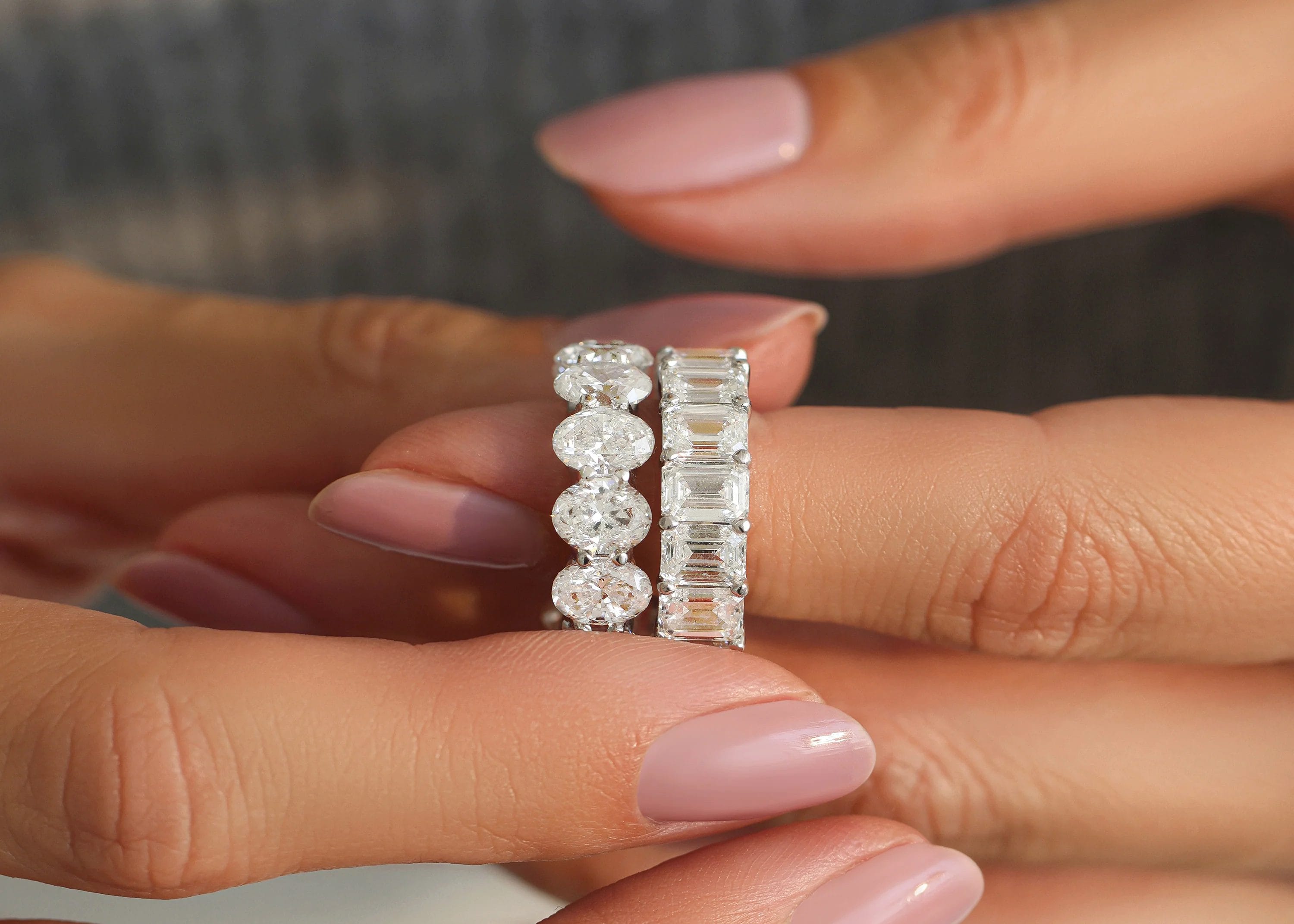

Which cuts best hide inclusions or color?
This is a matter of faceting geometry, not taste. Step cuts, such as emerald and Asscher, highlight clarity because their large tables act like windows; if clarity matters, plan for VS clarity or better. Brilliant cuts, including princess and radiant, scatter light and tolerate slightly lower clarity or color grades before the eye notices, which is why choosing a princess can stretch your budget more efficiently. The pattern is simple: pick the cut first, then set realistic color and clarity targets based on how the cut displays light.
How should you size diamonds and plan carat distribution?
Think of an eternity band as a visual sum, not discrete diamonds. Two identical total-carat bands can look very different depending on stone shape, face-up diameter, and girdle thickness. When we guided holiday shoppers through 2024, the most common misstep was fixating on carat-per-stone while ignoring millimeter face-up and depth percentages, leaving some buyers disappointed when the band appeared smaller than expected. For consistent visual weight around the finger, prioritize matching millimeter sizes and table percentages across the run, and accept fractional cuts or slightly varied measurements rather than forcing identical grades that drive costs up.
What are the durability and maintenance tradeoffs?

Corners and exposure matter. Square and pointed cuts, such as princess and marquise, concentrate stress at the tips or corners, so bezel or protective prong designs reduce long-term chip risk but alter how light plays. Round and oval diamonds are inherently tougher to the knocks of daily use. If you expect constant wear, favor shapes with fewer vulnerable points and settings that tuck those edges, because a protective setting today saves a repair bill and potential stone loss later. Picture each cut as a shoe: some are delicate dress shoes that demand care, others are everyday sneakers built to take punishment.
How do cuts stack and pair with existing engagement rings?
Match profiles, not just style. If your engagement ring has low, flush-set diamonds and a thin profile, a low-profile baguette or half-wrap will sit flush and avoid rocking. Square cuts can butt neatly against a squared engagement setting, but mixed heights create gaps, pressure points, and faster wear. When you want true stacking harmony, request vendor photos showing the exact band paired with familiar engagement silhouettes, and measure band heights in millimeters before buying.
Which visual decisions affect resale and insurance value?
Popularity influences liquidity. Because rounds dominate sales, they retain more stable resale pricing and are easier to insure at predictable replacement values. Less common shapes may command a premium on purchase but reduce the buyer pool later. If long-term marketability matters, weigh initial novelty against the probability you will sell or insure the piece before fashion cycles change.
A clear rule for decision-making
If your top priority is long daily wear, choose a shape and setting that prioritize protection and ease of maintenance, then optimize color and clarity around that constraint; if your priority is maximum visible sparkle on a slimmer budget, start with a brilliant cut and accept slightly lower clarity or color where safe. This constraint-based framing helps avoid the trap of midstream priority shifts and paying for features you will never use.
Join thousands of engaged buyers, enthusiasts, and industry experts at PriceScope who rely on our unbiased forums, advanced tools like the Holloway Cut Advisor, and carefully vetted vendors. Start your diamond education journey today with our comprehensive guides, pricing insights, and sales-pressure-free community support – because when it comes to diamonds, knowledge is your most valuable investment.
There is one crucial question about eternity bands that most shoppers overlook, and it changes everything you thought you knew.
What is an Eternity Band?
An eternity band is a special type of ring designed with gemstones, usually diamonds, that encircle the entire band. Unlike traditional rings, where diamonds only cover the top or part of the band, an eternity band’s diamonds form an unbroken, continuous loop around the finger.
This complete circle of diamonds symbolizes eternal love, endless commitment, and an unbreakable bond. Because the diamonds never stop, the ring represents infinity, making it a popular choice for celebrating lifelong promises.
How many diamonds and how much weight will affect everything?
Full-wrap designs often use many small diamonds to create an even ribbon of sparkle, and that sheer count raises sorting and matching work for the jeweler. Total carat weight is another decision point, because you can achieve either a delicate shimmer or bold presence within similar profiles, which is why two bands that look alike at first glance can sit very differently in price and weight.
Why does precise matching matter?
Matching dozens of melee diamonds is a supply-chain and craft challenge, not a cosmetic one. Vendors must sort by diameter, table size, and color so the wrap reads as one continuous surface. When matching fails, a band appears patchy under magnification, and clinics for repair become frequent because replacing a single lost stone often requires a near-identical replacement from the original lot, which may no longer exist. Think of it like tuning an orchestra; every instrument must be close to pitch, or the chord loses clarity.
What tradeoffs do milestone buyers routinely miss?
This pattern appears across anniversary, birth, graduation, and self-gift purchases: buyers pick a meaningful ring, then discover constraints they did not budget for, such as limited resizing options, routine prong checks, and insurance appraisals that treat a wrap differently from a single-stone ring. Lab-grown diamonds ease matching and lower up-front cost, but they change replacement and resale dynamics; natural rocks can be harder to source in uniform lots, increasing lead time. Those realities matter when the ring is meant to mark a life event and be worn every day.
Most people compare glossy vendor photos because that is familiar and quick, but that habit hides real costs. As buyer expectations meet complex manufacturing, decisions fracture into delayed gifts, unexpected repair bills, or uncomfortable fits. Platforms like PriceScope provide a centralized community-verified images, searchable comparisons, and monthly price reporting, giving shoppers clearer sourcing notes and realistic delivery expectations so they avoid those surprises.

Practical actions to ask for before you buy
Request millimeter face-up measurements and confirmation of whether the diamonds come from a single lot, ask about the jeweler’s policy for replacing lost diamonds and the warranty window, and confirm whether the piece ships with an appraisal that separates labor, metal, and stone value. If matching is a priority, prioritize sellers who can show macro photos of the whole band and at-rest shots on varied skin tones, because color balance and setting tightness read very differently in studio lighting. Finally, factor a predictable maintenance line item into your budget, because a ring with many diamonds requires more upkeep than a plain band.
Join thousands of engaged buyers, enthusiasts, and industry experts at PriceScope, the largest diamond and jewelry forum, who rely on our unbiased forums, advanced tools like the Holloway Cut Advisor, and carefully vetted vendor partnerships. Start your diamond education journey today with our comprehensive guides, pricing insights, and sales-pressure-free community support, because when it comes to diamonds, knowledge is your most valuable investment.
That backstory is stranger than you think, and it changes how every eternity band was designed and sold.
Further Insights
A Brief History of Eternity Bands
Eternity bands did not appear fully formed; they evolved as technique, metal, and cultural meaning met. Over centuries, jewelers moved from symbolic rings with single motifs to precision-matched, continuous stone wraps once cutting and setting methods could deliver uniform small gems around a finger.
How did technology and craft push the design forward?
In the 18th and 19th centuries, advances in gem cutting and tighter quality control made small, consistent diamonds widely available, but it was changes in metalwork that mattered next. The adoption of more complex, workable alloys and, later, platinum enabled thinner profiles and finer settings, and that mechanical confidence allowed setters to place dozens of small diamonds in continuous sequences with predictable tension and alignment. Precision mounting techniques advanced further in the mid-20th century, when mechanical sorting and later laser-assisted repairs reduced the risk of mismatched replacements, turning what had been an artisanal curiosity into something a factory could reliably produce.
Why did the market become a mass category instead of a boutique curiosity?
Most shopping habits start with instinct, not industry knowledge, so jewelers leaned into anniversaries and milestone narratives to create regular demand. Over 2 million eternity bands are sold worldwide each year, a scale that has transformed supply chains, pricing, and the types of inventory retailers hold. That shift explains another change, the steady investor interest and product expansion that underpins forecasts, which projects the eternity band market will grow by 5% annually, a sign that production methods and consumer tastes are still aligning.
What do surviving artifacts and records tell us about use and meaning?
Estate inventories, jewelers’ ledgers, and museum holdings show a pattern, not a single origin story. Rings once inscribed with short mottos evolved into purely decorative pieces as gems became more affordable; conversely, bespoke pieces preserved older symbolism through engravings and hidden compartments. Think of those records as a set of fingerprints, each one hinting at who wore the ring, why, and how much craftsmanship went into it. That forensic trail explains why some collectors prize early examples more for workmanship than carat weight.
Most shoppers still start their search with glossy photos and product pages because that approach is familiar and fast. That works at first, but as choices multiply and lots fragment, it creates several predictable problems: inconsistent photos hide matching issues, warranties vary, and maintenance expectations get lost in marketing copy.
Platforms like PriceScope break that cycle by centralizing community-verified images, searchable comparisons, and monthly price reporting, so buyers trade fragmented guesses for evidence-backed choices and avoid surprises when the piece arrives or needs servicing.
How did social customs shape the ring’s modern role?
As the band transitioned from bespoke symbol to cataloged product, social habits shaped its use. Mid-century gift rituals and later shifts toward self-rewarding purchases expanded the buyer base beyond traditional bridal markets. That social expansion changed design priorities, so manufacturers balanced the continuity of sparkle with more straightforward repairs and clearer warranties, a trade-off reflected in contemporary product lines and warranty terms.
Finding original makers or period-correct examples often feels like following a breadcrumb trail through codicils, hallmark stamps, and old invoices; a single maker’s stamp or a tiny inscription will change how a ring is valued and conserved. Consider restoring one: it is like aligning the small teeth of a watch, precision both visible and invisible, and that craft history still matters to price and provenance today.
That history explains plenty, but the next part reveals a surprising cultural twist that changes how people show off these rings in the public eye.

