
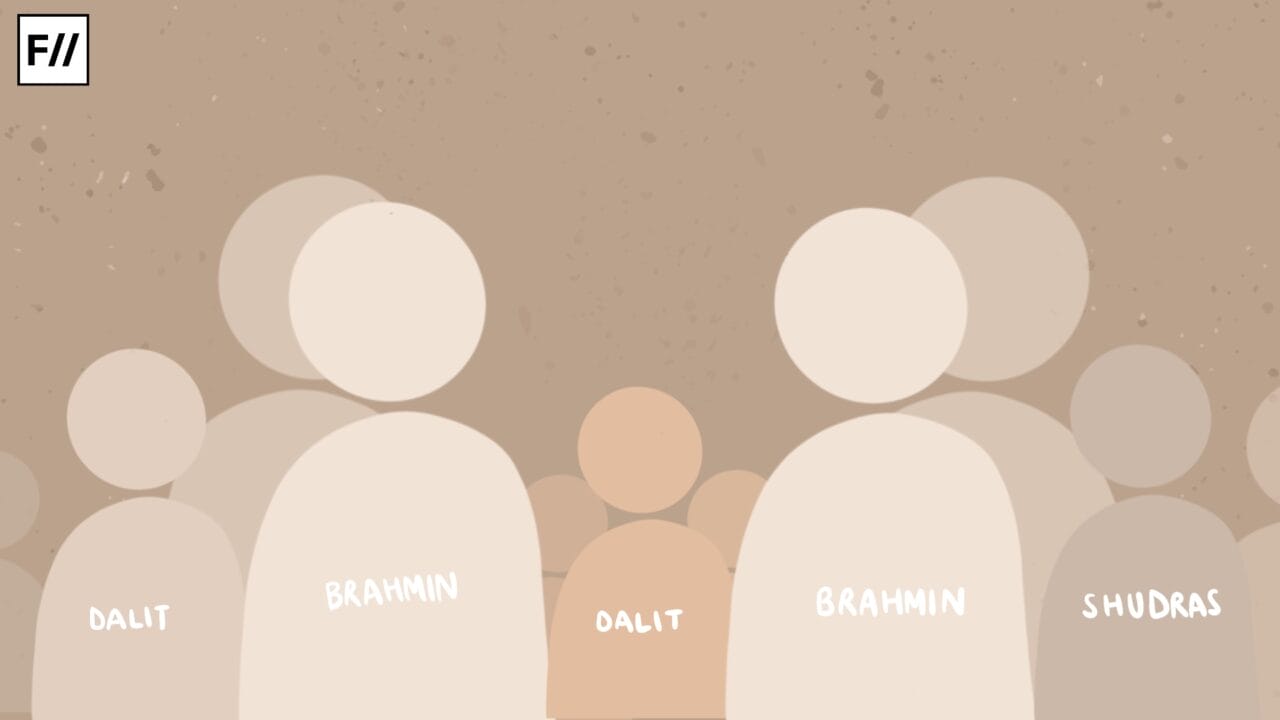

Whenever we imagine school and university life, learning, friends, fun and discoveries come to mind. However, for most students from marginalized caste groups, universities become a place of constant negotiation, suffering and unhealed wounds. Box trauma doesn’t necessarily have to scream or scream. It is a silent pain that accumulates due to the experience of being viewed as “less than.” It is the feeling of being stared at, looked down upon, or made to feel out of place in classrooms, dorms, and group discussions.
For Dalit students this is Trauma of caste does not just consist of an episode of discrimination. Still, it’s about generations of marginalization in a place that appears to be casteless.
Microaggressions: The Silent Wounds of Everyday Casteism
Microaggressions are minor, everyday insults that many consider to be jokes or flippant remarks. They continue to uphold caste hierarchies and are therefore minor and commonplace, unlike outright discrimination. They create an atmosphere of alienation and exhaustion, which has a long-term impact on self-esteem. For example, if a student’s accent or dialect is ridiculed with comments such as, “Oh, you sound so native,” this is not truly innocent teasing. Still, it reminds them that there are certain ways of speaking that are considered more educated or civilized.
At a freshman event, a senior might tell a freshman that he must have gotten over quota in the name of fun. Laughter follows and the student smiles weakly, hiding the pain of being stereotyped. Another very subtle but sharp form is exclusion from peers. A Dalit student’s idea may not be considered in a group discussion until one of the students from the dominant caste takes it up again and immediately gains new respect. In other cases, they don’t participate in study groups because they assume they won’t be able to handle it. And through stereotyping, a professor tells a Dalit student, “I’m surprised you sound so articulate.” This is a compliment of sorts, but it makes it clear that the professor believes that the intelligence of Dalits was unexpected.
Such minute details collect as dust in the brain, difficult to grasp and easier to ignore, but suffocating in the long run.
Conditional appreciation and caste stereotypes
Another kind of nuanced casteism is evident in the way Dalit students often receive their applause for things that are otherwise simple, ordinary and limited to the bare minimum. Some comments may sound good on the surface, but they often contain a deeper message. For example: “You are so humble with your background” or “You are really honest and hardworking, not what people usually say.” These comments show that kindness, humility or honesty are unexpected qualities of a person belonging to a marginalized caste. It is good that we are constantly valued on the basis of basic human values, but this is not an endorsement, just a silent reminder of the low regard other people place on Dalits.
“Wait, you’re SC? Really? You dress so well, I didn’t think people with your background usually had such a fashion sense.”
The comment was intended as a compliment, but it had a slight aftertaste. Behind the friendly tone was the assumption that taste, confidence or style did not belong to people from certain castes.
The psychological toll
Such experiences become stressful for mental health over time. Most Dalit students develop impostor syndrome, meaning they doubt whether they actually belong in elite institutions. They work hard to show that they are good, but they are always afraid that failure will confirm caste stereotypes. Imagine walking into the classroom every day knowing that you will be expected to speak on behalf of your entire community. Imagine how afraid you are to say something because you think your words will be disregarded or laughed at. This type of introspection constantly leads to anxiety, self-doubt, and exhaustion. Dalit students tend to be simultaneously invisible and hyper-visible, going unnoticed when they need help and unduly scrutinized when they excel.
Caste trauma also impacts the way students engage in academics. Some withdraw from discussions, avoid joining clubs or events dominated by certain groups, or stop asking questions in class for fear of being judged. Additionally, many hide their discomfort because they fear they will be accused of “playing the caste card.”
“I stopped speaking out because I was tired of proving that I deserve to be here.”
When the mind is burdened by constant exclusion, even the brightest students find it difficult to achieve. Campuses that should be spaces for growth become places of quiet survival.
On the way to healing
Coping with caste trauma requires more than just symbolic gestures. Campuses should start taking caste realities into account and not hide the pretense of being neutral. Caste must be recognized in awareness programs, teacher awareness programs and grievance systems. Mental health services must also be caste-conscious and counselors must be trained to understand the social causes of distress and intergenerational trauma. Students and teachers must learn to listen and not reject, to unlearn and not to justify themselves. An inclusive campus isn’t about being nice, it’s about being right.
For many Dalit students, survival itself is an act of resistance. But healing cannot be an individual responsibility; it has to be collective. Self-help groups, Ambedkarite circles and peer networks often become places of solidarity and care. Identifying caste trauma is not about dividing people. It’s about accepting the facts that govern our lives. Only when we recognize and name these patterns can our campuses be places where every student belongs, not in disgrace, but in right. The problem of mental health is not individual. Still, it is very political and caste trauma will continue to harm young minds until institutions decide to see, listen and act.
Dharanesh Ramesh hails from Coimbatore and is a PhD candidate in Gender and Development Studies at the Tata Institute of Social Sciences, Hyderabad. Based on the belief that stories shape structures, his studies and work explore the intersections of gender, caste and public policy from an intersectional feminist perspective. He is particularly interested in understanding how power, privilege and politics interact to define inclusion and justice in everyday life. Dharanesh is naturally curious and often turns to drawing, painting, photography and writing as an extension of his reflective practice. His work seeks to bridge thought and experience, analysis and art in the pursuit of justice and representation.
