


Black women refused bondage in both thought and action: through everyday resistance, legal challenges and daring escape in the face of a nation built on their exploitation.
This essay is part of the FEMINIST 250: Founding Feminists series, marking the 250th anniversary of America by reclaiming the revolution through the women and gender-expansive people whose ideas, labor and resistance shaped U.S. democracy. Taking the form of essays, audio, poetry and original art, historians and scholars revisit the nation’s origins to center those written out of the founding documents and reimagine what a truly inclusive democracy requires.
The name Ona Judge should sound familiar. She was one of at least nine enslaved people owned by George and Martha Washington who were highlighted in the President’s House exhibit, which opened in 2010, a short distance from the Liberty Bell Center in Philadelphia.
The exhibit was recently dismantled by National Park Service employees on Jan. 22, 2026.
The fact of Judge’s enslavement—alongside Hercules, Moll, Giles, Austin, Richmond, Paris, Joe (Richardson), Christopher Sheels and William Lee—seemed to conflict with the current administration’s 2025 executive order, “Restoring Truth and Sanity to American History,” which targets those exhibits perceived to “divide Americans based on race.”
Despite these efforts—which have also resulted in the city of Philadelphia bringing a lawsuit against the federal government—the names of the nine remain chiseled in stone nearby.
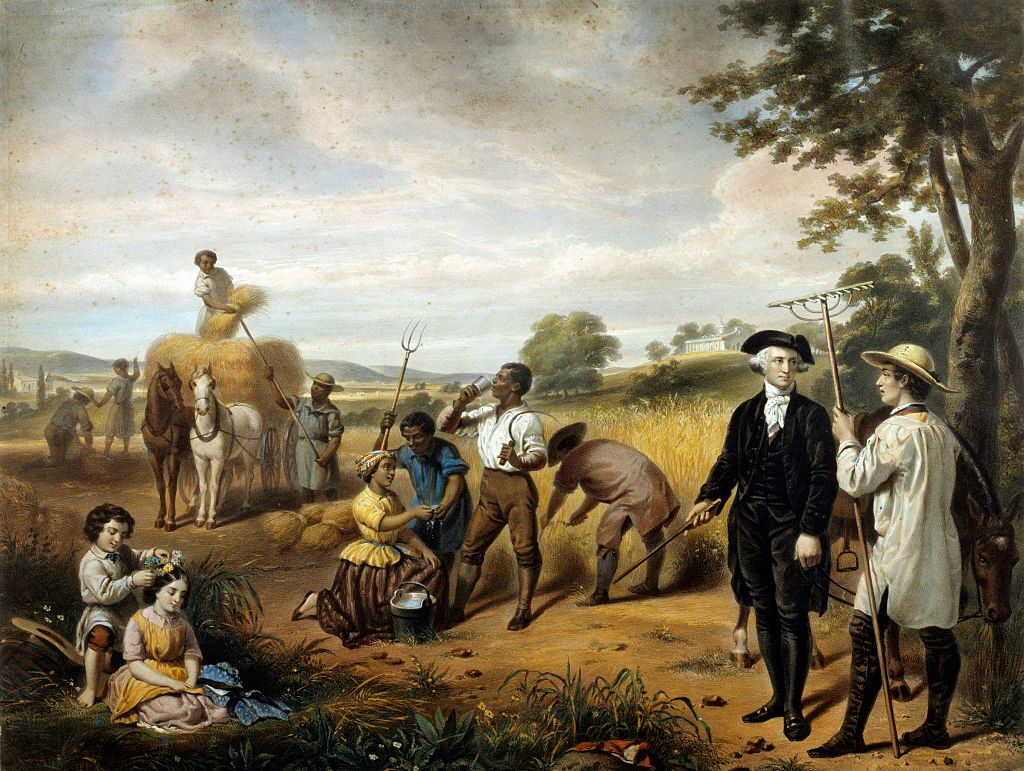
Ona Judge is the subject of Erica Armstrong Dunbar’s award-winning book, Never Caught: The Washingtons’ Relentless Pursuit of their Runaway Slave, Ona Judge.
Born around 1774—the year the British Crown subjected the 13 colonies to the Intolerable Acts—Judge grew up with the new nation.
In 1784, the same year the Treaty of Paris ended the Revolutionary War, Ona Judge became Martha Washington’s personal maid. As such, she traveled to wait on Ms. Washington at the nation’s new capital—first in New York City, then in Philadelphia.
At the end of Washington’s presidency, the first family prepared to return to Mount Vernon, their Virginia plantation. Ona Judge prepared to flee and live free.
Black women made clear, daily, that remaining in bondage was not their preferred state.
She was not alone. Judge relied on networks within and between free Black communities. Her refusal to remain enslaved was part of a much larger Black liberation movement that existed before, during and after the American Revolution. African American women and their communities did not need the Enlightenment or the Age of Revolutions to teach them about human rights. Enslaved women had argued for their freedom, and free women of color had argued for their social and political equality for generations, by the time revolutionary rhetoric took hold in the British North American colonies that became the United States.
To erase from an exhibit the names of those who labored in bondage for the nation’s first president may obscure Washington’s participation in the national sin of slavery, but it also leaves visitors with the impression that those nine were only laborers. Judge’s life story, and the story of thousands of other Black women, argue the opposite: Enslaved and free people offered far more sophisticated interpretations of the Enlightenment principles that enslavers touted.
Black women made clear, daily, that remaining in bondage was not their preferred state. And enslavers knew and acknowledged this readily apparent fact. Enslavers throughout Britain’s North American colonies passed laws and slave codes that instituted severe physical punishment for resistance and rebellion.
Still, Black women sued enslavers for their freedom. Sometimes, they poisoned, set ablaze, or found other means to murder their enslavers. They fled from their households and plantations, even if for only a short time. Black women slowed down work. They grew their own gardens. They helped sustain their communities despite the ever-looming prospect of sale. They raised children, their own and their enslavers’.
Black women heard what Euro-Americans proclaimed in town squares, public houses, on the docks and in the warehouses and in their churches. And the notion of natural rights to life, liberty and the pursuit of happiness sounded like what Black women had been demanding, petitioning for and even stealing all along.
Elizabeth Freeman offers an example of the liberatory power of Black women’s political thought. Freeman was enslaved in Massachusetts by Col. John Ashley, a prominent magistrate and patriot.
As an older woman, she recalled how she daily resisted her enslaver’s wife, Hannah Ashley. When Freeman stepped in to spare her younger sister from the violence at the hands of Ms. Ashley, Ashley beat her across the arm with a fire iron, leaving a gash that formed into a gruesome scar. When asked about her arm in years to come, Freeman would reply, “Ask Madam.”
Remembered as intelligent, principled and formidable, Elizabeth Freeman did not mince words about her claim to freedom. As an elderly woman, she stated, “Any time, any time while I was a slave, if one minute’s freedom had been offered to me, and I had been told I must die at the end of that minute, I would have taken it, just to stand one minute on God’s airth a free woman—I would.”
At the time of the American Revolution, her enslaver was actively involved in resisting the British Crown. Her position in the Ashley household as an enslaved woman would have made her unremarkable to her enslaver’s prominent guests, whose political discussions she listened to while waiting on them. During her daily labor, she heard the news of the day. She relied on others reading texts like the then-new Massachusetts Constitution aloud.
… If one minute’s freedom had been offered to me, and I had been told I must die at the end of that minute, I would have taken it, just to stand one minute on God’s airth a free woman …
Elizabeth Freeman
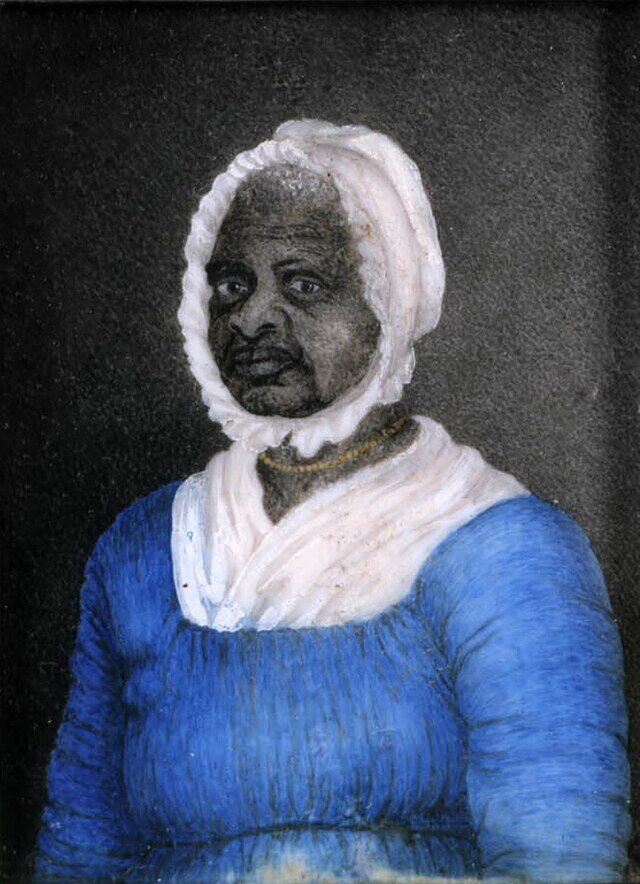
Ratified in 1780, the Massachusetts Constitution clearly stated: “All men are born free and equal, and have certain natural, essential, and unalienable rights…”
Much to her enslavers’ shock, Freeman sought the help of Theodore Sedgwick, a Revolutionary War veteran, politician and lawyer, and boldly argued that she was included in the new constitution.
Sedgwick agreed.
In late August of 1781, roughly one month before the Battle of Yorktown that ended the Revolutionary War would begin in Virginia, Freeman won her case by a unanimous judgment. She was not the first to sue for her freedom, nor was she the only enslaved person to petition and sue for her freedom during the American Revolution. But her argument was revolutionary in its simplicity.
Casting aside the name she’d been called in slavery—Mum Bette—and claiming Elizabeth Freeman as her new name, she began her life in freedom just as the United States won its final victory over Britain. Her lawsuit is also credited with abolishing slavery in Massachusetts.
When Elizabeth Freeman was fighting for her freedom in Massachusetts courts, thousands of enslaved people had already struck out for freedom on foot.
All over the 13 colonies, enslaved people chose to take the British up on their offer of freedom in exchange for service to the Crown. When British officials offered freedom to enslaved people who defected, they envisioned able-bodied, young men leaving farms and plantations to serve in the British Army. Their decision was not the result of abolitionist sentiment but military practicalities. British colonial officials saw an opportunity to deprive American colonists of much-needed Black labor, to bolster their ranks, and to scare enslavers with the prospect of facing their former slaves in battle.
To their surprise, Black women, children and elders began arriving in family and kinship groups along with Black men, fully prepared to claim their liberty. Whatever British commanders intended stood no chance in the face of Black women’s political theory and praxis. If the British offered freedom, then women would claim it. When the war ended, the British could not evacuate everyone who wanted to leave with them. In all, about nine thousand managed to leave the United States with evacuating troops.
Ona Judge, enslaved by Martha Washington as part of her late husband’s estate, faced the end of the Revolutionary War with no hope for emancipation in sight. In her native Virginia, the war led many to flee slavery with varying levels of success. When the Treaty of Paris was signed in 1784, ending the Revolutionary War, Judge, then 10 years old, became Martha Washington’s personal maid. Like Elizabeth Freeman, Judge had ears. She knew the news of the day, the rhetoric of the Revolution, and the vaunted place the Washingtons occupied as the first president and first lady of the United States.
She also would have known that some states were working to abolish slavery or gradually emancipate enslaved people. Virginia was not one of those states. Instead, enslavers in Virginia were actively ramping up the transatlantic trade to replenish the laborers lost during the war years. Individual enslavers sometimes emancipated their slaves or made provisions for their manumission in their wills. But for states like Virginia that relied heavily on enslaved people’s labor, revolutionary principles were not enough to inspire a statewide manumission law.
No, Ona Judge knew that she would one day be inherited by Martha Washington’s descendants. George Washington did make provisions for the emancipation of his human property at the end of his life. Martha Washington, though, fully intended to execute her first husband’s will and ensure the wealth and inheritance of her children.
Though Pennsylvania began a program of gradual manumission in 1780, the Washingtons were careful to make sure the enslaved members of their household never resided in the state for more than six months, allowing them to avoid having to free any of them. The Washingtons were clear: Enslaved people like Ona Judge would bolster the Custis estate for generations.
Like Freeman, Judge’s labor took her into the local community, where she met and knew free Black Philadelphians. As a member of the
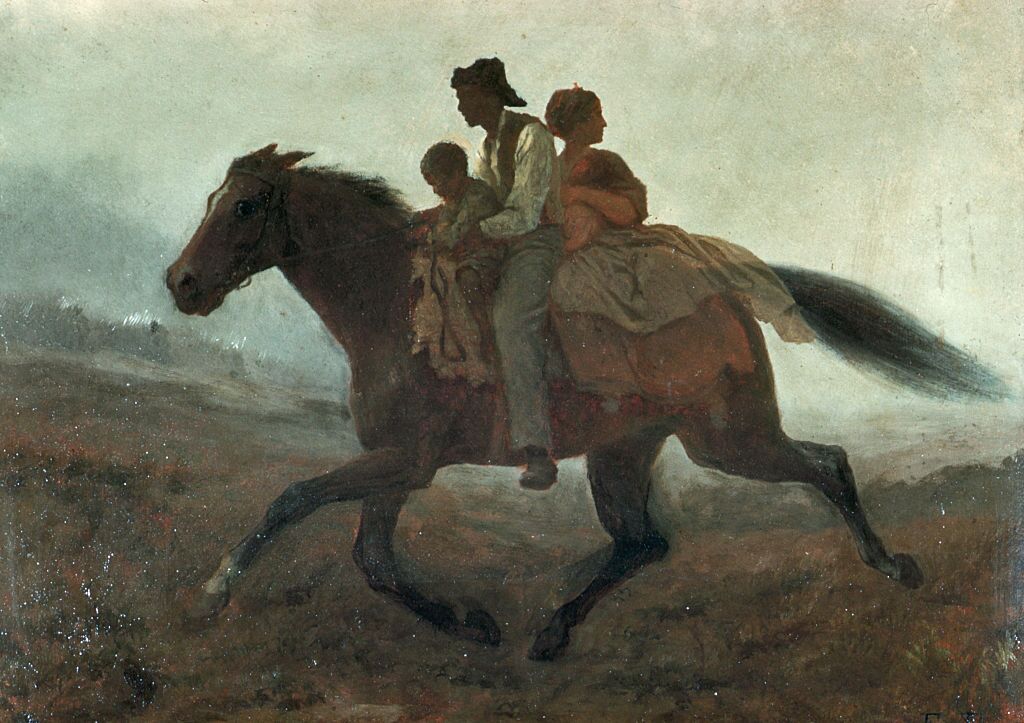
president’s household, she would’ve heard constant talk of the early Nation’s attempt to live up to its principles. When it came time for the Washingtons to leave Pennsylvania and return to Virginia, Judge chose boldly. She fled. Her feet brought her, eventually, to Elizabeth Freeman’s New England, where she evaded capture and lived free until her death.
Black women’s history cannot be reduced to simply a tale of America’s many injustices. Yes, studying the lives of Black women certainly illuminates the many ways that the revolutionary promise so ardently expressed by the Nation’s founders just paces from the President’s House exhibit have yet to be fully realized. But to speak of Black women as only our sorrow is also dehumanizing. Women like Elizabeth Freeman and Ona Judge were savvy political thinkers, brave advocates for liberty, and change agents of their own free lives, whether America was ready for them or not.
When asked in her old age why she left the Washingtons and chose a life evading capture, Judge told her interviewer, Rev. T. H. Adams, that “she wanted to be free…” And so did Elizabeth Freeman. So did every enslaved mother, sister, grandmother, aunt, who fled to British lines. And the Black women of Philadelphia who helped Ona Judge escape. And the generations who followed, including present-day Philadelphians who have protested the exhibit’s removal with their own exhibit, including handmade signage and copies of the original educational signs: “Learn all history.” “Tell the truth.” “Slavery is Part of U.S. History. Learn from the Past or Repeat It!”
Then, as now, we continue to hold the nation’s collective feet to the fire.
