
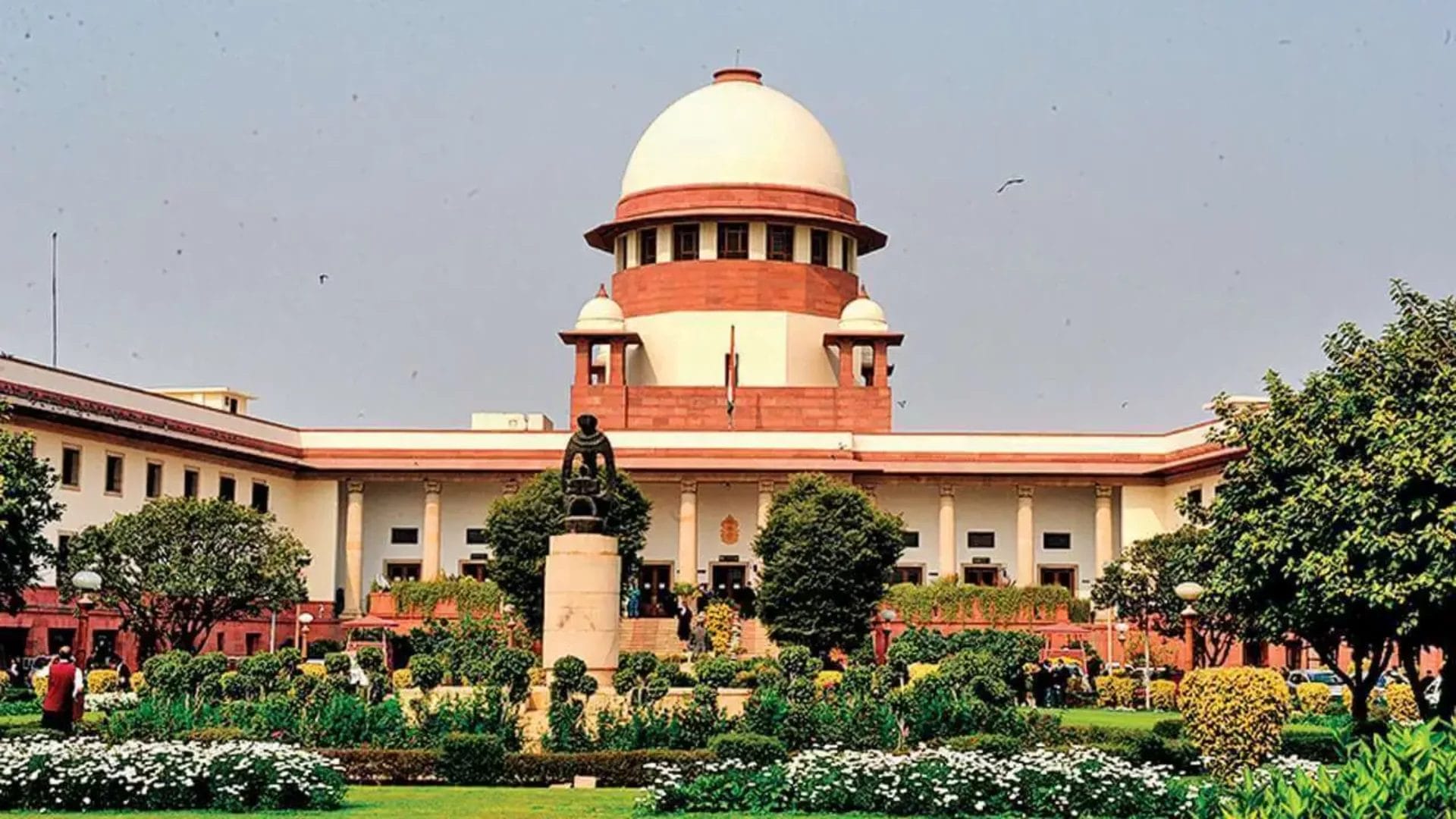
Sabarimala hearing in the Supreme Court: Constitutional morality and the limits of religious autonomy

Than that Supreme Court As India prepares to revisit the Sabarimala issue, the case is once again taking center stage in India’s constitutional imagination. What began as a dispute over temple access developed into a conflict of goals between biology and citizenship.
The upcoming ruling is not just a legal clarification of the 2018 ruling; It represents a pivotal moment that will determine the extent to which constitutional morality can transform entrenched social norms.
Reforming the Question: Beyond Entry
The Sabarimala debate often boils down to a simple question: Should women between the ages of 10 and 50 be allowed to enter the Sabarimala temple? This rephrasing ignores the more important issue. The main problem is not only access, but also the validity of biological criteria as a basis for exclusion in public institutions.
The main problem is not only access, but also the validity of biological criteria as a basis for exclusion in public institutions.
The 2018 ruling contradicted this school of thought, saying that excluding people based on their menstruation violated constitutional rights to equality and dignity.
Menstruation as a constitutional division
In the case of Sabarimala, menstruation is not just a biological condition; it is a regulatory classification. In the past it was part of systems of purity, ritual discipline and symbolic order. In Sabarimala, the rationale was not framed as impurity but as reverence for the celibate essence of the deity, Lord Ayyappa.
However, this distinction is analytically tenuous. Menstruating bodies are marked as incompatible with participation, whether they are depicted as impure with participation or as impure or protective. This exclusion category remains even if the language used to describe it changes.
The constitution, on the other hand, is based on a completely separate set of rules. It does not recognize biological processes as a criterion for graduated citizenship. The court’s job is not only to resolve a religious disagreement, but also to decide whether these types of categories can withstand constitutional scrutiny in places open to the public.
The institutional nature of Sabarimala is an important aspect that is often ignored in public discussion. The temple is not a completely independent religious place; It is run by the Travancore Devaswom Board, a government body.
This changes the problem from one of personal belief to one of public policy. A religious institution that operates under public law cannot remain unaffected by constitutional norms. The court is not concerned with theology; It sets rules for how institutions should function.
This difference must be made clear in the judgment. Failure to do so might make one think that constitutional scrutiny of religious practices is an attack on faith, when in reality it is an important way for democracy to hold people accountable.
The politics of biological uniqueness
At the heart of the Sabarimala dispute is the concept of biological exceptionalism, which assumes that natural bodily processes can legitimize institutional exclusion. If no one questions this idea, it goes far beyond temples. It has historically influenced access to education, employment and civic engagement. The 2018 Supreme Court ruling attempted to break this logic by saying that dignity cannot depend on biology. But the backlash showed how deeply rooted this way of thinking is in society.
One of the complicated aspects of the Sabarimala debate is that women are defending the ban. Many claimed that the exclusion was not oppression but an expression of faith. This complicates the story of victimhood, but does not answer the question of whether it is constitutional. In a democracy, rights do not depend on the consent of the majority. The court’s job is not to find out how many people agree with a practice, but to check whether it is consistent with fundamental rights.
Noticing or ignoring menstruation
There is a subtle but important difference between ignoring and denying menstruation. Contemporary feminist discourse repeatedly advocates recognizing menstruation as a health problem, as a question of dignity and accessibility to resources. The Sabarimala case, on the other hand, works on a different level. The problem is not recognition; it is regulation.
The constitutional position does not negate menstruation; it eliminates its regulatory significance. It says that the government must address menstrual health as a welfare issue, but it must not allow menstruation to determine a person’s civil or spiritual status. Mixing recognition and regulation could harm both gender equality and the clarity of the constitution.
The strong backlash that followed the 2018 ruling showed that menstruation is not just a biological fact; it is also an important symbol. For many people, the verdict was not a legal redress but rather a cultural upheaval.
This response highlights a significant limitation of judicial intervention: courts can change rules, but they cannot immediately change societal interpretations. However, this does not make constitutional jurisdiction any less important. On the other hand, it shows that it is a long-term normative force.
The most important aspect of the upcoming verdict may not be Sabarimala itself. The case set a benchmark for the treatment of biological categories in public law institutions. If menstruation cannot prevent people from visiting an important pilgrimage site, the same rules can apply in other places, such as schools, workplaces and places of worship. The verdict can change something here. It’s not just about a temple; It’s about changing the rules for who can be admitted to a constitutional democracy.
The Sabarimala case poses a big question for India: Can a democracy that values equality let natural biological processes decide who belongs? If the court upholds its earlier decision, it will reinforce the idea that constitutional citizenship cannot be based on biology. If it gives in, it might be OK for the body’s constitutional interpretations to get in the way of the right.
In this way, the upcoming decision should not be about religious aspects, but about constitutional ones. It will determine whether India’s democratic system can constitutionally prevent biological differences from turning into institutional inequality.
So Sabarimala is not an isolated case. It is a test case for the future of Indian constitutionalism – one that will determine whether equality remains an idea or becomes a real thing that cannot be changed by biology or tradition.
