
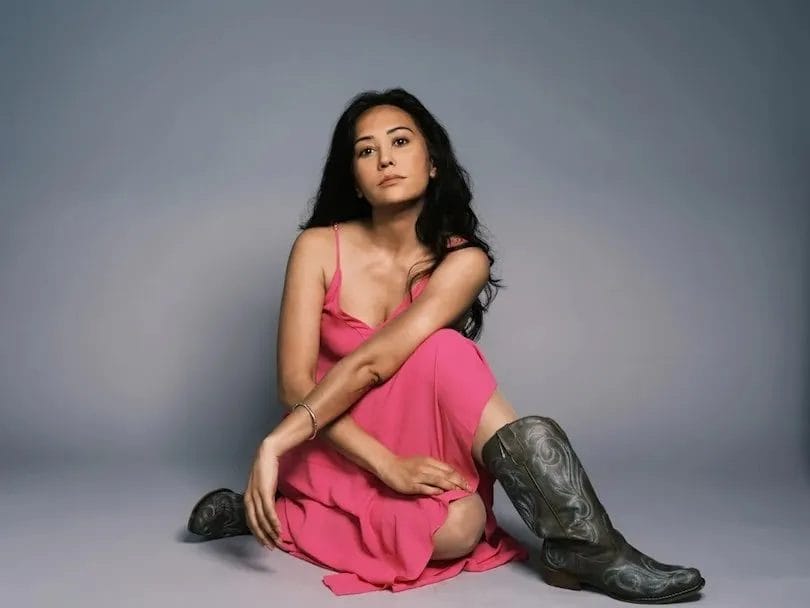

Wheaton-born Freya Adams may not be a household name yet but she’s someone to watch for. In fact, IMDb (International Movie Database) singled her out as one of 10 rising actresses to watch and she made the Sundance Film Festival’s Up-and-Coming Actors list in 2015. Since then, the University of Wisconsin–Madison grad and Actors Studio alum has appeared on TV shows such as The Rookie (2022). In addition to co-starring with Jennifer Ehle and Ken Jeong in the sci-fi drama Advantageous (2015), she starred opposite Mahershala Ali in the mockumentary Taste the Revolution (2024). Most recently, Adams penned a pilot where she’ll take on the lead role. She also made time to talk to Rebellious.
Janet Arvia: You’re an actress (New Amsterdam, The Blacklist) and writer (Gloria). Which position do you find most rewarding?
Freya Adams: Acting will always be my first love—it’s the most immediate and vulnerable…there’s nothing like stepping into another person’s interior life and letting it move through your body.
How does acting help you more effectively write or vice versa?
Writing has made me a better actor because it’s trained me to see the full architecture of a story: pacing, tone, stakes, and silence. When I’m acting, I understand why a moment exists; when I’m writing I’m always thinking about what an actor needs to feel safe, brave, and specific. Each role sharpens the others—they’re in constant conversation.
As an American woman with Persian, Russian, and Indian ethnicity, is it important for you to tell diverse stories?
It is—but not in a performative way. I’m drawn to stories that feel human first and specific second. Diversity, to me, is about complexity and contradiction rather than representation as a checkbox. I’m interested in characters who aren’t explained away by their background but are shaped by it—sometimes quietly, sometimes painfully. Those stories feel honest to my experience and to the world as it actually is.

What are the pros and cons of acting in film versus TV?
Film offers a kind of poetic intensity—you live inside a character for a compressed, immersive stretch, and the experience can feel almost sacred. Television, on the other hand, allows for deep evolution; you get to grow with a character over time and explore their contradictions slowly. The challenge with film is letting go once it’s done; the challenge with TV is sustaining freshness and truth over years. They stretch different creative muscles, and I love that.
Do you have a genre preference?
I’m most drawn to drama with a pulse of humor—or comedy with real emotional stakes. Life is rarely one or the other, and I love work that reflects that messiness. I’m especially interested in grounded, character-driven stories where the genre serves the psychology, not the other way around.
You were born in Chicagoland. Do you ever find yourself in The Windy City?
I do, whenever I can. Chicago still feels grounding to me—there’s an honesty to it. I love spending time in the theater scene, especially places like Steppenwolf and smaller storefront theaters. And honestly, just walking neighborhoods, sitting in a coffee shop, or being near the lake—it reminds me where my work ethic and curiosity came from.
