

Ms. Global: Iraq’s Child Marriage Surge, Hurricane Devastation in Jamaica, Historic EU Abortion Vote and More

The U.S. ranks as the 19th most dangerous country for women, 11th in maternal mortality, 30th in closing the gender pay gap, 75th in women’s political representation, and painfully lacks paid family leave and equal access to health care. But Ms. has always understood: Feminist movements around the world hold answers to some of the U.S.’s most intractable problems. Ms. Global is taking note of feminists worldwide.
Iraq
+ Child marriage rates rise after changes to Iraq’s Personal Status Law
Nearly a year after Iraq amended its Personal Status Law, Baghdad’s wedding industry is booming, fueled in part by a rise in underage marriages. Vendors in Baghdad’s “Bridal Boulevard” told The Sunday Times that the surge is driven by child bride clients.
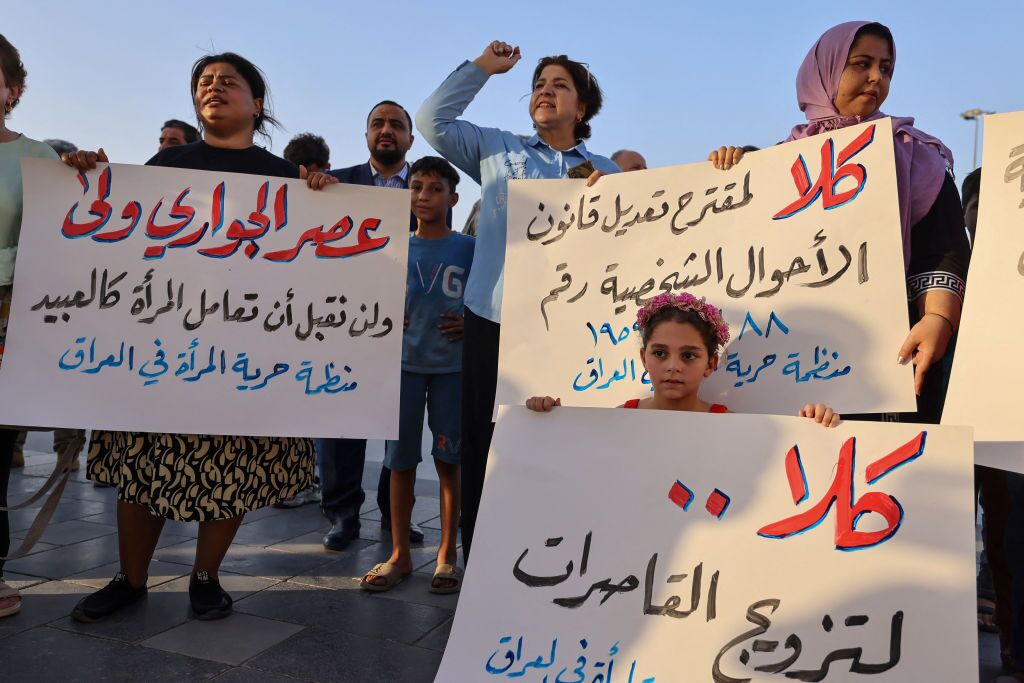
For decades, Iraq’s 1959 Personal Status Law provided strong legal protections against child marriage. But in February, parliament amended the law, allowing families to choose between it or a new Personal Status Code to be developed by the Shia Ja’afari school of Islamic jurisprudence. In August, parliament approved the new Ja’fari Personal Status Code, reviving 8th-century religious jurisprudence for Shias, the religious majority in Southern Iraq, and expanding male authority over marriage, divorce, inheritance and child custody.
Despite civil law setting the legal marriage age at 15, the Ja’fari Personal Status Code allows judges to make exceptions by approving marriages based on a child’s perceived “maturity and physical capacity,” a loophole critics say has led to girls reportedly as young as nine being married.
Human rights activists in Iraq warn the amendment has effectively opened a black market, where families can trade daughters for money or social standing without consequence. Coalition 188, a group of prominent female lawyers, journalists and activists in Iraq, has spent the past year opposing the law. “We will continue to fight. The coalition will not be silenced. Even if the state continues attacks,” said founding member Jannat al-Ghezi. “We must be brave because someone needs to protect Iraq’s girls.”
Jamaica
+ Women in Jamaica carry the emotional and physical burdens as the country rebuilds
The third-strongest Atlantic hurricane in recorded history struck Jamaica on Oct. 28, 2025. It killed 45 people, and affected 1.5 million more, leaving over 90,000 people displaced and 150,000 buildings damaged. Almost half of the country still does not have electricity. Flooding and debris have led to the outbreak of a rare bacterial illness of leptospirosis. The emotional impact of the storm has also persisted—and the weeks since have shown the emotional and physical impact that Jamaicans are experiencing.
Displacement, a loss of livelihood, and damaged or destroyed social services are key issues in a crisis that has already caused so much emotional harm. Anxiety, PTSD and depression often follow climate catastrophes especially due to displacement. Coupled with Hurricane Beryl, which hit Jamaica in 2024, financial support helps but cannot undo the emotional trauma of climate catastrophe.
According to U.N. Women, more than half of those evacuated in Jamaica, the Dominican Republic and Cuba were women, and thousands of women and girls were sheltering in unsafe or unstable situations.
The Jamaica Gleaner explains the unique experience of women during Hurricane Melissa who typically care for the physical and emotional safety of children and the elderly as well as their own wellbeing. For pregnant women and women with small children, lifesaving and immediate healthcare can be incredibly difficult to access—and are sometimes impossible to access—leading to complications or even death during childbirth.
Cambodia and Thailand
+ Before second ceasefire, hundreds of thousands flee fighting at border between Cambodia and Thailand
2025 saw border clashes and months of fighting between Cambodia and Thailand due to a century-old border dispute. The dispute has continued over contested sovereignty of various points of their land border. However, their second ceasefire of this year went into effect Dec. 27, and has held since.
On both sides of the most recent conflict, tens of thousands have been forced to flee their homes near recent fighting. A 27-year-old Cambodian woman, Suang Sreang, told Reuters that she feared she would have to give birth in a displacement camp at nine months pregnant.
“When the fighting started I put my difficulties aside and took my children and ran away fast,” Sreang told Reuters. “My priority was to save myself, my children’s lives.” As of Dec. 14, as reported by Reuters, there were about 130,000 people in evacuation centers across Cambodia, who faced food, shelter and water shortages. According to The New York Times, the second wave of conflict has killed more than 10, and displaced hundreds of thousands on both sides.
European Union
+ EU votes to expand abortion access in historic vote
The European Parliament voted in a historic ballot to expand abortion access across Europe in an initiative called “My Voice, My Choice.” Parliament members voted in favor of a fund that would provide a voluntary financial mechanism—backed with EU funding—to help women who cannot access abortion in their own country travel to access it in another European country.
The fund will help close the gap in discrepancy of access on a country-by-country basis. There are near-total and total bans in EU member countries such as Malta and Poland, whose citizens will now be supported in accessing the care available in more abortion-progressive countries such as France.
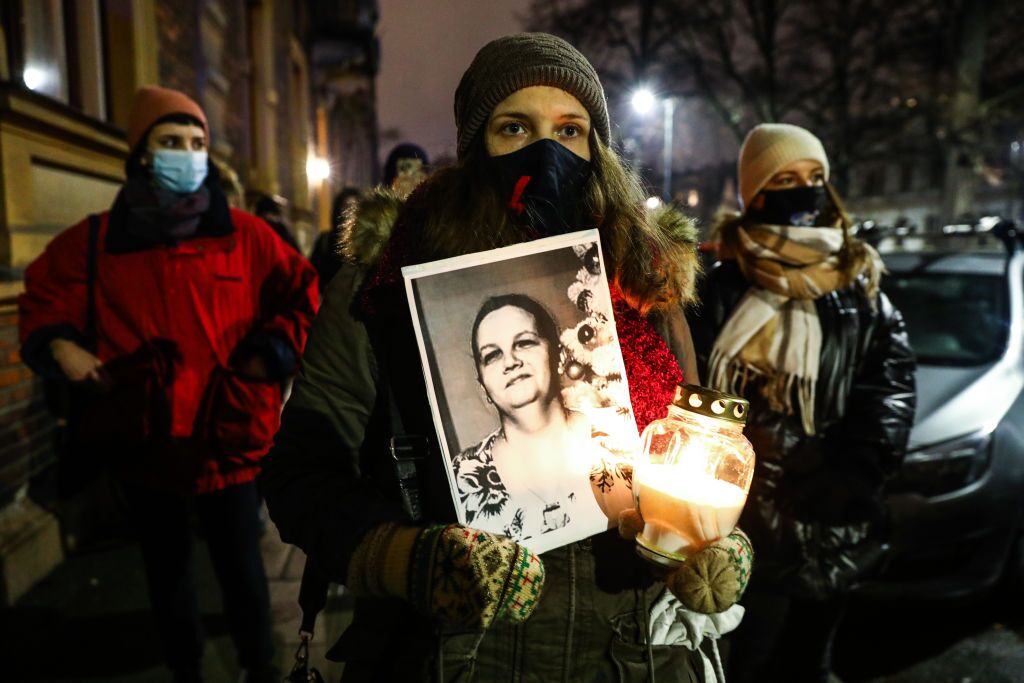
The vote highlights the growing backlash against women’s rights, and abortion specifically, as well as the high cost on certain countries that had already been providing services for people to access cross-border healthcare. Supporters argued that it will reduce the health risks that come with inaccessible or delayed reproductive healthcare services. Additionally, it directly addresses the many individuals who cannot afford to travel for abortion and the discrepancy in access based on socio-economic factors as well.
Belgium/U.S.
+ Additional USAID birth control meant for Africa discovered; stockpile continues to waste away in Belgium
Recent reports indicate that a stockpile of U.S.-funded birth control abandoned in Belgium–originally valued at $9.7 million–may be significantly larger and more costly than previously reported. Belgian officials have now confirmed the discovery of 20 additional truckloads of supplies, many of which are already unusable due to improper storage and expiration.
The contraceptives have been stranded in Belgium for months, following the Trump administration’s suspension of U.S. foreign aid programs that covered their distribution in January 2025. The stockpile includes birth control pills, intrauterine devices and other implants or injectables intended for use in five African countries: the Democratic Republic of the Congo, Kenya, Tanzania, Zambia and Mali.
Rather than allowing the supplies to be distributed or bought, the Trump administration initially ordered USAID to incinerate the contraceptives in June, at an additional $167,000 cost to U.S. taxpayers. Belgian regulations did not permit the destruction, and multiple aid organizations, including the Belgian government itself, offered to purchase and distribute the supplies. The U.S. government rejected all such proposals.
Public health experts estimate that the failure to deliver these contraceptives could result in 362,000 unintended pregnancies, 110,000 unsafe abortions and 718 preventable maternal deaths, further exacerbating maternal mortality rates across much of the continent. On Dec.15, The Center for Reproductive Rights filed a lawsuit against the U.S. Department of State, citing its refusal to disclose plans regarding the destruction of at least $10 million worth of unexpired, taxpayer-funded contraceptives.
India
+ Indian states implement direct payments to women for household work
Across India, about 118 million adult women in 12 states are now able to receive unconditional monthly payments from their state governments. These payments, typically between 1,000-2,500 rupees ($12-$30) a month, acknowledge the unpaid labor women perform to sustain households, from cooking and cleaning to caring for children and the elderly. By the end of December 2025, the 12 participating states are expected to have spent about $18 billion (around 200 thousand USD) on payouts throughout the year.
The initiative has enabled women to become a powerful voting group. In Bihar state’s November elections, the state transferred additional funds to women right before the election, and female turnout surpassed that of men. While some called the move vote buying, its supporters argued it signaled long-overdue recognition of women’s economic contributions.
Although critics warn that the policy could reinforce gender roles, early research suggests otherwise. Studies indicate the transfers have increased women’s financial autonomy and bargaining power without reducing participation in paid work. “If the transfers are coupled with messaging on the recognition of women’s unpaid work,” said Prabha Kotiswaran, a professor of law and social justice at King’s College London, “they could potentially disrupt the gendered division of labour when paid employment opportunities become available.”
England
+ England records first year where C-sections outnumber unassisted births
For the first time, more babies in England are being delivered by caesarean section than through unassisted vaginal birth. According to National Health Service (NHS) childbirth data from 2024-25, 45 percent of births were by C-section, compared with 44 percent classified as “spontaneous,” the term used to describe an unassisted vaginal birth. Another 11 percent required additional interventions.
Nearly half of these C-sections were planned ahead of time. These procedures may be scheduled for medical or personal reasons, or performed as or as an emergency measure, due to complications during labor. The NHS attributes the rise to several overlapping factors: These include more women opting for cesarean delivery, higher rates of pre-existing conditions such as diabetes and obesity and an increase in the average age at pregnancy.
But Soo Downe, a professor of midwifery studies at the University of Lancashire, explains that circumstantial factors alone do not fully account for the steady increase in cesareans over the past decade. For many women, the decision is a choice of autonomy and control. England’s maternity services have come under intense scrutiny, with 14 NHS hospital trusts that provide maternal and neonatal care currently undergoing reviews. Downe paints a picture of women who increasingly see C-sections as the “least worst option,” with their choices borne from concerns that they will not receive adequate support for a “safe straightforward positive labour.”
Namibia
+ UNESCO Office meets in Namibia to call out online attacks on women journalists
In Windhoek, Namibia, the UNESCO Office met on Dec. 9 with the U.N. Gender Theme Group to bring attention to the digital risks women in media face. On the International Day to End Impunity for Crimes Against Journalists, 50 participants held an event titled “Chat GBV: Raising Awareness on AI Facilitated Gender Based Violence Against Women Journalists.”
Eunice Smith, the UNESCO Head of Office and Representative to Namibia, said “Technology is now used to harass journalists, especially female practitioners, and as synthetic media tools become more accessible, the threats grow more sophisticated, and the consequences more severe. And yet, despite these escalating threats, impunity remains one of the greatest obstacles to justice.”
There has been an increased amount of attacks on women journalists, especially when reporting on gender and politics, that are often sexualized or threatening in nature. A majority of women online experience online violence, especially journalists, simultaneously targeted by AI deepfakes and manipulation. The conference stressed that when women are targeted, silenced and discredited, society loses an important measure of accountability.
