
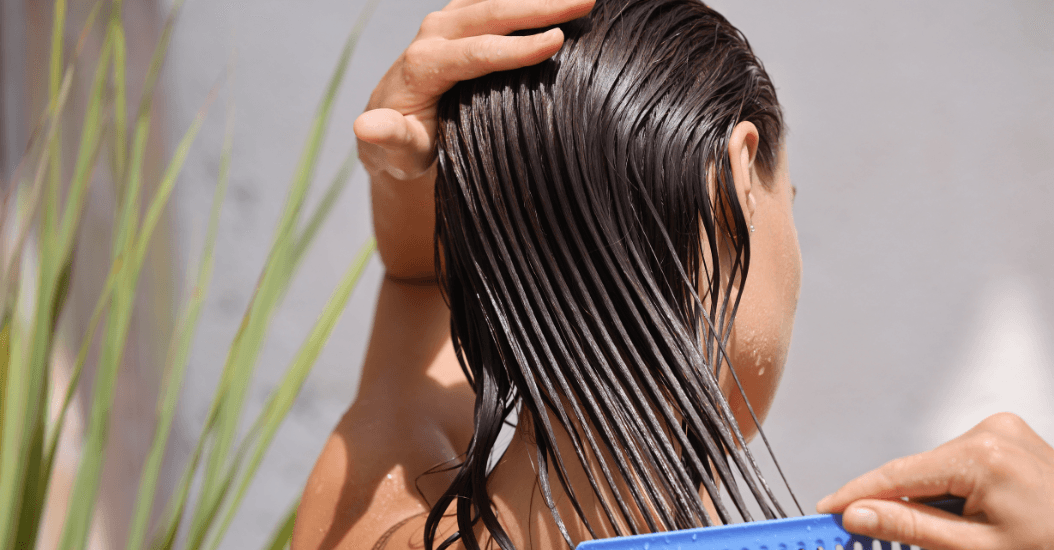

Coconut oil has become one of the most talked-about beauty ingredients in the last decade – fuelled by viral TikTok trends, countless DIY hair masks, and its long list of benefits. Scroll through social media and you’ll find people who swear it transformed their hair, while others insist it causes build-up and greasiness! With so many strong opinions, it can be hard to know where the truth lies.
In this blog, we’ll break down what coconut oil does structurally, who benefits most from using it, who should avoid it, and the biggest myths versus facts. You’ll also find stylist-approved tips to apply it correctly – so you can decide whether coconut oil deserves a place in your haircare routine.
What Is Coconut Oil and How Does It Affect Hair?
Understanding Coconut Oil and Hair Health
Coconut oil is rich in lauric acid, a lightweight saturated fat, which means it can penetrate the hair shaft easier than other oils. This deep penetration helps reduce protein loss, which is especially beneficial for damaged, porous, or chemically treated hair. However, coconut oil also acts as an occlusive, meaning it forms a protective layer that helps lock moisture in, but can also block moisture out if misused – leading to dryness or build-up.
What Stylists and Research Say
Research shows that coconut oil can reduce protein loss compared to sunflower or mineral oil, thanks to its high lauric acid content and its ability to bind to the hair’s protein structure more effectively than many other lipids. Whilst this can help strengthen the hair, overusing can dry the hair out due to coconut oil being an occlusive – increasing the risk of breakage. Some stylists recommend coconut oil as a pre-wash treatment for those with dry, porous, or damaged hair. It helps protect the strand during cleansing and minimizes moisture loss, leaving hair feeling softer and less frizzy. However, other stylists avoid it completely, steering their fine/thin hair clients away from it. This is because coconut oil can easily cause build-up, weighing the hair down and making it look flat or greasy.
Benefits of Coconut Oil for Different Hair Types
Coconut oil offers a wide variety of benefits for different hair types, making it a popular natural hair care staple. Its ability to penetrate the hair shaft helps support hair strength and reduces protein loss, which is especially beneficial for damaged or chemically treated hair. Coconut oil can act as a deep conditioner, boosting moisture retention, enhancing softness, and helping to control frizz. Those with thick or textured hair often find it helps with detangling by improving slip and reducing breakage, while finer hair types can use small amounts to smooth flyaways and add shine.
Curly Hair – Definition and Moisture Retention
Curly hair is naturally more prone to dryness because the scalp’s natural oils have a harder time traveling down the curls and coils of each strand. As a result, curls tend to lose moisture faster, making this hair type more susceptible to breakage and frizz. When used sparingly, coconut oil can help smooth the hair cuticle, reduce frizz, and strengthen strands by minimising moisture loss. Coconut oil works well as a pre-wash treatment, helping to protect hair during cleansing and improve softness, but it should not replace regular conditioner.
Straight Hair – Smoothness and Shine
Coconut oil can be used to maintain the smoothness and shine of straight hair, keeping it look healthy and polished. Coconut oil can help reduce frizz, smooth the hair cuticle, and increase overall softness. As straight hair can become greasy more easily, make sure you’re not using too much coconut oil, only focusing on the mid-lengths and ends rather than the roots. When applied lightly, coconut oil works well as a natural alternative to a smoothing serum, helping to tame flyaways and add shine without weighing the hair down.
Common Myths About Coconut Oil Debunked
There are several myths about coconut oil that can lead to misuse and disappointment. One of the biggest misconceptions is that coconut oil moisturises hair; in reality, it seals in moisture but does not hydrate on its own, which is why it works best when applied to damp hair or over a water-based product.
Another myth is that coconut oil works for everyone. Coconut oil works for everyone however, its effectiveness depends on the hair’s porosity. For example with some hair types, it can dry out the hair, leading to more breakage. Many also believe that more is better, but overuse often results in build-up, leading to greasy, stiff hair.
Another myth is that coconut oil repairs split ends and reverses damage. Whilst it can help to nourish the hair, it simply reduces friction and protein loss, which can make hair appear smoother and healthier, not necessarily repairing split ends.
How to Use Coconut Oil Correctly, Stylist Tips
To get the best results from coconut oil without unwanted build-up, follow these stylist-approved steps.
Always ensure that you patch test first on a small area of skin before use, as coconut oil can be a common allergen for some people. Start by lightly warming the oil in your hands to help it melt into an oily consistency. When applying, focus on the mid-lengths and ends and apply to the scalp if it is very dry or flaky. Coconut oil can be used in several ways, such as a pre-wash treatment to boost softness and shine, an overnight mask, or as a shine finish to smooth flyaways.
Ensure that coconut oil isn’t used on wet hair, as it is hydrophobic. This means it repels water, ultimately locking out moisture. We’d recommend avoiding using coconut every day and using it directly before heat styling, as this can fry your hair! Stylists recommend mixing coconut oil with your conditioner to make rinsing easier, shampooing twice if there is a lot of build-up to fully cleanse the hair.
Potential Drawbacks of Coconut Oil
While coconut oil is found in products and hair care regimes, it isn’t suitable for every hair type. It can cause significant build-up on low-porosity hair, creating a coated finish rather than softness, easily weighing down fine hair, leaving it limp or greasy.
On the scalp, coconut oil can contribute to congestion and may trigger seborrheic dermatitis flare-ups for those who are prone to them. It is also difficult to rinse out fully, often requiring shampooing twice, and when overused or applied incorrectly, it can dull the vibrancy of colour-treated hair.
Great alternatives to coconut oil include argan oil for weightless shine, jojoba oil which closely mimics the scalp’s natural sebum, almond oil for gentler penetration and softness, or shea oil for nourishment without heavy build-up.
Book An Appointment for Personalised Hair-Care Advice
If you’d like personalised guidance on coconut oil, treatments, and product routines, our stylists are here to help. Rush’s stylists are experts in hair health, damage prevention, and product selection. They can give you expert advice on what oils work best for your specific hair type. Book an appointment at your nearest Rush salon for a personalised hair-care consultation today.
FAQ’s
It won’t damage hair for most people, but overuse can cause build-up, dryness and stiffness for some hair types.
Yes, it’s generally safe for coloured hair and can help reduce protein loss, but heavy use may dull colour over time.
1 – 2 times a week is enough for most people; fine or oily hair should use it less often.
No, it shouldn’t replace conditioner since it lacks moisture; it works better as a pre-wash or treatment.
Yes, it can help with dryness and mild dandruff, but may clog pores for oily or sensitive scalps.
