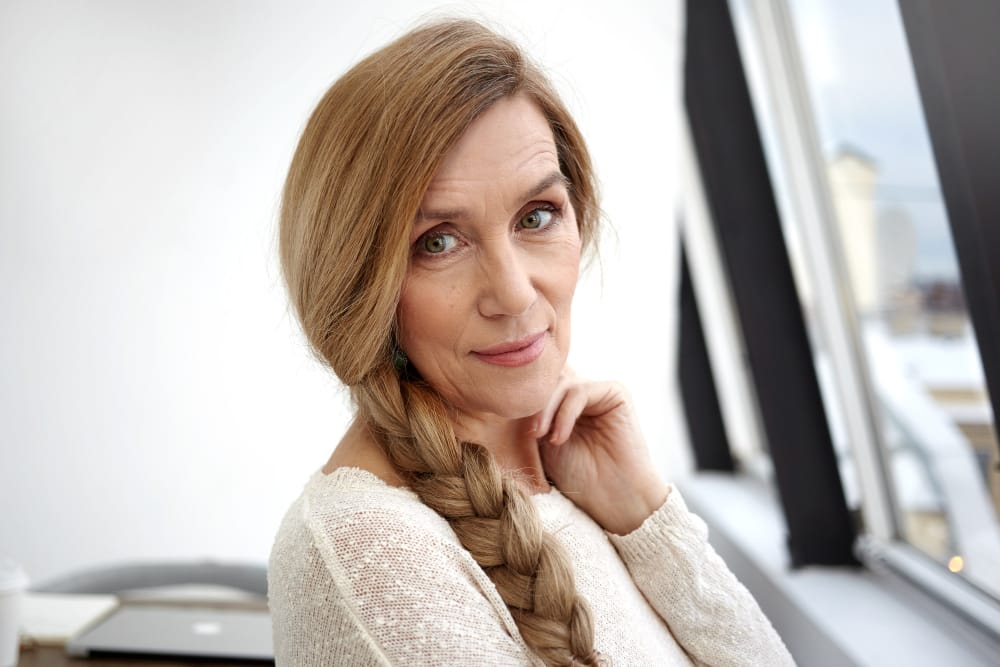

Are you struggling with inflammatory skin conditions during menopause?
If you’re not sure, ask yourself this: Does your skin feel dry and itchy? Is it redder than it used to be? Are you breaking out and reacting to products that used to work just fine for you?
If you answered “yes” to any of these questions and you are in perimenopause (pre-menopause) or menopause, you may be dealing with menopausal skin conditions.
We know it’s frustrating. As if you don’t have enough to deal with while going through this period of life! Fortunately, there are some things you can do to help your skin look and feel better.
Inflammatory Skin Conditions During Menopause: Why Does It Happen?
During menopause (and perimenopause), estrogen levels drop in the body. That brings on all the changes we’re used to hearing about with menopause—the hot flashes, night sweats, mood swings, etc.
Estrogen changes also affect the skin, weakening the outside barrier, increasing inflammation, and leading to other changes that cause those symptoms we don’t like.
That’s because estrogen does a lot for the skin. It supports collagen production and thickness, maintains moisture, influences lipids (fats) in the outer barrier, and helps manage inflammation and wound repair. When estrogen levels decline, the following changes can occur.
Collagen and Thickness Fall Quickly
Collagen is the protein that provides the scaffolding for the skin, keeping it firm and plump. Unfortunately, studies show that women can lose roughly 30 percent of skin collagen in the first years after menopause, with a slower decline after that. That sudden and significant drop causes reduced thickness and elasticity, which is why skin sags, fine lines and wrinkles become more noticeable, and crepiness develops.
Barrier Lipids Change
Laboratory studies of the skin show a good amount of lower and shorter-chain ceramides, which are key fats that help seal in moisture. After menopause, the skin produces fewer and shorter-chain ceramides, which means that it lacks the longer ones that can help trap moisture. As a result, water escapes more easily, leaving skin dry, itchy, and vulnerable to outside assault.
Hydration and TEWL Shift (Transepidermal Water Loss)
Your skin’s outer layer (the stratum corneum) acts as a shield to lock in hydration. TEWL measures how quickly water escapes through that barrier.
Aging effects on TEWL are subtle and inconsistent, but you may notice them. A study involving 150 women aged 18 to 80 found only minor differences in TEWL with age, but most women reported that their skin felt drier, tighter, and more prone to flaking during and after menopause.
Inflammation Biology Changes
As we age, inflammation often increases. Estrogen usually helps regulate immune activity, so that inflammation calms down after it has done its job of healing a wound or helping us recover from an illness. With less estrogen, however, inflammatory markers in the blood can stay higher. That can make redness, rashes, and irritation more common, more noticeable, and last longer.
One study of 175 women found that postmenopausal women had significantly higher blood levels of key pro-inflammatory markers called “cytokines,” compared to the younger women. In fact, levels of one particular cytokine (IL-8) were comparable to those in women with chronic inflammatory diseases.
Elevated levels of these cytokines in the blood are known to break down collagen, impair barrier function, promote redness and sensitivity, and delay wound healing.
Microbiome Disruption
Recent research has indicated that there may be something else going on during menopause too that we hadn’t considered before: changes in the skin’s microbiome. This is the natural bacterial balance on the skin. Some bacteria are helpful, and some are not. When this microbiome is healthy, it helps skin to look and feel its best.
During menopause, however, changes can occur that negatively affect this community. One small pilot study compared women of similar ages who were either pre- or postmenopausal and found increased bacterial diversity on the faces of postmenopausal participants, along with a decrease in the Cutibacterium species, which is known for thriving in skin environments.
A drop in a species like Cutibacterium, which thrives in the presence of skin oil (sebum), suggests that the skin has reduced sebum production because of lower estrogen levels. That could be one of the reasons why skin feels drier after menopause.
Greater bacterial diversity, as well, isn’t necessarily bad, but it could show that the skin is experiencing a subtle shift away from a stable, balanced community toward one that’s more easily disrupted. This could make the skin more reactive, prone to redness or irritation, and more vulnerable to flare-ups of eczema or psoriasis.

Inflammatory Skin Conditions During Menopause: What Are the Symptoms?
Common symptoms that all these changes may be going on for you include the following:
- Dryness, tightness, and itch
- Redness, flushing, and sensitivity
- Breakouts on a drier face
- Slower healing and more irritation
- More flare-ups from eczema, rosacea, and psoriasis
- Accelerated signs of aging
- Hair loss
Inflammatory Skin Conditions During Menopause: Science-Backed Solutions that Help
To help your skin cope with menopausal changes, you want to come at it from several different angles. That means strengthening your skin barrier, calming inflammation, and reducing any triggers that cause reactive skin.
Build a Barrier First
Your skin barrier—which is the outermost layer made of lipids (fats), proteins, and dead skin cells—helps keep moisture in and irritants out. During menopause, this barrier weakens due to a decrease in ceramides and collagen. Reinforcing it helps restore hydration, reduces sensitivity, and reduces inflammation.
- Cleanser: Use a low-foaming, fragrance-free formula. Harsh cleansers strip away natural oils and ceramides your skin is already producing less of, which worsens dryness and barrier fragility.
- Moisturizer: Choose formulas that contain ceramides, fatty acids, glycerin, and beta-glucan. These ingredients replace and lock in essential barrier lipids, attract water to skin cells, and reduce redness. Try our CV Skinlabs Calming Moisture and Body Repair Lotion. Both help hydrate and restore moisture with beta-glucan, aloe, oat, and natural oils.
- Reduce flare-ups: Keep a calming mist or gel in the refrigerator for use when flushing and itching. Try our Rescue & Relief Spray, as it offers quick anti-redness action along with anti-itch relief. Bonus: Rescue & Relief Spray provides instant cooling relief during a hot flash.
- Daily sunscreen: Use a broad-spectrum SPF 30+ every morning. UV light accelerates collagen breakdown and fuels inflammation—two processes that are already going on in your skin because of menopause.
Address Inflammation from the Inside
Menopause is linked to a rise in low-grade systemic inflammation, which slows skin repair, increases redness, and speeds collagen breakdown. That means you need to use every method you can to reduce inflammation from both the inside and out.
- Mediterranean-style diet: Rich in antioxidants, omega-3 fatty acids, and polyphenols, this dietary pattern has been shown in studies to help reduce inflammation in the blood.
- Exercise regularly: Moderate aerobic exercise and resistance training help lower inflammation and improve circulation, supporting nutrient delivery and waste removal from the skin.
- Prioritize sleep: Sleep loss increases blood inflammation and slows barrier recovery after damage. Try to go to bed and get up at the same time every day. Keep your bedroom cool, quiet, and technology-free (including TVs). Also, have a pre-bed period that includes relaxing activities like reading or listening to calming music.
- Manage stress: Chronic stress fuels the same inflammatory pathways that menopause already activates. This increases the risk of flare-ups and slows down the healing of any wounds. Plan a daily stress-relieving activity. This may be your daily exercise, such as walking the dog, doing some journaling or meditation, or any other activity that helps you shed stress and feel more centered and relaxed.
- Support your gut health: A balanced gut microbiome can help reduce inflammation in your body, which in turn supports the health of your skin. Aim for high-fiber plant foods, fermented foods (such as yogurt and kefir), and limit ultra-processed snacks.
- Maintain healthy vitamin D levels: This essential vitamin plays a crucial role in managing inflammation and supporting the skin’s barrier function. A vitamin D deficiency has been connected with higher inflammatory markers in postmenopausal women.
- Limit alcohol and added sugars: These can promote oxidative stress and increase internal inflammation, making the skin more prone to redness, puffiness, and irritation.
- Try mindfulness or yoga: These help calm your nervous system, which in turn, can help lower inflammation in the body.

Address Inflammation from the Outside
In addition to reducing inflammation inside your body, you can also address it topically—on the skin itself.
- Choose products with calming agents: Ingredients such as oatmeal, beta-glucan, bisabolol (derived from chamomile), and aloe vera can all help calm and soothe inflamed skin. Try our CV Skinlabs Calming Moisture, which combines beta-glucan, oat extract, aloe, and Reishi mushroom to hydrate while actively reducing redness.
- Use antioxidant-rich formulas: Antioxidants, such as vitamin C and E, help reduce oxidative stress, which fuels chronic inflammation and collagen breakdown. Our Tri-Rescue Complex, which is present in all our products, delivers turmeric, alpha-bisabolol, and reishi mushroom extract for combined antioxidant and anti-inflammatory support.
- Avoid common irritants: Fragrances, drying alcohols, sulfates, and certain essential oils can trigger inflammation, particularly in sensitive, postmenopausal skin. Switching to hypoallergenic, fragrance-free products reduces flare frequency.
- Incorporate barrier-repair actives consistently: Niacinamide, ceramides, cholesterol, and other ingredients help rebuild the lipid matrix that locks out environmental irritants, reducing inflammation before it starts. CV Skinlabs Body Repair Lotion uses ceramides and fatty acids to help keep skin calm.
- Try gentle exfoliation: Aggressive exfoliation using scrubs and harsh materials can increase inflammation on postmenopausal skin. Try gentler exfoliation that includes acids like lactic, glycolic, and malic. Enzyme exfoliation can also improve cell turnover without causing micro-tears or irritation.
- Seal in moisture and protect skin: Try our Restorative Skin Balm. It provides a breathable barrier along with tons of healing and hydrating ingredients. These protect skin and allow damaged, severely dry skin and irritations to heal quickly.
Consider Medical Options
Some menopausal skin changes are strongly connected to the hormone changes you’re going through. Medical options like hormone therapy or targeted prescriptions can address these directly, which may offer results that topical or lifestyle changes can’t match.
If you’re struggling, talk to your doctor about your options.
Inflammatory Skin Conditions During Menopause: Use a Holistic Approach
Managing skin changes during menopause is a common concern for many women at this stage of their lives. By addressing the problems at their roots—through self-care, lifestyle changes, and professional support when needed—you can improve your skin’s health and appearance, which is likely to enhance your overall self-esteem.
The key is to be patient with your skin as it adjusts to the changes while providing the gentle support that it needs.
Have you struggled with inflammatory skin conditions during menopause?
Featured image by Shurkin_son via Freepik.