

It’s spring in Delhi – the two months of pleasant, albeit pleasant weather in Delhi that brings some calm after the cool winters and is on the precipice of the scorching summer. As we navigate the transition, we grapple with how “pleasures of the seasons” are shaped by bodies, health, and access in ways that are often ignored in climate discourse.
For example, when we look back on the winters of years ago, we are reminded of the gathering of grandparents and elders, friends and family, and the dreaded (but beloved) crowd of neighborhood uncles and aunts gathered on the communal patio – where chai and conversation were exchanged while basking in the sun. The Delhi sun, a feared character in the city landscape most of the year, transformed for a short quarter into a valued presence, providing the backdrop for shared warmth and conviviality. But for one of us (Re: Nipun) this winter was one of many Delhi is the coldestforcing his body to adapt to an unusually severe cold. As a wheelchair user, Nipun struggles with thermoregulation, and limited mobility combined with extreme cold exacerbates this challenge. His winters are not as “joyful” as mine.
While Nipun feels some relief with the onset of summers, Harshita, who feels temporary relief in winters, is already worried about the coming summer. Harshita lives with MOGAD and experiences Uhthoff phenomenon – a temporary worsening of neurological symptoms triggered by rising body temperature and commonly seen in demyelinating diseases such as multiple sclerosis. For them this means: fatigue, nausea and limited mobility as existing symptoms recur. With Climate change As summers in Delhi become more and more relentless and temperatures regularly rise above tolerable limits, the fear is not abstract but imminent.
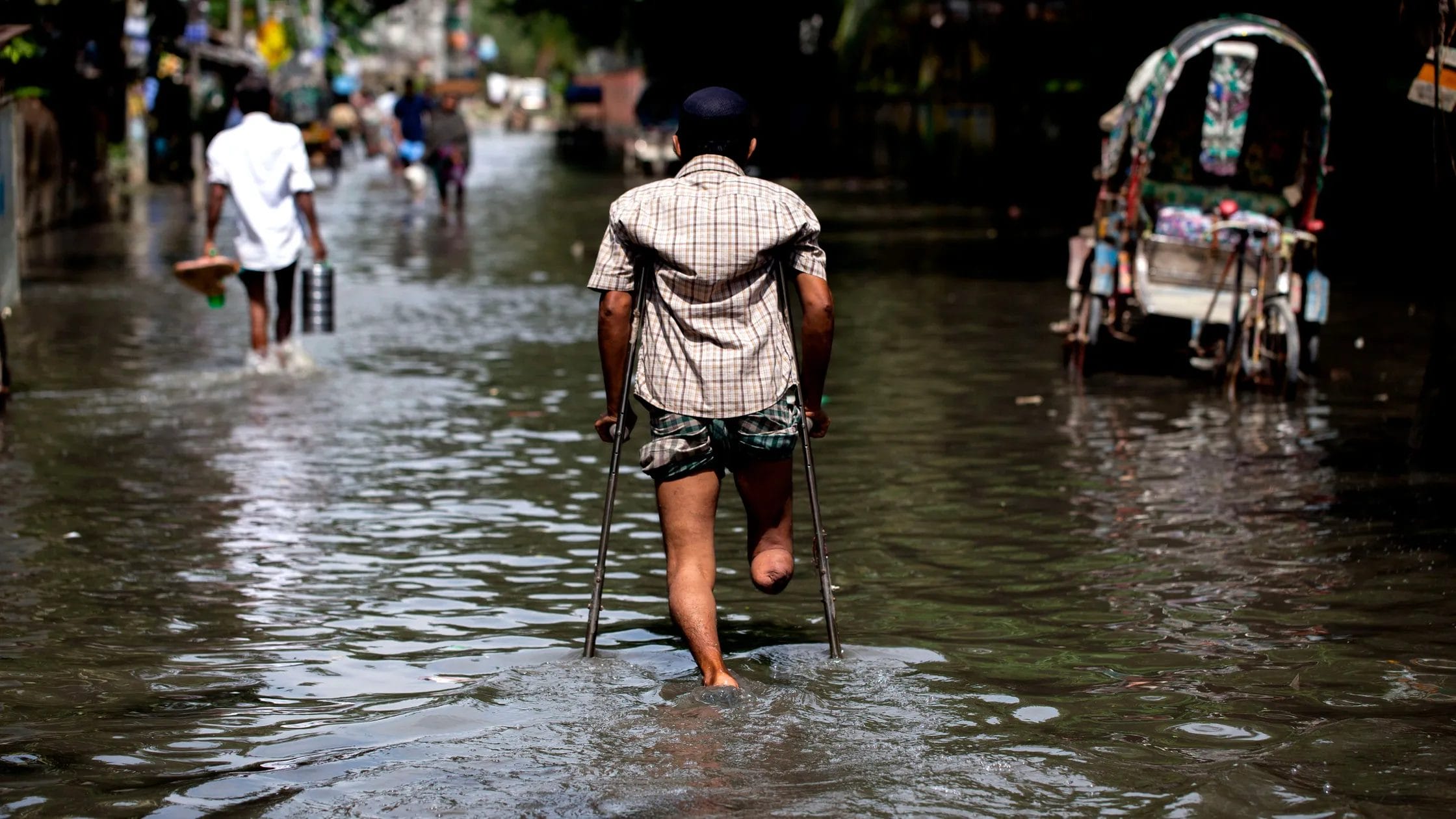
What matters is that our experiences are not exceptional. People with disabilities make up approximately 16 percent of the world populationwith almost 80 percent Life in the Global South. In India, disability data remains fragmented and outdated. official sources indicate a broad spectrum of disabilities – visual, movement, psychosocial, speech and hearing – each interacting differently with heat exposure, cold stress, flooding, evacuation and access to emergency assistance. Yet climate disaster governance continues to treat vulnerability as unitary and based on assumptions about body mobility, sensory capacity and physiological resilience.
This neglect takes place against a backdrop of increasing climate stress. The climate risk index The year 2024 shows that the ten countries in the world most affected by climate are all in the global south. Between 1995 and 2024, heat waves and storms accounted for the highest proportion of climate-related deaths, while flooding affected nearly half of all affected populations. India is increasingly falling into the category of countries experiencing recurrent extreme climate events rather than isolated disasters – conditions in which gaps in preparedness not only persist but worsen over time.
Our stories are part of a much larger spectrum of experiences that people with disabilities have address climate change It changes seasons, intensifies exposure and normalizes extreme conditions. As heatwaves and cold spells evolve from episodic events to near-permanent conditions, climate policy must address two intertwined demands: first, the need for long-term adaptation that addresses disability-specific needs under everyday climatic conditions; and second, the need for disability-accessible systems as hazards and disasters increase in both frequency and intensity.
In India, households with people with disabilities are disproportionately concentrated in the poorest spending brackets, with nearly a quarter falling into the lowest consumption category. With extremely low per capita spending and larger households, individual acclimation to heat, cold or polluted air is simply not practical.
The first of these – adapting to everyday extremes – remains largely unmentioned in climate policy discourse, even as disabled people are already forced to adapt in informal and unequal ways. While we can afford to manage some of our symptoms through heating, air conditioning, or staying indoors—much like Delhi’s elite rely on air purifiers to beat pollution—these private strategies are neither universal nor scalable. In India, households with people with disabilities are disproportionately concentrated poorest spending classeswith almost a quarter falling into the lowest consumption category. With extremely low per capita expenditure and larger household sizes, individual habituation to heat, cold or polluted air is simply not feasible. When climate resilience is viewed as a matter of personal adaptation, responsibility shifts away from public systems and makes survival in extreme conditions a function of income rather than rights.
The consequences of this gap are already visible in subnational climate planning. For example, while the Delhi Heat Action Plan Although people with disabilities are recognized as a disability group that is exposed to various harms, they shy away from operationalizing this recognition through concrete measures. There is little clarity on accessible cold storage, targeted outreach or institutional support that would enable disabled people to cope with extreme heat in their everyday lives – showing that recognition without implementation offers limited protection.
If everyday climate adaptation reveals the limits of individual coping, disasters reveal the consequences of institutional failure. Unlike long-term adaptation, disability inclusion in disaster risk reduction has at least been formally recognized in global frameworks. The Sendai Framework is a development agenda that aims to protect development gains from the risk of disaster. It is groundbreaking because it provides an actionable path to implementing accessibility for people with disabilities in disaster preparedness and response. But closer to home, the gap between commitment and implementation remains wide.
During the 2025 winter session of the Lok Sabha, the Union Government admitted that it does not maintain data on how many shelters or relief centers have been certified as accessible as per National Disaster Management Authority norms and how many have been inspected for accessibility as part of the Accessible India campaign. At a time when India’s climate policy remains dominated by technology-first politics, this evidence stands in stark contrast and highlights the vulnerability faced by India’s disabled population. A system that has no answers for people who cannot evacuate quickly, navigate crowded relief camps, or access information through standard communication channels.
Responding to climate disasters requires moving beyond symbolic inclusion to two commitments: climate change adaptation that takes disability into account in everyday life, and disaster management that treats accessibility and participation as enforceable standards rather than aspirational goals.
In 2019, the National Disaster Management Authority issued Disability-Accessible Disaster Risk Reduction Guidelines that align India’s disaster management with the Sendai Framework’s focus on accessibility for people with disabilities. But like that Reply from Lok Sabha shows that these commitments have not been put into practice. So while inclusion is articulated, it is not measured – and without measurement, accountability remains elusive.
As episodic and normative climate disasters increase, the likelihood of acquired disabilities as a result of direct physical injury will increase. In connection with the increasing spread of non-communicable diseases such as: Alzheimer And Parkinson’sand the rapid aging of the population overall point to a future in which the prevalence of disability will increase. Responding to this reality requires moving beyond symbolic inclusion to two commitments: climate change adaptation that takes disability into account in everyday life, and disaster management that treats accessibility and participation as enforceable standards rather than aspirational goals. Without this transition, preparation will continue to be designed for able-bodied bodies, while others will either have to adapt, cope, or be left behind.
Harshita Kumari is an analyst at The Quantum Hub. She holds a master’s degree in gender and development from the Institute of Development Studies at the University of Sussex. She lives with an invisible disability and works on social policy issues, with a focus on gender and disability inclusion, and is also involved in emerging policy areas such as clean energy. Her writing has been published in leading Indian newspapers. Details can be found here.
Nipun Malhotra is a national award-winning disability rights activist and co-founder and CEO of the Nipman Foundation, advocating for health and disability rights. He is also the Director of Policy and Programs at The Quantum Hub and Young Leaders for Active Citizenship. He has driven accessibility reforms such as wheelchair listings on Zomato, accessibility audits of public spaces and legal victories including a Supreme Court PIL on accessible transport and the 2024 guidelines on portrayal of disabilities in the media. He is also Chair of the FICCI D&I Working Group on Empowering People with Disabilities and a World Economic Forum Young Global Leader. He was born with arthrogryposis and uses a wheelchair.
