
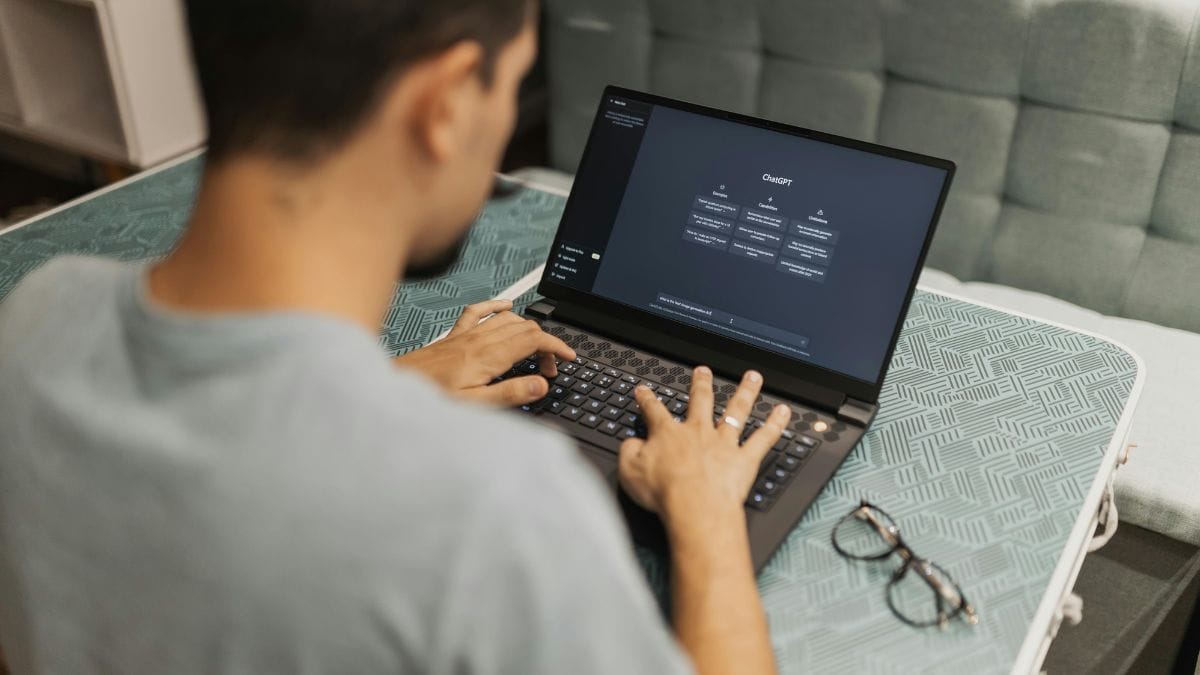

During an interaction with a teenager at an academic conference recently, an interesting thought suddenly came up as we talked about modern relationships and their dynamics for the younger generation. The teen mentioned that a friend of his “used GPT to write an apologetic love letter when he had an argument with his partner,” and that most of the friends this teen knew also did this in their relationships. In fact, many conversations have been “simulated” or controlled using AI-generated text.
A second instance then appeared in one current article about a judge in New Zealand finding it difficult to rule on a case in which an arson convict was ordered to apologize to the victims and the court. Taking a quick look, the judge noted that while the letter was articulate and sincere, it appeared to have been created by an AI. The judge continued: “When considering the authenticity of a person’s remorse, simply producing a computer-generated letter doesn’t really get me anywhere.” He only offered a 5% reduction in the sentence, as opposed to the 10% that the defendant and his lawyer had requested. Similar, a study from the University of Kent found that people negatively perceive those who use AI as “lazy and less trustworthy” (Claessens et al., 2025).
According to OpenAI’s own statements and rough estimates from user surveys and company reports, AI use is booming across all demographics (except older generations), regions (with almost all countries in the Global South having a “high enthusiasm” score), and purposes.
But what might this say about the larger area of AI use in human activities? Do we perceive the use of AI differently in different contexts and if so, when are we more reluctant to use AI and why?
AI use in our daily lives
The statistical analysis of AI use is quite meaningful. The global generative AI market has been estimated at $1.75 billion in 2022 with a CAGR of about 80%. According to OpenAI’s own statements and rough estimates from user surveys and company reports, AI use is booming across all demographics (except older generations), regions (with almost all countries in the Global South having a “high enthusiasm” score), and purposes. ChatGPT was over 800 million active users weekly and the market now serves a total of over 1 billion users on a regular basis. Harvard Business Review statistics show that generative AI is the most widely used ‘Therapy and support‘. The way in which this typology of use is defined is still quite unclear, as it itself falls into a broad category of “personal and professional support,” which can range from supporting basic daily tasks and organizing work calendars to mental health support and basic communication issues, with multiple motivations in terms of the desired outcome.
Source: Getty Images
However, a clear trend is that more and more people are using generative AI less for “technical support” in refining computer codes and performing theoretical or statistical analysis and more for emotional or “relational support” based on contextual and interpersonal interactive bridging. This generative AI “use case” study sits uncomfortably with the aforementioned research that showed how people perceive others’ use of AI as negative. People who use AI to support their thought processing or thought expression are largely perceived negatively, and even distrust of people’s communication is reflected in respondents’ overestimation of AI use.
The larger point I want to emphasize lies precisely in this gap. I define the use of AI as an emotional tool to reduce effort or support complexity in planning relational interactions or human communication as “AAC.” The studies mentioned above show that although we view people who rely on “AAC” less positively, we as a people tend to use it more and more in our daily communication practices. We can ask why this is so, and I come back to two insidiously related questions: First, the social theory of “alienation,” which talks about how people increasingly lose connection to social processes or their visibility the deeper we go into capitalist lifestyles. I would also like to shed light on the time poverty that arises from the strenuous modern working life. The second question concerns patriarchal value systems and their impact on the definition of what counts as legitimate “work.”
Time poverty in capitalism and supported communication as care work
In his book Time, capitalism and alienation: a socio-historical investigation into the emergence of modern timesMartineau argues that one of the most important abstractions we have to contend with in the capitalist organization of society is that of “clock time.” Clock time became the most influential and defining typology of time around the Industrial Revolution to motivate and control workers’ time use, in contrast to other natural temporal rhythms we experience, for example seasonal rhythms or physical rhythms that work more synchronously with natural and social behaviors. Our natural body clocks, circadian rhythms and menstrual rhythms function in complex and profound ways, as opposed to “abstract” and rigidly quantified units of time such as hours and days. Martineau and other scholars suggest that this dissonance creates a new form of alienation that we experience under capitalism, namely that of “Period Poverty”.
This is where we come across our current mess – where we have to devote most of our time to “productive tasks” (which could be defined as studying when one is young, or career-oriented work and organization as one gets older), while other “relational” tasks remain less valued and threatened by the productivity orientation in capitalism. One must strive to be a better student than a highly emotionally intelligent partner or friend, as they are “unproductive.” Here I come to my second position: What happens to other forms of equally important but devalued work when productivity is narrowly defined as “activity that must lead to some monetary gain”?
Patriarchal productivity and inferior emotional communication
Arlene Daniels defines these “unproductive” activities “Invisible work”. Invisible labor is labor that is needed to socially reproduce the work of the next working day. This would include housework, chores, and other administrative tasks that need to be completed to create a home life and stable home routines. Skills required to perform tasks related to nursing work have been framed by Meenakshi Bose in her work within a specific “Knowledge, Skills and Attitude” matrix framework ‘Valuing Women’s Unpaid Work: Experiences from Odisha‘. However, she notes that care work is generally devalued and undervalued due to misconceptions of care work as a “duty” and due to structural constraints in national economic calculation systems.
AI has quietly and invisibly taken on the role of a caregiver in a fast-paced modern social structure that has long since devalued and made invisible any work that is “unproductive”.
In modern life and the workplace, this definition has changed to include tasks such as organizing a birthday party for your friends, clearing out shared kitchens (of dirty dishes and used tea bags), and taking notes in meetings. It is also crucial that intersectionally these tasks would always fall into the area of “women’s work” at the household level and would be carried out by them at the societal level socioeconomic, cultural or sexual minorities in shared public spaces.
The modern social order, in which there is too little time for these tasks, is the birth of “supported communication”. It can take the form of an AI-designed birthday card, an AI-generated apology letter (from the aforementioned court case), or a… generative AI “familiar” confide your secret and offer confirmation. However, because such invisible work has been devalued under patriarchal notions of legitimate work separated from “care work,” such facilitated communication is also despised and castigated. In our study in the Vashi Naka slums in Mumbai, researchers from the Tata Institute of Social Sciences studied found that women (6.7 hours) spent far more time on unpaid housework than men (1.7 hours). Male respondents largely rejected housework as a task for women.
The constant danger of unassessed and invisible AI-powered communication
AI has quietly and invisibly taken on the role of a caregiver in a fast-paced modern social structure that has long since devalued and made invisible any work that is “unproductive”. As productivity operates within the strict definitional boundaries of “career progression” and “monetary value creation,” AI has stepped into the role occupied by caregivers, traditionally more of a social function than an individual challenge. In an era of ever-smaller social circles and drastically reduced budgets for shared and public infrastructure for social support and mental health work, time constraints dictate the way we use AI and its generative capabilities. There are many pitfalls here too Caldwell and Fisher show that in their study with adolescents, there was increased “salivation” among AI companions, who tend to agree with the user rather than offer critical and relational perspectives. Added to this are the ever-present concerns about data, privacy and abuse among teenagers using the Internet. When it’s all of them ‘bowl alone(a phrase borrowed from Robert Putnam’s groundbreaking study of growing loneliness in the capitalist United States), then whose fault is it if most communication is AAC?
If we look back at the work of Meenakshi Bose, she has shown that one of the key competencies that is undervalued is the relational complexity of tasks, which is also neglected in a “time use” work paradigm. So the fight remains not with the use of AI for care work, but with the gendered ideas about care work itself that dominate our ideas about productivity. These ideas force humans to delegate “unproductive tasks” that require relational and emotional intelligence to a machine that, unfortunately, does not learn as much about them as another related human would.
