
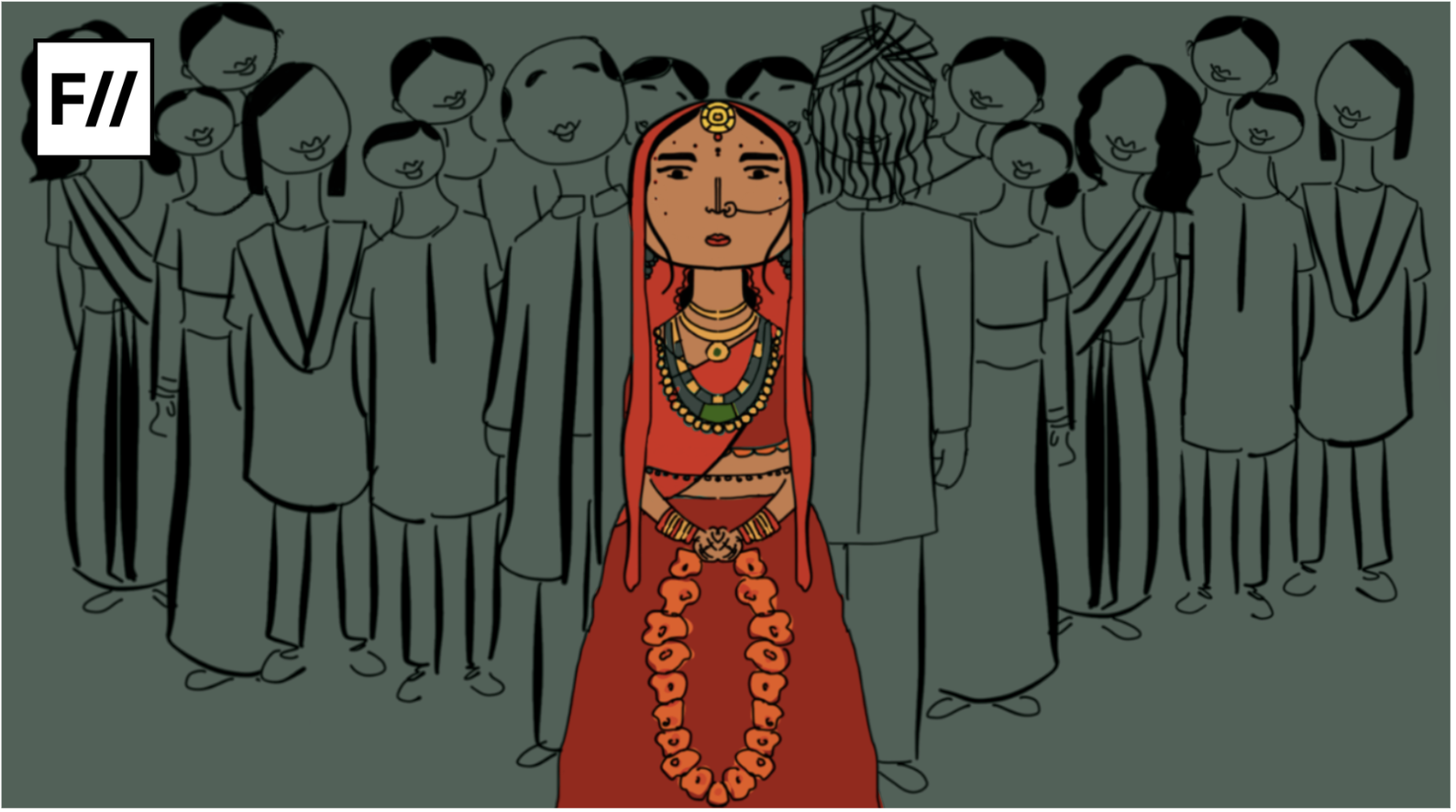

It was a 17-year-old girl from Koriya district in Chhattisgarh repeatedly raped and forcibly given abortion pills from community leaders because she married a man from a different caste. The survivor belongs to the Gond community from Khadgawan railway station area. The alleged perpetrators were leaders of her community and relatives who kidnapped her and then gang-raped her. The survivor was five months pregnant at the time.
In a country where caste is so prevalent, crimes cannot be viewed in isolation. It is important to analyze each case of brutality through the lens of “honor” and prejudice. In this case, the survivor “dared” to go beyond the accepted practice of endogamy and was “punished” by her community for it.
While this is by no means the first case of honor violence, it still calls for an intersectional examination of honor sexual violence and the legal loophole the country faces.
The Chhattisgarh case
The incident occurred in early July when the survivor’s parents and members of her community traced her whereabouts and visited her at her in-laws’ house. The survivor stated in her police report that her family members handed her over to two community leaders. The two men, Ramesh Tekam and his brother-in-law Daroga Singh, then kidnapped her. They took her to her house in Surajpur district, where they locked her in an empty grocery store for several days and raped her repeatedly. When they found out that the survivor was five months pregnant, they forced her to take abortion drugs and even massaged her stomach in order to forcibly abort the fetus.
When the survivor was sent to a medical supply store to get more medication, she managed to get in touch with her husband. Police rescued them from custody and arrested the duo under the Prevention of Children from Sexual Offenses (POCSO) Act, 2012 and the Bharatiya Nyaya Sanhita (BNS), 2023. The accused were arrested from hideout and remanded to judicial custody.
Community leaders made it their mission to “right a wrong” that they considered a crime. According to reports, her family filed a missing person’s report when the girl went missing a few months earlier, but withdrew it when they came to know about her intercaste marriage. Even though the families had accepted the marriage, it remained unacceptable to community leaders, who allegedly convinced the survivors’ parents to pursue, locate and hand her over to them because she deserved to receive a “lesson.”
An abomination to justice
In India, Khap Panchayats (Caste councils) are known for acting as kangaroo courts, illegally punishing individuals for violating conservative social norms. While this case is still being investigated to determine whether there is a link with Khap Panchayats, these self-proclaimed councils have long been involved in financial extortion, public humiliation and social exclusion of individuals and families to “punish” those who dare to violate patriarchal and caste norms.
In fact, the National Human Rights Commission (NHRC) took note of media reports claiming that Khap Panchayats in Haryana had issued orders regarding issues Marriages within the same caste (In several Indian communities, marriages do not occur within the same subcaste.) In one case, a man was asked to divorce his wife because they belonged to the same subcaste. When the woman’s family rejected the panchayat’s diktat, she was asked to leave the village. In another case, a man faced the wrath of the panchayat after he eloped with and married a woman from his own sub-caste. Despite a court order allowing the couple to live together, they were lynched by villagers in the presence of police.
In 2022, a Patha Veerapuram Dalitwada woman returned to her village after her intercaste marriage, which was approved by the elders of both families. However, the village elders gathered at their house to spontaneously initiate a panchayat and passed a resolution She asked her family to pay INR 25,000Conduct construction work at the local temple or hold a mass festival for the entire village as “atonement” for violating community norms. When she refused, a mob attacked her, resulting in her being hospitalized. The local police filed a criminal case against the mob.
The role of the police in these cases was often limited to that of bystanders or documentary filmmakers. On the other hand, courts have also taken years to reach verdicts in such honor violence cases. The most glaring example of this is this Manoj Babli case of 2007. Manoj and Babli eloped and married each other despite belonging to the same gotra (clan), a practice forbidden by local customs. The following month, the woman’s relatives dragged the couple off a bus to Karnal and the newlyweds were murdered. Of the seven defendants, five were sentenced to death; They were all relatives of Babli. Khap panchayat leader Ganga Ram was sentenced to life imprisonment while the driver, who was found guilty of kidnapping, was sentenced to seven years in prison. The court also ordered proceedings against two police officers for negligence.
The right to choose
In Lata Singh v. State of Uttar PradeshThe Supreme Court of India ruled: “Once a person becomes a major, he or she can marry whomever he/she wants,” and that any threats or violence from parents or community against a consensual caste or interfaith marriage is completely illegal. Honor killings were considered an “outrage against humanity” and police personnel were instructed to protect couples from harassment.
This laid the foundation for Shakti Vahini v. Union of Indiawhere the Supreme Court ruled that any attempt by Khap Panchayats to interfere in a marriage between consenting adults is illegal. Proceeding from a Public Interest Litigation (PIL) filed by NGO Shakti Vahini, a three-judge bench headed by then Chief Justice Dipak Misra declared the right to choose a life partner as a fundamental right under Articles 19 and 21. The court observed that honor killings are based on a feudal perception of honor incompatible with the constitutional regime and observed states that the consent of families or khap panchayats is not required for marriages and that the state must protect this right. The court also ruled that khap panchayats were illegal assemblies.
In the case of Asha Ranjan v. State of BiharThe Supreme Court ruled that a woman’s choice of partner was a legitimate constitutional right under Article 19 and that a group of people could not restrict such a right in the name of “class honor.” In fact, freedom of association and privacy were read together and interpreted as the autonomy of an individual to choose a spouse of his or her own choosing.
Waiting for inaction
While the courts have acted, the legislature must criminalize khap panchayats and their dictates. However, data remains scarce; The National Crime Records Bureau (NCRB) only began tracking honor violence in 2014. Logging 18 cases. According to Government responses In Parliament, 25 such cases were registered in 2020, 33 in 2021 and 18 in 2022. The Interior Ministry noted 145 incidents in 2022.
Without specific legislationOffenders face common charges such as kidnapping, intimidation, conspiracy, aiding and abetting, attempt to murder and murder, exposing the casteist intent behind such crimes. The Scheduled Castes and Scheduled Tribes (Prevention of Atrocities) Act, 1989 covers cases where the victims are Dalit or Adivasi, but makes no specific mention of honor violence.
Love is not a crime. Until India legally recognizes honor violence as a crime in its own right, the right to choose a life partner remains an empty and often deadly promise.
Second year student of Media Studies at CHRIST (Deemed to be University), BRC, Bangalore. A trained Kathak dancer, theater artist and political nerd.
