


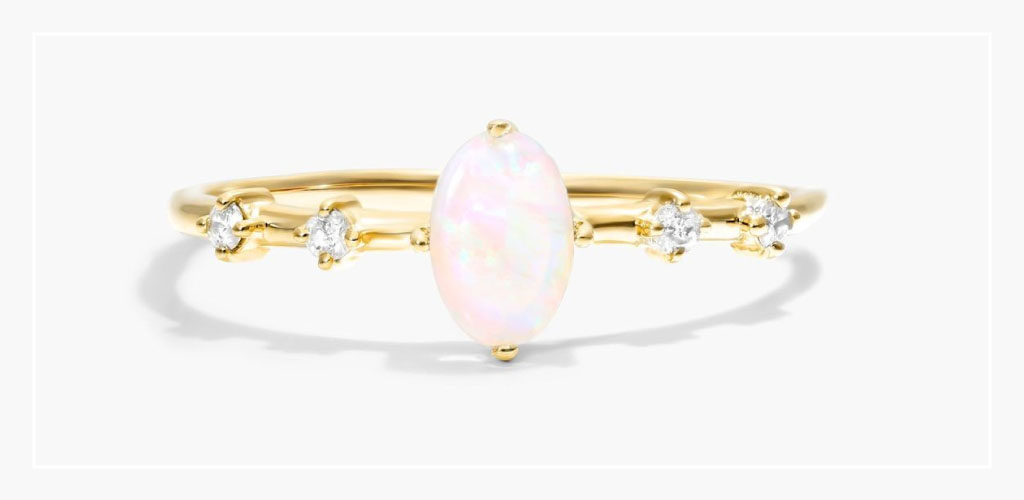
Opal, the original October birthstone, is known for its unique myriad of rainbow colors and milky shine. This kaleidoscope effect, called play of color, occurs when light diffracts through tiny, regularly arranged silica spheres inside the stone.
The opal birthstone forms when silica-rich water seeps into cracks in rock and slowly hardens over time. Opal uniquely contains water within its structure, which contributes to both its beautiful appearance and its delicate nature.
If you need help finding the right stone, check out our guide to buying gemstones.
Opal’s Symbolic Meaning
Each October birthstone has a special meaning, and opals are no different. Ancient cultures associated opals with the following symbolic meanings:
- Hope
- Purity
- Foresight
- Spiritual insight
- Creativity
Additionally, the ancient Greeks also claimed the stone granted its owners the gift of prophecy. Over time, opal has been linked to healing, emotional expression, and imagination.
A Brief History of Opal
Opal’s name traces back to the Sanskrit word upala, meaning precious stone, which later became the Latin opalus. Myths about opal appear across cultures, including Arabic legends that describe it as a stone born from lightning.
While folklore once suggested opals were unlucky for those not born in October, today this gem is widely admired. Most opals are mined in Australia, though there are also deposits in other parts of the world. Understanding gemstones and their meanings offers a deeper appreciation of where they come from and what they can stand for.
Opal Color Characteristics
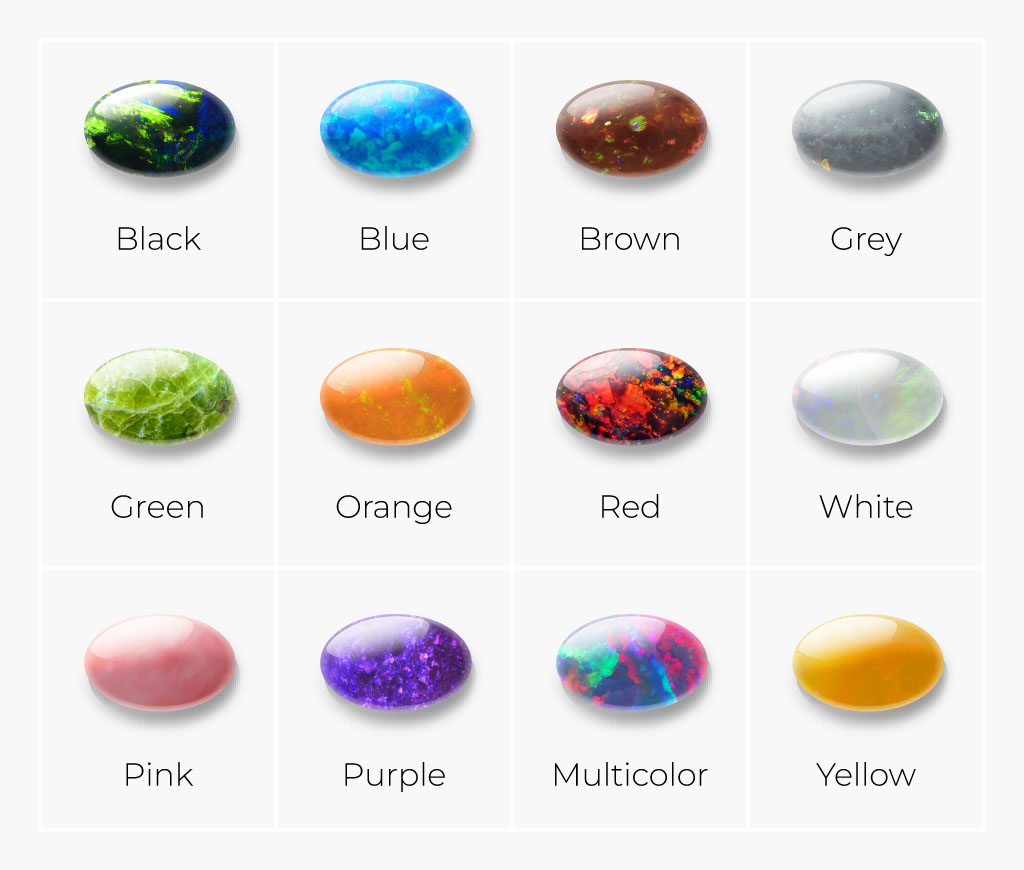
While the October birthstone opal is famous for its soft, milky shimmer and flashes of rainbow color, opals offer a range of unique appearances, including:
- White opal: Classic and most common variety featuring a milky, translucent body
- Black opal: Rare variety with a dark body tone
- Fire opal: Warm, fiery orange to red body color
- Crystal opal: Sought-after variety with a transparent to semi-transparent body
This natural variety makes opal one of the most visually unique birthstones. Whether set in yellow, white, or rose gold, each opal displays its own one-of-a-kind pattern and color play.
Opal Care Tips
Opal is one of the more delicate birthstones and requires gentle handling. Here are a few tips to keep them safe:
- Handle gently: Opals can crack or scratch if bumped. Avoid wearing during heavy activity.
- Avoid heat and sunlight: High temperatures can dry out the stone and cause damage.
- Use mild cleaners: Clean with warm water, mild soap, and a soft cloth only.
- Store separately: Keep away from harder gemstones to prevent scratching.
- Avoid ultrasonic cleaners: These can damage the internal structure of opals.
This gemstone is as delicate as it is beautiful, so care will go a long way in preserving your jewelry.
Popular Opal Styles
With its gorgeous hues and beautiful meaning, it is no surprise that October’s birthstone creates breathtaking jewelry. Here are some of the most popular ways to wear opal jewelry:
- Opal birthstone necklaces: Set in icy white gold, this milky white opal is set in a timeless birthstone necklace. Perfect to wear every day but elegant enough for special occasions. Shop the 14k white gold opal birthstone necklace.
- Opal birthstone earrings: Featuring beautiful beadwork and dazzling diamonds in a halo design, these opal birthstone earrings glow like a golden sun. Level up your everyday look with 14k white gold opal earrings.
Opal birthstone ring: This petite single opal ring is as timeless as it is trendy. A luminescent opal is set on a yellow gold band, creating a ring that looks spectacular on its own, shines bright when stacked with others, and pairs easily with your other fine jewelry.
