
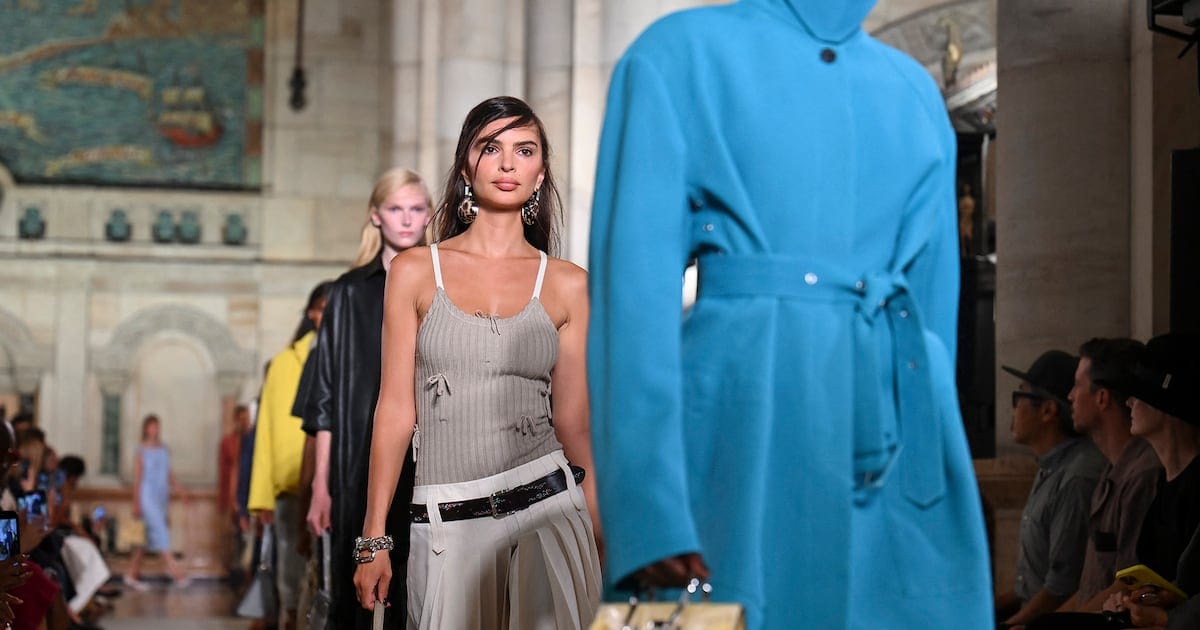


This season at New York Fashion Week, designers made it work.
Facing challenges from every direction — tariffs that seem to change day-by-day, dimming consumer sentiment, wholesale upheaval and a luxury sector in crisis — brands did their best to position themselves for success in an uncertain environment.
“[We saw] determination in terms of business, but more importantly, there’s really great creative optimism and reach that we’ve seen on the runways that reflect originality and a very American, New York point of view,” said Steven Kolb, chief executive of the Council of Fashion Designers of America.
A number of designers, including stalwarts Tory Burch, Michael Kors, Ralph Lauren and newcomers such as Fforme and TWP continued to make the argument for the enduring relevance of American sportswear.
But while there may be “more pressure on designers to deliver great product,” as Robert Burke, consultant and former buyer at Bergdorf Goodman, said, meeting that mission now meant different things to different brands.
For many, how people actually wear clothes off the runway is driving their approach to showing, merchandising and marketing. Brands introduced products that will be a surer bet on the sales floor, and re-evaluated price points in tandem. Buzzy upstart Area, known for its eye-popping, couture style pieces beloved by celebrities and red carpets, and career instigator Elena Velez broadened their mix to include basics retailing below $400. Likewise, Kate Barton, known for her innovative liquid eveningwear looks, emphasised ready-to-wear and accessories. Wiederhoeft included more wearable separates alongside his dramatic coresetted gowns, while craft-centric luxury label Maria McManus was among those who put out “real, relatable looks, for women with complicated, demanding lives,” as highlighted in her show notes.
“Instagram and the internet make us so inundated with pop imagery, and we won’t forget that,” said Area’s new creative director Nicholas Aburn. “But the next wave is more analogue, it’s back to things for real life.”
For others the focus was leaning further into what makes them unique, putting on smaller shows to cater to the consumers who love them most — and building up their direct-to-consumer businesses.
Following her success with trunk shows, Lapointe designer Sally Lapointe also put on a smaller show with fewer, more special looks and is set to open an atelier for VIPs next week. Willy Chavarria debuted his first womenswear collection with an old-school salon at downtown department store Printemps. Colbo, a Lower East Side menswear store with an in-house brand that’s a favourite among fashion insiders, put members of its community, such as fashion writer and consultant Liana Satenstein and James Harris, behind the “Throwing Fits” menswear podcast, on the runway for its first show (off the official CFDA schedule). The first runway was a milestone meant to “take the brand to a different level,” said founder and designer Tal Silberstein. But because it meets with most of its buyers during Paris men’s week, the show itself was more “for our people” than the industry, Silberstein added.
Recently appointed Proenza Schouler creative director Rachel Scott stood out, using colour, texture, volume to centre joy, rebelliousness, and the history of the Caribbean diaspora in her Diotima Spring/Summer 2026 collection; ruffled skirts, bulbous-bottom dresses, long coats trimmed in paillette and beaded mesh joggers pounded down her first-ever runway.
“People aren’t looking to buy stuff just to buy it, every look we did had something special about it,” said Sergio Hudson, designer of his namesake womenswear brand, founded in 2016.
Could New York Fashion Week Be Entering Its ‘Art Basel’ Era?
In a more challenging environment, brands — particularly emerging ones — had to get especially crafty to deal with the high costs of showing.
More labels are inking “unconventional revenue deals,” with brands outside the fashion sphere to supplement their cash flow, said Paige Landesberg, founder of showroom and agency for emerging designers, The Carpool Group, which works with designers such as Jane Wade, Gabe Gordon, Elena Velez and Batsheva. It has helped Jane Wade secure show sponsorships from headphone company Nothing and software company Docusign, and Gabe Gordon ink an Instagram post partnership with rideshare company Lyft.
“In general lot of designers don’t have hope in the retail market right now,” said Landesberg. “Anything that’s going to bring $10,000 in the door in a fast way is something they’ll pivot toward because their businesses are just so thirsty at this stage.”
But there was also more support. Last year, The Shows operator IMG pulled out of fashion week, removing its (albeit bare bones) centralised hub as demand declined: as shows have become social media moments first and foremost, designers are increasingly prioritising unique, eye-catching locations.
Earlier this year, however, KFN — a company including former executives from IMG and Spring Place backed by Kilburn Entertainment, a film, TV and live productions investor, and led by Los Angeles Fashion Week operator Imad Izemrane, founder of N4XT Experiences — announced its attempt to fill the void. This season, KFN launched “The Venue Collective,” a network of ten spaces, some shared by multiple designers, meant to be a middle ground between a centralised location like Bryant Park and an everyone-for-themselves format. The hope was to narrow the support gap between European fashion weeks (which see formal support from local governments and the presence of luxury conglomerates) and New York, because “we’re at an inflection point,” said Izemrane.
Demand was high: The Venue Collective received over 100 applications, according to Izemrane, and ultimately worked with 30 brands, including Fforme, Zankov, Tibi, Kallmeyer, Public School and Off-White to put on shows and events this week. In the long term, the company is looking to amplify New York Fashion Week’s reach through more public-facing, ticketed events (including a music festival) and a wider swath of brand activations and cultural programming that create a virtuous buzz circle, in the style of a festival like Art Basel, he said.
“People go to look at the art, but the majority probably don’t. They go because it’s a great time and a great energy,” said Izemrane. “There’s so many different intersections that you can think of when you’re looking at fashion, being at the center of it, all that go so well with each other.”
The CFDA “welcomes anybody who wants to help designers during fashion week,” said Kolb, but is focused on the industry side of things and a “designer first approach.”
The non-profit is doing what it can to liven up the event, operating its Google Shopping-backed bus for editors for the third season and creating a consumer-facing experience where passersby can watch show livestreams in Rockefeller Centre.
And though there wasn’t a major international presence this time, like last year’s Alaïa show, several European brands did return: Off-White, which put on its first runway show in the US last September, was joined by a trio of Swedes, including mass retailer Cos, minimalist go-to Toteme and cult menswear line Our Legacy, which put on an activation with Nordstrom. Mexico City-based menswear label Campillo, which was attracted to join the calendar last year because of the Latino-owned brands such as Willy Chavarria and Luar growing community in New York, was also back. To broaden American fashion’s international reach, the CFDA also help subsidise 10 international buyers and editors’ trips to the city with its travel fund (launched in 2022), and will again feature select designers in its Paris showroom “Americans in Paris.”
“New York Fashion Week also projects collections globally, whether a person’s here or not,” said Kolb.
