
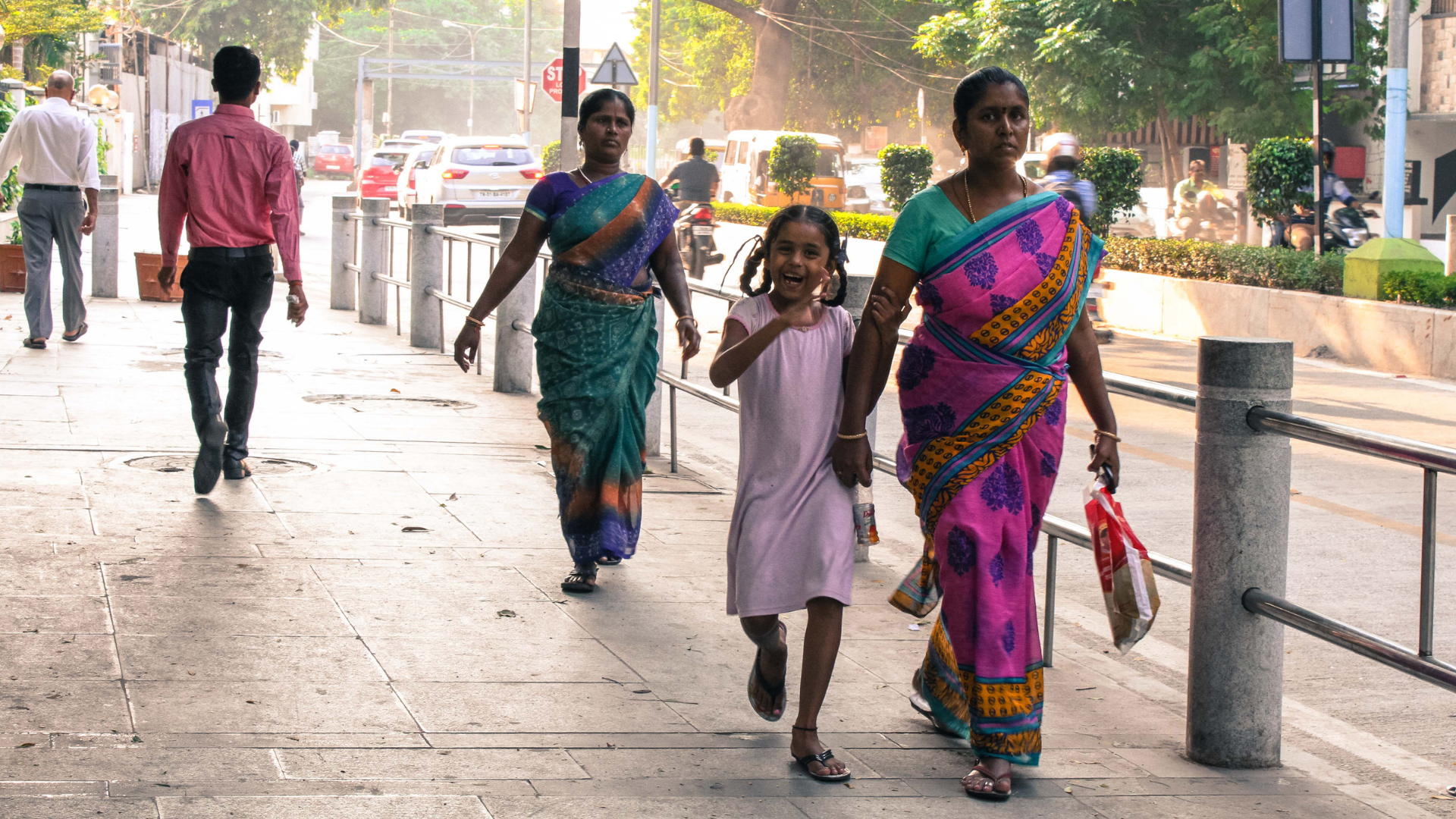

Walking is the simplest pleasure in life – for a man. However, for women, walking requires extensive strategy and planning. Will I be back before dark? Is this t-shirt too “revealing”? Should I have something to cover myself with at night? Do I carry pepper spray? Do I have my keys ready to hold between my fingers? Have I shared my location with my friends and family? Because every time women go outside, they take a risk.
Lack of security limits women’s access to education, employment and discovery. It is a financial, physical and mental cost that we incur pay every day. And the burden of these costs falls disproportionately on women from socially and economically marginalized communities, limiting their agency, autonomy, and mobility. Unfortunately, in a patriarchal society like India, the responsibility for women’s safety falls on their own shoulders as their presence in public spaces is restricted.
Basic right to walk
In a recent decision, the Supreme Court declared the “right to walk on safe, demarcated footpaths” a right Fundamental rightan integral part of the right to freedom of movement and personal liberty in accordance with Article 19(1)(d) and Article 21 of the Constitution. It directed local development authorities at city, district and village levels to “delineate, construct, maintain and protect footpaths and other necessary pedestrian infrastructure.” The court also recognized gaps in the law and called for a legal framework and a full-time regulatory authority. However, the ruling is primarily concerned with pedestrian safety in the context of road infrastructure and traffic accidents.
While the ruling is progressive, it raises practical questions about whose safety the law is intended to protect. Although the judgment does not address the broader question of women’s safety in public spaces or the question of access control, even in the context of pedestrian safety, there are complex and varied infrastructure and behavioral requirements to ensure women’s safety that the judgment does not address.
Women’s Pedestrian Safety
The 2025 National Annual Report and Index on Women’s Safety (NARI) recorded a national safety score of just 65 percent. The report also found that feelings of safety decline even more after dark, particularly on public transport, on the streets and in recreational areas. Perceptions of safety also vary by region, class and caste, resulting in very different life experiences for different groups of women.
Therefore, if women truly want to exercise their fundamental right to walk, enforcement must go beyond the mere demarcation and construction of footpaths and towards regular maintenance and consistent implementation of safety measures.
To ensure pedestrian infrastructure is accessible and safe for women, some measures are essential: adequate lighting, especially in high-risk areas; rapid response teams that respond to harassment complaints; mobile security applications with panic buttons; and women-led safety audits and consultations, particularly in rural areas.
However, some security infrastructures pose a reverse risk. For example, surveillance justified as protection can easily be transformed into restriction. The CCTV coverage raises privacy concerns, while the “for their own safety” rhetoric reproduces the old logic of policing women’s behavior rather than addressing the conditions that put them at risk. Ultimately, structural and technical interventions can be carried out Instruments of paternalistic control and surveillance by a state ideologically focused on restricting women’s freedom.
Therefore, behavioral and cultural changes must be at the heart of pedestrian safety. Social awareness campaigns for men, mandatory awareness workshops for officials, resident- and volunteer-led security patrols, legal advice for women, and empowerment of bystanders, among others, are essential to realize the right to walk.
The Red Dot Foundation’s Safe City project presents a community-led alternative to this. The project documents women’s lived experiences in public spaces and translates these findings into advocacy for urban planning and policy reforms that improve safety, inclusivity and accessibility. What sets it apart is its use Crowd mapping data to highlight everyday sexual harassment and gender-based violence. Models like this that prioritize and center women’s voices should be supported and funded by duty bearers.
The way ahead
The court ruling calls for pedestrian safety legislation. However, lawmakers should wake up from their deep sleep of indifference and symbolic gestures towards women and formulate a law that ensures that the right to walk is accessible to all. The law must focus on both infrastructure regulations and behavior change. Creating safe cities for women is about more than just lighting streets or installing cameras. It’s about fostering a sense of community, respect and shared responsibility.
We must move beyond a negotiated and blocked social life for women and enable active participation and free will. Walking is a fundamental everyday activity that we have long had to reckon with due to gender-specific experiences of insecurity. As the Supreme Court observed in this judgment: “Walking has always captured the imagination of India – it has deep cultural, social, religious, political and reformatory roots.” That’s why we must now reclaim it for women from all walks of life.
Vasudha is a law graduate and researcher with a keen interest in gender equality, climate policy and legal reform. Beyond her research, she is an aspiring writer with a love of reading, cooking and the classical dance form Kathak.
