
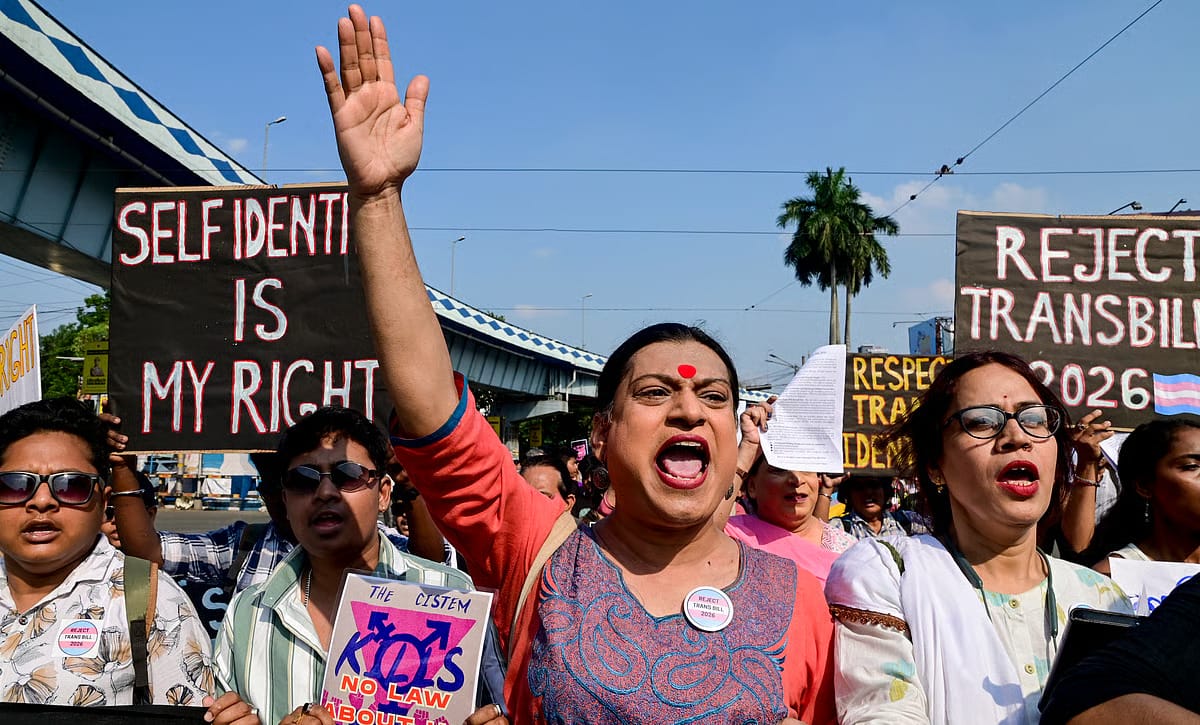
Erasure, medicalization and the state: Lok Sabha passes draconian Transgender Amendment Bill

During a field visit to Varanasi, a transgender activist asked me, “When will the government require a medical certificate?” And answered themselves: “When someone is sick, when a disability needs to be checked, or when a body needs to be medically examined for a certain reason.” There are medical certificates confirming the condition of the body.’
For transgender people, however, the requirement for a medical certificate is completely different. The certificate does not assess any physical condition; it verifies identity. The aim is to confirm whether a person’s body conforms to the state’s narrow, medicalized understanding of gender by requiring a carefully curated archive of all medical procedures a person has undergone. The question therefore becomes quite simple: If transgender is more than just physical anatomy, then why does the state even insist on medical evidence to identify trans identity?
This issue has gained renewed urgency with the introduction of the Transgender Persons (Protection of Rights) Amendment Act, 2026 past the Lok Sabha on March 24, 2026. Once the bill is also passed by the Rajya Sabha, it will be referred to the President for his assent, after which it will come into force.
No steps forward, but ten steps backStations
The amendment moves away from the principle of self-perceived gender identity (understanding gender identity as determined by oneself). Instead, it proposes a framework in which a person’s right to identify as transgender is subject to medical and bureaucratic verification. This will undo key government achievements National Legal Services Authority v. Union of India Verdict.
The NALSA verdict, a milestone in India’s constitutional history, recognized gender identity as a matter of dignity, autonomy and self-determination protected by Articles 14, 19 and 21 of the Constitution. It reaffirmed that gender cannot be imposed from outside; it must be articulated by the individual themselves. This ushers in an era of government recognition of transgender people’s self-perceived gender identity.
The legal and political terrain when it comes to recognizing the rights of transgender people has always been too complex and fraught to simply fit the NALSA ruling into the dichotomous “progressive” or “regressive” structure.
But in India, the legal and political terrain when it comes to recognizing the rights of transgender people has always been too complex and fraught to simply fit the NALSA ruling into the dichotomous “progressive” or “regressive” structure. NALSA itself fluctuated between several recognition frameworks. Did it affirm gender self-determination? Yes. But did it repeatedly invoke Hindu mythological references to establish sociocultural legitimacy of transgender identities in Indian society? Yes. Were parts of the ruling conflating all vernacular and ritually constructed identities, such as Hijra and other transgender-identifying people, into a “third gender”? Yes. Did parts of the ruling seem to limit who can identify as “male” or “female” based on external criteria such as surgery or psychological testing? Also yes.
Overlapping recognition frameworks
What does that tell us? It actually highlights two things. First, a tendency towards biological essentialism, i.e. Second, there is a tendency to rely on sociocultural acceptance of transgender identity. This creates a tension between multiple frameworks of recognition: gendered self-determination, biological essentialism, and an overlapping framework of sociocultural acceptance.
And this tension is not trivial. However, what concerns us most today is the fact that the ruling based recognition in part on culture and tradition, allowing for the possibility that some transgender identities will be seen as more legitimate than others, while biological essentialism created a loophole for the medicalization of identity.
This amendment seems to go further in this direction. By narrowing the definition of “transgender,” the bill risks recognizing only certain socioculturally legible identities such as Hijra, Kinner, Aravani and Jogata communities. This risks ignoring a wider range of gender diverse experiences, such as those of transmasculine people.
Historically, Hijra and other indigenous communities have occupied visible ritual roles in South Asian society. Their presence has often been interpreted through cultural and spiritual narratives, placing them in a complex relationship of respect, fear, shame and marginality.
This has alarming consequences. Historically, Hijra and other indigenous communities have occupied visible ritual roles in South Asian society. Their presence has often been interpreted through cultural and spiritual narratives, placing them in a complex relationship of respect, fear, shame and marginality. However, the lived experiences of transgender people today extend far beyond ritual spaces.
Many transgender people pursue this Trainingseek formal employment, raise families, and participate in public life in ways that challenge older expectations of gender and community. If legal recognition is tied primarily to culturally sanctioned identities, there is a risk that anyone who does not fit within this framework will be pushed beyond the boundaries of legal recognition and legitimacy.
Medicalization of gender
The change also marks a dangerous return to the medicalization of transgender identity. By defining transgender identity based on the deeply flawed understanding that the body exists as an objective, medically self-evident truth that can be used to authoritatively determine gender identity, the bill moves away from self-determination toward clinical and authoritative verification. There is also a lack of understanding that sex itself is not a simple biological binary, but a complicated spectrum shaped by medical interpretations, social norms and the powers that be.
By tying recognition to medical evidence, the change will create a hierarchy of “legitimate” transgender citizens and push others beyond the boundaries of legal recognition.
By tying recognition to medical evidence, the change will create a hierarchy of “legitimate” transgender citizens and push others beyond the boundaries of legal recognition. On the other hand, the obligation to disclose such confidential medical information risks unlawful interference with deeply personal aspects of a person’s life and jeopardizes their right to privacy. This medicalization is also counterintuitive with regard to the definition of transgender in the amendment, as the socioculturally accepted transgender identities are not based on medical criteria.
Another serious problem, as Gee Semmalar, a transgender activist, points out, is that Section 18 of the bill foregrounds coercion, kidnapping and forced incorporation into the transgender community, reviving older colonial logics of distrust of the community.
For many transgender people, chosen families are places of survival, especially when it comes to escaping violence in their birth families. But by expanding criminalization without recognizing the precarious position of transgender people within a birth family, the change risks targeting the community-based networks that enable care and escape.
What this moment reveals about allies
Watching the discussions surrounding this amendment, an ally must ask himself: Where do allies stand in moments like these? As news of the bill spread, the transgender community reacted forcefully. Activists, collectives and community organizations began working tirelessly: explaining what the bill entails and mobilizing public attention. The immediacy was unmistakable. For many transgender people, the possibility that the state might again require proof of identity was not an abstract legal issue but an already experienced hardship.
But for many cisgender and heterosexual people who have never been forced to authenticate their gender and whose identities have been taken for granted and unsuspected, these legislative interventions around gender identity may seem like someone else’s struggle. But this very idea is why allies are important.
A call for allyship
If transgender people are once again forced into the position of defending their hard-won right to self-identification, the burden of resistance cannot rest solely on those whose identities are being verified. Allies must recognize that silence in these times is indifference and indifference is compliance; a form of disengagement that allows arbitrary policies to advance without broader public scrutiny.
Being an ally cannot simply end with supporting queer celebratory moments. It must also include solidarity and mobilization in times of political turmoil, when rights that once seemed within reach are quietly being redefined and distanced through legislation. For cisgender people, this moment requires a willingness to understand and amplify transgender voices and challenge policies that risk regulating gender identity through medical or bureaucratic channels.
After all, identity is not a diagnosis that requires certification. And in a democracy, the right to exist can never be made dependent on arbitrary norms of state recognition.
The debate over the amendment is not just about administrative procedures or legal definitions. It’s about the fundamental intertwining of identity and citizenship. When the state claims the authority to confirm who someone is, it transforms identity into something to be evaluated by institutions rather than lived by individuals. For transgender communities, this can mean re-examination, invasive verification processes and possible exclusion. For allies, it should serve as a reminder that promises of rights do not always lead to the material realizations hoped for.
The constitutional promise of dignity for transgender people does not end with its recognition in government terminology and language. It must include diverse experiences and recognize transgender identities without medical and bureaucratic hurdles. After all, identity is not a diagnosis that requires certification. And in a democracy, the right to exist can never be made dependent on arbitrary norms of state recognition.
Divya Rai is a doctoral candidate at the Center for Regional Studies at the University of Hyderabad and studies the realities of transgender communities in Uttar Pradesh with a focus on law, state politics and everyday negotiations over recognition. Her work addresses issues of gender, citizenship and social justice.
