


If you’ve been seeing signs your skin is losing collagen—less plump, a bit duller, with lines that weren’t there before—you’re not imagining it.
And chances are, if you’ve been trying to figure out which product, ingredient, or technique is the answer, you’ve probably felt more confused than ever. There are so many options out there.
Where do you even begin?
The truth is, many of the signs your skin is losing collagen are subtle at first. They’re easy to mistake for simple dryness, stress, or a bad skincare week. But understanding what’s actually happening beneath the surface can help.
Let’s start from the beginning.
What Is Collagen?
Collagen is the most abundant protein in the human body. In one scientific review, researchers characterized collagen as making up roughly 30 percent of total protein mass. It helps give firmness, strength, and resilience, particularly in the lower layers of the skin. You can think of it as the rebar inside a concrete wall. When it’s strong and plentiful, your skin looks full, smooth, and bouncy. When it starts to break down, the surface above begins to lose its support.
Collagen works alongside elastin (which gives skin its snap-back ability) and hyaluronic acid (which holds moisture). Together, these three form the foundation of youthful-looking skin.
Signs Your Skin is Losing Collagen—When Collagen Levels Begin to Decline
Unfortunately, collagen production starts to slow as early as our mid-twenties. Research confirms that we lose about 1 percent of our skin collagen per year after that point.
A landmark study published in The American Journal of Pathology found that fibroblasts isolated from older skin produced significantly less collagen than those from younger skin. They also found that the collagen network becomes fragmented and disorganized with age, further suppressing new collagen production.
Over time, this slow decline compounds into visible damage.
What Makes the Signs Your Skin is Losing Collagen Appear Faster?
Aging is unavoidable, but several other factors can accelerate the rate at which skin loses collagen.
Menopause and Hormonal Changes
This is significant for women. Estrogen plays a direct role in stimulating collagen production. When estrogen drops during perimenopause and menopause, collagen loss accelerates dramatically.
A review published in Dermato-Endocrinology notes that skin collagen can decrease by as much as 30 percent in the first years after menopause.
UV Exposure
Sun damage is one of the biggest external drivers of collagen breakdown. Ultraviolet (UV) radiation triggers matrix metalloproteinases (MMPs)—enzymes that degrade collagen fibers—and then suppresses new collagen synthesis at the same time.
Sugar and Refined Carbohydrates
High sugar intake leads to a process called glycation, in which sugar molecules attach to collagen proteins and form advanced glycation end products (AGEs). These make collagen fibers stiff, brittle, and unable to repair themselves.
Smoking
Cigarette smoke directly damages collagen and elastin and restricts blood flow to the skin. This limits the delivery of oxygen and nutrients that support collagen synthesis.
Chronic Inflammation—Skin Barrier Disruption
Prolonged inflammation from stress, poor diet, environmental pollutants, or a disrupted skin barrier can activate enzymes that break down collagen faster than the skin can replace it. A damaged barrier doesn’t mean that collagen is gone, but it can make your skin look older, feel rougher, and become more irritated.
Research on aging skin shows that older skin tends to lose moisture more easily and recover more slowly, which is one reason barrier support becomes more important with age. Protecting the barrier does not directly rebuild lost collagen, but it can reduce irritation and dryness so the skin functions better overall.
7 Signs Your Skin is Losing Collagen (And What to Do!)
The following signs of collagen loss are common, but that doesn’t mean you have to settle for sagging, drooping skin. Here’s what to watch for and how to respond.
1. Fine Lines and Wrinkles that are Getting Deeper
One of the most recognizable signs your skin is losing collagen is the deepening of fine lines, especially around the eyes, mouth, and forehead. These areas lose their plump, supported look as the underlying scaffolding weakens.
What to do:
Look for topical ingredients that have evidence behind them for supporting collagen. Some good options include vitamin C (which helps synthesize collagen and inhibits its breakdown), retinoids, and peptides.
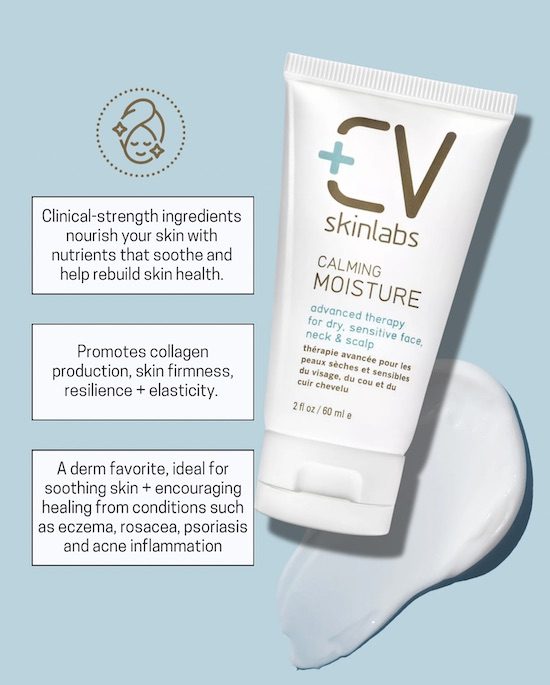
Consistent daily moisturizing also matters. Keeping the skin hydrated helps maintain the skin barrier, which in turn supports the environment your collagen needs to thrive. Our Calming Moisture and Body Repair Lotion both deeply moisturize while leaving behind a radiant glow.
They include our proprietary Tri Rescue Complex, with properties that increase hydration, elasticity, and collagen production.
2. Skin That Feels Thinner or More Fragile
When collagen levels drop, all three layers of the skin begin to thin. You may notice that your skin bruises more easily, feels more papery to the touch, or seems less “substantial” than it used to. This is especially common on the backs of hands, on the decolletage, and on the face.
What to do:
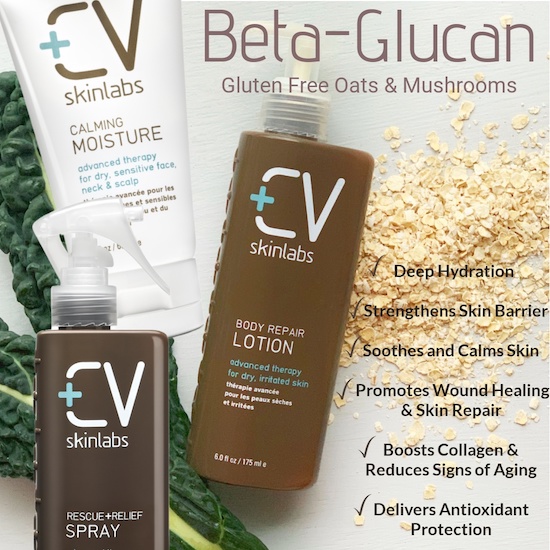
Protect and nourish your skin with gentle, deeply hydrating products free from irritants that can further compromise fragile skin. CV Skinlabs’ Calming Moisture contains beta-glucan, an ingredient shown to help stimulate collagen production and support skin repair, alongside aloe vera and oat extract for calming, nourishing hydration.
3. Loss of Firmness and Sagging
Sagging skin—particularly along the jawline, cheeks, and neck—is a direct result of the collagen network losing its density and integrity. When those tightly woven collagen fibers loosen, the overlying skin no longer has the support it needs to stay lifted.
What to do:
Daily sun protection is non-negotiable here. UV exposure is one of the fastest ways to accelerate the production of enzymes that break down collagen. Use a broad-spectrum SPF 30 or higher every day, year-round. (Choose zinc oxide or titanium dioxide—they are the safest options.)
Facial massage and Gua Sha may also help by stimulating circulation. For ingredient support, look for formulas that address inflammation. Chronic skin inflammation degrades both collagen and elastin.
All CV Skinlabs’ products are anti-inflammatory, as we purposely included ingredients that calm inflammation so you can enjoy less redness and collagen breakdown. Our formulas contain powerful antioxidants that help neutralize free radicals and protect against sun damage and UV radiation, while reducing inflammation and stimulating cellular regeneration and boosting collagen.

4. Dryness That Doesn’t Respond to Moisturizer
The one surprises many people. Collagen plays a role in maintaining skin’s moisture levels, not just its structure. As collagen density decreases, the skin’s ability to retain water diminishes. This contributes to a persistent dry feeling and a rough, dull texture.
Research published in the Journal of Cosmetic Dermatology noted that skin dryness and accelerated fragmentation of the dermal collagen network are hallmarks of skin aging.
What to do:
This is where skin barrier support becomes critical. A healthy, intact skin barrier retains moisture, protects against irritants, and creates the conditions in which skin repair (including collagen maintenance) can occur.
Look for moisturizers with barrier-strengthening ingredients like beta-glucan, plant-based oils, and aloe. CV Skinlabs’ products are built around exactly this principle. Every formula is designed to nurture and repair the skin barrier, which helps your skin hold on to the moisture it needs.
You can also try supplementing with collagen peptides. According to the study mentioned above, oral collagen peptide supplementation significantly increased skin hydration after 8 weeks. The collagen density significantly increased and the fragmentation of the collagen network decreased after only 4 weeks of supplementation. Both effects persisted after 12 weeks.
You have to be careful here, though. Not all collagen supplements are the same. Regular collagen is a large, complex protein molecule that’s too big to be absorbed efficiently by the digestive system. Collagen peptides are hydrolyzed forms of collagen, meaning the protein has been broken down into smaller fragments, which may result in better absorption.
So when you’re looking for supplements, look for “collagen peptides,” not just collagen. Always check with your doctor before adding a supplement to your diet.
5. Enlarged or More Visible Pores
This is another sign that can surprise people. Enlarged pores mean collagen loss? It’s true, particularly as we age. The collagen fibers around each pore help maintain their structure and size. As collagen breaks down and the surrounding skin loses its firmness, pores can appear stretched and more noticeable, particularly across the nose and cheeks.
What to do:
Gentle exfoliation helps keep pores clear and the skin surface smooth. But just as important is avoiding harsh, stripping products that damage the skin barrier. These trigger inflammation, which in turn speeds up collagen degradation.
Choose gentle, non-irritating formulas for exfoliation that support skin health. Think mild acids like lactic, salicylic, and glycolic.

6. Dull, Lackluster Skin Tone
Healthy collagen gives skin a natural luminosity. When collagen thins and the dermal structure weakens, skin can take on a flat, dull appearance. Light no longer reflects the same way off a well-supported surface.
What to do:
Antioxidant-rich ingredients help protect existing collagen from free radical damage, which is a key driver of dullness and accelerated aging. Vitamin C, vitamin E, and plant-based antioxidants are all valuable here. CV Skinlabs Body Repair Lotion, for example, features beta-glucan, which works as an antioxidant, alongside St. John’s wort, which is noted for its collagen-boosting and wound-healing properties.
Eating more foods rich in antioxidants can also help. Choose more colorful fruits and vegetables and add them more often to your daily diet.
7. Slow Healing and Increased Sensitivity
Collagen plays a direct role in wound healing and skin repair. If you’ve noticed that small cuts, blemishes, or skin irritations seem to take longer to resolve than they used to—or that your skin has become more reactive to products or weather—that can be another sign your collagen levels and skin resilience are declining.
What to do:
Reduce the burden on your skin by eliminating products with synthetic fragrances, alcohol, harsh preservatives, and known irritants. Use our Rescue + Relief Spray to calm, soothe, and heal sensitive skin. Then, for wounds and irritations, try our Restorative Skin Balm. Each contains our proprietary Tri-Rescue Complex, which addresses inflammation and supports the skin’s healing processes.
You Can Address the Signs Your Skin Is Losing Collagen
If you read through this list and recognize your skin in one or more of the signs, don’t panic. You can’t stop the clock, but you can slow down its effects.
Start with the basics: daily SPF, a diet rich in antioxidants and collagen-supporting nutrients, and a consistent skincare routine that prioritizes barrier health over aggressive treatments.
Next, protect your skin from unnecessary irritants. Keep inflammation in check. And choose products that work with your skin’s natural biology rather than against it.
Every small step helps! Care for your skin daily in these ways, and you’ll be glad you did in the years that come.
Did you notice if your skin is losing collagen?
Featured image by RDNE Stock project via Pexels.
