
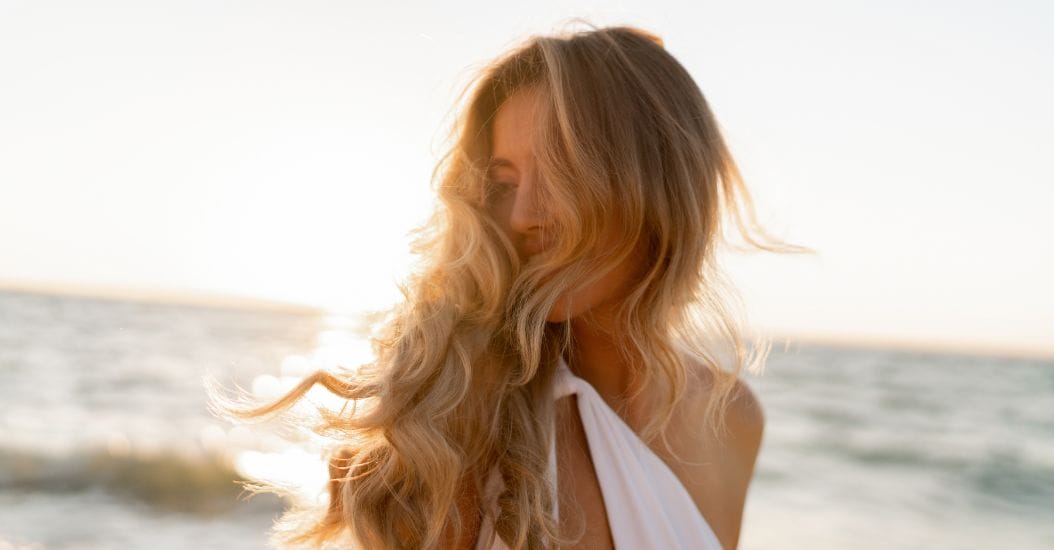

Sun-damaged hair is a common yet often overlooked issue caused by prolonged exposure to UV rays and environmental stressors such as heat, wind, saltwater and pollution. Just as the sun can harm your skin, it can also weaken and degrade your hair’s structure. Over time, ultraviolet radiation breaks down the hair’s protective outer layer (the cuticle) and depletes essential proteins and moisture, leaving strands vulnerable to dryness, brittleness and breakage.
The long-term effects of sun exposure on hair health can be significant. Repeated UV damage can fade natural or colour-treated hair, reduce elasticity and make hair feel rough or straw-like. It can also lead to split ends and increased frizz as the compromised cuticle struggles to retain moisture. If left unaddressed, sun damage can progressively weaken the hair shaft, diminishing overall strength, shine and
manageability. That’s why recognising and treating sun-damaged hair early is essential to restoring its resilience, smoothness and healthy appearance.
You can identify sun-damaged hair by several telltale signs such as excessive dryness despite conditioning, noticeable colour fading, increased tangling, a rough texture and more frequent breakage. Unlike damage caused by chemical processing or heat styling which can result in more localised breakage or distinct structural weakening, sun damage tends to affect the outer layer of the hair more uniformly.Environmental damage often appears alongside scalp dryness or irritation, especially after extended time outdoors.
In this blog, we will explore the science behind how UV rays affect hair, the key signs to look out for and how to distinguish sun damage from other common hair concerns. We’ll also share practical prevention tips, effective treatment options and product recommendations to help restore strength, moisture and shine to sun-stressed strands.
Can The Sun Damage Your Hair?
Hair is primarily made up of a structural protein called keratin. This protein gives hair its strength, elasticity and resilience. When hair is exposed to UV radiation, these rays penetrate the hair shaft and begin to break down the protein bonds. UV radiation triggers chemical reactions within the hair fiber that degrade keratin and oxidise amino acids, especially cystine, which is essential for maintaining strong disulfide bonds. These bonds are responsible for keeping the hair structure intact. As they weaken, the hair becomes more fragile, less elastic and more prone to breakage.
In addition to protein degradation, UV exposure also affects hair pigment. Additionally melanin, which gives hair its natural colour, absorbs UV radiation as a protective mechanism. However, repeated exposure gradually breaks down melanin molecules, leading to faded, dull or brassy tones- particularly noticeable in colour-treated or lighter hair shades. Over time, the combined breakdown of protein and pigment leaves strands weakened, rough in texture and visibly less vibrant.
Spending time in the sun is not inherently harmful for your hair, in fact, moderate sun exposure is a normal part of daily life and does not immediately cause significant damage. Hair is naturally designed with a protective outer layer, the cuticle, that helps shield the inner cortex from environmental stress. However, consistent and prolonged exposure to strong UV rays, especially without protection, can gradually compromise the protective barrier. Just as repeated sun exposure can damage skin over time, constant UV stress can slowly degrade the hair’s protein structure, strip moisture and weaken its overall integrity.
The key distinction is frequency and intensity. Occasional outdoors is perfectly safe but regular exposure to intense sunlight can accelerate protein loss, colour fading,
dryness and breakage. Recognising this cumulative effect is essential for protecting hair long-term and maintaining its strength, shine and healthy appearance.
What Happens To Hair When It’s Damaged By The Sun?
One of the most immediate effects of sun exposure on hair is moisture depletion.
Prolonged UV exposure lifts and weakens the hair’s cuticle making it harder for strands to retain hydration. At the same time, heat from the sun accelerates water evaporation from within the hair shaft. As moisture levels drop, hair becomes dehydrated and loses its natural flexibility. This leads to brittle texture, increased tangling and a rough, straw-like feel. Dehydrated hair also appears dull and lacks shine because a compromised cuticle cannot reflect light smoothly. Over time, chronic dryness makes strands more vulnerable to snapping and split ends.
Sun exposure is particularly damaging to colour-treated hair. UV rays break down both artificial dye molecules and the hair’s natural melanin. When this pigment degrades, colour fades faster and may shift in tone. Lighter shades, blonde highlights, balayage and red tones are especially prone to fading because they rely on delicate pigment molecules that are more easily broken down by UV radiation. Brunettes may notice brassiness, while blondes can appear dull or overly warm. Without protection, even professionally coloured hair can lose vibrancy after repeated sun exposure.
When hair is regularly exposed to strong sunlight, it may lose some moisture and protein strength, which can make strands feel drier, rougher, or more prone to split ends. This doesn’t impact the hair at the root, but it can influence how healthy and full your hair looks overall. In some cases, increased breakage may create the appearance of reduced density as strands become shorter or more fragile.
The good news is that this type of damage is manageable and largely preventable. With the right protective products, hydration-focused care, and occasional trims to maintain healthy ends, you can keep your hair looking strong, smooth, and resilient year-round. A proactive approach helps preserve shine, softness, and overall hair health without compromising your time in the sun.
How To Spot Sun-Damaged Hair
Recognising the signs of sun damage early can help prevent further weakening and
restore your hair’s health before the effects become more severe.
Sun-damaged hair often feels noticeably dry to the touch. As UV rays weaken the cuticle and strip away natural moisture, the hair loses its softness and smooth finish. Instead of feeling silky or supple, strands may feel coarse, rigid or straw-like. You might also notice that conditioning treatments don’t seem to work as effectively as they once did. This is because a damaged cuticle struggles to retain hydration, leaving hair perpetually thirsty and dull looking.
Moisture loss doesn’t just cause dryness, it also disrupts the hair’s natural smoothness. When the cuticle is lifted or uneven due to sun exposure, strands cannot lie flat. This creates friction between hair’s, leading to increased frizz and stubborn flyaway’s.
Even in calm or mildly humid conditions, sun-damaged hair may appear puffy or difficult to control. Styles may not hold as well and hair can look unruly despite regular styling efforts.
One of the most visible signs of sun damage is change in colour. UV rays break down both natural melanin and artificial dye molecules, causing hair to lighten or fade over time. Natural hair may develop lighter patches, brassy undertones or a washed-out appearance. Colour-treated hair, particularly blonde, highlighted or red shades, may lose vibrancy, appear uneven or shift in tone. The result is often a dull, lacklustre finish rather than the rich, consistent colour you started with.
As sun exposure weakens the hair’s internal protein structure, strands become more fragile. This fragility typically shows up first at the ends, where hair is oldest and most vulnerable. You may notice more hair snapping during brushing or styling, as well as split ends that seem to multiply quickly. Over time, breakage can make hair look thinner, shorter and less full- even if the roots remain healthy.
How To Repair Sun-Damaged Hair
Restoring sun-damaged hair requires a combination of moisture replenishment, protein reinforcement and ongoing protection. Deep conditioning masks are essential for replenishing moisture through UV exposure. These treatments penetrate beyond the surface to hydrate and smooth the hair fibre, helping to restore softness and shine. Look for masks formulated with ingredients such as argon oil, which is rich in fatty acids and vitamin E to nourish and soften dry strands and keratin, a protein that helps reinforce weakened areas of the hair shaft. Using a deep conditioning treatment once or twice a week can significantly improve elasticity, reduce brittleness and make hair more manageable over time. For best results, apply to damp hair and leave on for the recommended time to allow maximum absorption.
When sun exposure breaks down keratin proteins within the hair, strands lose strength and resilience. Protein rebuilding treatments are designed to temporarily fill in
weakened areas of the cuticle and cortex, helping to fortify damaged sections. These treatments work by depositing hydrolysed proteins that bind to the hair shaft, improving structure and reducing breakage. They are particularly beneficial for hair that feels overly soft, stretchy or prone to snapping- common signs of protein loss. It’s important to balance protein with moisture. Overuse can make hair feel stiff, so alternating protein treatments with hydrating masks help maintain optimal strength and flexibility.
Leave-in products provide ongoing hydration and protection throughout the day. Unlike rinse-out conditioners, they remain on the hair, forming a lightweight barrier that helps seal the cuticle and lock-in moisture. Leave-in conditioners can smooth frizz, improve detangling and reduce friction that leads to breakage. Lightweight hair oils, such as argan or jojoba oil, can also add shine while helping shield hair from environmental stressors. Applied to damp hair before styling or sun exposure, these products act as an added layer of defence against dehydration and further damage.
Just as skin benefits from SPF, hair can also be protected with UV-filtering sprays or creams specifically designed for sun exposure. Hair sunscreens form a protective barrier that helps reduce UV penetration, minimising protein degradation and colour fading. These products are especially beneficial during holidays, beach days or extended time outdoors. Many formulas are lightweight and non-greasy, making them easy to reapply throughout the day without weighing the hair down.
Incorporating UV protection into your routine is one of the most effective preventative measures to maintain strength, colour vibrancy and overall hair health long term.
How To Prevent Further Sun Damage
Preventing sun damage is just as important as repairing it. By adopting protective habits and using the right products, you can minimise UV-related damage and maintain healthy, strong hair.
One of the simplest and most effective ways to shield hair from the sun is to wear hats, caps or scarves when spending time outdoors. Protective headwear blocks direct UV rays, reducing moisture loss, colour fading and protein breakdown.
Lightweight, breathable fabrics work best for comfort, while wide-brimmed hats offer extra coverage for both hair and scalp.
Many modern hair care products are formulated with built-in UV filters to defend against sun damage. Leave-in conditioners, sprays and serums with UV protection can create a protective barrier on the hair shaft, helping to prevent colour fading, dryness and brittleness. Using these products before outdoor exposure ensures your
hair receives an additional layer of defence against harmful rays, complimenting any physical barriers like hats and scarves.
Timing matters when it comes to sun protection. The sun’s rays are strongest between 10am to 4pm, so limiting prolonged hair exposure during these peak hours can reduce cumulative UC stress. Simple strategies include seeking shade, taking breaks indoors or scheduling outdoor activities for early morning or late afternoon.
Healthy, hydrated hair is more resilient to sun damage. Using moisturising shampoos, conditioners and masks keeps hair fibres plum and flexible, while UV-protective products shield against environmental stressors. Combining hydration with sun protection not only prevents dryness and breakage but also helps maintain colour vibrancy and shine. Regularly replenishing moisture and reinforcing the hair’s protective barrier is key to keeping hair strong and resilient, even under the sun.
When To Seek Professional Help For Sun-Damaged Hair
While at-home care can repair and protect most sun-damaged hair, there are situations where professional guidance is essential. If you notice significant breakage, excessive shedding or thinning it may indicate that the hair shaft has suffered deeper structural damage. In these cases, continuing with DIY treatments alone may not be enough. At Rush a professional stylist can assess the underlying causes and recommend targeted solutions to prevent further loss and restore strength.
Salons offer specialised treatments that go beyond what typical home care can provide. Protein-rebuilding treatments can strengthen hair from the inside out, repair split ends and restore smoothness and shine. These treatments are formulated with higher concentrations of restorative ingredients than over-the-counter products, giving your hair a more immediate and noticeable improvement.
Booking an appointment with a Rush stylist can help create a personalised treatment plan tailored to your hair type, degree of damage and lifestyle. A stylist can recommend the right combination of protein treatments, moisturising masks and protective products as well as trimming strategies to remove severely damaged ends without sacrificing length. Professional assessments ensure your hair receives both immediate repair and long-term protection, setting the foundation for stronger, healthier and more resilient strands.
Book An Appointment At Rush To Restore Hair Health
If your hair has been exposed to prolonged sun, shows signs of damage or you simply want to maintain its health and vibrancy, booking a professional appointment at Rush is the next best step.
At Rush, stylists provide personalised treatments and expert advice tailored to your hair type, damage level and lifestyle.
FAQ’s
Yes, the sun can permanently damage your hair, especially with repeated and prolonged exposure. UV rays break down the hair’s protein structure, weaken the cuticle and strip moisture, leaving brands brittle, dry and prone to breakage. Colour-treated hair and lighter shades are particularly vulnerable as the sun can fade the pigment permanently. While new hair growing from the scalp remains healthy, the strands already affected by protein loss, split ends or severe dryness cannot fully repair themselves, meaning some damage is irreversible.
You can protect your hair from sun damage by combining physical barriers, protective products and proper care. Wearing hats, caps or scarves when outside blocks direct UV rays and shields both your hair and scalp. Limiting exposure during peak hours reduces cumulative and keeping your hair hydrated using moisturising shampoos, conditioners and deep-conditioning masks help maintain flexibility and strength.
You can tell if your hair is sun-damaged by noticing changes in texture, strength, colour and manageability. One of the first signs is dryness and roughness- hair feels coarse, straw-like or less soft than usual. Frizz and flyaways often increase, even in calm conditions, since the cuticle can no longer lie flat.
Discolouration is another clear indicator alongside increased breakage and split ends, especially at the tips where strands are the weakest.
