
The conflict between Dominicans and Puerto Ricans is not real. Bad Bunny’s DtMF concerts in the DR are proof

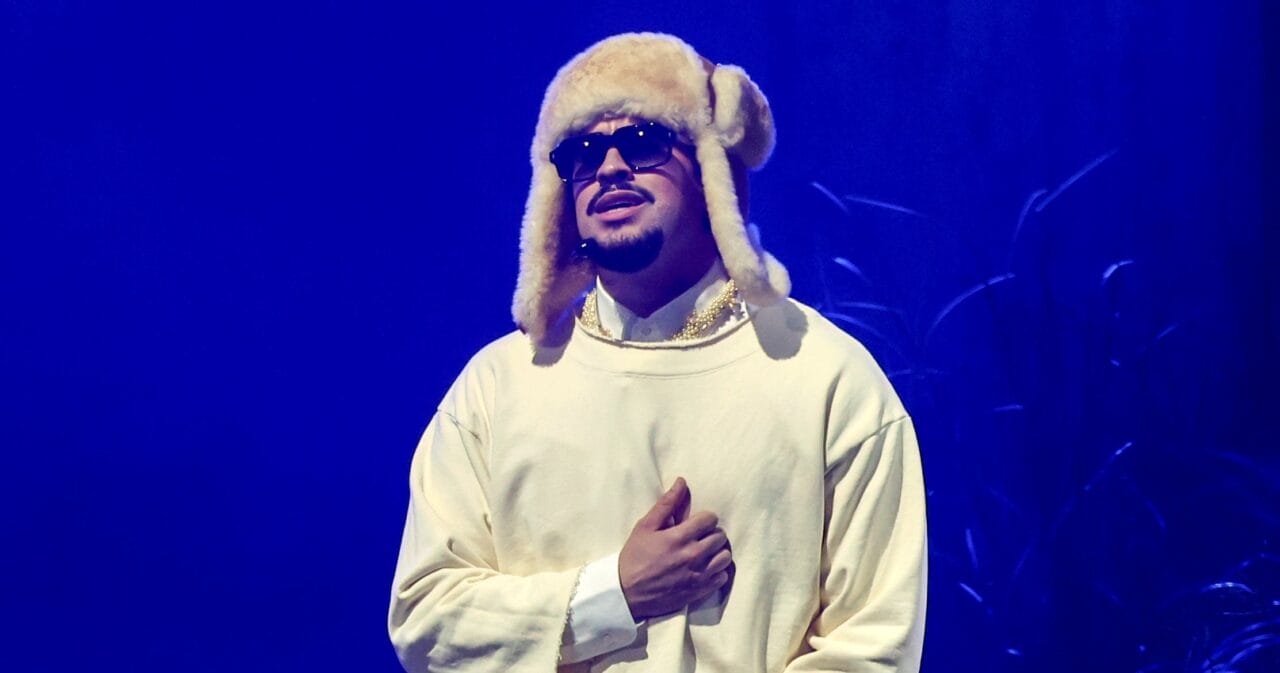
SAN JUAN, PUERTO RICO – JULY 11: Bad Bunny performs on stage during the first night of Bad Bunny: “No Me Quiero Ir De Aqui” Residencia En El Choli at Coliseo de Puerto Rico José Miguel Agrelot on July 11, 2025 in San Juan, Puerto Rico. (Photo by Kevin Mazur/Getty Images)
The rivalry between Puerto Ricans and Dominicans goes back decades. The neighboring islands and their diasporas in the United States compete for almost everything. The question of who is better at baseball is resolved almost every year with a new headline game. DR won an exhibition game in New York on November 15, but Puerto Rico defeated them in the 2023 World Baseball Classic. In the kitchen, the argument rages between Puerto Rico’s mofongo and the Dominican Republic’s mangú, two staples flavored with garlic and plantains. And in music there are debates about who has more rhythm on the dance floor and who makes more hits. An outsider might see these hilarious, if pointed, taunts online and think the two are truly enemies, but the opening of Bad Bunny’s DeBí TiRAR MáS FOToS World Tour in Santo Domingo showed what we always knew: It’s all playful love between the family.
On November 21st, Puerto Rican three-time Grammy winner Benito Antonio Martínez Ocasio kicked off his highly anticipated stadium world tour with two sold-out shows in the capital of the Dominican Republic. On the first night, Bad Bunny, whom Billboard named the best Latin artist of the 21st century, greeted the crowd of about 50,000 people at the Estadio Olímpico Félix Sánchez and said, “I really enjoyed being a tourist here, although I don’t know if ‘tourist’ is the right word, because when I’m here I feel at home.” And everything about the show celebrated the shared heritage and close relationship the two islands have built with each other.
In the audience, Dominican women complemented their concert outfits with Puerto Rican pava hats — or, as screaming street vendors throughout the Zona Colonial have renamed them, “el sombrero de Bad Bunny.” Meanwhile, Puerto Rican fans who missed Bad Bunny’s historic 31-show residency at El Choli in San Juan took a quick trip west to Santo Domingo and snapped photos in front of wall-high Dominican flags.
Hennessy, the tour’s global presenting sponsor, created experiences that seamlessly blended both cultures, right outside the stadium and in downtown Santo Domingo. In a casita with the show’s Hennessy logo, Boris like model Joan Smalls and Domis like actress Dascha Polanco sat down to play dominoes, the two flags in the house, while Alex Sensation spun 70s salsa and merengue típico. Fans refreshed themselves from the Caribbean humidity with Hennessy De Coco, a take on Pitorro de Coco that mixes coconut, tropical fruit and Hennessy, and Hennessy Pasión, a blend of passion fruit, lemonade and Hennessy – two cocktails that will be available throughout the tour. The activations also featured a Piragua stand, which served cognac-infused versions of the shaved ice popular on the cobblestone streets of Viejo San Juan and classic Dominican chimis.
The mix made sense because most of us, those with roots in Borikén or Kiskeya, have known them all our lives.
While our shared history can be traced back to the Taínos, the indigenous people who once inhabited the islands of the Greater Antilles, and to the Spanish conquest that brought violent genocide and African enslavement, the solidarity that emerged from this shared struggle is less discussed. For generations, Puerto Ricans and Dominicans have stood together, supporting each other and fighting together in anti-colonial and social justice movements.
First, the Dominican Republic’s struggle for sovereignty, first in 1821 and then in 1844, served as a symbolic and inspiring model for Puerto Rican nationalists. During their push for independence in the 19th century, Puerto Rican revolutionaries often sought refuge in Santo Domingo, where they could safely organize, network with nationalists throughout the Caribbean, and publish anti-colonial materials. In 1868, when Puerto Ricans first revolted against Spanish rule during El Grito de Lares, they sewed a revolutionary flag with a white cross that divided the flag into four rectangles, a tribute to the Dominican flag and to the Trans-Caribbean revolutionary network.
Decades later, now as a U.S. colony, the people of Puerto Rico are using their political power to resist the federal government’s anti-immigrant policies in Puerto Rico, which primarily target Dominican migrants. Boricuas regularly take to the streets to protest against raids, deportations and anti-immigrant laws. organizing food, clothing and medical brigades to help Dominican families economically affected by immigration measures; and even house Dominican migrants in churches and community halls that have become safe havens.
“Everything about the show honored the shared heritage and close relationship the two islands have built together.”
Raquel Reichard
A similar solidarity exists within the diaspora. In New York, where the playful rivalry between Puerto Ricans and Dominicans began in the 1970s—as Dominicans moved in large numbers to historic Boricua neighborhoods such as the South Bronx, Washington Heights, and the Lower East Side—new forms of alliances emerged. The Young Lords, a Chicago-based Puerto Rican revolutionary group that later expanded to New York, included many Dominican women and men who fought together for housing rights, access to education, and community health programs that impacted both communities. At the same time, El Museo del Barrio in East Harlem served as one of the few hubs where Puerto Rican and Dominican youth collaborated on art, education, and cultural projects.
Both groups lived side by side in housing projects across the city and did what they arguably do better than anyone else: crack jokes. As my Puerto Rican father, growing up in New York in the ’70s, told me, no one was safe and everyone was up for teasing: those with accents, those who were more adept with girls, and who had better rum. Over the years, these neighborhood jokes continued, with Puerto Rican men now laughing at how tight their Dominican friends wore their pants and Dominicans teasing their Puerto Rican brothers for dressing like they were in an early 2000s Peedi Crakk music video.
A comedic skit titled “Puerto Ricans vs. Dominicans,” published by Flama in 2015, perfectly captures the playful beef. In the five-minute clip, two men talk back and forth, hilariously arguing about which culture has better style, music, and food, but then a mother intervenes in Rolos and reveals that the two are actually brothers, each both Puerto Rican and Dominican.
And that’s the other reality: In the diaspora, Puerto Rican and Dominican communities often intermingle, forming families that bind us even more closely. Are you even Puerto Rican if you don’t have Dominican Tío? Are you even Dominican if you don’t have a Prima who is half Bori and a few other distant relatives who have lived in Puerto Rico for decades? We are a family in the truest sense of the word. During Bad Bunny’s second show in Santo Domingo this weekend, he brought in Romeo Santos, who is of both Dominican and Puerto Rican descent, to perform a bachata version of “BOKeTE.” And so many of our favorite stars in music, film, television and social media share this mix too. Our identities are intertwined like the knotted fibers of Taíno baskets, a shared, ancient practice that I recently learned about during my recent visit to the Centro Cultural Taíno Casa del Cordón in Santo Domingo.
A guy I used to date who happened to be Dominican used to say to me, “Where there’s a Puerto Rican, there’s a Dominican nearby.” And he wasn’t wrong. From New York and New Jersey to Worcester, Allentown and Orlando, there are completely mixed neighborhoods. We come together because we know that despite all the jokes and competition, we see and understand each other. Our food and our music are seasoned with the same substance. Our accents and slang may be different, but we understand each other’s dialects more easily than others. We feel safe together. We feel at home. And like siblings who playfully argue but shake hands with anyone who truly comes for their family, we tease each other tirelessly and hilariously, out of love and love in return.
“We are two cultures, two nations and two islands that have fought against conquest, injustice and generations of marginalization in the Caribbean and the States – and that is who we are today, we are together, we tease each other and we are in a good mood.”
Raquel Reichard
And that’s why when I threw my hands in the air and jumped euphorically and screamed, “Puerto Rico,” mi tierrita, “está bien cabrón,” at Bad Bunny’s show in the Democratic Republic of Congo, there were tens of thousands of Dominicans around me who were jumping and screaming it too – and meaning it.
That’s why I cried when Benito ended this performance with the words: “La República Moroccana está cabrón también.” Because we are two cultures, two nations and two islands that have fought against conquest, injustice and generations of marginalization in the Caribbean and the United States – and that is who we are today, together, teasing each other and having a good time.
Do you like what you see? How about some more R29 goodness here?
