
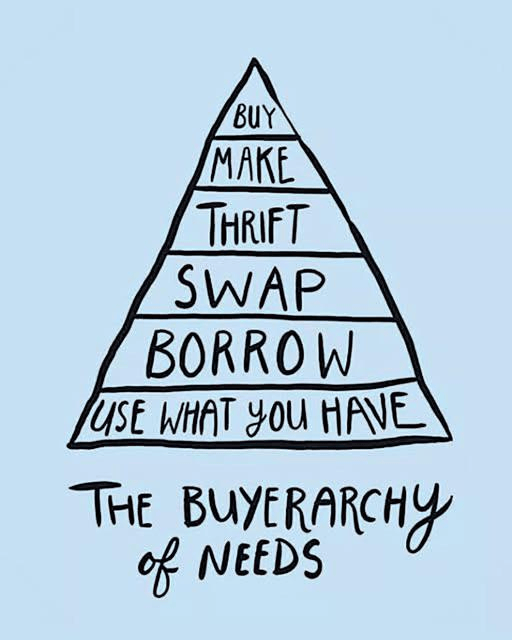

From my corner of the Internet, it feels like more people are embarking on no-buy journeys. Yes, the majority are still hoarding Labubus, Stanley cups, Trader Joe’s mini tote bags, and such. Still, I’m choosing to celebrate and highlight the growing number of us who are living rebelliously and saying no to consumerism.
Note: a successful no-buy or low-buy journey doesn’t mean that you don’t buy anything at all. You can choose to focus on specific categories. For example: clothing, makeup, vacations, dining out, and impulse spending.
My no-buy year was going strong until mid-June. I was fine with falling off the journey because I don’t identify as a heavy consumer. However, when a customer at work noted that the year only had 3 more months, I felt inspired to tighten up and finish my no-buy year strong. This period, right before the holiday shopping season, is a good time to rebuild no-spend habits.
#1: Remember my ‘why’ and revisit what worked
I started this no-buy journey because I wanted to save money for an art project and pay off one of my student loans.
My strategy: Get a job and have our family continue to live on 1 income. Deposit $3 from the family account into my savings account for every day that I avoided spending money.
Unfortunately, completing my art project got me in the habit of spending money. Then a 3-week vacation reignited my sugar addiction. Now I was spending way more than $3 to buy a sweet treat every shift to help me survive the workday.
I had to go back to what worked: packing a healthy snack and living on one income.

#2: Reducing stress
Thinking about paying off my other debt when the first one wasn’t paid off stressed me out. Stress makes me want to eat my feelings, and I need those $3 for more important things.
I’m taking a breath. I’m zooming out from mountain view (i.e. the entirety of my student debt) and zooming in on the step in front of me (i.e. monthly repayments of the smaller debt). No more treating myself to “small” purchases because I feel hopeless about larger financial goals.

#3: Visualizing the true cost of consumerism
Every purchase has a hidden cost that is not detailed in the listed price. Think before you buy.
Whenever I’m tempted to buy clothes, I visualize people forced to work for unfair wages, damage to the environment, large fashion companies stealing designs from independent designers, and all other sorts of f—kery.
Now that I know the pain of working weekends, I try to be mindful to avoid shopping at big box retailers on the weekends or near closing time. If you didn’t know, there’s work to be done after closing. So if you show up minutes to closing, you’re only forcing tired people to work overtime.

#4: Audit and limit my media
At the start of the year, I unsubscribed from every lifestyle influencer—even the ones I hate-watched because they all made me feel shit about myself. Why waste time watching stuff that influenced me to spend? Instead, I followed creators who supported living rebelliously by saying no to consumerism. Here are some of my faves:
To kill boredom at work, I reinstalled several social media apps on my phone. Over time, my app usage got out of hand. It’s, once again, time to uninstall.
#5: Revisit my no-spend calendar
I stopped tracking during my season of spending on my art project. Now I know this simple daily ritual of marking the days in my notes app was really helpful in keeping me accountable. The only way to get back on track is to start tracking my spending.

#6: Shamelessly (re-)identify with being Poor
The world constantly tells us that being Poor is bad and that we need to avoid it. Being poor is not a moral failing. In these times, it’s imperative to be intentional about our spending. I’m still boycotting Target. Haven’t f-ked with Amazon for several years. I’m not renewing Hulu because of the Disney/Kimmel situation. Sucks because I really want to watch Reasonable Doubt.
Listen, my spending won’t be perfect, and it won’t solve large issues such as the genocide in Gaza. I can’t undo the 2020 elections. But I can and will vote with my dollar. Every dollar saved is one dollar less they have for their private jets, yachts, and islands.
#7: Find creative ways to secure needs
Individualism is insufferable. Life is better with community. Need something? Ask your neighbors or text a friend. Heck, ask the internet. This is why we have buy nothing and buy/sell/trade groups.
Search the Internet for mutual aid and nonprofit organizations in your area. Some of my favorite local organizations include Casa Hernandez Free Store, Food Not Bombs (Humboldt Park, Rogers Park), Chicago Tool Library, The Wasteshed, The Love Fridge, and Chicago Public Library.
This fall, I’m looking forward to utilizing the Chicago Tool Library to borrow items needed for an awesome birthday party for my tiny human. I’m also excited to check out The Wasteshed and local thrift stores for Halloween decor and costume elements.

READ: Repair Broken Things for Free at Chicago Tool Library – Rebellious Magazine
#8: Avoid expressing love through gifts
The holiday shopping season is fast approaching. Marketers are getting ready to convince us that the only and best way to express love to ourselves and others is by spending money. Instead of succumbing to this pressure, I’m finishing my no-buy year strong by focusing on the other 4 love languages: Acts of kindness, words of affirmation, physical touch, and quality time.
This includes the many calls for charitable giving. I can volunteer. I can repost. I can dance in a fundraising dance-a-thon.

How’s your no-buy year going? What are you not buying? What’s your strategy for staying on track? Email or tag us on the socials.
