Princess Diana’s 12-carat Ceylon sapphire engagement ring is one of the most recognizable jewels in modern history, but its design, provenance, original cost, and present value are often misunderstood. In this guide, Benjamin Khordipour, G.D., C.G.P., a GIA- and Gübelin-educated gemologist with more than a decade of experience evaluating rare vintage jewelry and gemstones, uses documented sources and comparable jewels to uncover the ring’s history and estimate what it is worth today.
Princess Diana’s Engagement Ring at a Glance
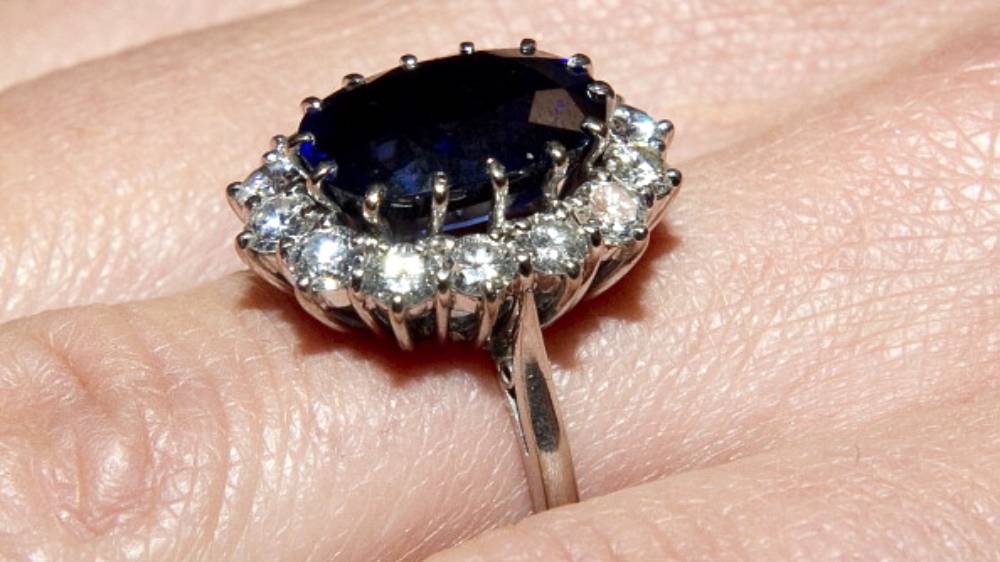
Princess Diana’s engagement ring was created by Garrard and personally selected by Lady Diana Spencer in 1981. The design centers a 12-carat oval Ceylon sapphire surrounded by 14 round diamonds in a cluster setting crafted from 18-karat white gold.
| Detail | Description |
|---|---|
| Jeweler | Garrard |
| Year selected | 1981 |
| Center stone | 12-carat oval Ceylon sapphire |
| Accent stones | 14 round brilliant cut diamonds |
| Setting style | Sapphire and diamond cluster |
| Metal | 18-karat white gold |
| Reported original price | Approximately £28,500 |
| Current wearer | Catherine, Princess of Wales |
Unlike many royal engagement rings, Diana’s ring was not commissioned as a one-of-a-kind design. She selected it from Garrard’s existing collection, meaning other customers could purchase the same style, but its connection to Diana and later Catherine transformed it into one of the most historically significant engagement rings in the world.
How Princess Diana Chose Her Engagement Ring
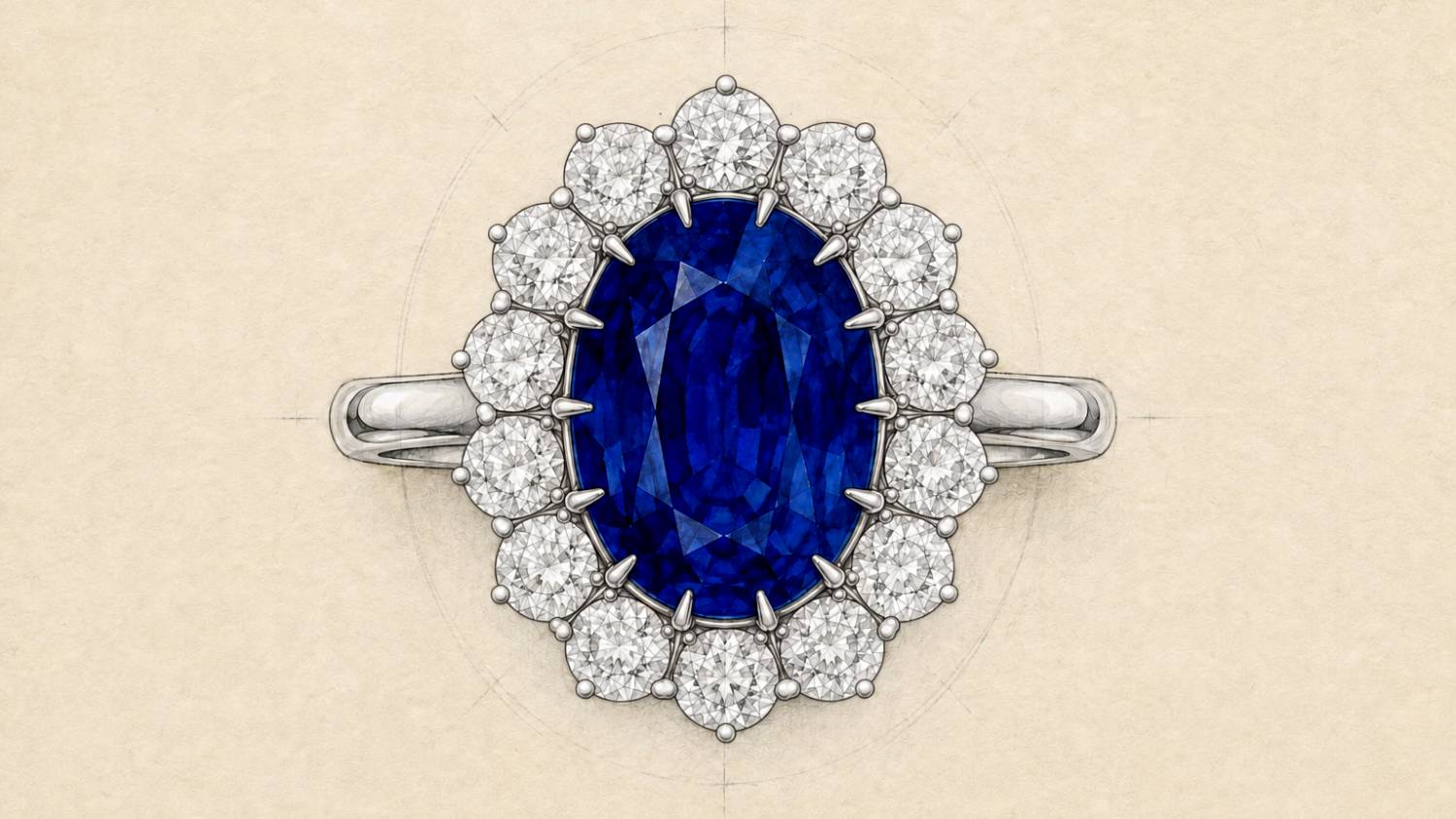
Lady Diana Spencer selected the sapphire and diamond ring from a group of Garrard designs presented to her before her engagement to Prince Charles was announced on February 24, 1981. When Diana displayed the ring during the couple’s official engagement photocall at Buckingham Palace, its unusually large blue sapphire and brilliant diamond surround immediately attracted worldwide attention.
Her choice was unconventional because the ring was an existing Garrard design rather than a unique royal commission. Contemporary accounts offer several possible reasons for her selection, including the sapphire’s remarkable size, its resemblance to her mother’s engagement ring, and the way its rich blue color complemented her eyes. Whatever her personal reasoning, the choice helped transform sapphire cluster rings from a traditional jewelry style into one of the most recognizable engagement-ring designs in the world.
The ring also had a historical connection to the British royal family. Garrard based its sapphire cluster design on a brooch Prince Albert presented to Queen Victoria around their wedding in 1840, featuring a large blue sapphire surrounded by diamonds. Queen Victoria wore the brooch on her wedding day and treasured it throughout her life, while its distinctive arrangement later provided the inspiration for the ring Diana selected more than 140 years later.
Benjamin’s Gemological Analysis of Princess Diana’s Sapphire Ring
I have not personally examined Princess Diana’s engagement ring, so the following analysis is based on Garrard’s published specifications, consultation with expert jewelry historian Afshin Shaddaie, reliable historical records, detailed photographs, and my experience evaluating important sapphire jewelry. Certain characteristics, especially the sapphire’s treatment status, clarity, exact measurements, and laboratory origin determination, cannot be confirmed without examining the ring and its gemological report.
1. The 12-Carat Ceylon Sapphire
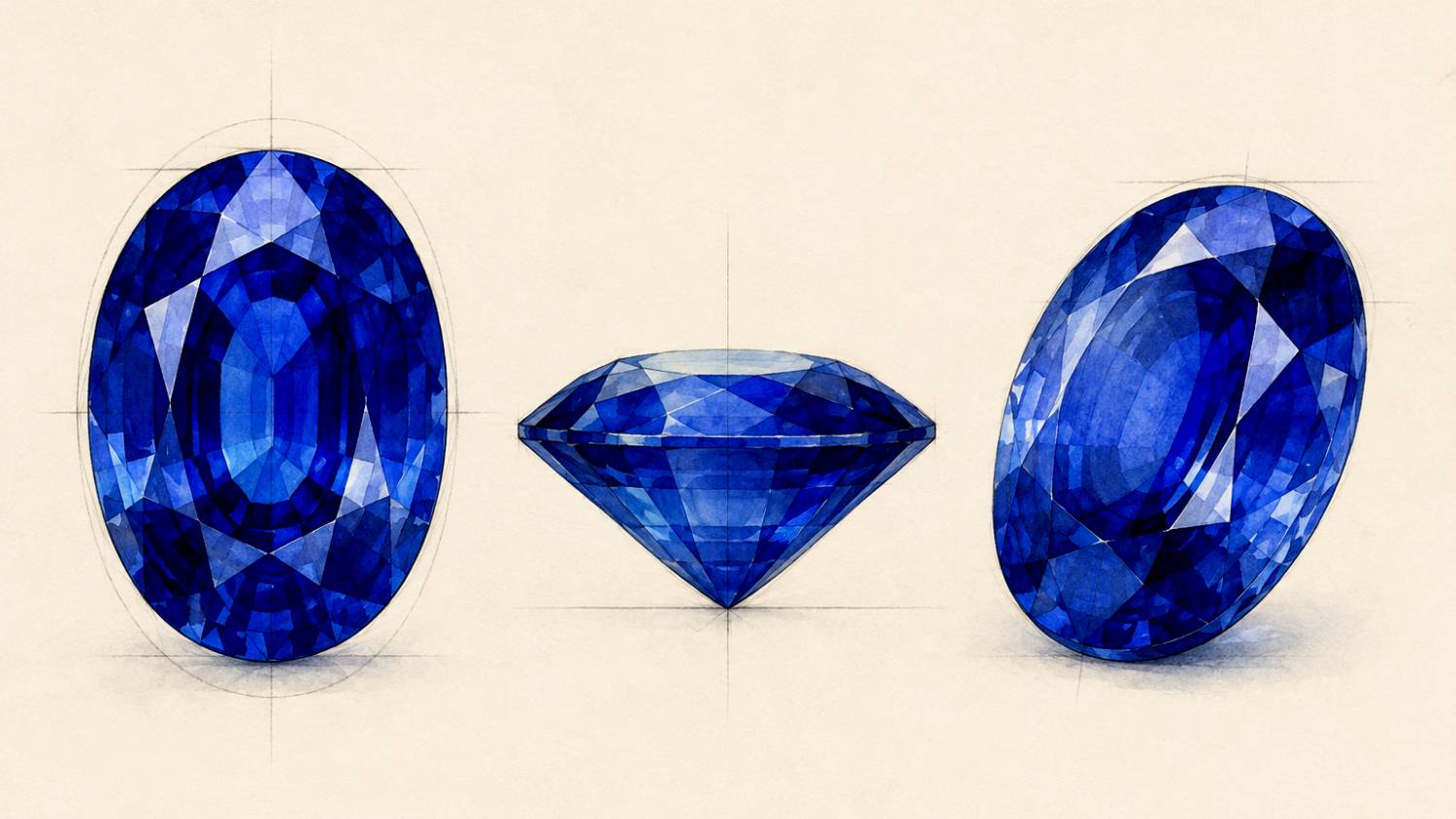
At the center of the ring is a reported 12-carat oval Ceylon sapphire. Ceylon is the former name of Sri Lanka, an island that has produced many of history’s finest sapphires and remains especially celebrated for stones with vivid blue color, strong transparency, and exceptional brightness.
A Sri Lankan origin can add considerably to a sapphire’s desirability, but origin alone does not determine quality or value. The stone must also possess excellent color, clarity, cutting, and transparency. At 12 carats, Diana’s sapphire belongs to a rare size category, particularly if its beauty remains consistent throughout the stone.
The sapphire is secured by 14 white-gold prongs distributed around its oval outline. This unusually extensive prong arrangement provides multiple points of support for such a large and valuable gemstone while becoming an important part of the ring’s visual design. The white gold recedes against the surrounding diamonds, allowing the sapphire’s strong blue color to remain the undisputed focus of the ring.
2. The Sapphire’s Color
Color is the most important quality factor in a blue sapphire. Based on available photographs, Diana’s sapphire appears to display strong saturation and a rich royal-blue tone without becoming so dark that it loses its brilliance.
This balance is difficult to achieve in a large sapphire. Some deeply saturated stones become nearly black in subdued lighting, while lighter sapphires can lack the intensity expected from an important jewel. Diana’s sapphire appears lively across many photographs and lighting conditions, although photography, editing, reflections, and surrounding colors make it impossible to assign a formal color grade from images alone.
3. Its Oval Cut and Proportions
The sapphire has a faceted oval shape with proportions that appear relatively full rather than narrow or excessively elongated. This outline provides substantial finger coverage while preserving a balanced and graceful appearance.
Colored gemstones are rarely cut according to the standardized proportions associated with modern round diamonds. Sapphire cutters must consider color zoning, crystal orientation, inclusions, and weight retention when shaping the stone. In Diana’s ring, the oval outline appears to distribute the blue color effectively across the face of the sapphire while leaving enough room for a substantial diamond surround.
The gemstone’s precise length, width, depth, and spread have not been publicly documented. Two 12-carat sapphires can have dramatically different visible sizes depending on their depth and proportions, so the reported carat weight alone cannot tell us exactly how large the stone measures.
4. Was Princess Diana’s Sapphire Heated?
There is no reliable public documentation that appears to confirm whether the sapphire was heated. Heat treatment has been accepted within the gemstone trade for generations and is commonly used to improve a sapphire’s color or clarity. An exceptional unheated sapphire, however, is generally much rarer and can command a considerably higher price than a heated stone of similar appearance.
It would therefore be irresponsible to describe Diana’s sapphire as unheated without a report from a respected gemological laboratory. Its treatment status will become especially important when we estimate the ring’s comparable market value later in this article.
“Garrard prominently identifies a sapphire as unheated whenever that rare and valuable distinction can be supported,” says Afshin Shaddaie, veteran vintage jeweler. “Since Garrard makes no such claim about Princess Diana’s sapphire, I believe there is a strong likelihood that it was heated, although this cannot be confirmed without examining a laboratory report.”
5. The Overall Design of the Ring
Princess Diana’s ring is best described as a “sapphire and diamond cluster ring”, although many modern writers would also call it a halo engagement ring. Unlike a contemporary halo made from numerous small pavé-set diamonds, this design uses 14 individually prominent diamonds to create a bold, scalloped frame around the sapphire.
The proportions are what make the design so successful. The sapphire remains the unmistakable center of attention, while the diamond surround gives the ring greater presence without overwhelming the blue gemstone. The narrow white-gold shank also helps the large cluster appear to float across the finger rather than making the entire ring look heavy.
It is a relatively simple arrangement, but simple designs leave little room for error. If the sapphire were too dark, the diamonds too small, or the spacing uneven, the ring would lose much of its visual impact. Garrard’s careful balance of color, scale, symmetry, and contrast is one of the main reasons the design has remained recognizable for more than four decades.
6. The 14-Diamond Cluster Halo
Benjamin Khordipour and Afshin Shaddaie estimate that each of the 14 halo diamonds weighs approximately 0.40 carats, producing an estimated total diamond weight of 5.60 carats. They identify the stones as round brilliant-cut diamonds and estimate them to fall within the D to F color range and approximately VS2 to VVS1 clarity.
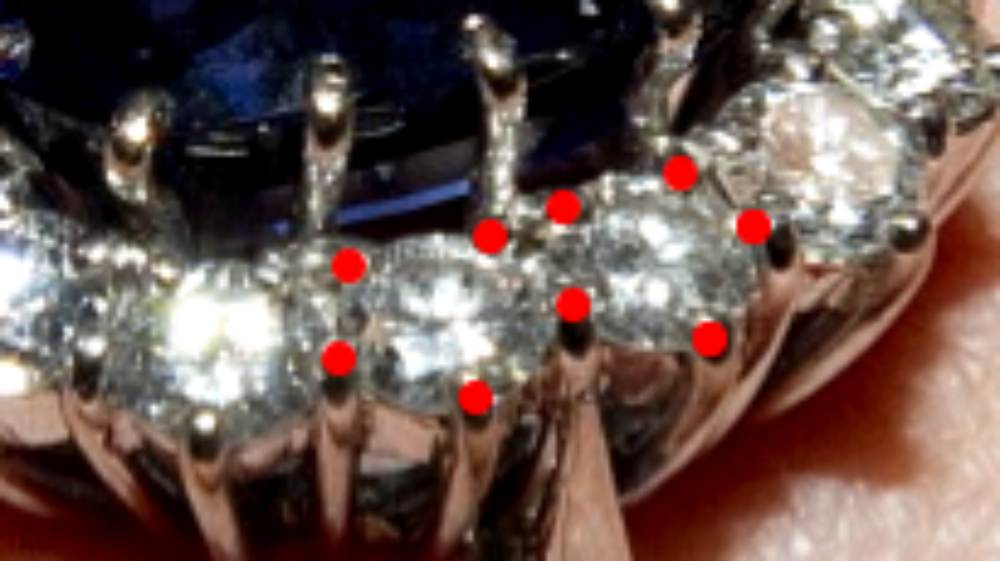
The halo’s construction is particularly sophisticated. Each diamond appears to receive support at five contact points: three individual white-gold prongs and two additional prongs shared with the neighboring diamonds. Each shared prong secures one side of a diamond while simultaneously supporting the adjacent side of the next stone. This arrangement holds the diamonds closely together, forming an uninterrupted frame of brilliance around the blue sapphire.
Slender white-gold rails surround the pavilions of the diamonds and continue around the ring’s perimeter, creating a basket-like gallery beneath the halo. The outer prongs extend over these rails, integrating the diamonds into a secure and carefully engineered setting. The estimated 5.60-carat halo is therefore not merely decorative; it is a substantial and technically impressive component of the ring.
7. The 18-Karat White-Gold Setting
Garrard describes the ring as being crafted from 18-karat white gold. This means that the alloy contains 75 percent pure gold, combined with other metals that give it a whiter color and improve its strength.
White gold was an effective choice for this design because it visually recedes behind the diamonds. A yellow-gold border would create a warmer separation between the sapphire and its halo, while white gold allows the diamonds to form a clean, bright frame. The result directs the viewer’s attention toward the contrast between the intense blue center stone and the surrounding white diamonds.
The mounting must support a considerable amount of gemstone weight within a relatively compact area. From a jeweler’s perspective, the condition of the prongs, gallery, connections beneath the cluster, and base of the shank would all be important during an in-person inspection. Even a historically important ring requires periodic maintenance if it is going to be worn regularly.
8. Princess Diana’s Estimated Ring Size
Princess Diana’s exact numerical ring size has not been publicly documented, to the best of our knowledge. That being said, Catherine, Princess of Wales, has stated that the ring did not need to be resized because she and Diana had exactly the same ring size.
Judging only from photographs and the apparent proportions of the ring on both women, I would tentatively estimate their ring size to be approximately a US size 5.5, equivalent to roughly a UK size K 1/2.
The ring’s large, top-heavy cluster would also need to fit securely enough to resist rotating around the finger. A precise fit is especially important with a ring of this scale because even a small amount of looseness can cause the sapphire and diamond cluster to tilt to one side.
What Did the Diana’s Ring Originally Cost?
Princess Diana’s engagement ring was reportedly valued at approximately £28,500 in 1981 (£28,500 was worth approximately $63,500 USD in 1981), equivalent to roughly £125,000 today after adjusting for inflation. Some sources round the original figure to £28,000, while a smaller number report substantially higher amounts.
The price was extraordinary for an engagement ring in 1981, particularly because the design was available through Garrard’s collection rather than created as a unique royal commission. That distinction did not make the ring ordinary or mass-produced. Its reported 12-carat Ceylon sapphire, approximately 5.60 total carats of high-quality diamonds, 18-karat white-gold construction, and sophisticated hand-finished setting made it an exceptional jewel even before its royal provenance transformed its value.
How Much Is Princess Diana’s Engagement Ring Worth Today?
Princess Diana’s engagement ring has two very different values. The first is the cost of recreating the jewel with comparable gemstones, materials, and craftsmanship. The second is the amount the original ring could achieve at auction because of its extraordinary royal provenance and historical importance.
What Would It Cost to Recreate Princess Diana’s Ring?
Assuming the center stone is a heated, gem-quality 12-carat oval Ceylon sapphire, and the halo contains 14 collection-grade, 0.40-carat round brilliant diamonds in the D to F color range with approximately VVS clarity, the ring would contain an estimated 5.60 total carats of diamonds. Recreating it would also require an 18-karat white-gold mounting with the original ring’s elaborate shared-prong halo, basket-style gallery, and 14-prong sapphire setting.
The craftsmanship would also represent a significant cost. Very few jewelers possess the skill required to reproduce this setting entirely by hand while maintaining the original ring’s proportions, symmetry, security, and refined finish. Based on the estimated gemstone quality, materials, and specialized labor required, we estimate that if we were asked, we would charge approximately $180,000 to handcraft a sapphire ring of comparable quality.
What Could the Original Ring Bring at Auction?
The value of the original ring would extend far beyond its sapphires, diamonds, gold, and craftsmanship. It was selected and worn by Diana, Princess of Wales, and is now worn by Catherine, Princess of Wales. It was also created by Garrard, remained closely associated with the British royal family for more than four decades, and became one of the most recognizable jewels in modern history.
Afshin Shaddaie estimates that, if the original ring were ever offered at a major international auction with clear title and complete documentation, it would achieve at least $3.6 million. Intense competition among collectors could drive the final price substantially higher, since no comparable jewel combines the same level of royal provenance, cultural importance, public recognition, and continued historical relevance.
Why Princess Diana’s Ring Is So Influential
Princess Diana’s extraordinary popularity helped transform her engagement ring from a royal jewel into an international symbol of romance and personal style. Millions of people saw the ring during her 1981 engagement announcement and throughout her public life, creating a connection between its sapphire-and-diamond cluster design and one of the most admired women of the twentieth century.
The story of Diana choosing the ring also contributed to its influence. Rather than receiving a custom royal commission, she selected an existing Garrard design from several rings presented to her. Her willingness to choose the ring she personally loved made the jewel feel more relatable, even though its gemstones, cost, and craftsmanship placed it far beyond an ordinary engagement ring.
Diana’s choice produced an enormous surge in interest in sapphire engagement rings. It also helped expand the public’s idea of what an engagement ring could be, encouraging couples to consider sapphires, rubies, emeralds, and other colored gemstones instead of automatically choosing a diamond center stone. When Prince William presented the same ring to Catherine in 2010, it introduced the design to another generation and created a renewed wave of demand for sapphire cluster rings.
“Princess Diana’s sapphire ring was one of the most important engagement rings of the past 100 years,” says Benjamin Khordipour. “It changed public taste, revived sapphire engagement rings, and proved that a colored gemstone could become even more recognizable than a diamond.”
Garrard acknowledges the ring’s continuing influence through its 1735 collection, which uses oval or round colored gemstones framed by diamond clusters. Although these rings are unmistakably inspired by Diana’s engagement ring, they are modern interpretations rather than exact replicas. The standard 1735 models differ substantially from the original in gemstone size, diamond weight, mounting construction, proportions, quality, and level of handcraftsmanship. Diana’s ring remains in a category of its own.
Frequently Asked Questions
1. Is Princess Diana’s Sapphire Natural?
Yes, Garrard identifies the center stone as a natural Ceylon sapphire originating from Sri Lanka. Its treatment status has never been publicly confirmed, although Benjamin Khordipour and Afshin Shaddaie believe there is a strong likelihood that it was heated.
2. What Are the Estimated Dimensions of Princess Diana’s Sapphire?
Based on its reported 12-carat weight and proportions visible in close-up photographs, Benjamin and Afshin estimate that the sapphire measures approximately 16 mm long by 12 mm wide. Its depth cannot be estimated reliably without examining the ring from multiple angles or measuring the stone directly.
3. Who Inherited Princess Diana’s Engagement Ring?
Princess Diana left her personal jewelry to her sons so that their future wives could wear it, and the engagement ring ultimately passed into Prince William’s possession. The often-repeated story that Prince Harry selected the ring and later gave it to William has been disputed by Harry himself.
4. Who Owns Princess Diana’s Engagement Ring Today?
Catherine, Princess of Wales, is the ring’s current wearer and is generally regarded as its present owner after Prince William gave it to her for their engagement. The royal family has not publicly released documentation detailing the ring’s precise legal ownership.
5. Can You Buy an Exact Replica of Princess Diana’s Ring?
Garrard offers modern rings inspired by Diana’s design through its 1735 collection, but they are not exact replicas and differ considerably in gemstone size, proportions, construction, and craftsmanship. An expert jeweler could handcraft a close reproduction using comparable materials, which Estate Diamond Jewelry estimates would cost approximately $180,000.
6. Is Princess Diana’s Ring the Most Valuable Royal Engagement Ring?
No, Princess Diana’s ring is not even close to being the most valuable royal engagement ring when judged by gemstone value or published market estimates. It may, however, be the most famous and instantly recognizable engagement ring in the world.
Consult with an Expert Jeweler
If you have questions about Princess Diana’s engagement ring or our sapphire jewelry collection, our expert jewelers would be delighted to help. Fill out the form below to receive personalized guidance from our team.