This guide explains how to identify a genuine Art Deco engagement ring, evaluate its diamond and condition, and avoid costly buying mistakes. It is essential reading for serious shoppers because many modern, altered, and poorly restored rings are incorrectly presented as authentic Art Deco pieces.
The guide was written by Afshin Shaddaie, a world-renowned antique jewelry expert with more than 40 years of experience buying, examining, and curating rare vintage engagement rings.
What Is a Genuine Art Deco Engagement Ring?
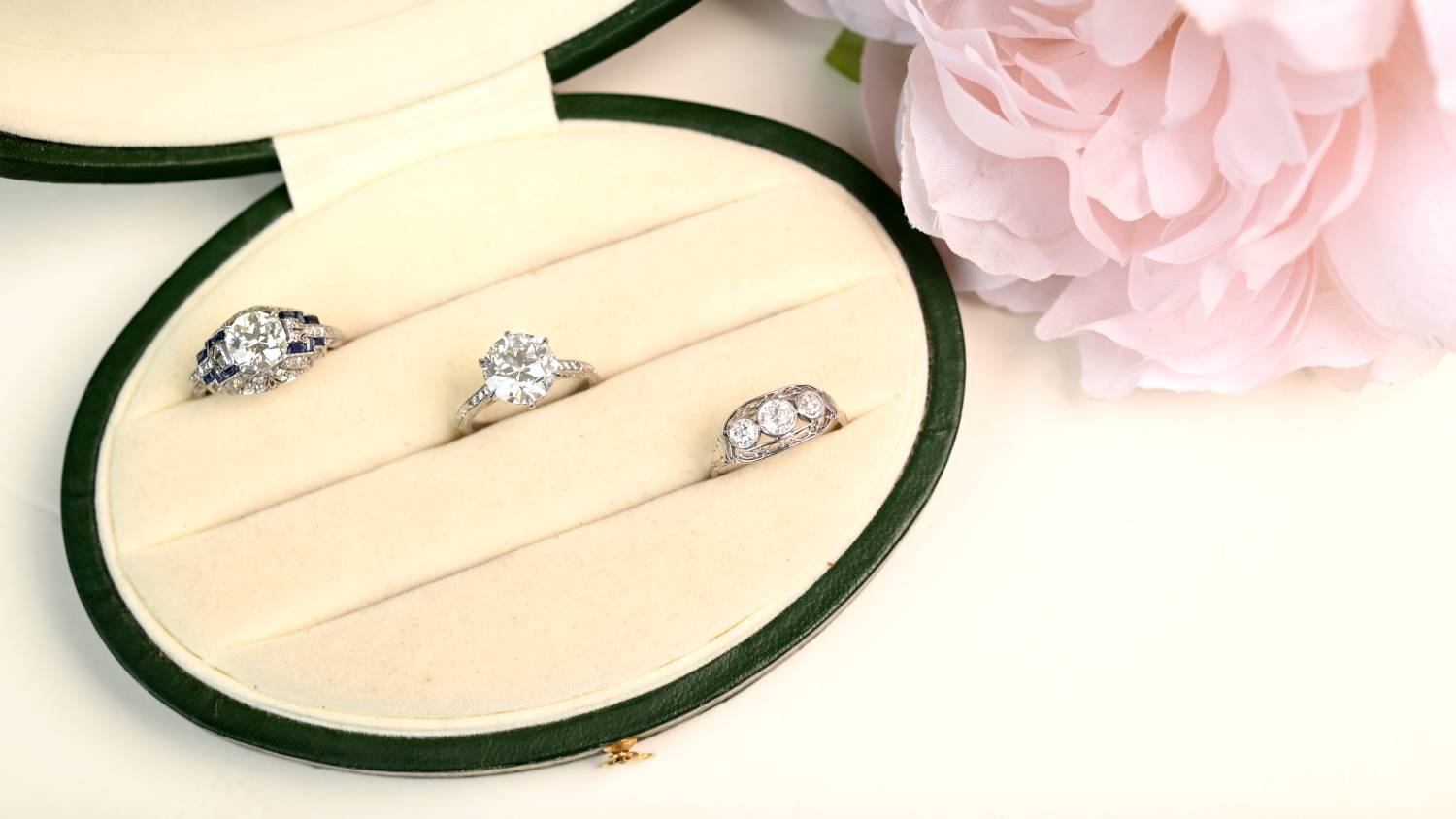
A genuine Art Deco engagement ring is a period ring created during the Art Deco era, generally between 1920 and 1940. Its original mounting should date to that period and typically reflects the era’s geometric design, balanced symmetry, detailed metalwork, and use of platinum or white gold. The center diamond may have been cut during the Art Deco era or earlier, since jewelers often incorporated existing diamonds into new rings.
A modern ring is not genuinely Art Deco simply because it has an antique diamond or copies the style of the 1920s. Likewise, a period ring may still be authentic if it has undergone appropriate repairs, resizing, or limited restoration, although significant alterations should always be disclosed. The term “genuine Art Deco” ultimately describes the age and origin of the ring itself, not merely its appearance.
“There are countless rings on the market being labeled as Art Deco,” says Benjamin Khordipour G.D., “but most are simply modern recreations made to resemble rings from the period. They may be beautiful, but they should not be represented or priced as genuine Art Deco rings.”
Genuine Art Deco vs. Art Deco Style
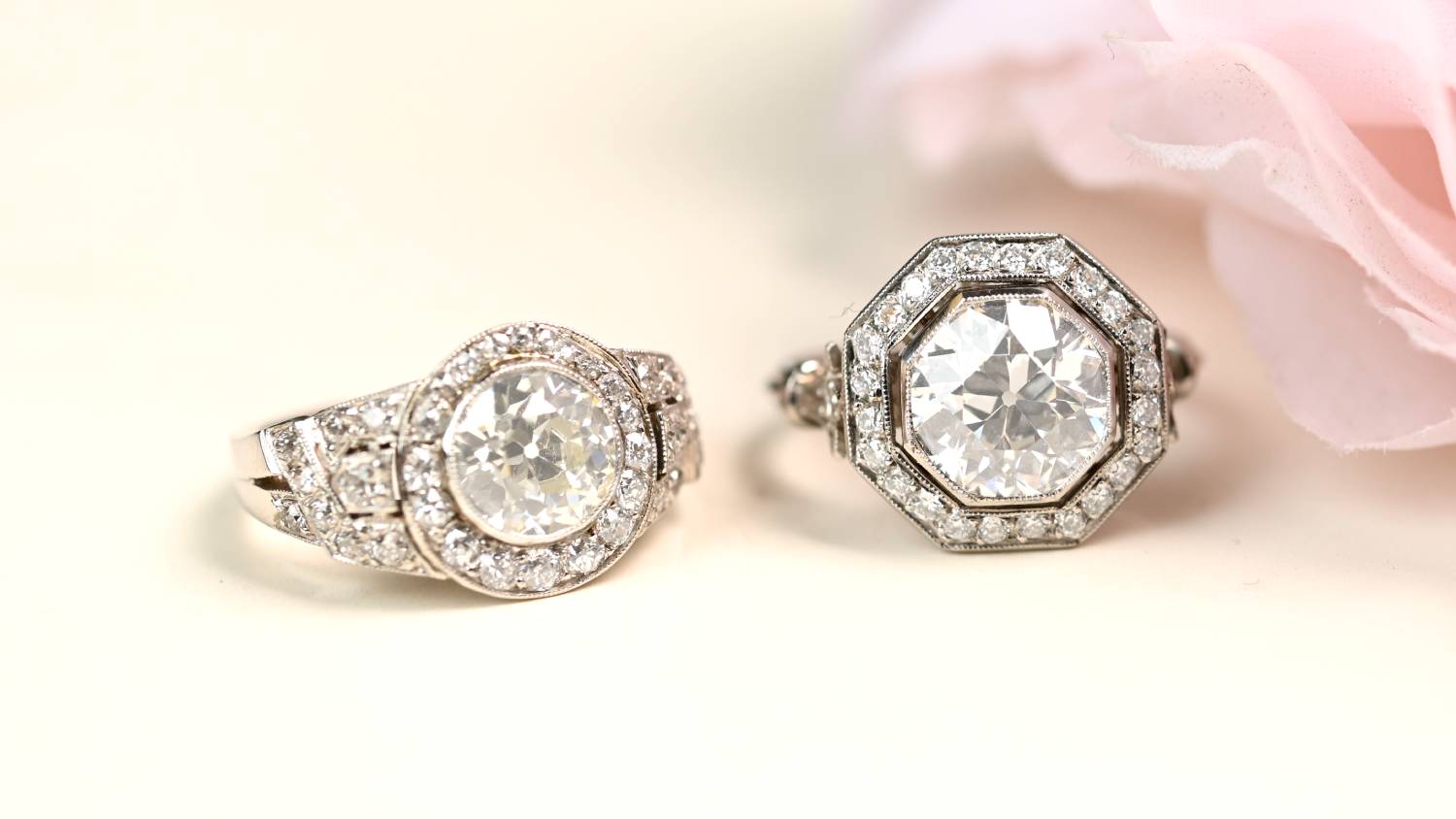
A genuine Art Deco ring was created during the Art Deco era, while an Art Deco-style ring is a modern piece inspired by the designs of that period. Both may feature geometric patterns, milgrain, filigree, platinum, sapphires, and antique diamonds, but only the period ring is genuinely Art Deco.
| Feature | Genuine Art Deco Ring | Art Deco-Style Ring |
|---|---|---|
| Date created | Generally 1920 to 1940 | Made after the Art Deco era |
| Mounting | Original period mounting | Modern mounting |
| Diamond | Needs to be from Art Deco era | May be modern or antique |
| Construction | Period materials and techniques | Modern production or handcrafting |
| Condition | May show wear or restoration | Usually new or recently made |
An Art Deco-style ring is not necessarily inferior, and it may be a practical choice for someone who wants the appearance of the era with modern construction. However, it needs to be clearly described as an Art Deco-style ring, not sold as a genuine Art Deco period piece.
A Short History of Art Deco Jewelry
Art Deco jewelry emerged after World War I and flourished throughout the 1920s and 1930s. The movement took its name from the 1925 Paris exhibition that celebrated modern decorative arts and design. Jewelers embraced geometric patterns, bold color contrasts, platinum, and precise architectural forms that reflected the modern spirit of the period.
The Anatomy of an Art Deco Engagement Ring
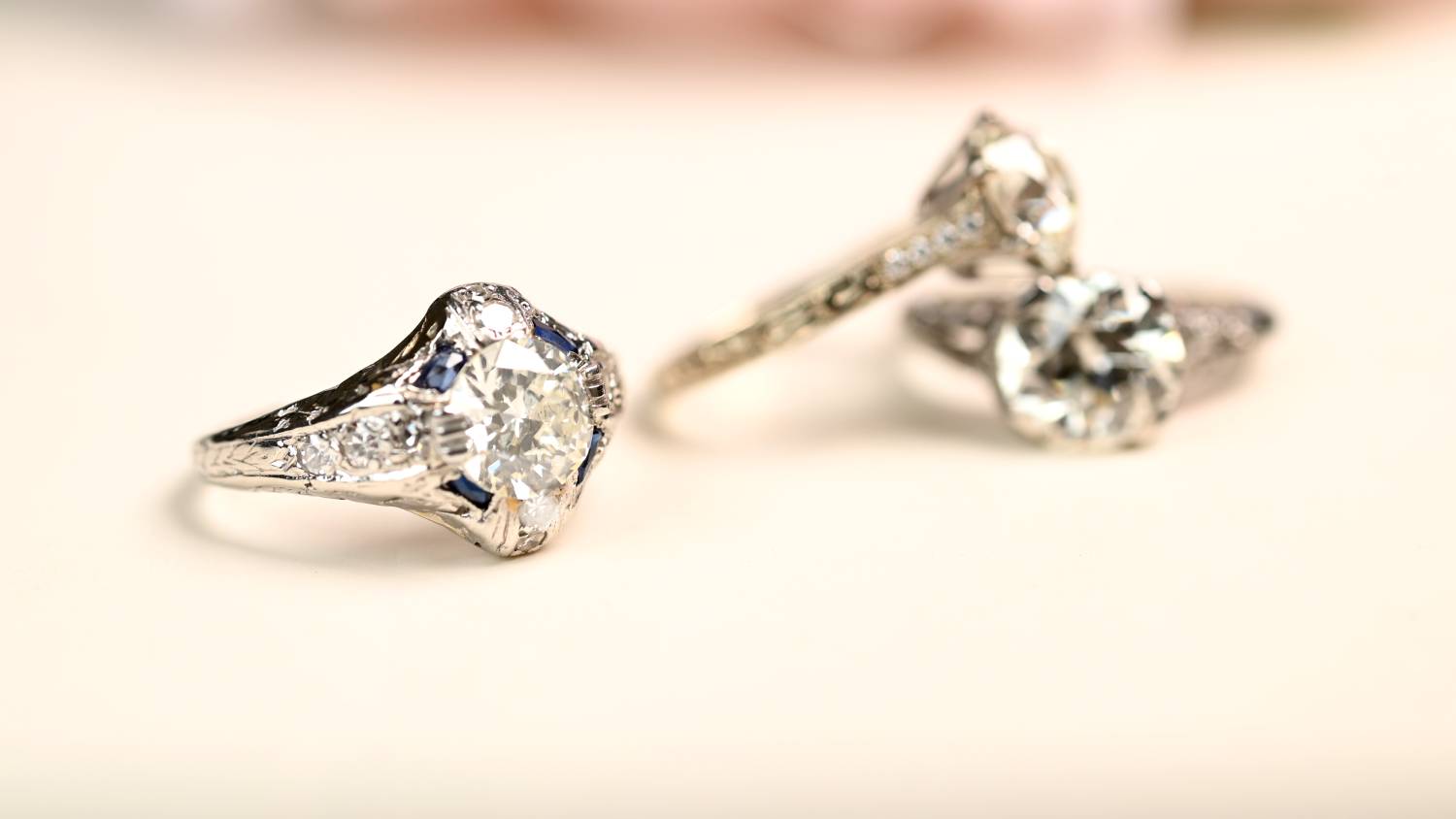
Understanding the anatomy of an Art Deco engagement ring helps shoppers evaluate its design, craftsmanship, and period-appropriate details. This section examines the center stone, accent stones, metalwork, shoulders, shank, gallery, and profile from a practical buying perspective.
Afshin Shaddaie also consulted Benjamin Khordipour, GIA Graduate Gemologist and vintage jewelry expert, when preparing this section.
1. Overall Shape and Architecture
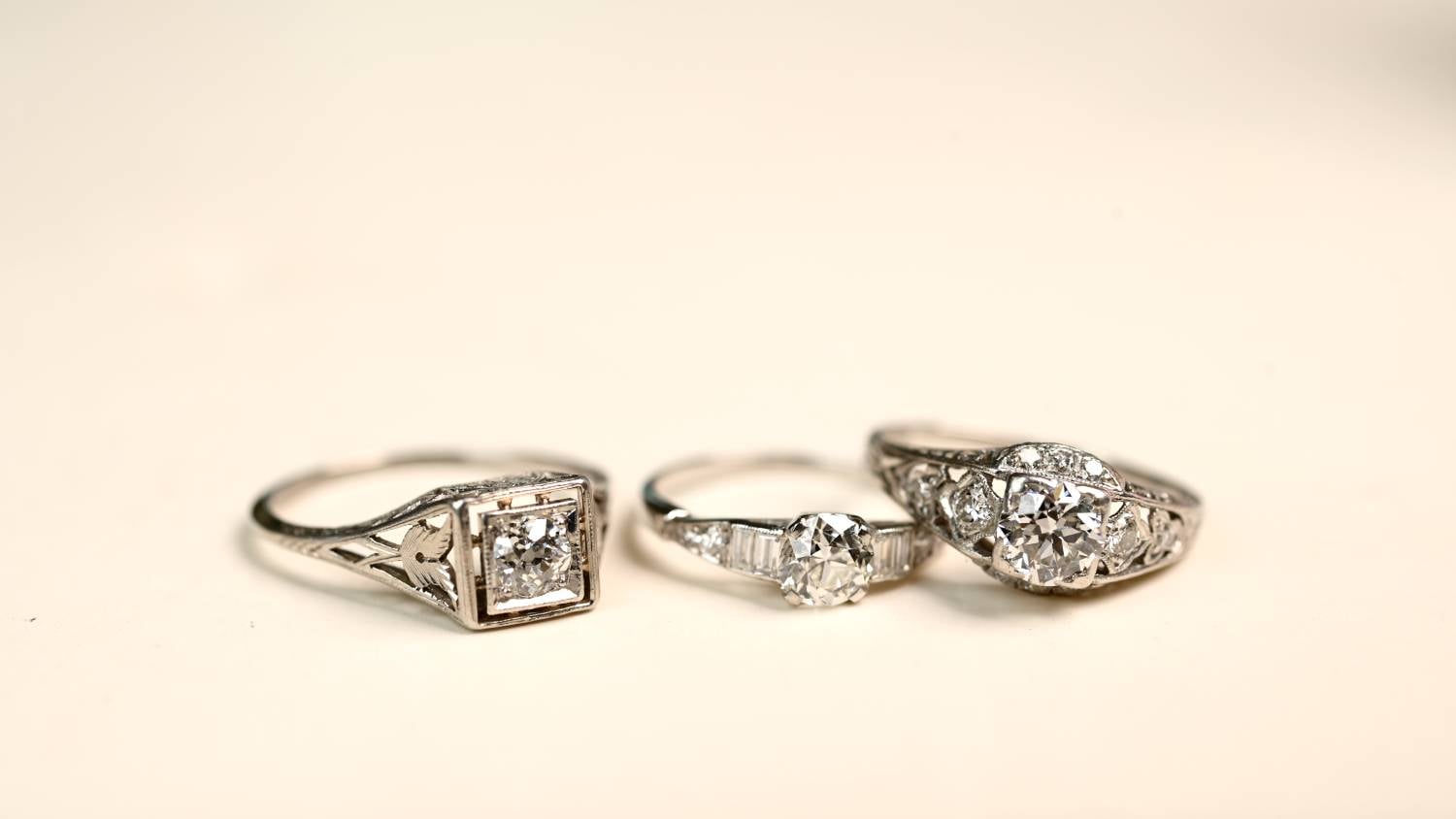
The face-up outline is often the first feature that identifies an Art Deco engagement ring. Common Art Deco designs use square, rectangular, octagonal, circular, shield-shaped, and stepped forms arranged with strong symmetry and visual balance. The center stone usually anchors the composition, while surrounding diamonds, gemstones, and metalwork create an architectural pattern around it.
Shoppers should examine whether the ring appears cohesive from the center outward and whether its proportions look deliberate. Although geometry is an important characteristic of Art Deco jewelry, it does not prove that a ring is genuinely from the period because modern jewelers frequently reproduce these designs.
“Some Art Deco motifs are certainly more recognizable and popular than others,” explains Michael Khordipour, “but the most important consideration is which design resonates most strongly with the person who will wear the ring.”
2. The Center Antique Diamond
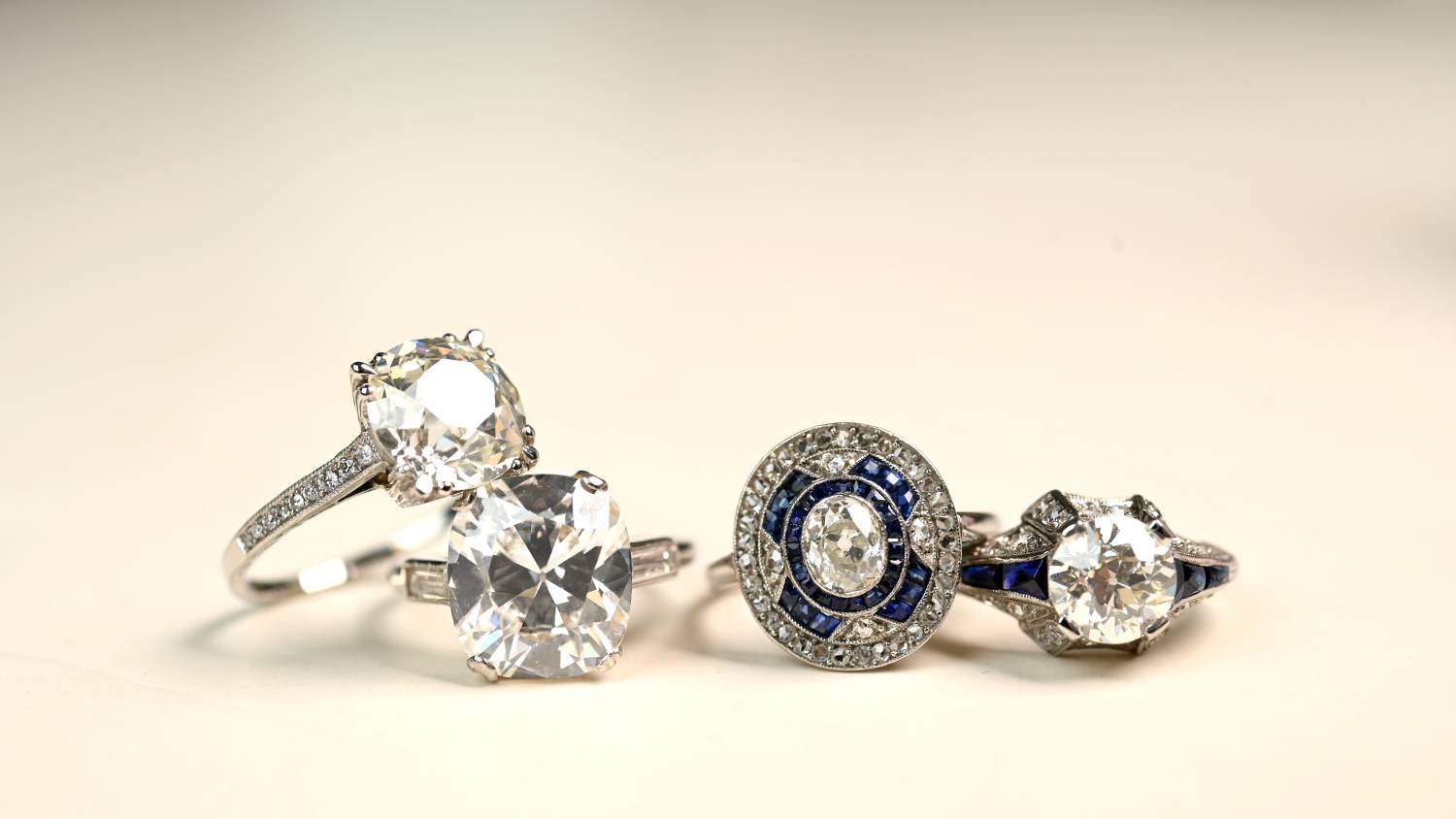
The center diamond establishes the proportions, character, and visual focus of an Art Deco engagement ring.
Important Note: Shoppers should consider whether its shape and size fit naturally within the mounting, since an awkward gap, crowded setting, or unusually raised position may indicate that the original diamond was replaced.
- Old European cut: The most characteristic round center diamond found in Art Deco engagement rings. Old European cuts typically have a small table, high crown, deep pavilion, open culet, and broad facets that produce larger flashes of light than a modern round brilliant.
- Old mine cut: An earlier hand-cut diamond with a cushion-like outline, high crown, small table, and open culet. Although most strongly associated with Georgian and Victorian jewelry, old mine cuts were sometimes carried forward or reset into Art Deco mountings.
- Transitional cut: Developed between the old European cut and the modern round brilliant. Transitional diamonds generally have more precise symmetry, a larger table, and a more brilliant facet pattern, making them especially appropriate for rings from the later Art Deco period.
- Emerald and Asscher cuts: A rectangular (or square) step-cut diamond with cropped corners and long, linear facets. Its clean geometry suited Art Deco design, but its open facets can make color and inclusions easier to see. The Asscher cut became especially associated with the period’s fascination with symmetry and architectural design.
- Antique cushion cut: A square or rectangular diamond with rounded corners and broad facets. Antique cushion cuts vary considerably in outline and facet arrangement because they were cut individually rather than to a single standardized pattern.
- Pear and marquise cuts: These elongated shapes appeared less frequently than round and step-cut center diamonds but can be found in genuine Art Deco rings. Their pointed outlines often became the foundation for highly symmetrical surrounds and geometric accent stones.
3. Accent Diamonds and Colored Gemstones
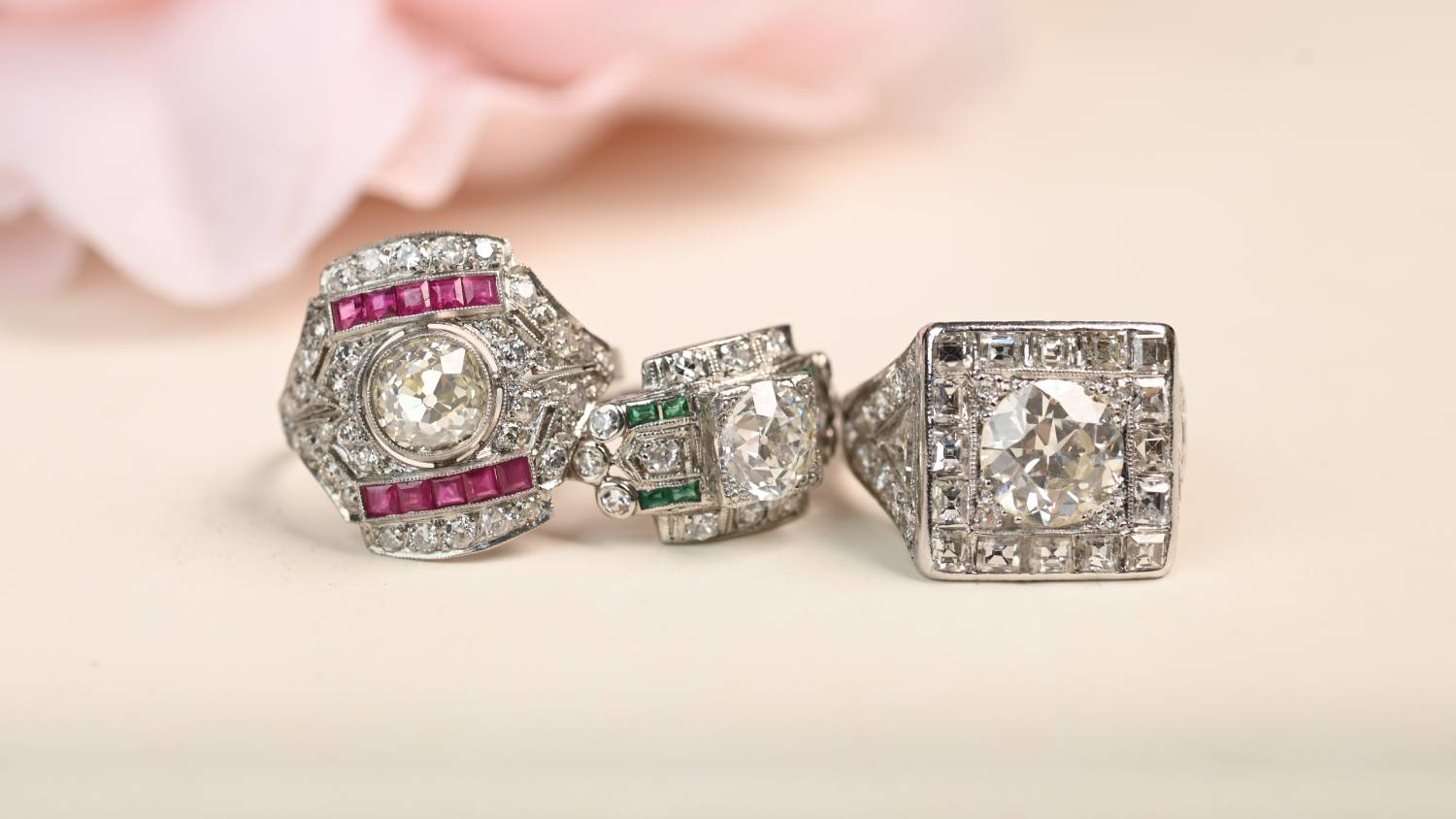
Accent stones are essential to the geometry and visual balance of many Art Deco engagement rings. Jewelers used single-cut diamonds, baguettes, French cuts, carré cuts, shields, and triangular diamonds to create structured borders and lead the eye toward the center stone. These smaller diamonds were often selected for their ability to fit the design rather than for perfectly uniform modern grading characteristics.
Sapphires, rubies, emeralds, onyx, and enamel introduced the bold color contrasts associated with the period. Calibré-cut gemstones were individually shaped to fit tightly within curved or geometric channels, making intact original examples especially desirable. Both natural and synthetic sapphires and rubies were used during the Art Deco era, so period synthetic stones do not automatically mean that a ring is a modern reproduction.
Shoppers should examine whether the accent stones match in shape, color, size, and condition. Noticeably uneven stones, empty gaps, chipped corners, or inconsistent cutting may indicate replacements or poor restoration. Replaced accent stones are not necessarily a serious problem, but the work should be disclosed, securely executed, and visually faithful to the original design.
4. Metal Types Used in Art Deco Engagement Rings
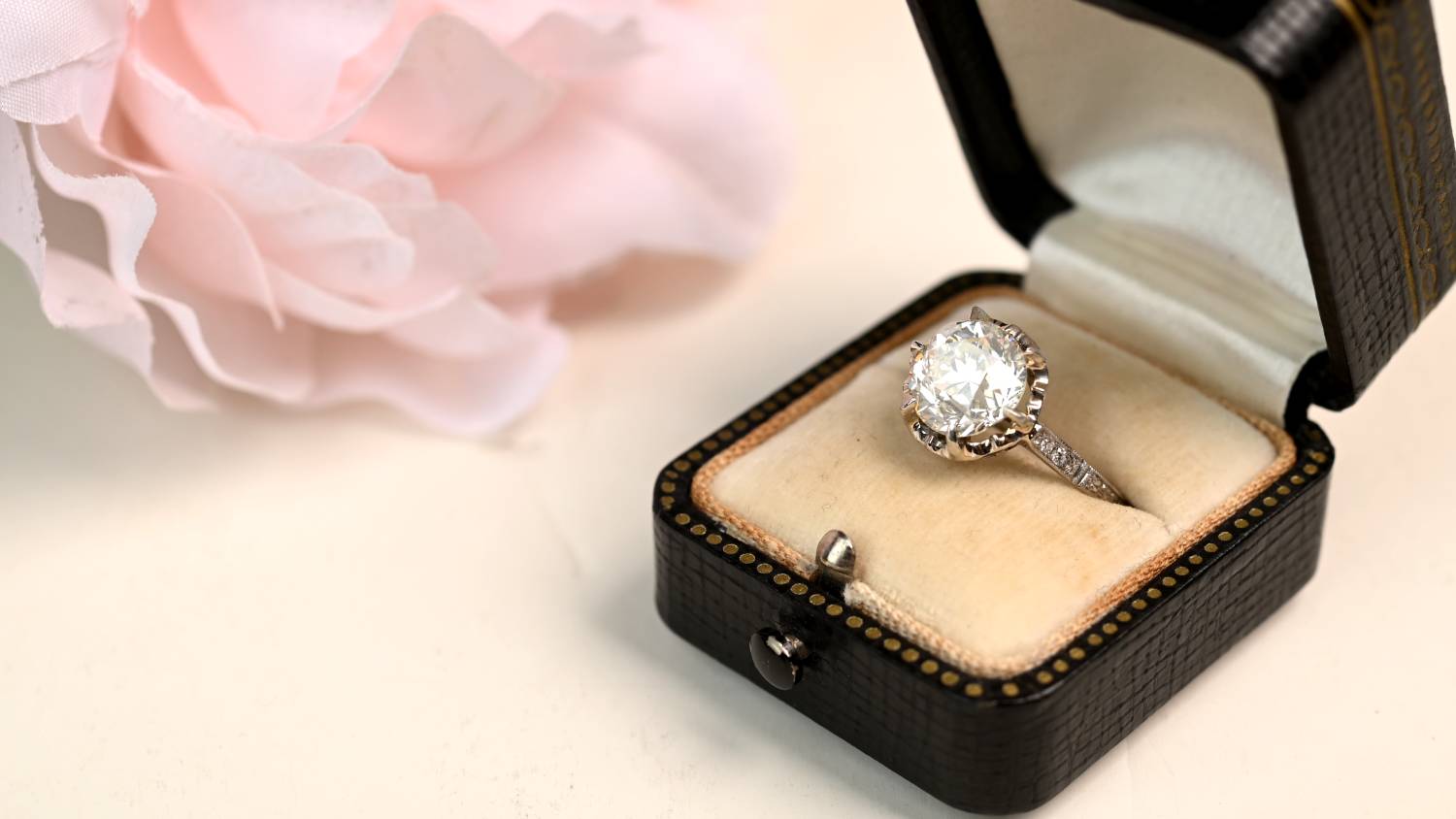
Metal type can provide an important clue when evaluating an Art Deco ring, although it cannot establish authenticity by itself. Platinum dominated fine Art Deco engagement rings, while white gold was also used, particularly in more affordable pieces from the late 1930s.
Important Warning: In Afshin’s experience, many white-gold rings currently marketed as “Art Deco” are later reproductions, so these pieces require especially careful examination.
Mixed-metal construction, which was more common during the Edwardian and transitional periods, became far less fashionable as all-platinum construction came to define fine Art Deco jewelry.
- Platinum: The metal most closely associated with genuine Art Deco engagement rings. Its strength and malleability allowed jewelers to create intricate filigree, fine milgrain, delicate prongs, and precise geometric settings with very little visible metal.
- White gold: A period-appropriate but less prestigious alternative to platinum, particularly during the Depression years of the 1930s. Because modern reproductions are frequently made in white gold, a white-gold mounting should be examined carefully rather than accepted as Art Deco based on its appearance alone.
- Yellow gold: Less characteristic of the classic white-on-white Art Deco aesthetic, but still found in genuine period rings. Yellow gold became more prevalent toward the end of the period and into the Retro era.
- Mixed metals: Platinum-topped gold rings and other mixed-metal combinations were popular during the Edwardian and transitional years but became much less common during the height of Art Deco. Mixed-metal construction may indicate an earlier ring, a transitional piece, or a later alteration rather than a classic Art Deco mounting.
5. Art Deco Metalwork: Milgrain, Filigree and Engraving
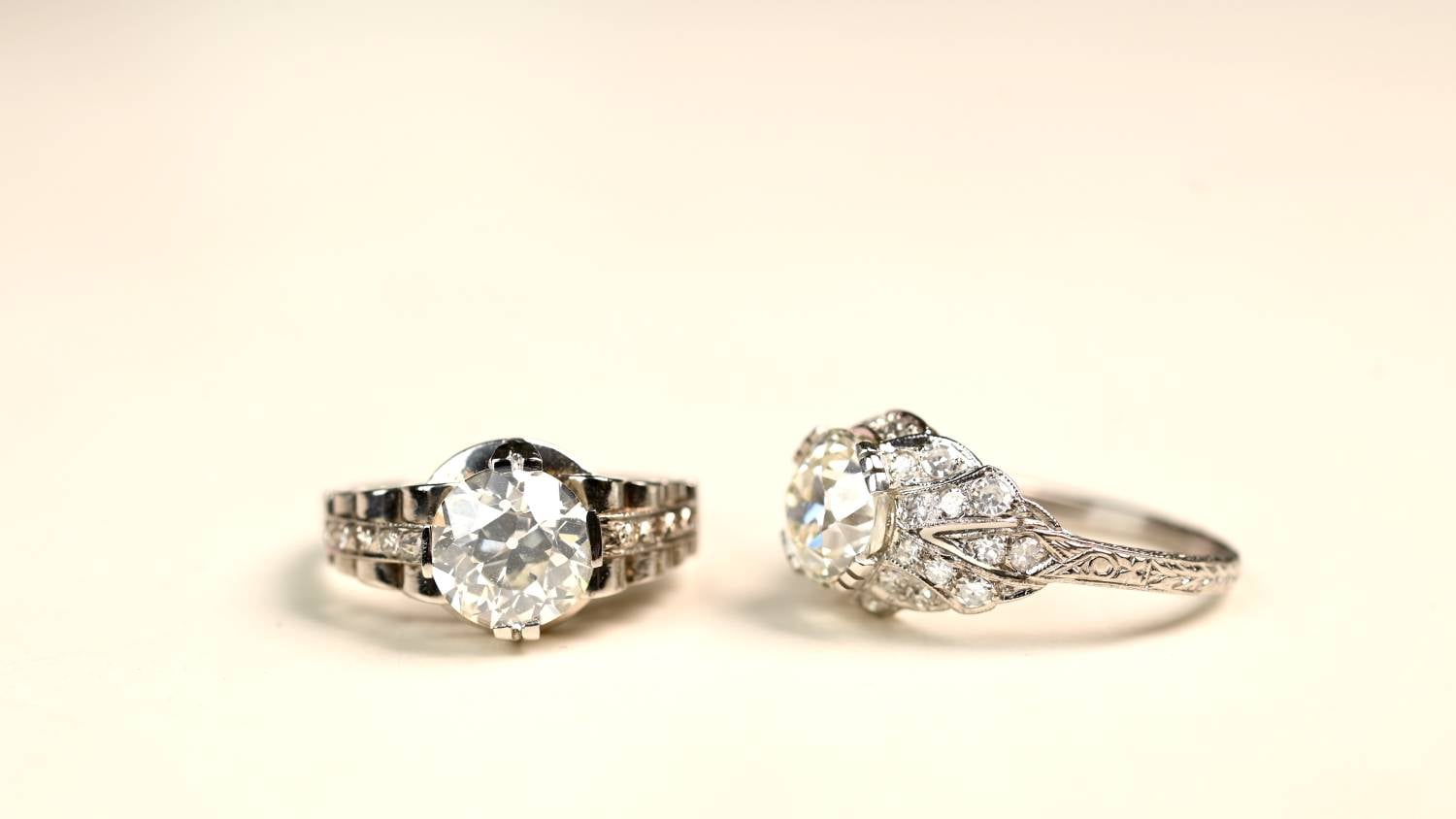
Art Deco jewelers used intricate metalwork to create detail without overwhelming the ring’s geometric structure. Milgrain, filigree, and engraving are separate decorative techniques, although they frequently appear together in the same ring.
Shoppers should examine whether these details remain crisp, balanced, and consistent, since heavy wear, excessive polishing, or poor restoration can significantly diminish the original craftsmanship.
- Engraving: Decorative lines or patterns cut directly into the surface of the metal. Art Deco rings may feature engraved wheat, floral, linear, or geometric motifs along the shoulders and shank. Clear, continuous engraving is desirable, while faded sections may reveal ordinary wear, previous resizing, or repeated polishing.
- Milgrain: A border of tiny metal beads applied around diamonds, gemstones, bezels, and geometric design elements. Art Deco milgrain should appear fine and controlled, although some softening is normal after decades of wear. Flattened, missing, or uneven milgrain may indicate excessive polishing or previous repair work.
- Filigree: Delicate open metalwork formed into geometric, scroll, or lace-like patterns. Art Deco filigree commonly appears in the gallery, shoulders, and spaces surrounding the center stone. Buyers should look for complete, symmetrical patterns without broken wires, bent sections, heavy solder, or areas that appear noticeably thicker than the surrounding work.
6. The Shoulders, Shank, Gallery, and Profile
The shoulders connect the center setting to the shank and may feature diamonds, engraving, filigree, or geometric motifs that gradually transition into a plain band. Shoppers should examine whether these details remain symmetrical and whether the shank matches the metal, proportions, and workmanship of the upper mounting. Photographs of the entire band can reveal thinning, previous resizing, replacement metal, or a rebuilt shank.
The gallery and profile reveal how the center stone is supported, how high the ring sits, and whether the mounting has been altered to accommodate a replacement diamond. Buyers should look for balanced construction, intact openwork, secure connections, and signs of heavy soldering or structural repair. Always request clear photographs or video of the ring from the side and underneath, since a face-up view can conceal important condition and construction issues.
Shop Our Collection of Rare Art Deco Engagement Rings
Explore Estate Diamond Jewelry’s curated collection of genuine Art Deco engagement rings from the 1920s and 1930s. Each ring is carefully selected for its authenticity, beauty, craftsmanship, condition, and rarity.
How Experts Determine Whether an Art Deco Ring Is Genuine
Authenticating an Art Deco ring requires examining the entire piece rather than relying on one design feature, hallmark, or antique diamond. No single technique proves authenticity, but the following methods, provided by Afshin Shaddaie, can form a strong and reliable attribution when considered together.
- Evaluate the overall design: Experts examine whether the proportions, symmetry, geometry, and decorative details are consistent with rings made during the Art Deco era. A mixture of details from different jewelry periods may indicate a later reproduction or heavily altered ring.
- Inspect the construction under magnification: The gallery, stone settings, filigree, joints, and underside can reveal how the ring was fabricated. Experts look for period-appropriate workmanship, tool marks, joining methods, and natural irregularities rather than relying only on the visible face-up design.
- Test the metal and examine the hallmarks: Metal testing can determine whether the ring is platinum, gold, or a combination of metals, while hallmarks may identify its purity, maker, or country of origin. Missing hallmarks do not automatically indicate a reproduction because marks can wear away or be removed during resizing.
- Study the diamonds and gemstones: The cuts, proportions, setting styles, and arrangement of the stones should be consistent with the claimed period. An antique diamond can support an attribution, but it cannot authenticate the ring because old diamonds are frequently placed into modern mountings.
- Identify repairs and alterations: Experts look for replaced shanks, rebuilt prongs, heavy solder, replacement accent stones, and modifications made to accommodate a different center diamond. Appropriate restoration does not make a ring inauthentic, but extensive changes can affect its originality, rarity, and value.
- Compare the ring with documented period examples: Specialists compare the ring with jewelry catalogs, maker archives, auction records, and authenticated examples from the 1920s and 1930s.
Can an Art Deco Ring Be Worn Every Day?
A genuine Art Deco ring can often be worn every day, provided that its mounting is structurally sound and appropriate for the wearer’s lifestyle. Low-profile rings with secure settings are generally more practical than tall, delicate designs with extensive filigree or calibré-cut gemstones. Before purchasing, the ring should be examined for worn prongs, loose stones, weakened metal, and earlier repairs that could affect its durability.
Even a well-preserved Art Deco engagement ring is close to a century old and should be treated with reasonable care. Remove it during exercise, gardening, cleaning, swimming, and other activities that could expose it to impact or harsh chemicals. Have the ring professionally inspected regularly, and ask an antique jewelry specialist before using an ultrasonic or steam cleaner, since certain gemstones, repairs, and delicate settings may be vulnerable.
What Determines the Price of a Genuine Art Deco Ring?
The authority and reputation of the seller can significantly affect the price of an Art Deco ring. An established antique jeweler places professional expertise behind the ring’s period attribution, condition report, restoration history, and gemstone descriptions, while also providing meaningful guarantees and after-sale support. Buying from an inexperienced or anonymous seller may cost less, but it also creates a greater risk of purchasing a modern reproduction or heavily altered ring.
The center diamond’s size, quality, and visual beauty are major components of value. An antique diamond that remains appropriately paired with a genuine period mounting may command more than a comparable loose diamond because buyers are purchasing the complete historical jewel. The beauty and rarity of the design, quality of the workmanship, and sophistication of its filigree, milgrain, engraving, or calibré-cut accents can also make one Art Deco ring considerably more valuable than another with a similar center diamond.
Additionally, a verified signature from Cartier, Tiffany & Co., Van Cleef & Arpels, or another important design house can add a substantial premium, particularly when the design is characteristic of that maker.
Red Flags When Shopping for an Art Deco Ring
Many modern reproductions and heavily altered rings are marketed using vague terms such as “Art Deco,” “Deco-era,” or “Art Deco inspired.” Serious shoppers should investigate the following warning signs before relying on a seller’s description or period attribution.
- The seller is not an established expert or authority in antique and vintage jewelry.
- The center diamond is a brilliant cut or modern diamond cut.
- The listing provides only face-up photographs and does not show the gallery, profile, underside, or shank.
- The seller cannot identify or verify the ring’s metal.
- The seller does not provide a reasonable inspection period, return policy, or authenticity guarantee.
- The price appears unusually low for the diamond, workmanship, and claimed historical importance.
Frequently Asked Questions
1. Can a Genuine Art Deco Engagement Ring Be Resized?
Most Art Deco engagement rings can be resized within a reasonable range, but the feasibility depends on the ring’s metal, construction, engraving, and placement of gemstones. The ring should be examined by a jeweler experienced with antique jewelry before any sizing work is attempted.
2. Are Worn Prongs Normal on an Art Deco Ring?
Some prong wear is expected on a ring approaching 100 years old, but severely worn prongs can allow the center diamond or accent stones to loosen and fall out. Any weakened prongs should be professionally repaired before the ring is worn.
3. Does a GIA Report Prove That a Ring Is Genuinely Art Deco?
A GIA report identifies and grades the diamond, but it does not authenticate or date the ring’s mounting. Determining whether a ring is genuinely Art Deco requires a separate examination of its design, construction, metalwork, gemstones, and alterations. At Estate Diamond Jewelry, we prefer the UGL certification for validating the age of a ring.
4. Does an Art Deco Ring Need a Hallmark to Be Genuine?
A genuine Art Deco ring does not need to retain a visible hallmark, since markings can fade from wear or be removed during resizing. Hallmarks can support an attribution, but the entire ring must still be examined to determine its age and authenticity.
5. Can the Diamond Be Older Than the Art Deco Mounting?
Yes, Art Deco jewelers sometimes incorporated diamonds cut during earlier jewelry periods into newly created mountings. An old mine cut or another earlier diamond can therefore be original to a genuine Art Deco ring even though the stone itself predates the setting.
6. Should Antique Diamonds Be Judged by Modern Cut Standards?
Antique diamonds should not be judged exclusively by the precision and light-performance standards applied to modern diamonds. Hand-cut proportions, broad flashes of light, visible culets, warmer colors, and slight irregularities are part of their character and should be evaluated in person.
7. How Can Someone Safely Buy an Art Deco Engagement Ring Online?
Purchase from an established vintage jewelry expert who provides detailed photographs, videos, condition information, and a clear explanation of the ring’s period attribution. The purchase should also include a reasonable inspection period and return policy.
8. Should an Art Deco Engagement Ring Be Insured?
A valuable Art Deco engagement ring should generally be insured against risks such as theft, loss, and accidental damage. Obtain an appropriate appraisal and confirm that the policy adequately covers an antique ring whose exact design may be impossible to replace.
9. How Should an Art Deco Engagement Ring Be Stored?
Store the ring in a padded box or separate fabric-lined compartment where it cannot rub against other jewelry. Keep it in a dry, secure location and avoid placing pressure on delicate filigree, prongs, or raised gemstones.
Estate Diamond Jewelry’s experts can help shoppers evaluate an Art Deco ring’s authenticity, condition, diamond quality, and value before making a purchase. Contact the team for personalized guidance or assistance finding a genuine Art Deco engagement ring that matches your preferences and budget.